

Why does my tongue have cracks is a question that surprises many people the first time they notice deep grooves or furrows running across their tongue surface.
The condition is called a fissured tongue, and it is far more common than most people realize, affecting anywhere from 5% to 20% of the global population
. In most cases it is completely harmless. However, understanding the causes, symptoms, and proper care routine can protect you from complications like bad breath, infection, and unnecessary discomfort.
What Is a Fissured Tongue?
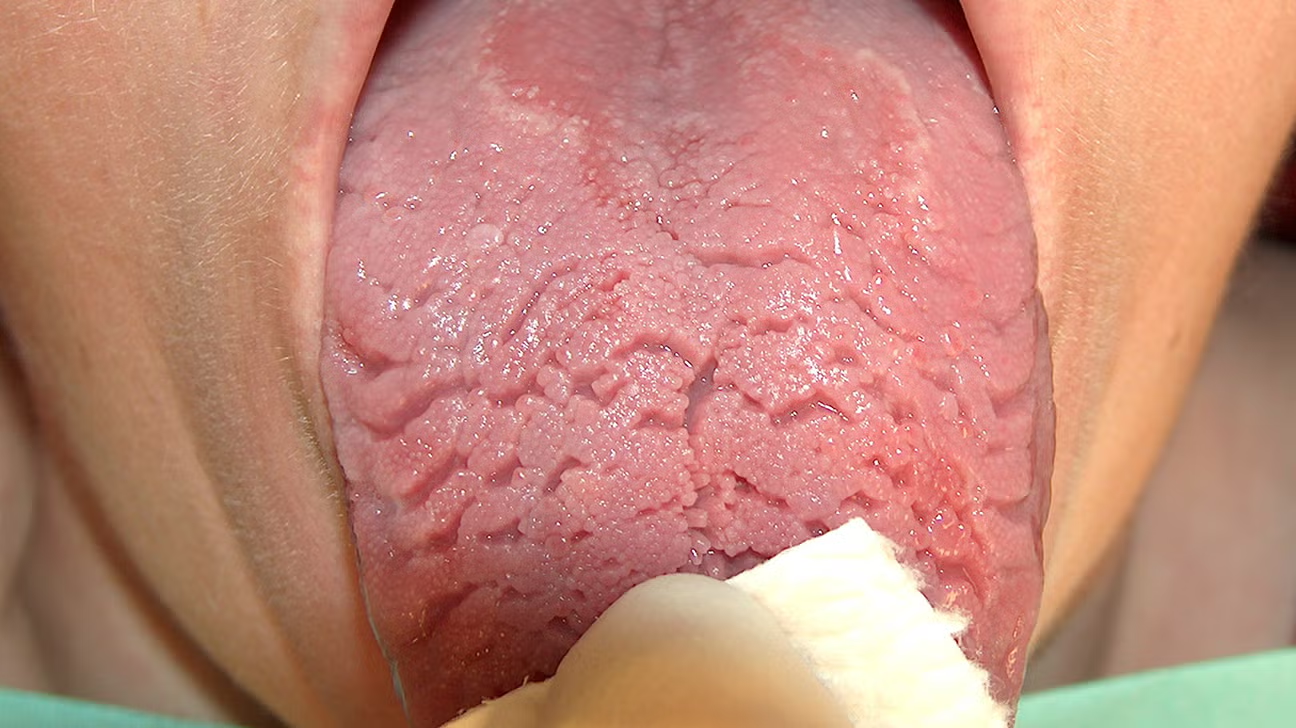
A fissured tongue is a benign condition where one or more grooves, cracks, or furrows appear on the top surface (dorsum) of the tongue. Doctors also call it lingua plicata, scrotal tongue, or grooved tongue.
The fissures can range from shallow lines just 2 millimeters deep to pronounced crevices up to 6 millimeters deep. They may run down the center of the tongue, branch outward to the sides, crisscross, or create a pattern that resembles a cracked landscape or the surface of a brain.
The condition is not a disease. Most experts consider it a natural variation in tongue anatomy. Many people only discover they have it during a routine dental exam.
How Common Is a Cracked Tongue?
Fissured tongue affects an estimated 5% to 20% of people worldwide. Some studies in specific populations put the figure even higher, with prevalence reaching up to 30% in certain groups.
It is more frequently seen in men and in adults over the age of 50. The grooves tend to deepen and become more numerous with age. Some people are born with it, while others notice it developing gradually during childhood or adulthood.
| Feature | Detail |
|---|---|
| Medical name | Lingua plicata, fissured tongue, grooved tongue |
| Estimated prevalence | 5% to 20% of the population |
| More common in | Males, adults over 50 |
| Fissure depth range | 2 mm to 6 mm |
| Painful? | Usually no; pain signals a secondary issue |
| Contagious? | No |
| Curable? | No permanent cure, but fully manageable |
Why Does My Tongue Have Cracks? 10 Doctor-Identified Causes
1. Genetics
The most widely accepted cause of a fissured tongue is heredity. Research consistently shows that the condition runs in families, suggesting a strong genetic component.
If one or both of your parents have a cracked tongue, your likelihood of developing one is significantly higher. Scientists believe it involves multiple genes working together, making it a polygenic trait rather than one caused by a single gene mutation.
In many people, no other explanation is ever found, and the fissures are simply part of their individual tongue anatomy from birth.
2. Aging
Tongue fissures often become deeper, wider, and more numerous as a person gets older. A tongue that showed only faint lines in a person’s twenties may display pronounced grooves by their fifties or sixties.
This is partly because the tongue tissue changes in texture and elasticity over time, and partly because chronic low-grade inflammation or repeated minor irritation accumulates across decades.
Age-related deepening of fissures is normal and does not require treatment on its own.
3. Nutritional Deficiencies
Low levels of specific vitamins and minerals are a well-documented and treatable cause of tongue changes including cracking, burning, and soreness.
Key deficiencies linked to a cracked tongue include:
Vitamin B12 deficiency is one of the most directly linked, with a 2016 study finding a clear association between low B12 levels and fissured tongue. Vitamin B2 (riboflavin) deficiency causes a burning sensation in the tongue known as glossopyrosis. Iron deficiency leads to a pale, sore tongue and can worsen existing fissures. Zinc deficiency causes taste changes and may deepen furrows over time. Folate deficiency affects the health of oral mucosa and accelerates tongue changes.
If your cracked tongue comes with burning, soreness, or sensitivity, a blood test to check your nutrient levels is an important first step.
4. Dehydration and Dry Mouth (Xerostomia)
Dehydration does not directly cause the structural grooves of a fissured tongue, but it is a significant contributing factor to discomfort and the worsening of existing fissures.
When saliva production drops due to dehydration, certain medications, or conditions like Sjögren’s syndrome, the tongue surface dries out. This makes the grooves more noticeable, more prone to irritation, and easier for bacteria and food debris to accumulate in.
Common medications that cause dry mouth include antihistamines, antidepressants, blood pressure drugs, and diuretics.
5. Geographic Tongue (Benign Migratory Glossitis)
Geographic tongue is a closely related condition that frequently coexists with a fissured tongue. It causes smooth, red, map-like patches on the tongue surface surrounded by white or yellow borders that seem to migrate or shift over time.
The two conditions share overlapping features and are thought by some researchers to represent different stages of the same process. When both are present together, the tongue can have a particularly unusual appearance that worries patients but remains medically harmless.
6. Psoriasis
Psoriasis is a chronic autoimmune skin condition, and there is a well-documented association between psoriasis and fissured tongue. The tongue changes in psoriasis-related cases can mirror the patterns seen in geographic tongue, with similar histopathology.
If you have a diagnosed autoimmune skin condition and also notice deep tongue cracks, inform your dermatologist and dentist so both conditions can be monitored together.
7. Melkersson-Rosenthal Syndrome
Melkersson-Rosenthal syndrome (MRS) is a rare neurological disorder that presents with three classic features: recurrent facial swelling (especially of the lips), facial muscle weakness or paralysis, and a fissured tongue.
A fissured tongue is found in 30% to 80% of people with MRS. The syndrome is estimated to affect just 0.08% of the general population and often has a genetic component.
If your cracked tongue is accompanied by persistent swelling of the lips or face or any facial weakness, this combination of symptoms warrants evaluation by a doctor to rule out MRS.
8. Down Syndrome
Fissured tongue occurs at significantly higher rates in people with Down syndrome compared to the general population. The tongue in Down syndrome is often larger than normal (macroglossia), which contributes to the development of fissures.
The condition itself requires the same management as in the general population, with careful daily tongue cleaning being the most important step.
9. Acromegaly
Acromegaly is a hormonal condition caused by excess growth hormone, usually from a pituitary gland tumor. One of the oral manifestations of acromegaly is an enlarged tongue that develops fissures and grooves.
If a fissured tongue appears alongside other signs of acromegaly, such as enlarged hands and feet, jaw changes, or facial feature changes, a medical evaluation is essential.
10. Poor Oral Hygiene and Lifestyle Factors
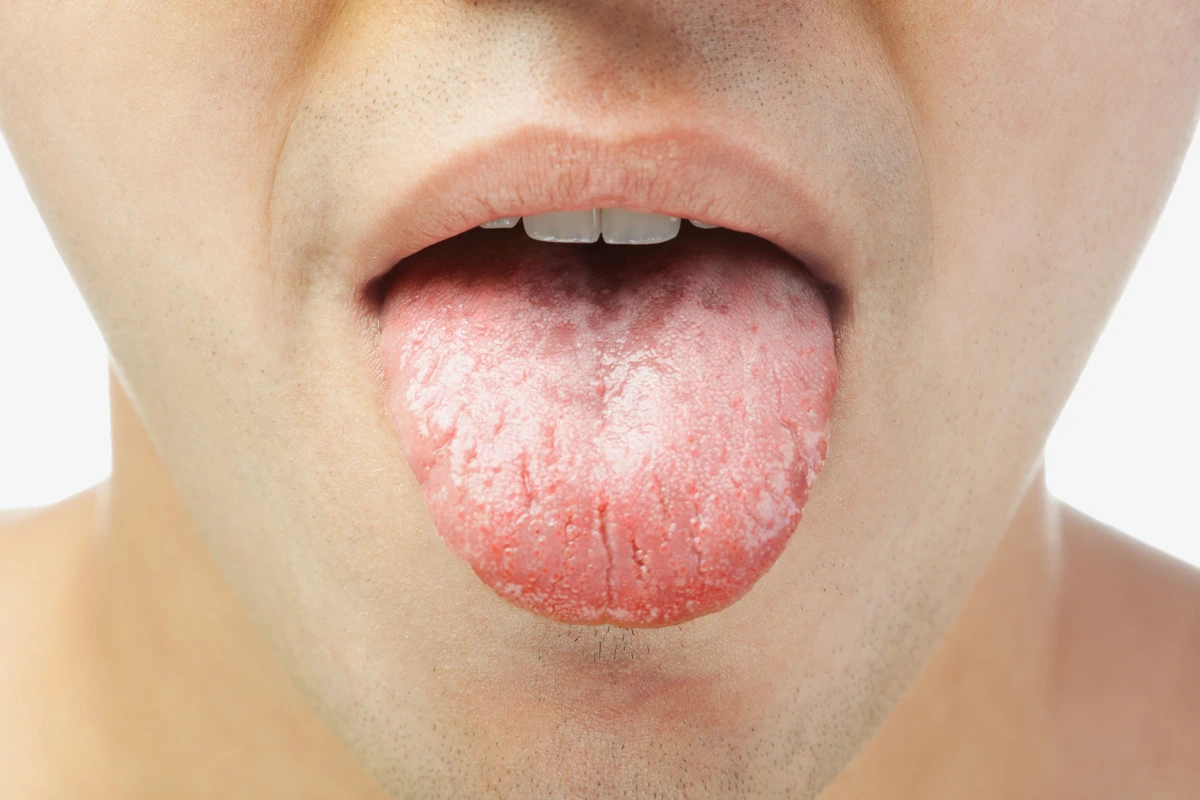
While poor oral hygiene does not create the structural grooves of a fissured tongue, it significantly worsens the condition’s impact. When the grooves are not cleaned properly, food particles, bacteria, and dead cells accumulate inside them.
Specific lifestyle factors that worsen tongue fissures include smoking, which dries and irritates the tongue tissue. Alcohol consumption increases dryness and inflammation. Chronic stress weakens immune defenses and can trigger oral symptoms. Bruxism (teeth grinding) creates chronic tongue trauma and aggravates surface changes.
Types and Patterns of Tongue Cracks
Doctors classify fissured tongues based on their groove patterns. Understanding the pattern can sometimes provide clues about severity and cause.
| Pattern Type | Description | Prevalence |
|---|---|---|
| Central longitudinal | Single prominent groove running down the midline | Most common, over 50% of cases |
| Branching | Central groove with smaller cracks radiating outward | Very common |
| Transverse | Horizontal cracks crossing the tongue surface | Common |
| Crisscross (cerebriform) | Multiple interconnected grooves creating a brain-like surface | Less common; associated with deeper involvement |
| Lateral longitudinal | Grooves running along the tongue edges | Less common |
| Diffuse | Multiple random grooves across the full surface | Associated with more systemic causes |
Severity is also graded by the number of fissures. Mild cases have one to three grooves. Severe cases, sometimes called cerebriform tongue, feature more than ten deep, interconnected cracks.
Symptoms of a Fissured Tongue
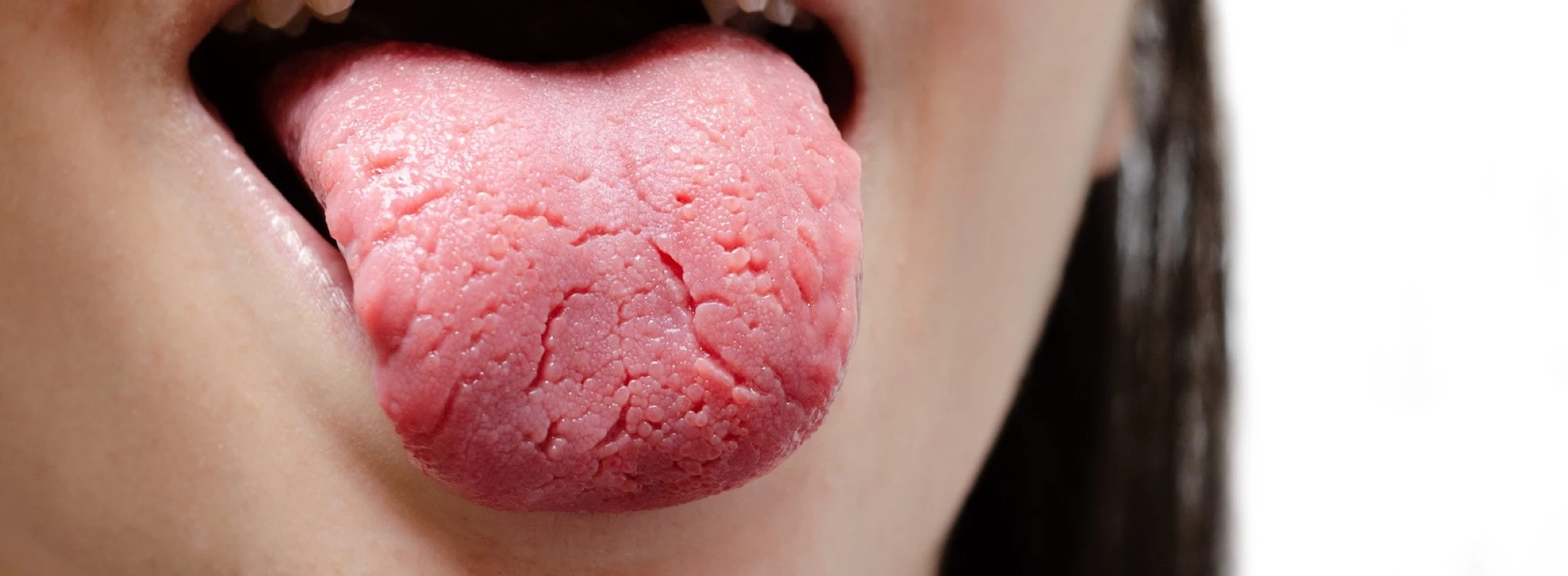
Most people with a cracked tongue have no symptoms at all and discover it by accident in the mirror or during a dental check-up.
When symptoms do occur, they include:
A visible network of grooves, cracks, or furrows on the top surface of the tongue. A burning sensation or soreness, especially when eating spicy, acidic, or salty foods. Bad breath (halitosis) caused by food debris and bacteria trapped in the grooves. A coated or white-filmed tongue surface from accumulated debris. Sensitivity or discomfort when drinking hot or cold beverages. In cases with secondary infection, redness, swelling, or white patches that do not wipe away easily.
Pain is not a primary feature of a fissured tongue itself. When pain is present, it almost always signals a secondary complication such as a nutritional deficiency, oral thrush infection, or an associated systemic condition.
Complications of an Untreated Cracked Tongue
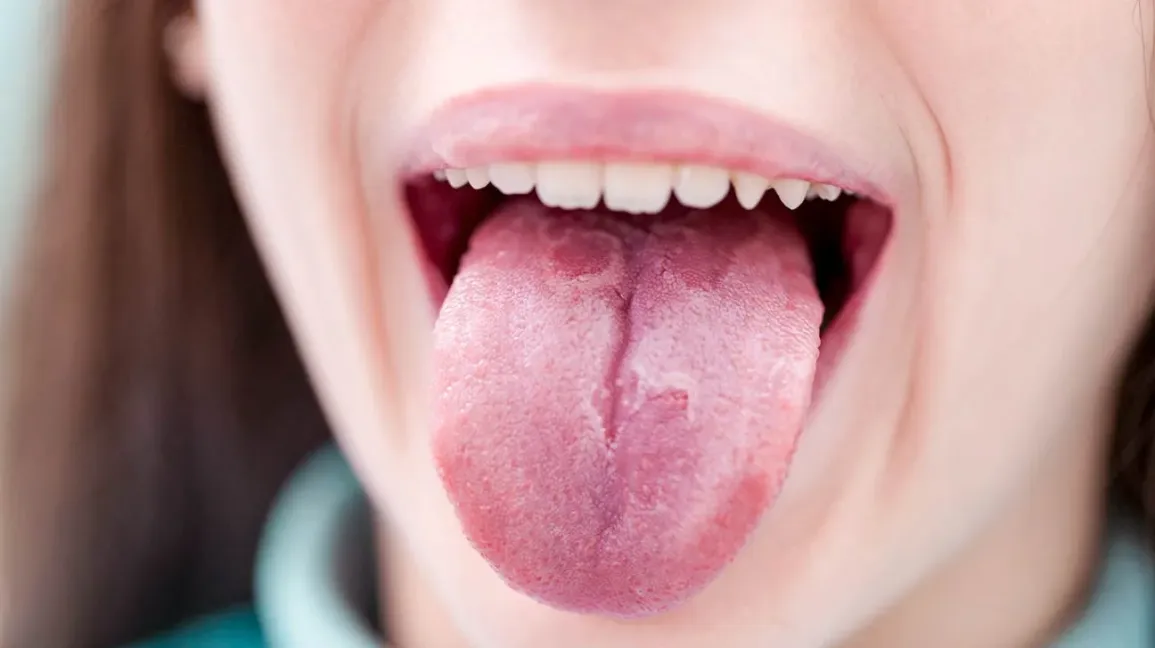
A fissured tongue that is not cleaned regularly can develop secondary complications.
Oral thrush (candidiasis): The grooves create warm, moist pockets where Candida albicans yeast can overgrow. This leads to white patches, intensified burning, and increased tongue soreness.
Halitosis: Bacteria feeding on trapped food particles produce odorous compounds that cause persistent bad breath, even with regular tooth brushing.
Glossitis: Prolonged bacterial buildup or nutritional deficiency leads to generalized tongue inflammation, causing redness, swelling, and pain across the entire tongue surface.
Secondary bacterial infection: In rare cases, deep fissures become a site for bacterial colonization requiring antibiotic treatment.
All of these complications are preventable with a consistent daily cleaning routine.
Treatment for a Cracked Tongue
There is no permanent cure that eliminates the structural grooves of a fissured tongue. The fissures are part of the tongue’s anatomy and do not disappear with any known treatment. Management focuses entirely on keeping the grooves clean, reducing irritation, and treating any underlying cause.
Daily Tongue Cleaning
Gentle daily cleaning is the single most important treatment step for a cracked tongue.
Use a soft-bristled toothbrush or a dedicated tongue scraper every day. Start at the back of the tongue and work forward with light, even pressure. Pay extra attention to the deeper grooves where debris accumulates most heavily. Repeat this twice daily when you brush your teeth.
Aggressive scrubbing can damage the thin tongue tissue, so always use gentle pressure and stop immediately if you experience pain or notice bleeding.
Saltwater Rinses
A warm saltwater rinse after meals is a simple, highly effective way to flush debris from tongue fissures and reduce minor inflammation.
Mix half a teaspoon of salt in a glass of warm water. Swish the solution around your mouth for 30 to 60 seconds, making sure it reaches the tongue surface, then spit it out. Repeat two to three times daily, especially after eating.
Staying Well Hydrated
Drinking at least eight glasses of water daily keeps saliva flowing, which naturally flushes the tongue surface and limits bacterial and fungal growth in the fissures.
If you take medications that cause dry mouth, discuss saliva substitutes, saliva-stimulating products, or alternative medications with your doctor or dentist.
Alcohol-Free Mouthwash
Using an alcohol-free antiseptic mouthwash once or twice daily helps reduce the bacterial load across the entire mouth, including inside the tongue fissures. Mouthwashes containing alcohol should be avoided as they dry out the oral tissue and can worsen irritation in existing cracks.
Addressing Nutritional Deficiencies
If blood tests reveal deficiencies in B12, B2, iron, zinc, or folate, targeted supplementation can reduce the burning sensation and soreness associated with cracked tongue.
Supplementation will not eliminate the structural fissures, but it can significantly reduce the discomfort that comes with them. Always consult your doctor before starting supplements, especially at higher doses.
Treating Secondary Infections
If oral thrush develops in the grooves, your dentist or doctor will prescribe a topical antifungal medication such as nystatin. For bacterial infections, antibiotics may be needed.
Secondary infections need prompt treatment to prevent them from spreading or recurring. After treatment, maintaining strict daily tongue hygiene is essential to prevent reinfection.
Managing Associated Conditions
If your fissured tongue is linked to a systemic condition like psoriasis, Melkersson-Rosenthal syndrome, or Sjögren’s syndrome, treating the underlying condition is a core part of managing tongue symptoms.
Anti-inflammatory medications, corticosteroids, and immunosuppressants are used for MRS. Treating the primary diagnosis often reduces the severity of associated tongue changes.
Home Remedies for a Cracked Tongue
Several safe, natural approaches can complement professional care and reduce day-to-day discomfort.
Raw honey: Honey has natural antibacterial and anti-inflammatory properties. Apply a thin layer of raw honey directly to the tongue surface, leave it for a few minutes, then rinse. Repeat two to three times daily during symptom flare-ups.
Aloe vera gel: Diluted aloe vera gel applied to the tongue can soothe inflammation and minor irritation. Use a food-grade gel and rinse after a few minutes.
Chamomile tea rinse: Allow chamomile tea to cool and use it as a mouth rinse. Chamomile has gentle anti-inflammatory properties that can ease tongue soreness.
Probiotic-rich foods: Eating plain, unsweetened yogurt daily helps restore healthy bacterial balance in the mouth and can reduce the risk of thrush developing in tongue fissures.
Ice chips: Sucking on small ice chips numbs the tongue temporarily and reduces localized inflammation during acute flare-ups.
Foods to Eat and Avoid with a Fissured Tongue
| Eat These | Avoid These |
|---|---|
| Soft foods (yogurt, soups, oatmeal) | Spicy curries and hot sauces |
| Plain yogurt (probiotic benefits) | Highly acidic foods (citrus, vinegar) |
| Cooked vegetables | Raw, crunchy foods that scratch the grooves |
| Leafy greens (B vitamins, iron) | Alcohol (dries and irritates tissue) |
| Plenty of water | Tobacco in any form |
| Mild, cool beverages | Very hot beverages |
| B12-rich foods (eggs, meat, dairy) | Salt-heavy snacks |
Cracked Tongue vs. Other Tongue Conditions
A fissured tongue is often confused with other tongue changes that have different causes and implications.
Geographic tongue creates smooth red patches with irregular white borders that shift location over time. It frequently coexists with fissured tongue and is equally harmless.
Oral thrush produces creamy white patches that coat the tongue and can spread to the cheeks and throat. Unlike fissured tongue, these patches can be wiped off and are caused by a fungal infection requiring treatment.
Atrophic glossitis (smooth tongue) causes the tongue to appear abnormally smooth and shiny due to loss of papillae. It is strongly associated with iron, B12, and folate deficiencies.
Hairy tongue appears as a darkened, hair-like coating caused by overgrowth of filiform papillae, often from antibiotic use, poor hygiene, or tobacco use.
Oral cancer can cause sores, lumps, or surface changes on the tongue that do not heal. Any tongue change lasting more than two weeks without improvement should be evaluated by a dentist.
How a Dentist Diagnoses a Cracked Tongue
Diagnosis is straightforward and requires no special testing in most cases. A dentist visually examines the tongue, notes the pattern and depth of the fissures, and reviews your medical history.
Additional investigation may be recommended if:
The fissures are accompanied by swelling, facial weakness, or significant pain. White patches or sores are present alongside the cracks. Burning or soreness does not respond to home care. A nutritional deficiency is suspected based on symptoms.
Blood tests checking B12, folate, iron, zinc, and B2 levels are sometimes ordered. In rare cases where systemic conditions like MRS are suspected, referral to a specialist is appropriate.
When to See a Doctor or Dentist
A cracked tongue on its own rarely requires urgent medical attention. However, certain signs mean you should schedule an appointment promptly.
See a dentist or doctor if:
Pain or burning persists despite improved oral hygiene and home care. You notice white patches on the tongue that do not wipe away. The tongue is visibly swollen, red, or inflamed. You experience facial swelling or any degree of facial weakness alongside the tongue cracks. Fissures suddenly worsen significantly or new, deep cracks appear rapidly. Bad breath persists despite thorough tongue cleaning. You notice a sore or lesion on the tongue that does not heal within two weeks.
Early evaluation prevents small problems like nutritional deficiencies and early fungal infections from becoming more serious and harder to treat.
Preventing Complications from a Cracked Tongue
The fissures themselves cannot be prevented if they are genetic or age-related. However, the complications that arise from them are entirely preventable.
Key prevention habits:
Brush the tongue gently twice daily with a soft brush or scraper. Rinse with saltwater or alcohol-free mouthwash after every meal. Drink at least eight glasses of water daily. Eat a diet rich in B vitamins, iron, zinc, and folate. Avoid smoking, excess alcohol, and highly irritating foods. Attend dental check-ups every six months so any changes are caught early. Address dry mouth promptly with your doctor if medications are the cause.
Consistency is everything. A daily two-minute tongue cleaning routine done properly makes a significant difference in long-term comfort and oral health for anyone with a fissured tongue.
Frequently Asked Questions (FAQs)
Q1. Why does my tongue have cracks suddenly?
Sudden tongue cracks are most often caused by dehydration, a nutritional deficiency like low B12 or iron, or the onset of an associated condition like geographic tongue. If the cracks appeared very suddenly and are accompanied by facial swelling or pain, see a doctor promptly.
Q2. Is a cracked tongue dangerous?
No. A fissured tongue is a benign condition and is not dangerous on its own. The main risk comes from neglecting oral hygiene, which allows bacteria or fungi to accumulate in the grooves and cause secondary infections.
Q3. Can a fissured tongue be cured permanently?
There is no treatment that permanently eliminates the structural grooves. However, good oral hygiene, hydration, and treating any underlying cause can completely control the symptoms and prevent complications.
Q4. Does a cracked tongue mean I have a vitamin deficiency?
Not necessarily, but nutritional deficiencies in B12, B2, iron, zinc, and folate are a treatable cause worth checking. If your cracked tongue is accompanied by burning or soreness, ask your doctor for a blood test to check your levels.
Q5. Is a fissured tongue contagious?
No. A fissured tongue is not an infection and cannot be passed from one person to another. Any secondary fungal infection that develops in the grooves is also not contagious in normal circumstances.
Q6. Can children have a cracked tongue?
Yes. Some people develop fissured tongues in childhood, and the grooves can deepen as they grow older. Parents should help children maintain good tongue hygiene and consult a dentist if there is pain, burning, or difficulty eating.
Q7. Why does my cracked tongue burn when I eat spicy food?
Spicy, acidic, and hot foods irritate the exposed tissue inside the tongue fissures, triggering a burning or stinging sensation. Avoiding these foods during flare-ups and rinsing with cool saltwater after eating helps manage the discomfort effectively.
Q8. How do I clean a fissured tongue properly?
Use a soft-bristled toothbrush or tongue scraper twice daily, starting from the back and moving forward with light pressure. Rinse thoroughly with water or saltwater afterward. Never scrub aggressively as this can damage the tissue lining the grooves.
Q9. Can stress cause a cracked tongue?
Stress does not directly create the structural grooves, but it weakens immune defenses, which can trigger flare-ups of related conditions like geographic tongue and oral thrush. Managing stress through exercise, sleep, and relaxation techniques indirectly supports tongue health.
Q10. When should I worry about cracks on my tongue?
Worry if the cracks are accompanied by persistent pain, swelling, white patches that do not wipe away, facial weakness, or a sore that does not heal in two weeks. These signs indicate a secondary issue that needs professional evaluation and treatment.
Conclusion
Why does my tongue have cracks is a completely valid concern, and the answer in most cases is reassuring.
A fissured tongue is a common, harmless condition rooted in genetics and natural aging that affects millions of people worldwide.
It does not require a cure, but it does require consistent daily care to prevent the secondary complications of bad breath, oral thrush, and glossitis that can develop when the grooves are neglected.
Brushing the tongue gently twice a day, rinsing with saltwater after meals, staying well hydrated, and eating a nutrient-rich diet are the four pillars of effective management.
If your cracked tongue comes with burning, swelling, white patches, or any sign of facial involvement, do not delay seeing your dentist or doctor.
Early evaluation is always the safest and most effective approach to protecting your long-term oral and overall health.
