

That surprise little nip in the middle of a petting session can leave you wondering if your cat is showing love or losing patience. Cat love bites confuse a lot of owners, and the truth is a bit of both.
Why Do Cats Love Bite? Cats love bite as a form of communication rooted in grooming behavior, bonding, and sensory limits. It can signal affection, overstimulation, playfulness, or a request to stop petting.
Why Do Cats Love Bite? What Counts as a Love Bite
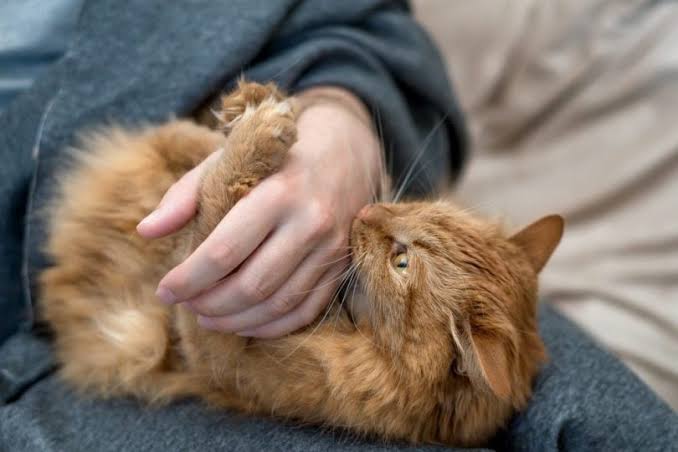
A love bite is a gentle, controlled mouthing of the skin that doesn’t break skin or cause pain. It’s often paired with purring, kneading, or slow blinking.
Cats deliver love bites with what behaviorists call bite inhibition, meaning the jaw pressure is deliberately restrained. This is very different from a defensive or aggressive bite.
Why Cats Give Love Bites
Instinct From Grooming Behavior
Mother cats groom kittens by licking vigorously, then nibbling gently to remove debris from their fur. Many adult cats repeat this pattern with trusted humans as an extension of that same care.
Social Bonding (Allogrooming)
Cats that live together often groom each other in a behavior called allogrooming, which strengthens social bonds. A love bite directed at you can be your cat including you in that same trusted circle.
Overstimulation
Cats have sensitive nerve endings along their skin and hair follicles. Extended petting, especially over the same spot, can shift from pleasant to overstimulating, and a gentle nip signals it’s time to stop.
Seeking Attention or Play
Kittens nip littermates to start play, and some cats carry this habit into adulthood. A love bite during an energetic moment can simply be an invitation to interact or play.
Communicating a Boundary
Sometimes a love bite means “that’s enough.” It often shows up when a cat has had enough affection but isn’t upset enough to hiss or growl first.
Love Bite vs. Aggressive Bite: Key Differences
| Sign | Love Bite | Aggressive Bite |
|---|---|---|
| Skin contact | No breaking of skin | May break skin or draw blood |
| Body language | Relaxed, calm | Tense, ears back, tail flicking |
| Sounds | Purring or silence | Hissing, growling, yowling |
| Timing | Usually during petting or play | Often sudden, tied to fear or pain |
| Aftermath | Cat stays relaxed | Cat may flee or stay defensive |
Body Language Signs to Watch For
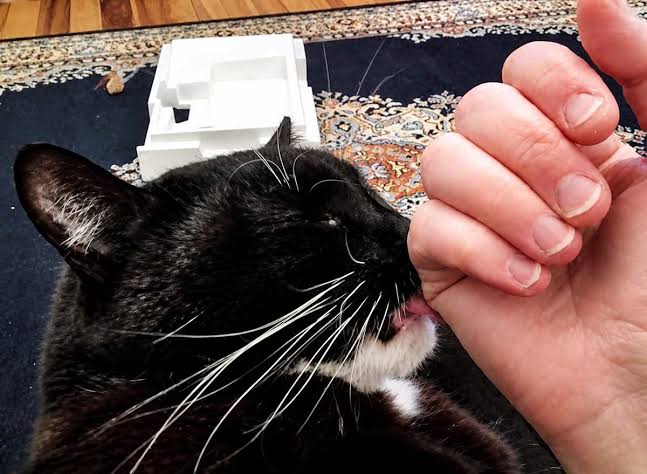
Reading your cat’s body language before a bite helps you understand what triggered it. These subtle cues often appear seconds before a nip.
- Tail swishing or flicking rapidly
- Skin twitching along the back
- Ears flattening or rotating backward
- Sudden stillness or freezing
- A quick head turn to watch your petting hand
- Dilated pupils
How to Respond to Love Bites
Most love bites don’t need punishment, but consistent responses help set expectations. Try these approaches.
- Pause petting immediately when a nip happens, without yelling or pulling away sharply.
- Redirect your cat’s mouth toward an appropriate toy instead of your hand.
- Watch for early body language cues and stop petting before overstimulation builds.
- Keep petting sessions shorter if your cat tends to nip after a few minutes.
- Avoid using your hands for rough play, which can reinforce biting as a game.
- Reward calm, gentle interactions with treats or praise to reinforce good behavior.
Best Practices for Reducing Unwanted Nipping
A few consistent habits go a long way toward minimizing bites you’d rather avoid. These work best when applied over time, not just after a bite happens.
- Learn your cat’s individual petting tolerance and stop before it’s reached
- Focus petting on areas cats usually enjoy, like the cheeks and chin
- Provide regular play sessions with wand toys to burn off energy
- Avoid prolonged petting over the same spot repeatedly
- Keep interactions calm and predictable, especially with sensitive cats
Mistakes to Avoid
Certain reactions can unintentionally make nipping worse or teach your cat the wrong lesson. Avoid these common missteps.
- Punishing your cat physically, which can increase fear and aggression
- Continuing to pet through obvious overstimulation signals
- Using hands as toys during rough play
- Ignoring early body language warnings before a bite
- Assuming every nip is aggressive and reacting with fear
When Biting Might Signal a Bigger Problem
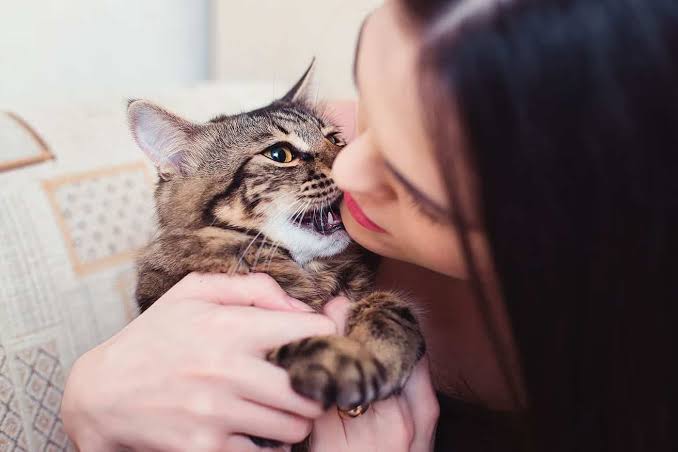
Occasional, gentle love bites are normal cat behavior. But certain patterns suggest something beyond simple communication.
- Bites that suddenly break skin or draw blood
- A noticeable increase in biting frequency or intensity
- Biting paired with hissing, growling, or aggressive posture
- Biting that seems triggered by touching a specific body area, which could indicate pain
- Sudden behavior changes alongside other signs of illness or stress
If any of these apply, a veterinarian visit can rule out pain, illness, or a stress-related cause behind the change in behavior.
Key Takeaways
- Love bites are gentle, controlled nips that don’t break skin and often come with purring or relaxed body language.
- Common causes include grooming instinct, social bonding, overstimulation, playfulness, or a signal to stop petting.
- Watching for tail flicking, ear position, and skin twitching helps predict a nip before it happens.
- Sudden increases in biting intensity or bites that break skin are worth discussing with a veterinarian.
Frequently Asked Questions (FAQs)
Why does my cat bite me gently when I pet them?
Gentle biting often signals affection, bonding, or a request to pause petting once your cat has had enough stimulation.
Are love bites a sign my cat loves me?
Yes, love bites can be a sign of trust and affection, especially when paired with purring, kneading, or relaxed body language.
How can I tell a love bite from an aggressive bite?
Love bites don’t break the skin and happen with relaxed body language, while aggressive bites are harder, may draw blood, and come with tense posture or hissing.
Why does my cat lick me and then bite me?
Licking followed by a gentle bite mimics grooming behavior your cat learned as a kitten, often used to show trust and closeness.
Is it normal for cats to nip during petting sessions?
Yes, gentle nipping during petting is common, especially once a cat becomes overstimulated from extended touch.
Why does my cat bite me out of nowhere?
Sudden bites are often triggered by overstimulation or subtle discomfort that built up gradually, even if you didn’t notice earlier warning signs.
Should I punish my cat for love bites?
No, physical punishment can increase fear or aggression. Redirecting the behavior and rewarding calm interactions works better.
Do kittens love bite more than adult cats?
Kittens often nip more frequently as part of play and exploration, and many grow out of it with proper redirection and training.
Why does my cat bite me and then purr?
Purring alongside a gentle bite usually indicates contentment, and the bite is likely an affectionate gesture rather than aggression.
Can overstimulation cause a cat to bite?
Yes, extended petting can overstimulate sensitive nerve endings, leading to a gentle bite as a signal to stop.
How do I stop my cat from biting me during play?
Redirect play toward toys instead of hands, and avoid encouraging rough play with bare skin from an early age.
Why does my cat bite my hand but not other family members?
Cats often have individual preferences and comfort levels with different people, which can affect how and when they choose to nip.
Can stress cause a cat to bite more than usual?
Yes, increased stress or anxiety can lower a cat’s tolerance for touch, leading to more frequent or intense biting.
Is love biting more common in certain cat breeds?
Some breeds known for high energy or strong bonding instincts may show love biting more often, though individual personality plays a bigger role.
What does it mean if my cat bites me and then walks away?
This often signals that your cat has had enough interaction for now and is using the bite to end the session.
Can pain cause a cat to bite when touched?
Yes, if a bite consistently happens when touching a specific area, it could indicate discomfort or pain that warrants a vet check.
Why does my cat bite my feet or ankles?
This often relates to play instinct and prey drive, especially if your feet move quickly, triggering a chase-and-nip response.
How do I know if my cat’s biting is getting worse?
Track frequency, intensity, and whether bites are breaking skin. An increase in any of these is worth addressing with a vet or behaviorist.
Can neutering or spaying affect love biting behavior?
Spaying or neutering can reduce hormone-driven behaviors, which may lessen some biting linked to mating instincts or territorial behavior.
When should I see a vet about my cat’s biting?
See a vet if biting suddenly increases, breaks skin, or seems linked to touching a specific body part, since these can signal pain or an underlying issue.
Conclusion
Love bites are one of the more confusing ways cats communicate, but most of the time they’re a normal mix of affection, bonding instinct, and sensory limits. Learning to read your cat’s body language helps you respond before a gentle nip happens.
If biting suddenly changes in frequency or intensity, or starts breaking skin, it’s worth a closer look from a vet to rule out pain or stress. Otherwise, a little nibble from your cat is usually just their own way of saying they trust you.
