

Why is the telephone important is a question that reaches into almost every part of daily life, from closing business deals to calling for help in a crisis.
It is easy to take for granted a device that fits in a pocket, yet the telephone reshaped how humans connect, work, heal, learn, and survive.
Long before smartphones, apps, and video calls existed, a single wire carrying a human voice changed the course of history.
What Is a Telephone and Why Does It Matter

A telephone is a device that converts sound into electrical signals and sends them across distances so people can speak in real time.
This simple function solved a problem humans had faced for thousands of years: how to talk to someone who is far away.
Before the telephone, distance meant delay. After it, distance became almost meaningless for conversation.
The Invention That Started It All
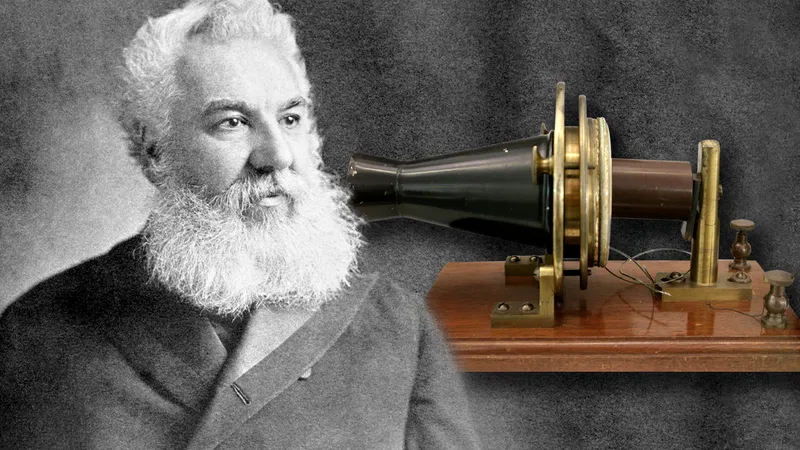
Alexander Graham Bell is credited with inventing the telephone, receiving his patent on March 7, 1876.
Three days later, on March 10, 1876, Bell spoke the first intelligible sentence over a telephone line to his assistant, Thomas Watson, in a nearby room.
That short message launched an industry, a technology, and a new way of life that spread across the world within a few decades.
Why Is the Telephone Important in Communication
The telephone is important because it gave people the ability to hold real, live conversations over any distance for the first time in history.
Voice carries tone, urgency, warmth, and emotion that plain text can never fully express.
Even in 2026, with countless messaging apps available, billions of people still choose to make an actual phone call when something truly matters.
Importance of the Telephone in Business
Commerce changed permanently once businesses could talk to suppliers and customers without traveling to meet them in person.
Deals that once took weeks of letter writing could be negotiated and closed within minutes over a phone line.
By the early 1900s, a business without a telephone was already considered behind its competitors.
How the Telephone Helped Build the Modern Economy
Entire industries such as call centers, telemarketing, and phone-based customer support exist only because the telephone made them possible.
National and global business networks became achievable once companies could coordinate instantly across cities and countries.
The physical infrastructure built for telephone lines later became the backbone that carried the early internet.
Role of the Telephone in Emergency Services
One of the clearest answers to why the telephone matters is its role in saving lives during emergencies.
Before phones existed, someone had to physically run to find help during a fire, crime, or medical crisis, which often cost precious time.
Emergency systems like 911 in the United States, and similar systems worldwide, are built entirely on telephone networks that connect callers to responders within seconds.
Telephone Importance in Healthcare
The telephone allowed patients to reach doctors and nurses without leaving home, which was revolutionary for people in remote or underserved areas.
Appointment scheduling, prescription refills, and urgent medical advice all became possible through a simple phone call.
In 2026, telemedicine built on telephone and video technology has become a standard way for millions of people to receive medical care.
The Telephone’s Role in Social Life and Relationships
Families separated by distance could finally stay emotionally close through regular phone calls, something letters could never fully replace.
Friendships survived relocations and long separations because a voice on the other end of the line kept people connected.
The telephone also opened new career paths, with women entering the workforce in large numbers as telephone operators in the early 1900s.
Importance of the Telephone in Education
Schools, teachers, and students gained a new way to coordinate lessons, ask questions, and stay in contact without needing to meet in person.
Long before video classes existed, radio and telephone-based tutoring reached students in communities that lacked physical schools.
Even today, regions with limited broadband internet still rely on telephone infrastructure to support distance learning programs.
The Telephone and Political Communication
Governments and world leaders gained a powerful new tool for negotiation, coordination, and diplomacy once the telephone became widespread.
During both World Wars, military commanders depended heavily on telephone lines to coordinate troop movements and share urgent intelligence.
The Moscow-Washington hotline, established in 1963, was a direct telephone connection designed specifically to prevent misunderstandings that could trigger nuclear conflict.
Why Is the Telephone Important for Rural Communities
Rural areas often felt cut off from markets, medical help, and social networks before telephone service reached them.
Farmers gained the ability to check prices, order supplies, and contact buyers without traveling long distances just to communicate.
In developing regions today, mobile telephone networks continue to close this same gap, bringing banking, pricing information, and emergency access to remote populations.
The Telephone as the Foundation of the Internet
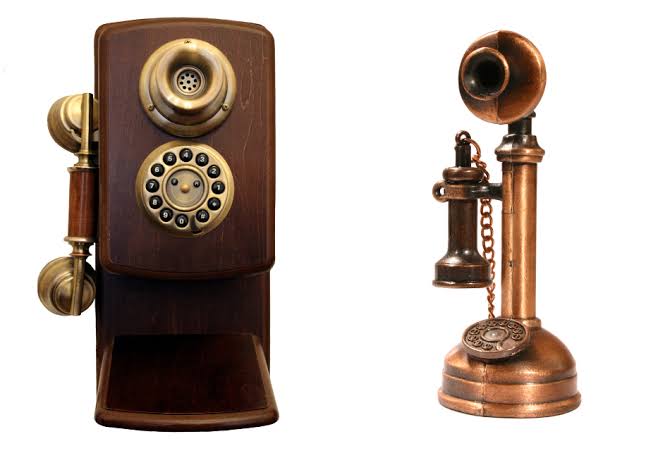
Modern internet infrastructure grew directly out of telephone networks, using the same cables, switching centers, and transmission lines.
Early home internet connections relied on dial-up modems that transmitted data over ordinary telephone lines.
The engineering concepts behind routing and connecting distant communicators, first developed for telephone systems, later shaped how the internet itself was designed.
Evolution of the Telephone Through History
The telephone has gone through dramatic changes since 1876, evolving from a fixed wire device into a global wireless network.
The table below highlights some of the most important milestones in that journey.
| Year | Development | Why It Mattered |
|---|---|---|
| 1876 | Bell patents the telephone | Real-time voice communication becomes possible |
| 1877 | Bell Telephone Company founded | Commercial telephone industry begins |
| 1900 | Over 1 million U.S. telephones in use | Telephone becomes a standard business tool |
| 1915 | First transcontinental call made | National-scale communication achieved |
| 1947 | Transistor invented at Bell Labs | Telephone hardware becomes smaller and more reliable |
| 1973 | First handheld mobile call made | Wireless telephone era begins |
| 1983 | First commercial cellular networks launch | Public mobile phone service becomes available |
| 2007 | Smartphone era begins | Calling merges with computing and internet access |
| 2026 | Billions of mobile subscriptions worldwide | Telephone reaches near-universal global access |
Why Is the Telephone Important for Business Customer Service
Customer service as we know it did not exist before the telephone gave businesses a way to support people remotely.
Before phones, customers had to visit a physical location just to ask a question or file a complaint.
Even with chatbots and email available in 2026, most people still prefer speaking to a real person by phone for complicated problems.
The Telephone’s Impact on Banking and Finance
Banking became far more accessible once customers could check balances and move money without visiting a branch in person.
Stock traders gained the ability to execute trades in real time based on information shared over the phone rather than waiting for physical paperwork.
International financial transactions that once took days to process could be authorized and confirmed within minutes.
Importance of the Telephone in Science and Research
Researchers at different universities and labs could finally share findings and coordinate experiments without waiting weeks for mail to arrive.
Bell Labs, the research division funded by telephone revenue, went on to produce major breakthroughs including the transistor and foundational information theory.
This model of instant, long-distance collaboration also shaped how later scientific and academic networks, including the internet, were designed.
The Telephone and Military Communication

Armies were among the earliest large-scale users of telephone technology, relying on it to coordinate troop movements and battlefield decisions.
Forces with reliable telephone networks consistently had an advantage over those whose communication systems were disrupted or destroyed.
Military investment in telephone technology also drove innovations that eventually became available for civilian mobile networks.
Comparing the Telephone to Other Communication Methods
Understanding why the telephone remains important becomes clearer when compared directly to other ways people have communicated throughout history.
| Method | Speed | Emotional Detail | Typical Distance |
|---|---|---|---|
| Letter | Days to weeks | Low | Unlimited |
| Telegraph | Hours to days | Very low | Unlimited |
| Telephone call | Instant | High | Unlimited |
| Text message | Near-instant | Low | Unlimited |
| Video call | Instant | Very high | Unlimited |
The telephone remains one of the only formats offering instant, emotionally rich conversation at very low cost across any distance.
Telephone vs. Smartphone — Same Purpose, New Form
A smartphone is essentially a telephone with many additional features layered on top of its original calling function.
Mobile networks are still designed around voice calling as their core purpose, with data services built on top of that foundation.
The shift from fixed-line phones to mobile phones to smartphones is really one continuous story about people wanting to talk across any distance.
| Device Type | Era Introduced | Core Function |
|---|---|---|
| Fixed-line telephone | 1876 | Voice call through a wired connection |
| Cordless telephone | 1980s | Wireless voice call within a limited range |
| Mobile phone | 1983 | Wireless voice call from almost anywhere |
| Smartphone | 2007 | Voice call combined with computing and internet |
The Telephone’s Role in Reducing Isolation and Loneliness
Elderly people living alone often depend on regular phone calls to stay emotionally connected to family and friends.
Research in gerontology has repeatedly shown that consistent telephone contact improves both mental and physical health outcomes in older adults.
During the COVID-19 pandemic, phone calls became a lifeline for millions of people who were isolated from in-person contact for extended periods.
Key Benefits of the Telephone Summarized
Reviewing the core advantages of the telephone in one place makes its overall importance easier to see at a glance.
| Benefit | Description |
|---|---|
| Real-time conversation | Instant voice communication across any distance |
| Business efficiency | Faster negotiations, orders, and coordination |
| Emergency response | Immediate access to help through 911 and similar systems |
| Healthcare access | Remote consultations and telemedicine support |
| Emotional connection | Keeps relationships strong despite physical distance |
| Rural development | Brings market access and banking to remote regions |
| Internet foundation | Supplied the infrastructure the internet was built on |
Global Telephone Statistics and Data
Numbers help put the ongoing importance of the telephone into perspective, showing it is far from a fading technology.
| Metric | Approximate Figure (2026) |
|---|---|
| Global mobile subscriptions | Over 8.9 billion |
| Countries with near-universal mobile coverage | 160+ |
| Global telecom industry revenue | Over 1.7 trillion USD |
| Direct jobs in the telecom sector | 3+ million |
| Rural mobile coverage growth in Africa since 2000 | Over 75% expansion |
These figures show a growing, trillion-dollar global industry rather than a technology in decline.
Interesting and Lesser-Known Telephone Facts
Bell reportedly offered his telephone patent to Western Union for a modest sum in 1876, and the company turned it down, a decision now viewed as one of history’s biggest business blunders.
Alexander Graham Bell is said to have kept a telephone out of his personal study because he found it too distracting for focused work.
In 1969, astronaut Neil Armstrong spoke by phone with the U.S. President from the surface of the Moon, creating the longest-distance telephone call ever recorded.
Why Is the Telephone Important for Developing Countries
In many developing nations, mobile telephone networks reached rural communities before roads, reliable electricity, or formal banking systems did.
Mobile phones gave people their first access to banking through mobile money, their first real-time market pricing data, and their first way to call for emergency help.
This leap allowed entire regions to skip traditional stages of infrastructure development and connect directly to modern communication and financial systems.
Why the Telephone Still Matters in the Smartphone Era
Despite endless messaging apps, social platforms, and video tools, voice calling remains the preferred option whenever a conversation truly matters.
Phone calls convey emotional nuance and urgency that text simply cannot replicate, which is why people still call during emergencies, medical concerns, or serious personal news.
Voice calls also tend to work in low-connectivity situations where data-heavy apps fail, making the telephone one of the most dependable communication tools available.
The Future of the Telephone Beyond 2026
The telephone is not fading away; it continues to evolve through satellite connectivity, VoIP systems, and AI-assisted calling features.
Satellite phone networks now reach remote areas, disaster zones, and ocean regions where traditional networks cannot operate.
Real-time translation and accessibility features are increasingly being built into telephone calls, helping people communicate across language and hearing barriers that once made conversation difficult.
The Telephone’s Effect on Journalism and News
News traveled far faster once reporters could phone in a story instead of waiting to mail it or find a telegraph office.
A journalist witnessing a major event could describe it to an editor within minutes, letting newspapers publish breaking news the same day rather than days later.
This shift changed how quickly the public learned about wars, disasters, and political events, and it set the pace for the fast-moving news cycle still seen today.
The Telephone and Workplace Culture
Offices were reorganized around the telephone once it became standard equipment, with receptionists, switchboards, and direct extensions becoming common features.
Remote work in its earliest form became possible because employees could call into the office instead of needing to be physically present for every conversation.
Sales teams, in particular, built entire strategies around cold calling and phone-based relationship building that still influence business development today.
Common Myths About the Telephone’s Importance
Some people assume the telephone has become a secondary tool now that messaging apps dominate daily communication, but call volumes for critical conversations remain extremely high.
Others believe landlines are entirely obsolete, yet many emergency systems, businesses, and older adults still depend on wired telephone service for its reliability.
A third myth is that voice calls are inefficient compared to text, when in reality complex or sensitive topics are usually resolved faster and with less misunderstanding over a call.
How to Explain the Telephone’s Importance to Students
Teachers often use the telephone as an example of how a single invention can reshape society, business, and daily habits within a single generation.
Comparing life before and after the telephone helps students understand how communication speed affects everything from family life to national economies.
Simple classroom examples, such as timing how long a letter would take versus a phone call, make the impact of the telephone easy to visualize.
Tips for Using the Telephone Effectively Today
Speaking clearly and pausing between key points still makes phone conversations easier to follow, even with modern call quality.
Keeping a notepad nearby during important calls helps capture details that might otherwise be forgotten once the conversation ends.
For business calls, confirming key points in a short follow-up message combines the speed of a phone call with the clarity of written confirmation.
Frequently Asked Questions (FAQs)
Why is the telephone important?
The telephone is important because it allows instant voice communication across any distance, supporting business, healthcare, emergencies, and personal relationships worldwide.
Who invented the telephone and when?
Alexander Graham Bell invented the telephone and received his patent on March 7, 1876, making the first call three days later.
Why is the telephone considered one of the greatest inventions?
It created real-time, long-distance voice communication for the first time in history and laid the groundwork for mobile phones and the internet.
How did the telephone change business practices?
It let companies negotiate, place orders, and coordinate with partners instantly, replacing slow written correspondence with immediate voice conversations.
Why is the telephone important in emergency situations?
It allows people to call for help immediately, forming the backbone of emergency systems like 911 that have saved countless lives.
How many telephones are in use worldwide today?
There are more than 8.9 billion mobile subscriptions globally in 2026, exceeding the total human population on Earth.
Why is the telephone still relevant despite smartphones and apps?
Voice calls convey emotion and urgency that text cannot match, and they remain reliable even when internet-based apps fail.
How did the telephone contribute to the creation of the internet?
Telephone cables, switching systems, and transmission lines formed the physical infrastructure that early and modern internet networks were built upon.
Why is the telephone important for developing countries?
Mobile telephone networks brought banking, market access, and emergency services to rural populations faster than roads or electricity infrastructure could.
What was the very first telephone call in history?
On March 10, 1876, Alexander Graham Bell spoke to his assistant Thomas Watson through a telephone wire, marking the first successful call ever made.
Conclusion
Why is the telephone important is a question with answers stretching across business, healthcare, emergency response, education, and human relationships.
From Alexander Graham Bell’s first spoken words in 1876, the world entered an age of instant voice connection that had never existed before.
The telephone did more than let people talk; it built the physical and conceptual foundation for the internet, mobile computing, and the global economy as we know it today.
With billions of mobile subscriptions active worldwide in 2026, the telephone remains as essential to daily life as any invention in human history.
Its role has not shrunk with time; if anything, it has grown broader, touching nearly every part of how people work, heal, learn, and stay connected across distance.
