

Why do cats meow at night is one of the most common questions cat owners search for — and for good reason.
Being woken up at 2 AM or 3 AM by a yowling or crying cat is exhausting and confusing.
The truth is, nighttime vocalization in cats almost always means something specific.
Your cat is communicating a need, discomfort, or an instinct-driven urge.
Why Do Cats Meow at Night?
A common misconception is that cats are nocturnal animals. They are actually crepuscular — most naturally active at dawn and dusk, not through the entire night.
Their internal clock does not perfectly match a human sleep schedule. Peak activity windows often fall between 3 AM and 5 AM — exactly when you are in your deepest sleep.
This crepuscular behavior is rooted in survival instincts. Wild cats hunt when prey is most active, which tends to be during low-light hours. Even domestic cats carry this biological wiring.
Why Do Cats Meow at Night
Hunger and Thirst
One of the simplest reasons your cat meows at night is an empty food bowl or water dish. If your cat finishes its last meal early in the evening, it may wake you up demanding more.
Cats have small stomachs and prefer to eat multiple small meals throughout the day. Setting up an automatic feeder can solve this problem without you ever having to wake up.
Boredom and Lack of Stimulation
Indoor cats that do not get enough playtime during the day build up excess energy. At night, that energy comes out as zoomies, running, or loud meowing.
A cat without mental and physical stimulation will treat the night hours as its activity window. This is especially common in single-cat households where there is no feline companion for entertainment.
Attention-Seeking Behavior (Learned Habit)
Cats are smart. If your cat meowed once and you immediately got up, gave food, or started petting it — your cat learned that meowing works.
This reinforced behavior becomes a nightly habit very quickly. The pattern builds: cat meows, owner responds, cat meows again the next night expecting the same result.
Cats in Heat or Unneutered Males
Unspayed female cats in heat produce loud, prolonged nighttime calls. Unneutered males yowl in response to nearby females in heat.
This type of nighttime vocalization is intense and very distinctive — more of a yowl than a standard meow. Spaying or neutering resolves this in almost all cases.
Stress and Environmental Changes
Cats love predictability and routine. A house move, a new pet, rearranged furniture, a new baby, or even a change in your work schedule can trigger anxiety-driven nighttime meowing.
Stress-related meowing often begins shortly after a change in the home. The cat is communicating that it feels unsettled or insecure in its environment.
Senior Cats and Cognitive Dysfunction Syndrome
Older cats commonly develop Cognitive Dysfunction Syndrome (CDS) — a condition similar to dementia in humans. This causes nighttime confusion, disorientation, and excessive vocalization.
CDS affects up to 28% of cats aged 11–14 and up to 50% of cats over 15. Senior cats with CDS often meow loudly in the dark because they cannot remember where they are or where their owner is.
Medical Conditions That Cause Night Meowing
Several health conditions cause cats to vocalize more at night. These include:
| Medical Condition | Common Symptoms |
|---|---|
| Hyperthyroidism | Excessive meowing, weight loss, hyperactivity, restlessness |
| Kidney Disease | Increased thirst, frequent urination, vocalization |
| Arthritis | Pain when moving, stiffness, nighttime crying |
| High Blood Pressure | Loud persistent meowing, sometimes linked to organ disease |
| Urinary Tract Infection | Straining, pain, frequent attempts to urinate |
| Cognitive Dysfunction (CDS) | Confusion, disorientation, wandering, loud yowling |
Hyperthyroidism is particularly common in senior cats. An overactive thyroid gland speeds up metabolism, causing restlessness and vocal outbursts, often at night.
If your cat’s night meowing started suddenly and was not happening before, a medical cause is the most likely explanation. Do not ignore sudden behavioral changes in any cat, especially those over 8 years old.
Kitten Meowing at Night
Kittens meow at night primarily because they feel lonely or scared in a new environment. They are used to the warmth and company of their mother and littermates.
A new kitten separated from its litter will cry throughout the night until it feels safe and settled. This is temporary and typically improves within one to two weeks as the kitten adjusts.
Separation Anxiety in Cats
Many people assume only dogs suffer from separation anxiety, but cats can develop it too — especially those who are closely bonded with one specific person in the household.
If your cat follows you everywhere during the day and then meows intensely the moment you go to bed and close the door, separation anxiety is a likely cause. These cats often scratch at the bedroom door, pace, and cry until they are let in or until exhaustion wins.
The long-term fix involves gradually increasing your cat’s comfort with being alone, using interactive toys, and sometimes consulting a vet about short-term anti-anxiety support.
Deafness or Vision Loss
Deaf or visually impaired cats become louder because they cannot gauge how much noise they are making or navigate confidently in low light.
These cats may meow repetitively and loudly without realizing how disruptive it is. Adding soft nightlights near key areas like the litter box and food bowl helps them move around more confidently.
How to Identify the Cause: A Simple Diagnostic Approach
Before jumping to solutions, identifying the right cause saves time and frustration. Use this quick guide:
| Cat’s Age | Most Likely Cause |
|---|---|
| Kitten (under 1 year) | Separation anxiety, new environment adjustment |
| Young adult (1–5 years) | Boredom, hunger, learned attention-seeking behavior |
| Middle-aged (5–10 years) | Stress, hormonal (if unaltered), environmental change |
| Senior (10+ years) | CDS, hyperthyroidism, arthritis, kidney disease |
Timing also matters. If the meowing starts at 3–5 AM specifically, crepuscular instincts and hunger are top suspects. If it happens all through the night, medical or cognitive causes deserve attention.
Proven Solutions: How to Stop Your Cat Meowing at Night
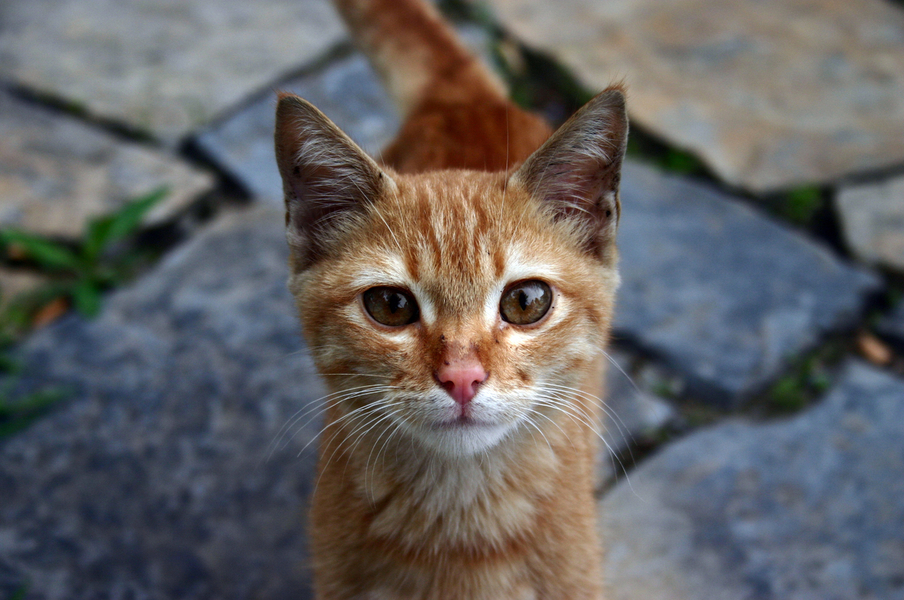
Play With Your Cat Before Bedtime
A dedicated play session 1 to 2 hours before bedtime significantly reduces nighttime energy. Use interactive toys like feather wands or laser pointers that engage hunting instincts.
After playtime, give a small meal. This mimics the natural hunt-eat-sleep cycle that cats are biologically programmed for. Most cats will naturally settle down and sleep after this sequence.
Set Up an Automatic Feeder
An automatic feeder delivers portions at scheduled times throughout the night without you waking up. This removes food as a nighttime trigger completely.
Set it to deliver a small portion around 3–5 AM if your cat typically wakes during those hours. The feeder breaks the association between your waking up and your cat getting food.
Provide Environmental Enrichment
A bored cat is a noisy cat. During the day, provide puzzle feeders, climbing trees, window perches, and rotating toys to tire your cat out mentally and physically.
Rotate toys regularly to keep things feeling new. A bird feeder outside a window gives cats hours of passive mental stimulation without any effort from you.
Do Not Reward Nighttime Meowing
If you get up, give attention, or feed your cat when it meows at night, you are reinforcing the behavior. Consistent non-response is the only way to break a learned meowing habit.
This is difficult in the first few nights because the meowing often gets louder before it stops — a behavior called an extinction burst. Stay consistent, and most cats adjust within one to two weeks.
Try Feliway or Calming Diffusers
Feliway diffusers release synthetic feline pheromones that signal safety and calm to cats. These are particularly helpful for stress and anxiety-driven nighttime meowing.
Plug the diffuser into a socket in the room where your cat spends most of its time. Results typically become noticeable within a week of consistent use.
Close the Bedroom Door and Use White Noise
If your cat meows outside your door at night, a white noise machine can drown out the sound enough to help you sleep while you work on behavior modification.
Some owners find that letting the cat sleep in the bedroom eliminates the problem entirely. For cats that meow due to loneliness, access to their owner at night solves the issue quickly.
Add Nightlights for Senior Cats
Older cats and cats with vision problems become more disoriented in complete darkness. A small nightlight near their sleeping area, food bowl, and litter box provides enough visual anchor to reduce confusion.
This is a simple, low-cost fix that makes a meaningful difference for cats with CDS or early vision loss. It does not need to be bright — a soft plug-in nightlight is sufficient.
Spay or Neuter Your Cat
If your unaltered cat yowls at night, spaying or neutering is the most effective and permanent solution. Hormonal vocalization typically stops within weeks of the procedure.
This is recommended by virtually every veterinarian regardless of nighttime meowing. It also reduces roaming behavior and the risk of certain cancers.
Consult Your Veterinarian
If nighttime meowing started suddenly, is unusually loud or distressed-sounding, or is accompanied by any of the following, see a vet promptly:
- Changes in appetite or water intake
- Weight loss
- Litter box issues (straining, going outside the box)
- Hiding or changes in activity level
- Limping or reluctance to jump
Do not wait to see if it resolves on its own when these signs are present. Many medical causes of nighttime meowing are very treatable when caught early.
Why Cats Meow at Specific Times of Night
The timing of your cat’s meowing gives you clues about the underlying cause. Not all nighttime meowing is the same.
Meowing at 3 AM to 5 AM
This timing almost always points to crepuscular biology. Your cat’s internal clock is signaling dawn activity. Hunger amplifies this — if the last meal was at 6 PM, your cat has been fasting for 9+ hours by 3 AM.
An automatic feeder set to release a small portion at 3 AM is one of the fastest fixes for this specific pattern. Combine it with a pre-bedtime play session for even better results.
Meowing Right After You Go to Bed
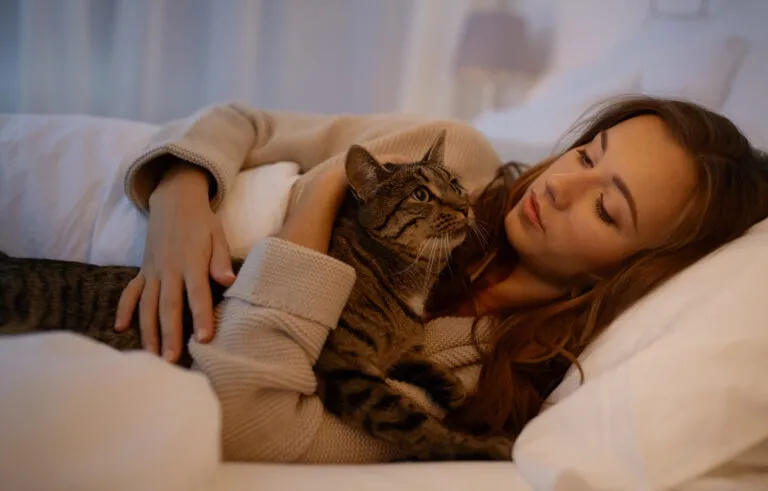
If your cat starts meowing the moment you turn off the lights and close the bedroom door, the trigger is almost certainly your absence or the change in routine rather than hunger or biology.
These cats are often very people-oriented and find nighttime separation genuinely distressing. Letting them sleep in the room, or leaving the door ajar, typically solves this instantly.
Meowing That Starts Suddenly After Years of Quiet
A previously quiet cat that suddenly begins meowing at night is showing a behavioral change — and behavioral changes in adult cats are almost always triggered by something new. That something could be a new pet, a move, a schedule change, or a medical condition.
Do not dismiss sudden-onset nighttime vocalization as random. It is almost always meaningful, and in older cats, it frequently signals a health issue requiring vet attention.
Feeding Strategies That Reduce Nighttime Meowing
Getting the feeding schedule right is one of the most underrated solutions for cat night vocalization. Many owners feed on a twice-daily schedule that leaves large gaps during nighttime hours.
Puzzle Feeders and Slow Feeders
Puzzle feeders make your cat work for its food, burning mental energy in the process. A cat that has spent 20 minutes hunting kibble out of a puzzle feeder is far more tired than one that ate from a standard bowl in 90 seconds.
Using puzzle feeders for the evening meal is a double benefit — your cat gets mental stimulation and slows down food intake, which reduces hunger spikes overnight.
Small Late-Night Snack Before You Sleep
Giving a small portion of wet food right before you go to bed helps bridge the nighttime hunger gap. Wet food is especially useful because the higher protein and moisture content is more satiating than dry food.
This does not need to be a full meal — a few tablespoons of wet food at 10 PM can shift when your cat feels hungry in the early morning by one to two hours.
Timed Water Fountains
Some cats meow at night because they prefer running water over still bowl water. A pet water fountain circulates water continuously, making it more appealing and ensuring your cat stays hydrated through the night.
Dehydration and kidney issues in cats are linked, and senior cats especially benefit from better water intake. A fountain removes thirst as a nighttime trigger and supports long-term kidney health.
What Cat Breeds Are More Vocal at Night
Not all cats are equally vocal. Some breeds are genetically predisposed to more communication and nighttime noise, regardless of training or routine.
| Breed | Vocalization Level | Known For |
|---|---|---|
| Siamese | Very High | Loud yowling, constant communication with owners |
| Bengal | High | Chatty, active, often vocal at night |
| Oriental Shorthair | High | Extremely talkative, similar to Siamese |
| Burmese | Medium-High | Affectionate and vocal, especially when lonely |
| Maine Coon | Medium | Chirps and trills, less yowling but still communicative |
| Ragdoll | Low-Medium | Generally quiet, but vocalizes when needs aren’t met |
| Scottish Fold | Low | Usually quiet unless in pain or distress |
If you have a naturally vocal breed like a Siamese or Bengal, some nighttime meowing is normal and managing the volume through environmental strategies is more realistic than eliminating it entirely.
Creating a Cat-Friendly Sleep Environment
The sleeping environment you create for your cat plays a bigger role in nighttime behavior than most owners realize. A cat that feels secure, comfortable, and well-placed is far less likely to vocalize at night.
Choose the Right Sleeping Spot
Cats feel safest sleeping at a height — an elevated bed on a shelf, cat tree, or window ledge gives them a vantage point that feels instinctively secure. A ground-level bed in an open space can make some cats feel exposed and anxious.
Placing a cat bed on a nightstand next to your own bed is a popular compromise. Your cat stays close to you without sleeping directly on the bed, which works well for owners who do not want to share sleeping space.
Temperature Matters
Cats prefer warm sleeping spots. A cold sleeping area will prompt some cats to seek warmth by meowing at closed bedroom doors.
A self-warming cat bed, a heated pad set to low, or simply ensuring the room is not too cold can eliminate this as a nighttime trigger. Most cats prefer temperatures between 20–25°C (68–77°F) during sleep.
Multiple Sleeping Options
Providing more than one sleeping location gives your cat choices. Some cats rotate between sleeping spots throughout the night and having only one option can cause restlessness if that spot becomes uncomfortable.
A few cat beds, a blanket pile, and access to a cat tree covers most cats’ preferences and reduces the chance they’ll wake you up looking for a better sleeping option.
Indoor Cats
Indoor cats rely entirely on their owners for stimulation, food, and company. Without adequate enrichment during the day, they often redirect excess energy into nighttime vocalization.
The solution for indoor cats almost always involves increasing daytime activity through structured play, puzzle feeders, and environmental variety.
Outdoor Cats Kept Inside at Night
A cat that is used to going outside will sometimes meow at the door when kept in at night. It hears or smells things outdoors and wants to investigate.
Providing a window perch with outdoor views can partially satisfy this urge. Over time, most cats adapt to an indoor-only nighttime routine if the adjustment is gradual.
Multi-Cat Households
Cats in multi-cat homes sometimes meow at night due to inter-cat tension. Social hierarchies and territory disputes do not pause at bedtime.
Watch for signs of one cat blocking another cat’s access to resources like food bowls, litter boxes, or sleeping spots. Separate feeding stations and extra litter boxes help reduce overnight tension.
When to See a Vet: Red Flags for Night Meowing
Most nighttime meowing is behavioral and manageable with the solutions above. However, some situations require veterinary attention without delay.
See your vet if the meowing is sudden and new, if your cat seems distressed or in pain, if you notice any physical symptoms alongside the vocalization, or if your cat is a senior who has recently become more vocal at night.
Conditions like hyperthyroidism, kidney disease, and CDS are all treatable. Early diagnosis leads to much better outcomes and a faster return to peaceful nights for both of you.
Quick Reference: Solutions Summary Table
| Problem | Best Solution |
|---|---|
| Hunger or thirst | Automatic feeder, water fountain |
| Boredom and excess energy | Pre-bedtime play session, enrichment toys |
| Learned attention-seeking | Consistent non-response, daytime attention |
| Heat or hormonal yowling | Spay or neuter |
| Stress or anxiety | Feliway diffuser, stable routine |
| Senior confusion (CDS) | Nightlight, vet evaluation, medication |
| Medical pain or illness | Veterinary diagnosis and treatment |
| Kitten adjustment | Warm sleeping space, gradual settling routine |
Frequently Asked Questions (FAQs)
Why does my cat meow loudly at 3 AM every night?
Your cat is most likely responding to its crepuscular biology — peak activity at dawn hours. Hunger, boredom, or learned attention-seeking are also very common causes at that specific time.
Should I ignore my cat when it meows at night?
Only ignore nighttime meowing after confirming all basic needs are met — food, water, clean litter box, and no signs of pain. Consistent non-response discourages attention-seeking, but sudden changes in behavior should always be evaluated.
Will playing with my cat before bed stop the meowing?
Active play 1–2 hours before bedtime reduces nighttime vocalization for most cats. Follow playtime with a small meal to complete the natural hunt-eat-sleep cycle.
Do older cats meow more at night?
Yes. Senior cats meow more due to Cognitive Dysfunction Syndrome, arthritis, hyperthyroidism, and kidney disease. Any sudden increase in nighttime vocalization from an older cat warrants a vet visit.
How long until my cat stops meowing at night?
With consistent behavioral changes, most cats improve within 1–2 weeks. Medical causes require veterinary treatment before behavioral solutions will fully work.
Is nighttime meowing a sign my cat is sick?
Not always, but it can be. Sudden-onset meowing, distressed-sounding yowling, or meowing combined with physical symptoms strongly suggests a medical cause that needs a vet’s attention.
Why does my female cat yowl at night?
An unspayed female cat in heat will produce loud, prolonged nighttime calls. This is hormonal and very distinctive. Spaying eliminates this vocalization permanently.
Can stress cause a cat to meow at night?
Yes. Changes like moving, new pets, schedule shifts, or rearranged furniture trigger anxiety. Feliway diffusers and maintaining a stable routine help stressed cats feel more secure.
My cat only meows at night outside my bedroom door — what should I do?
Your cat likely wants companionship. Try letting it sleep in the room with you or provide a cozy bed just outside the door. Avoid responding each time, as this reinforces the behavior.
What is Cognitive Dysfunction Syndrome in cats?
Cognitive Dysfunction Syndrome (CDS) is a feline form of dementia affecting older cats. It causes confusion, disorientation, and nighttime yowling. It affects up to 50% of cats over 15 years old and is manageable with vet-guided care.
Conclusion
Why do cats meow at night comes down to one key truth — your cat is always communicating something.
Whether it is hunger, boredom, stress, a hormonal urge, or a medical condition, nighttime meowing is a signal worth understanding rather than simply tolerating.
Start by ruling out medical causes, especially in older cats or when the behavior started suddenly.
Then apply consistent behavioral strategies like pre-bedtime play, automatic feeders, and environmental enrichment.
For young cats and kittens, patience and routine usually solve the problem within two weeks.
For senior cats, a vet conversation is always the right first step.
With the right approach, both you and your cat can enjoy full, restful nights — and your mornings will be far more peaceful in 2026 and beyond.
