

Why was no one born on December 6 2006 is one of the most searched viral questions on the internet right now, and the honest answer is simple and clear: the claim is completely false.
Hundreds of thousands of babies were born worldwide on that day, just as they are on every single day of the year.
This story began as a misread celebrity database entry, exploded across TikTok with over 12 million views on a single video, and was shared by millions of people who never questioned the source.
The Short Answer: It Is a Myth
Let’s address the core claim immediately and directly. No one was born on December 6, 2006 is not true.
In 2006, the global birth rate was approximately 20 births per 1,000 people annually. With a world population of around 6.5 billion at the time, that works out to roughly 365,000 to 380,000 births every single day.
For zero births to occur on any single day, every pregnant woman on Earth would have to simultaneously not give birth. Statisticians, demographers, and even AI models like ChatGPT-4 confirm that the probability of this happening is effectively zero.
Where Did This Viral Claim Actually Start?
The myth does not come from hospital records, government data, or scientific research. It traces back to one specific website: Who2.com.
Who2.com is a small celebrity biography database. At the time it gained attention, the site had profiles on roughly 2,800 to 4,000 famous people. The site publicly noted that December 6 was the only date in their entire database with no famous person listed.
That single gap in a small celebrity database was then picked up, misrepresented, and turned into the claim that nobody at all was born on December 6. The leap from “no famous person in our database” to “no human on Earth” is enormous, completely unsupported, and factually wrong.
How TikTok Turned a Small Database Gap Into a Global Myth
TikTok’s short-video format is extraordinarily effective at spreading emotionally charged, surprising information, and this myth had all the ingredients to go viral.
A series of “shocking birthday facts” videos began circulating on TikTok using the December 6 claim. One video alone accumulated over 12 million views. Dozens of similar videos followed, each repeating the same talking points with zero sources attached.
TikTok’s recommendation algorithm rewarded these videos because they generated curiosity, disbelief, and rapid sharing. None of the most-viewed versions cited any birth records, government statistics, or research of any kind.
Research published in the Harvard Kennedy School Misinformation Review confirms that belief in false claims drops significantly when people are shown debunking content, but by the time debunking reaches viewers, the original false claim has already reached millions.
The Real Numbers: How Many People Were Born on December 6, 2006?
The global birth data for 2006 is well-documented. According to United Nations World Population Prospects data, total global births in 2006 numbered approximately 134 million for the full year.
| Metric | Figure |
|---|---|
| World population in 2006 | Approximately 6.5 billion |
| Global annual births in 2006 | Approximately 134 million |
| Average daily births worldwide | Approximately 367,000 |
| Births in the United States on any given day | Approximately 11,000 |
| Probability of zero global births in one day | Statistically zero |
December 6, 2006 was a Wednesday. It was the 340th day of the year. Nothing about it was medically, astronomically, or biologically unusual in any way.
Approximately 367,000 babies entered the world on that date across every continent. The United States alone recorded roughly 11,000 births. The myth is not just slightly wrong. It is off by hundreds of thousands of people.
Who2.com: The Origin of the December 6 Celebrity Gap
Understanding the original source explains everything about why this myth exists.
Who2.com is a genuine website that has been cataloguing famous people since the late 1990s. The site openly acknowledged, in a blog post titled “The Day Nobody Was Born,” that December 6 was the only date in their database with no listed birthday.
The site was clear that this referred to their personal database of a few thousand notable people. They were not claiming it as a global birth fact. They even noted that they deliberately refused to go hunting for a celebrity with that birthday, calling it a fun quirk of their database.
By 2016, after the database grew to over 4,000 entries, the gap was eventually filled. Director Judd Apatow, jazz legend Dave Brubeck, and King Henry VI were added to the December 6 listing. The gap no longer exists even in the original database that inspired the myth.
Famous People Actually Born on December 6
The myth collapses completely when you simply look at birth records and celebrity databases. Multiple well-known people have verified birthdays on December 6.
| Person | Profession | Born |
|---|---|---|
| Giannis Antetokounmpo | NBA Basketball Player | December 6, 1994 |
| Judd Apatow | Film Director | December 6, 1967 |
| Dave Brubeck | Jazz Musician | December 6, 1920 |
| King Henry VI | English King | December 6, 1421 |
| A Boogie wit da Hoodie | Rapper | December 6, 1995 |
| Stefanie Scott | Actress | December 6, 1996 |
| Yoonchae Jeung | K-pop Singer, KATSEYE | December 6, 2007 |
Giannis Antetokounmpo, one of the most recognizable athletes in the world and a two-time NBA MVP, was born on December 6. The claim that no one was born on this date is not just statistically wrong, it is directly contradicted by household names.
What About Yoonchae Jeung and KATSEYE?
One of the most frequently cited responses to this myth on social media comes from fans of the K-pop group KATSEYE.
Yoonchae Jeung, the Korean member and youngest of the group, has a birthday widely cited as December 6 in fan communities. She rose to global recognition through the Netflix documentary series Pop Star Academy: KATSEYE and became one of the most visible young artists of her generation.
Fan communities on TikTok have pushed back against the December 6 myth specifically by pointing to Yoonchae as proof. This fan-led debunking became its own viral counter-movement, with users posting birthday celebration content using the hashtag to correct the original false claim.
The irony is that the same platform that spread the myth also organically generated the correction, though the myth still circulates in some corners of the internet.
The Statistics Behind Why Zero Daily Births Is Impossible

Let’s go deeper into the math so this is crystal clear.
The global birth rate in 2006 was approximately 20 births per 1,000 people per year. Divided across 365 days, that means on any single day, roughly one in every 18,250 people experiences a birthday.
With 6.5 billion people alive in 2006, and roughly 134 million births occurring that year, you would need every single pregnant person on Earth who was due that day to somehow delay or advance their delivery simultaneously. That would require every hospital, midwife, doctor, and natural process on every continent to pause at once.
This is not just unlikely. It is biologically, medically, and physically impossible under any natural or plausible circumstance.
ChatGPT-4, when specifically asked to calculate the probability that no one was born globally on a single day, returned the answer as effectively zero. This aligns with what any statistician or demographer would confirm from basic population data.
Why Does the Myth Feel Believable?
This is an important question. False claims do not spread unless they feel at least somewhat plausible to the people sharing them. Understanding why this myth feels believable helps explain how to resist similar misinformation in the future.
The claim is very specific. It names a precise date and year, which adds a false sense of credibility. Vague false claims feel easier to dismiss. Specific ones trigger the brain’s pattern-recognition instinct.
It is framed as a secret or hidden fact. The videos typically present the claim as something most people do not know, which creates a sense of privileged discovery that encourages sharing.
There are no visible victims. Unlike health or political misinformation, believing this claim harms no one directly, so viewers lower their guard and do not apply the same critical scrutiny they might to a medical claim.
It is delivered with confidence. Short video formats do not leave room for nuance or source citation. The presenter states the claim as fact and moves on, giving the viewer no natural prompt to question it.
December 6 Is Actually a Historically Significant Date
Far from being an empty or forgotten date, December 6 has deep historical significance across multiple cultures and time periods.
In Christianity, December 6 is the Feast of Saint Nicholas, the historical bishop of Myra who inspired the modern legend of Santa Claus. It is widely celebrated across Europe, particularly in the Netherlands, Belgium, and Germany, as a major gift-giving holiday.
Finland celebrates December 6 as its Independence Day, commemorating the country’s declaration of independence from Russia in 1917. It is one of the most important national holidays in Finnish culture.
In 1865, the Thirteenth Amendment to the United States Constitution was officially ratified on December 6, abolishing slavery across the country. This is one of the most consequential moments in American legal history.
In 1989, the École Polytechnique massacre occurred in Montreal, Canada on December 6. Canada observes December 6 as the National Day of Remembrance and Action on Violence Against Women in memory of the victims.
| Historical Event | Date | Significance |
|---|---|---|
| Feast of Saint Nicholas | December 6 (annual) | Origin of Santa Claus traditions |
| Finland Independence Day | December 6, 1917 | National holiday in Finland |
| 13th Amendment ratified | December 6, 1865 | Abolished slavery in the USA |
| École Polytechnique massacre | December 6, 1989 | Canadian day of remembrance |
This is not an empty date. It is one of the most historically loaded dates in December across multiple countries and cultures.
What Was Happening in the World on December 6, 2006?
For anyone genuinely curious about what was happening in the world on the specific date the myth references, here is a brief look at December 6, 2006.
It was a Wednesday. The United States was deeply engaged in debates about the Iraq War, with the Iraq Study Group releasing its report on that same week. It was an ordinary mid-week day during the lead-up to the holiday season.
Hospitals around the world were operating normally. Maternity wards were full. Parents were welcoming newborns in South Asia, East Africa, North America, Europe, and every other populated region on the planet.
There were no documented global emergencies, natural disasters, or events of any kind that would have affected birth rates on that specific day. It was, in every meaningful sense, a completely normal day.
Why This Type of Misinformation Spreads So Easily

The December 6 myth is a perfect case study in how viral misinformation works on short-video platforms.
Research consistently shows that surprising or emotionally charged content spreads faster on social media than accurate but mundane information. A claim like “no one was born on this date” triggers a combination of surprise, curiosity, and disbelief. All three emotions drive sharing.
TikTok’s algorithm is designed primarily to maximize engagement and watch time, not to verify accuracy. Content that makes viewers stop scrolling and react gets promoted to more people, regardless of whether the content is true.
The videos spreading this myth typically had no sources, no citations, and no data. But they were delivered confidently in a casual, friendly tone that mimicked how trustworthy information sounds. This combination of confident delivery with zero evidence is a defining feature of viral misinformation.
CNN reported that TikTok’s search engine “repeatedly delivered videos containing false claims in the first 20 results, often within the first five” when users searched major news topics. The December 6 myth followed exactly this pattern.
How to Fact-Check Viral Claims Like This One
Every time a claim like this surfaces online, the same basic fact-checking steps apply.
Ask where the data comes from. The December 6 myth had no government data, no hospital records, and no scientific source. It had a celebrity biography website that openly explained its own limitations.
Check the scale of the claim against known statistics. Any claim that zero events of a type occurred on a given day, when that type of event happens hundreds of thousands of times per day, should trigger immediate skepticism.
Search for people who directly contradict the claim. Multiple verified celebrities including Giannis Antetokounmpo were born on December 6. One counterexample is enough to disprove a zero-occurrence claim.
Look for comments under the original video. Users who have December 6 birthdays frequently commented on the viral TikTok videos saying the claim was false. The comment section itself was a fact-checking resource.
Use demographic tools. The World Bank, United Nations Population Division, and Our World in Data all provide free, publicly accessible global birth rate data that takes under two minutes to consult.
The Bigger Picture: Media Literacy in the Age of Short Video
The December 6 2006 myth is a harmless example of viral misinformation. It does not endanger lives, influence elections, or cause direct harm. But it is a useful mirror for understanding how false information travels in the modern media environment.
If millions of people will share a false claim about birth statistics without questioning it, the same psychological and algorithmic mechanics can spread false claims about health, politics, science, and safety just as easily.
Educational technology experts and media literacy researchers point to exactly this kind of viral myth as a teaching tool. When a 13-year-old tells their parent “no one was born on December 6, 2006,” it becomes a real-world opportunity to practice critical thinking: Where did you hear that? What is the source? Does it hold up to basic math?
Building that habit of verification before sharing is one of the most valuable skills in a media environment where a single 30-second video can reach tens of millions of people in 24 hours.
Viral Birthday Facts and How Reliable They Actually Are
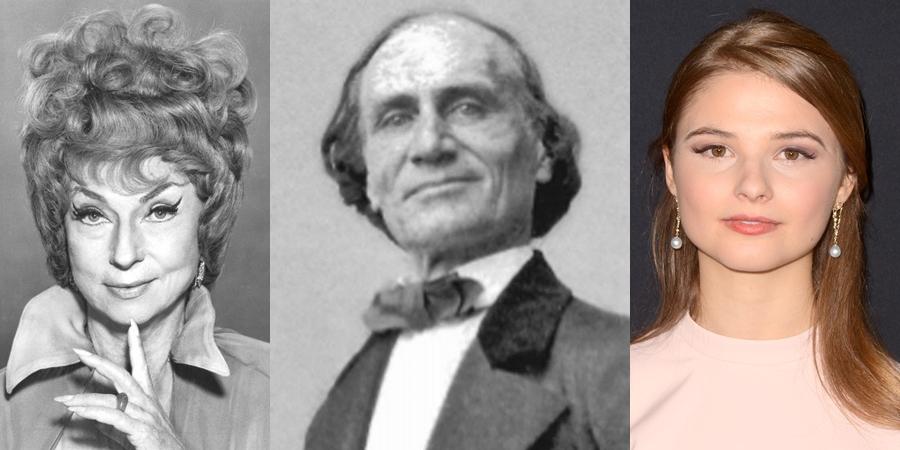
The December 6 claim belonged to a category of TikTok content known as “birthday facts” or “birthday trivia” videos. This genre regularly trades in unverified, dramatic-sounding claims about specific dates.
Some birthday fact claims are accurate. Many are selectively misleading. A small number, like the December 6 claim, are outright false. The problem is that the format does not differentiate between them.
Always treat birthday fact content with the same skepticism you would apply to any other statistical claim. If the video does not cite a source, the claim has not been verified.
The real birthday facts for December 6 are genuinely interesting without any embellishment. It is the Feast of Saint Nicholas. It is Finnish Independence Day. The 13th Amendment was ratified on this date. Giannis Antetokounmpo was born on this date. None of that requires fabrication.
Frequently Asked Questions (FAQs)
Why was no one born on December 6 2006?
The claim is false. Approximately 367,000 people were born worldwide on December 6, 2006, just like any other day. The myth started from a misread celebrity biography database.
Where did the December 6 2006 no births myth come from?
It originated from Who2.com, a celebrity database website that noted it had no famous person listed for December 6. That gap in a small database was wrongly presented as a global birth record.
Is it statistically possible for no one to be born on a single day?
No. With roughly 367,000 daily global births in 2006, the probability of zero births on any single day is effectively zero according to population statisticians and demographic data.
Who was actually born on December 6 2006?
Hundreds of thousands of people were born globally that day. Verified celebrities born on December 6 across various years include Giannis Antetokounmpo, Judd Apatow, Dave Brubeck, and A Boogie wit da Hoodie.
How did the December 6 no births claim go viral?
A series of TikTok “birthday facts” videos spread the claim, with one video reaching over 12 million views. TikTok’s algorithm promoted the content because it generated strong emotional engagement without verifying accuracy.
Was December 6, 2006 a special or unusual day?
No. It was a regular Wednesday, the 340th day of the year, with no global emergencies or unusual events that would have affected birth rates anywhere in the world.
Is Who2.com still missing December 6 birthdays?
No. The Who2.com database has since added entries for December 6, including director Judd Apatow, jazz great Dave Brubeck, and King Henry VI. The original celebrity gap no longer exists.
What historical events happened on December 6?
December 6 is the Feast of Saint Nicholas, Finnish Independence Day, the date the 13th Amendment abolishing slavery was ratified in 1865, and Canada’s National Day of Remembrance for Violence Against Women.
Why do birthday myths like this spread on TikTok?
They combine specificity, surprise, and confident delivery with no sources, which is a formula that TikTok’s engagement-driven algorithm promotes widely before fact-checkers can respond.
How can I verify viral birthday facts before sharing them?
Check global birth rate data from the UN or World Bank, search verified celebrity birthday databases like Famous Birthdays, and ask whether any source for the claim is actually cited in the video.
Conclusion
Why was no one born on December 6 2006 deserves a clear, permanent answer: the claim is false, and it always was.
Around 367,000 people were born worldwide on that date, including famous athletes, entertainers, historical royalty, and hundreds of thousands of ordinary people whose names are not in any celebrity database.
The myth originated from a small, self-aware celebrity website that noted a gap in its own limited database of a few thousand entries.
That gap was misread, stripped of context, and turned into a viral TikTok sensation viewed by millions.
The story of December 6 is actually a rich one, tied to the Feast of Saint Nicholas, Finnish Independence Day, the abolition of slavery in the United States, and lives of real significance.
The next time a viral video presents a dramatic factual claim with no source attached, the instinct to pause and check is the right one. The tools to verify take less time than the video itself.
