

Why does one side of my throat hurt when I swallow is one of the most searched health questions, and for good reason.
One-sided throat pain feels different from a regular sore throat and often signals a specific, localized cause worth understanding. It may stem from something as minor as postnasal drip or a small scratch from food.
Other times it points to tonsillitis, a bacterial infection, or even a peritonsillar abscess that needs medical attention.
What Does One-Sided Throat Pain Actually Mean?
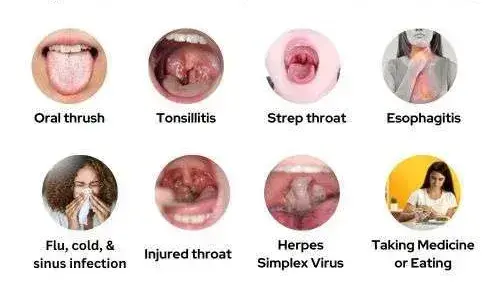
When both sides of your throat hurt equally, the cause is usually a general infection like a cold or flu. But when only one side hurts, the cause is almost always localized to one specific area.
This asymmetric pain typically comes from one inflamed tonsil, one swollen lymph node, a localized scratch or injury, or a deeper infection that has developed more aggressively on one side.
Understanding that the pain is localized is the first step toward identifying its cause. The side of the throat that hurts can give doctors important clues about which structure is involved and what treatment is needed.
How Your Throat Is Structured
Before diving into causes, it helps to understand the anatomy involved. The throat has several key structures on both the left and right sides.
The tonsils sit at the back of the throat on each side. The lymph nodes run along either side of the neck just below the jaw. The soft palate, tongue base, and larynx all connect through the pharynx and can each develop independent, one-sided irritation.
Swallowing is a muscular action that tightens and lifts the entire throat. When any one structure on one side is inflamed, swollen, or infected, that movement causes sharp, localized pain exactly on that side.
Top Causes of One-Sided Throat Pain When Swallowing
1. Tonsillitis (Single Tonsil Infection)
Tonsillitis is one of the most common causes of pain on only one side of the throat when swallowing. It occurs when one or both tonsils become infected by a virus or bacteria.
When only one tonsil is affected, the condition is called unilateral tonsillitis. The infected tonsil swells, becomes red, and may develop white or yellow patches on its surface.
Swallowing triggers a sharp pain on that side because the tonsil presses against surrounding tissue with each movement. The pain may also radiate toward the ear on the same side.
Common symptoms alongside tonsillitis:
| Symptom | Details |
|---|---|
| Fever | Usually above 100°F (38°C) |
| Bad breath | From bacterial buildup on the tonsil |
| Swollen neck lymph nodes | Tender lumps under the jaw on the affected side |
| White or yellow patches | Visible coating on the infected tonsil |
| Difficulty swallowing | Food and liquids both painful |
| Ear pain on same side | Referred pain through shared nerve pathways |
Viral tonsillitis typically clears up within 7 to 10 days with rest and fluids. Bacterial tonsillitis requires antibiotics. If left untreated, it can lead to a more serious complication called a peritonsillar abscess.
2. Peritonsillar Abscess (Quinsy)
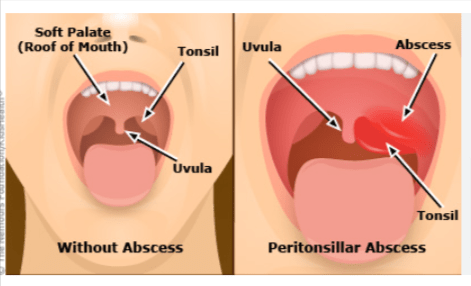
A peritonsillar abscess is a serious infection that develops in the tissue just behind and beside one tonsil. It is a direct complication of untreated or worsening tonsillitis.
This condition causes intense, one-sided throat pain that is often described as the worst throat pain a person has ever experienced. Swallowing becomes extremely difficult and even drooling can occur because swallowing saliva is too painful.
Other symptoms include a muffled or “hot potato” voice, difficulty opening the mouth (trismus), fever, and swollen lymph nodes. This is a medical emergency that requires prompt drainage of the abscess and antibiotic treatment.
Do not wait this one out at home. A peritonsillar abscess can rupture, allowing the infection to spread into the lungs or surrounding tissues. Seek urgent medical care immediately if these symptoms appear together.
3. Strep Throat (One-Sided Severity)
Strep throat is caused by Group A Streptococcus bacteria. While it typically affects both tonsils, the infection can be significantly more severe on one side, causing distinctly asymmetric pain when swallowing.
A rapid strep test at an urgent care clinic can confirm the diagnosis within minutes. Bacterial strep throat requires antibiotics, usually a 10-day course of penicillin or amoxicillin.
Without antibiotic treatment, strep throat can progress to rheumatic fever or serious kidney complications. Most people begin to feel better within 24 to 48 hours of starting the correct antibiotic.
4. Postnasal Drip
Postnasal drip is one of the most overlooked causes of one-sided throat pain. During nasal congestion, excess mucus drips down the back of the throat instead of draining normally.
Depending on a person’s sleeping position and the angle of nasal drainage, this mucus can irritate one side of the throat far more than the other. Over time, that constant dripping causes rawness, scratchiness, and pain concentrated on one side.
Common triggers include allergies, sinus infections, cold weather, and dry air. Treating the underlying nasal congestion with antihistamines, decongestants, or a saline rinse usually resolves the throat irritation within a few days.
5. Swollen Lymph Nodes
The lymph nodes along the neck act as filters that trap bacteria and viruses before they spread further into the body. When fighting an infection, these nodes swell and become tender.
If one lymph node on one side of the neck becomes inflamed, it can create a sensation of soreness or pain concentrated on that side of the throat, especially during swallowing.
Swollen lymph nodes commonly accompany colds, flu, ear infections, tonsillitis, and dental infections. They typically resolve on their own as the underlying infection clears. Persistent swelling lasting more than two weeks without improvement should be evaluated by a doctor.
6. Gastroesophageal Reflux Disease (GERD)
GERD occurs when stomach acid flows back up into the esophagus and throat. While most people experience a general burning sensation, acid can irritate one side of the throat more heavily depending on body position and the angle of reflux.
Sleeping on your right side can worsen acid reflux because of how the stomach sits. This means the acid exposure can be more concentrated on one side of the esophagus and throat, creating localized pain when swallowing.
Other signs of GERD include heartburn after eating, regurgitation, a sour taste in the mouth, hoarseness, and a persistent cough. Over-the-counter antacids and proton-pump inhibitors can help manage symptoms. Persistent GERD should be evaluated and treated by a doctor.
7. Dental Abscess or Tooth Infection
A tooth abscess is a localized bacterial infection near the root of a tooth or in the surrounding gums. The proximity of the upper and lower back teeth to the throat means that a dental infection can radiate pain directly into the throat on the same side.
The pain from a dental abscess often radiates to the jaw, ear, and throat. You may notice swelling in the cheek or gum, sensitivity to hot and cold foods, and a persistent throbbing ache on one side of the face and throat.
Dental abscesses do not heal on their own. See a dentist as soon as possible. Untreated tooth infections can spread to the jaw, neck, and even the brain in severe cases.
8. Throat or Mouth Injury
Eating sharp foods like chips, crackers, crusty bread, or bones can scratch the back of the throat or the soft tissues near the tonsils. Hot food or drinks can burn one area more than another depending on how you swallow.
These minor injuries typically cause pain only on the side that was scratched or burned. The pain intensifies during swallowing as the tissues move and stretch.
Most minor injuries heal on their own within 3 to 5 days. Gargling with warm salt water several times daily helps soothe the area and reduce inflammation while the tissue heals.
9. Laryngitis and Vocal Cord Issues
Laryngitis is inflammation of the larynx, also known as the voice box. When one vocal cord becomes more irritated or strained than the other, pain can be felt primarily on that side of the throat.
Overuse of the voice, such as from singing, shouting, or prolonged talking, can lead to vocal cord nodules or lesions. These form on one side and cause localized pain during swallowing and speaking.
Hoarseness, a tickling sensation, and temporary loss of voice often accompany laryngitis. Rest, hydration, and avoiding voice strain are the primary treatments. Severe or persistent vocal cord problems should be evaluated by an ENT specialist.
10. Canker Sores (Aphthous Ulcers)
Canker sores are small, painful ulcers that form on the soft tissues inside the mouth and throat. When a canker sore develops near the back of the mouth or on one side of the soft palate, it causes significant pain during swallowing.
Unlike cold sores, canker sores are not caused by a virus and are not contagious. Stress, nutritional deficiencies, minor injury, or acidic foods can trigger them.
Most canker sores heal on their own within one to two weeks. Over-the-counter topical treatments containing benzocaine can provide temporary numbing relief. A prescription mouthwash or topical steroid may be needed for large or recurring ulcers.
11. Hand, Foot, and Mouth Disease
Hand, foot, and mouth disease is a viral illness most common in young children but it can affect teenagers and adults too. It causes sores to form inside the mouth and at the back of the throat.
One side of the throat can be more affected than the other, creating asymmetric pain. The sores make swallowing uncomfortable and painful.
Other symptoms include fever, red spots or blisters on the hands and feet, and general fatigue. There is no specific antiviral treatment. Rest, fluids, and over-the-counter pain relievers are the standard approach.
12. Throat Cancer (Rare)
While rare, a tumor in the throat, tonsil, larynx, or tongue base can cause persistent one-sided pain when swallowing. This is the least common cause but the most important not to miss.
Red flag signs that may indicate a throat tumor include pain that lasts more than two to three weeks without improvement, blood in the saliva, unexplained weight loss, a lump in the neck, and hoarseness that does not resolve.
These symptoms alone do not confirm cancer, but they always require evaluation by a doctor or ENT specialist. Early diagnosis dramatically improves outcomes.
Symptom Comparison Table: Common vs. Serious Causes
| Cause | Pain Duration | Fever | Requires Doctor? |
|---|---|---|---|
| Viral cold or flu | 5 – 10 days | Sometimes | No (unless worsening) |
| Tonsillitis (viral) | 7 – 10 days | Yes | No (fluids and rest) |
| Tonsillitis (bacterial) | 7 – 10 days | Yes | Yes (antibiotics needed) |
| Strep throat | 3 – 7 days | Yes | Yes (antibiotics needed) |
| Peritonsillar abscess | Days (worsening) | Yes | Yes (urgent care now) |
| Postnasal drip | Days to weeks | No | Sometimes |
| GERD | Chronic if untreated | No | Yes (if persistent) |
| Dental abscess | Until treated | Sometimes | Yes (dentist urgently) |
| Throat injury (scratch) | 3 – 5 days | No | No |
| Canker sore | 7 – 14 days | No | No |
| Laryngitis | 1 – 2 weeks | Sometimes | If persists beyond 2 weeks |
| Throat cancer | Weeks to months | No | Yes (ENT urgently) |
Why Does Pain Increase When Swallowing?
Swallowing is not a passive action. It involves a coordinated contraction of more than 30 muscles in the throat and neck. When any one structure on one side is inflamed or swollen, this muscular action compresses and stretches that tissue with every single swallow.
That compression amplifies the pain signal. Even saliva, which you swallow dozens of times per hour without thinking, becomes a source of repeated discomfort when one side is irritated.
This is why one-sided throat pain often feels worst during meals or when drinking. The volume of food or liquid stretches the inflamed area further, intensifying the pain with each swallow.
Why Pain Is Sometimes Worse at Night
One-sided throat pain frequently worsens at night. There are several physiological reasons for this pattern.
Lying flat causes postnasal mucus to pool at the back of the throat rather than draining properly. This increases irritation on whichever side the mucus settles, depending on sleep position.
Acid reflux also intensifies when lying down. The lower esophageal sphincter relaxes in a horizontal position, allowing stomach acid to reach the throat more easily. Saliva production decreases during sleep, reducing its natural buffering and lubricating effect on the throat tissues.
If nighttime pain is a consistent pattern, elevating the head of the bed by 6 to 8 inches and avoiding food and drink for two hours before sleep can provide meaningful relief.
Left Side vs. Right Side: Does It Matter?
Many people wonder whether pain on the left side versus the right side means something different. In most cases, the specific side does not indicate a different diagnosis.
The side of the pain reflects which structure happens to be more affected. A left-sided lymph node reacting to a cold will cause left-sided pain. A right-sided tonsil infected first will cause right-sided pain.
Sleeping position often determines which side is more irritated. Postnasal drip and acid reflux affect the lower side of the throat during sleep. If you consistently sleep on your right side, right-sided throat pain from these causes is more common.
Home Remedies That Actually Help
Most mild cases of one-sided throat pain respond well to home treatment. These remedies reduce inflammation, soothe irritated tissue, and support your body’s natural healing process.
Warm salt water gargle is the most evidence-backed home remedy. Mix half a teaspoon of salt in 8 ounces of warm water. Gargle for 30 seconds and spit. Repeat every 2 to 3 hours. Salt pulls fluid from swollen tissues, reducing inflammation and flushing away bacteria and mucus.
Honey in warm tea has both antimicrobial and soothing properties. Research shows honey can be as effective as certain cough suppressants for throat discomfort. Add a full teaspoon to warm herbal tea, not boiling water, which destroys the beneficial compounds.
Cold foods and drinks like ice water, popsicles, and cold herbal teas can numb the throat temporarily and reduce swelling through vasoconstriction. Many people find cold relief more immediate than warm for acute pain.
Over-the-counter pain relievers such as ibuprofen (Advil, Motrin) and acetaminophen (Tylenol) reduce both pain and inflammation. Ibuprofen has a slight edge for throat pain because it targets inflammation directly. Always follow label dosing instructions.
Humidifier use adds moisture to dry air, preventing the throat from drying out and cracking during sleep. Clean the humidifier weekly to prevent mold growth, which would worsen throat irritation.
Steam inhalation from a hot shower or bowl of warm water with a towel over your head loosens mucus and soothes raw throat tissues. Even 10 minutes of steam inhalation twice daily can noticeably reduce discomfort.
Staying hydrated is non-negotiable. Fluids keep the throat moist, help thin and drain mucus, and support immune function. Aim for at least 8 cups of fluid daily when dealing with throat pain, prioritizing warm broths, herbal teas, and plain water.
What to Eat and What to Avoid
Diet matters when one side of your throat is sore. Some foods soothe the irritated tissue while others make it significantly worse.
| Foods to Eat | Foods to Avoid |
|---|---|
| Warm broth and soups | Chips, crackers, dry toast |
| Honey in herbal tea | Citrus juices and acidic foods |
| Cold popsicles and ice chips | Spicy foods and hot sauce |
| Smooth yogurt | Carbonated drinks |
| Oatmeal and soft cooked grains | Alcohol and caffeine |
| Mashed potatoes | Hard candy or tough meats |
| Scrambled eggs | Coffee (drying and acidic) |
| Smoothies and protein shakes | Very hot foods or drinks |
Soft, cool, or warm foods reduce the mechanical friction on the irritated side of your throat during swallowing. Avoid anything that requires significant chewing force or has sharp edges.
When to See a Doctor
Most cases of one-sided throat pain from minor viral infections or irritation resolve within 5 to 10 days with home care. However, certain symptoms require prompt medical evaluation.
See a doctor if you have:
- Throat pain lasting more than 7 to 10 days without improvement
- Fever above 101°F (38.3°C) that does not respond to over-the-counter medication
- Difficulty swallowing liquids or saliva
- Drooling because swallowing is too painful
- A visible swelling or bulge at the back of the throat
- Difficulty opening the mouth (jaw stiffness or trismus)
- A muffled or “hot potato” voice
- Swollen lymph node in the neck that has been present for more than 2 weeks
- Blood in the saliva or phlegm
- Unexplained weight loss alongside throat pain
- Throat pain that radiates to the ear on the same side
Go to an emergency room immediately if you have:
- Difficulty breathing or noisy breathing
- Stridor (high-pitched sound when inhaling)
- Severe swelling that is closing the airway
- Signs of a ruptured abscess with spreading infection
Diagnosis: What to Expect at the Doctor
When you visit a doctor for one-sided throat pain, they will typically begin with a physical examination using a light and tongue depressor to visualize the throat, tonsils, and soft palate.
They will feel the lymph nodes along the neck to check for swelling and tenderness. They may also listen to your breathing with a stethoscope.
A rapid strep test can confirm or rule out streptococcal infection within 5 to 15 minutes. If the rapid test is negative but symptoms are severe, a throat culture may be sent to a lab with results returning in 24 to 48 hours.
For suspected peritonsillar abscess, the doctor may order imaging such as a CT scan to confirm the diagnosis and determine the extent of the infection before draining it.
Treatment Options by Cause
Treatment depends entirely on the underlying cause. Using the wrong treatment not only fails to help but can allow the real problem to worsen.
| Cause | Primary Treatment |
|---|---|
| Viral tonsillitis | Rest, fluids, OTC pain relievers |
| Bacterial tonsillitis / strep | Antibiotics (10-day course) |
| Peritonsillar abscess | Drainage + antibiotics (urgent care) |
| Postnasal drip | Antihistamines, decongestants, nasal rinse |
| GERD | Antacids, proton-pump inhibitors, lifestyle changes |
| Dental abscess | Antibiotics + dental treatment |
| Throat injury | Salt water gargles, rest, fluids |
| Canker sore | Topical benzocaine, prescription mouthwash if severe |
| Laryngitis | Voice rest, hydration, steam inhalation |
| Swollen lymph nodes | Treat the underlying infection |
| Throat cancer | ENT referral, imaging, oncology team |
Frequently Asked Questions (FAQs)
Why does one side of my throat hurt when I swallow but I have no fever?
The absence of fever does not rule out infection or inflammation. Postnasal drip, GERD, a throat scratch, or early tonsillitis can all cause one-sided pain without raising body temperature.
Can strep throat affect only one side?
Yes. While strep typically inflames both tonsils, one side often develops more severely, creating distinctly one-sided pain. A rapid strep test at an urgent care confirms the diagnosis quickly.
How long should one-sided throat pain last before seeing a doctor?
If pain has not improved after 7 to 10 days, or if it is worsening after 3 to 4 days, see a doctor. Any difficulty breathing, drooling, or inability to swallow liquids requires same-day evaluation.
Is pain on one side of the throat a sign of cancer?
Throat cancer is a rare but possible cause of persistent one-sided throat pain. It becomes a concern when pain lasts more than 2 to 3 weeks without explanation, especially alongside unexplained weight loss, blood in saliva, or a neck lump.
Can sleeping position cause one side of the throat to hurt?
Yes. Sleeping consistently on one side allows postnasal mucus to drain toward that side and allows acid reflux to irritate the lower side of the throat. Elevating the head of the bed and alternating sleep positions can reduce this effect.
What is a peritonsillar abscess and how serious is it?
A peritonsillar abscess is a pus-filled infection that forms beside one tonsil. It causes severe one-sided throat pain, difficulty swallowing, drooling, and a muffled voice. It is a medical emergency requiring urgent drainage and antibiotics.
Can a tooth infection cause one-sided throat pain?
Yes. A dental abscess near the back molars can radiate pain to the throat and neck on the same side. If you have jaw swelling, gum tenderness, or tooth sensitivity alongside throat pain, see a dentist promptly.
Why does my throat hurt more on one side at night?
Lying flat increases postnasal drip pooling and acid reflux, both of which concentrate irritation on whichever side the fluid settles. Reduced saliva production during sleep also removes a natural protective buffer from the throat tissues.
What home remedies actually help one-sided throat pain?
Warm salt water gargles every 2 to 3 hours, honey in herbal tea, OTC ibuprofen or acetaminophen, cold foods like popsicles, humidifier use, and staying well hydrated are the most effective home approaches.
When is one-sided throat pain a medical emergency?
Seek emergency care immediately if you have difficulty breathing, a throat that is visibly closing, severe pain preventing any swallowing, drooling with jaw lock, or signs of a rapidly spreading neck infection.
Conclusion
Why does one side of my throat hurt when I swallow is a question with many possible answers, ranging from a minor scratch to a serious infection.
The most common causes are tonsillitis, postnasal drip, strep throat, swollen lymph nodes, and throat injuries, all of which respond well to the right treatment.
More serious causes like a peritonsillar abscess or dental abscess require prompt medical care and should not be managed at home.
Start with proven home remedies like salt water gargles, hydration, honey, and over-the-counter pain relievers for mild cases. Pay close attention to how your symptoms change over time.
If the pain is worsening after 3 to 4 days, lasting beyond a week, or accompanied by fever, difficulty breathing, or inability to swallow, contact a doctor without delay. Early attention leads to faster recovery and prevents complications from developing.
