

Why does my cat bite me is one of the most searched questions among cat owners in 2026, and the answer is almost never what people expect.
Cat biting is not random aggression. It is a form of communication rooted in instinct, emotion, and body language.
Your cat is trying to tell you something every single time those teeth make contact. Whether it is a gentle nibble during cuddle time or a sudden hard chomp out of nowhere, there is always a reason behind it.
What Does It Mean When a Cat Bites You
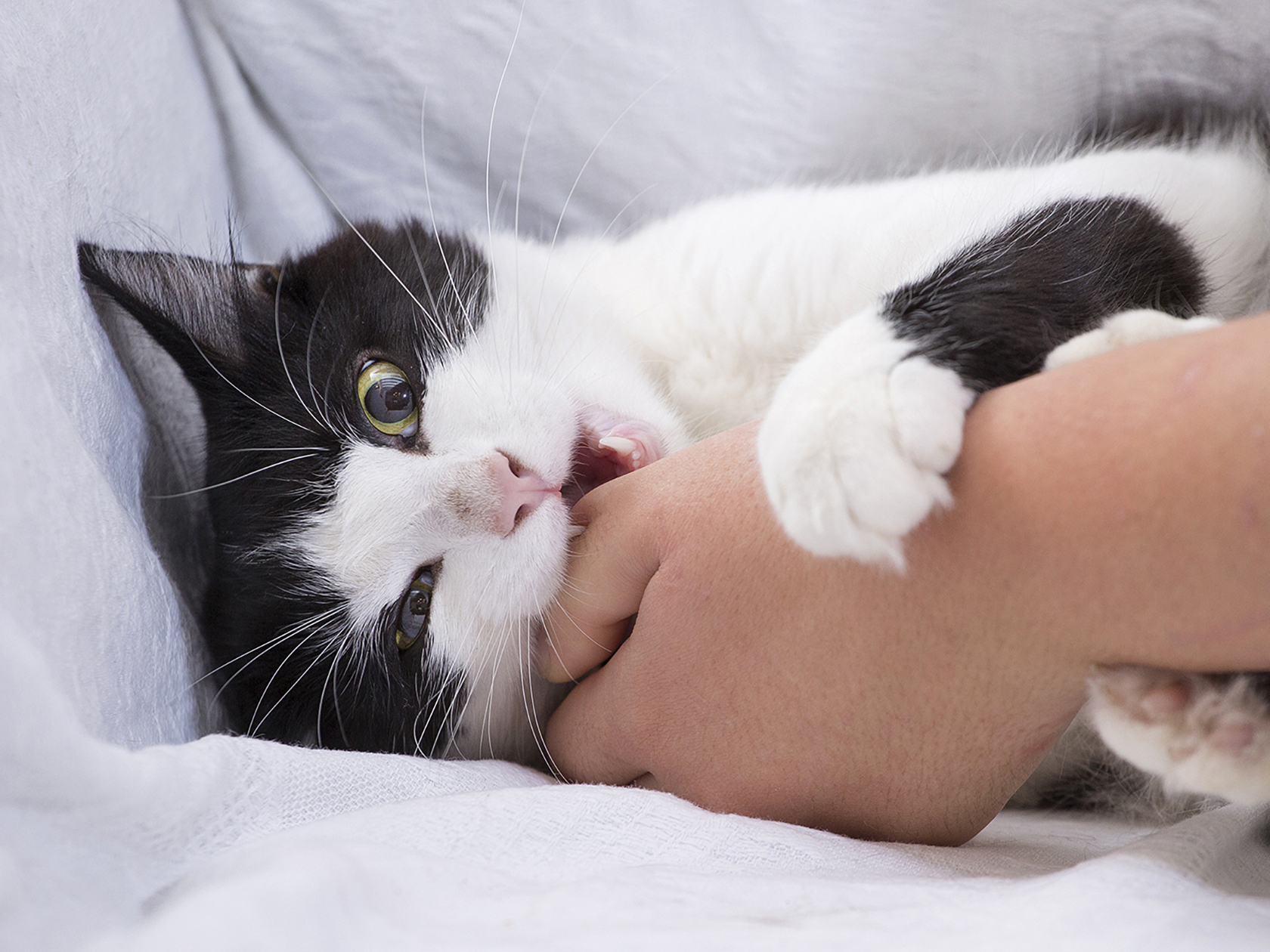
Cat biting falls into three broad categories. Your cat is either communicating overstimulation, expressing affection, or reacting out of fear and pain.
Understanding which category applies to your situation is the first step. Each type of bite looks and feels different, and each requires a different response from you as the owner.
The good news is that most cat biting is completely manageable once you learn to read the signals your cat is already giving you before the bite ever happens.
Why Does My Cat Bite Me Top Reasons Explained
Play Aggression and Hunting Instinct
Cats are natural predators. Even a well-fed indoor cat carries thousands of years of hunting instinct in its DNA.
When your cat stalks your feet under the blanket or pounces on your moving hand, it is practicing the same behavior it would use to hunt prey in the wild. The bite is not personal. It is instinctual.
This is especially common in kittens and younger cats who have not yet learned where the boundaries of acceptable play are. If hands and feet were used as toys during early kittenhood, the cat learned early on that human body parts are fair game.
Petting-Induced Aggression and Overstimulation
This is the most common reason cats bite during what seems like a perfectly relaxed moment. You are petting your cat, it is purring, and then suddenly it bites your hand and darts away.
Cats have sensitive nerve endings across their skin, especially along the back, tail base, and belly. When petting goes on too long or hits a sensitive spot, it shifts from pleasant to irritating very quickly.
The bite is your cat saying the interaction has gone past its comfort threshold. It is not an attack. It is a boundary.
Love Bites and Affection Nibbles
Not every bite is a problem. Some cats use a gentle nibble as an expression of affection, bonding, and trust.
Love bites are soft and do not break the skin. They often happen after a period of purring, licking, or head rubbing. Your cat is essentially grooming you the same way it would groom a littermate or a bonding partner.
If the bite is gentle and your cat looks relaxed and content, it is almost certainly a love bite and not a cause for concern.
Fear and Stress-Triggered Biting
A frightened cat will bite as a last resort when it feels trapped and unable to escape. Before reaching that point, it will almost always show warning signs like hissing, flattened ears, wide eyes, and a puffed tail.
New environments, loud noises, unfamiliar people, vet visits, and changes in routine are all common stress triggers. A stressed cat is not in control of its biting behavior in the same way a calm cat is.
The solution here is space and time, not more interaction.
Pain and Underlying Medical Conditions
A cat that suddenly starts biting out of nowhere, especially one that has never been a biter before, may be in physical pain. Conditions like dental disease, arthritis, hyperthyroidism, and gastrointestinal issues can make a cat irritable and reactive to touch.
If the biting is new and unexplained, a vet visit is always the right call. Pain-based biting will not be resolved through training alone.
Redirected Aggression
Sometimes your cat is not actually upset with you. It sees a bird through the window, gets excited or agitated, cannot reach the target, and bites whatever is closest, which happens to be you.
This is redirected aggression. The cat is not reacting to anything you did. It is transferring stimulation from an outside source onto the nearest available target.
Attention-Seeking Biting
Some cats learn through repetition that biting gets a reaction. If you respond to a nip by looking at your cat, talking to it, or feeding it, you have accidentally taught it that biting works as a communication tool.
The cat is not being malicious. It figured out a shortcut to getting your attention and is using it.
Territorial and Dominance Behavior
Cats are territorial animals. Biting can sometimes be a way of asserting ownership, whether over a space, a person, or an object.
This is more common in multi-cat households where hierarchy and boundaries are still being negotiated. It can also emerge when a new person, pet, or baby enters the home.
Teething in Kittens
Kittens between three and six months of age go through a teething phase. Their gums are uncomfortable and they bite and chew to relieve the sensation.
This kind of biting is temporary and not a sign of aggression. Providing kitten-safe chew toys during this period significantly reduces the urge to bite human hands.
Poor Socialization in Early Life
Kittens learn bite inhibition from their littermates and mother. When a kitten bites too hard during play, another kitten yelps and disengages, teaching the biter that hard bites end the fun.
Kittens that were separated from their litter too early missed this critical lesson. They never learned how hard is too hard, and that gap in socialization often shows up as biting problems in adult cats.
Warning Signs Your Cat Is About to Bite
Reading your cat’s body language is the most powerful tool you have for preventing bites. These signals almost always appear in the seconds before a bite.
| Warning Sign | What It Means |
|---|---|
| Tail flicking or lashing | Cat is becoming irritated or overstimulated |
| Ears flattening back | Cat is annoyed, fearful, or defensive |
| Dilated pupils | Cat is aroused, anxious, or in hunting mode |
| Skin rippling along the back | Cat is overstimulated and close to its limit |
| Sudden stillness or tensing up | Cat is about to react |
| Head turning toward your hand | Cat is warning you to stop petting |
| Low growl or hiss | Cat is at its limit and a bite is imminent |
| Body weight shifting away | Cat wants to disengage from interaction |
When you see two or more of these signals together, stop what you are doing and give your cat space. Responding to these early signals is what prevents the bite from happening at all.
Love Bite vs Aggressive Bite How to Tell the Difference
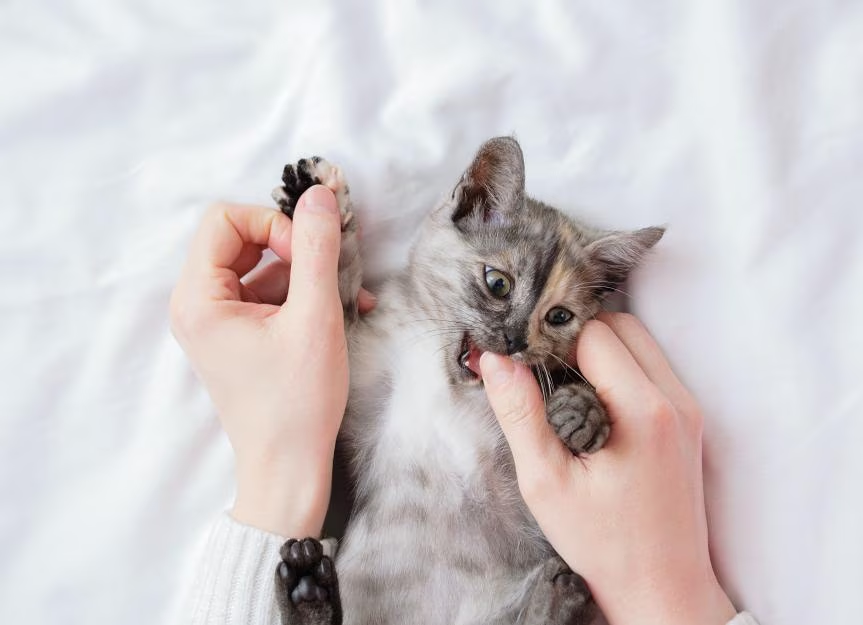
Not all cat bites are created equal. Learning to distinguish between a love bite and a true aggressive bite changes how you respond.
| Type | Characteristics | What to Do |
|---|---|---|
| Love bite | Soft, does not break skin, cat looks relaxed, often follows licking or purring | No action needed unless biting escalates |
| Play bite | Moderate pressure, happens during active play, cat is energized but not hostile | Redirect to a toy immediately |
| Overstimulation bite | Sudden, moderate to firm, follows extended petting | Stop petting, give space, note the threshold |
| Fear bite | Hard, may break skin, preceded by hissing and defensive posture | Give full space, remove the stressor |
| Pain bite | Hard and sudden, out of character, no obvious trigger | Visit vet to rule out medical cause |
| Redirected aggression bite | Unprovoked appearance, cat was watching something external first | Remove the external stressor, give space |
The key difference is context and body language. A cat delivering a love bite looks relaxed and content. A cat biting out of fear or pain looks tense, defensive, or agitated before and after the bite.
Why Does My Cat Bite Me When I Pet It
Petting-induced aggression is the most common complaint among cat owners. You are barely touching your cat, it seemed to be enjoying it, and then it bites without warning.
Most cats enjoy short strokes around the head, chin, and cheeks. Full body strokes, especially down the spine or near the tail base, can quickly become overwhelming. The belly is almost universally a high-risk zone.
Keep petting sessions brief. Stop before your cat reaches its threshold. Over time, short positive sessions build a higher tolerance than long sessions that always end in a bite.
Why Does My Cat Bite Me Then Lick Me
This is one of the most confusing behaviors for cat owners to interpret. Your cat bites your hand and immediately starts licking it.
In most cases, this is a grooming behavior. Cats lick and gently bite each other as a form of social bonding. When your cat does this to you, it is treating you the way it would treat a trusted companion.
The bite-then-lick sequence is generally a positive sign. It means your cat feels safe and bonded with you. As long as the bite is gentle and does not break skin, this is affectionate behavior, not aggression.
If the bite is hard and painful before the lick follows, it may be a sign of overstimulation where the cat is trying to self-regulate by switching from arousal to grooming behavior.
Why Does My Cat Bite Me Out of Nowhere
The sudden unprovoked bite is one of the most frustrating experiences for cat owners. Everything seems fine, and then out of nowhere your cat bites your ankle or arm.
In almost every case, the bite was not actually out of nowhere. There were warning signs that were too subtle to notice, or the bite was triggered by an external stressor like a sound, a smell, a view from a window, or a change in the environment.
Cats also have very low tolerance for certain repetitive sensations. A hand resting on them or a repeated stroking motion can build up irritation below the surface until the threshold breaks, and the bite seems sudden even though the buildup was gradual.
Keep a mental note of when and where unprovoked bites tend to happen. Patterns almost always emerge that point to a specific trigger.
Why Does My Kitten Bite Me
Kitten biting is extremely common and almost always normal. Kittens use their mouths to explore the world, practice hunting, communicate, and relieve teething discomfort.
The most important thing you can do with a biting kitten is never use your hands or feet as toys. Every time you wiggle your fingers to get a kitten to pounce and bite, you are reinforcing the idea that human body parts are acceptable targets.
Replace hands with wand toys, kicker toys, and interactive play. The kitten burns off the same energy, satisfies the same instinct, and learns that biting humans is not how the game works.
How to Stop Your Cat From Biting You Solutions That Work
Redirect to Toys Immediately
The moment a cat begins to bite or shows pre-bite signals, redirect its attention to a toy. Wand toys, kicker toys, and feather teasers all satisfy the hunting urge without involving your body.
Consistent redirection over time teaches the cat that toys are for biting and hands are not.
Use Positive Reinforcement Only
Never punish a biting cat by hitting, spraying with water, or yelling. Punishment creates fear and anxiety, which are two of the main causes of biting in the first place.
Reward calm, gentle behavior with treats and affection. Ignore or disengage from biting behavior without drama. The goal is to make biting unrewarding and calm behavior rewarding.
Learn and Respect Your Cat’s Petting Threshold
Every cat has a limit for how long it tolerates petting. Start observing how many strokes your cat accepts before showing any of the warning signs listed above.
Stop petting before you reach that threshold. End on a positive note. Over time, consistent positive short sessions often raise the threshold rather than lower it.
Increase Interactive Play Time
A cat that gets 15 to 20 minutes of dedicated interactive play per day has a healthy outlet for its hunting energy. That energy does not need to go into biting humans.
Use wand toys that keep your hands away from the cat’s mouth. Let the cat stalk, chase, pounce, and catch the toy. Finish the session with a treat to simulate a successful hunt.
Never Use Hands and Feet as Toys
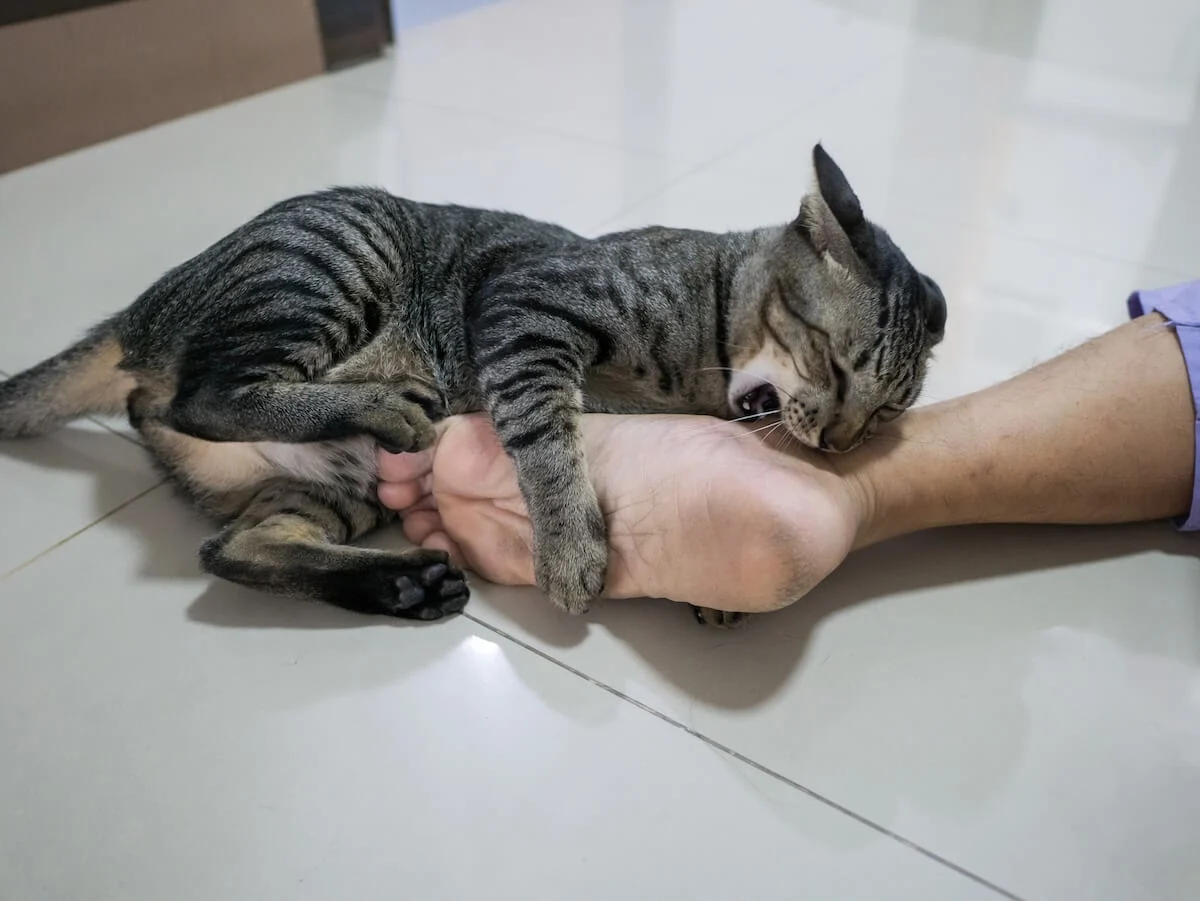
This single habit is responsible for a large percentage of cat biting problems. Roughhousing with kittens or encouraging them to attack moving hands feels playful, but it creates a lasting behavioral association that is very difficult to undo.
Establish the rule early and keep it consistently. Hands deliver treats and gentle strokes. Toys are for biting and hunting.
Give Your Cat Control Over Interactions
Allow your cat to initiate contact whenever possible. Let it approach you, sniff, and rub before you reach out to pet it. This gives the cat a sense of control and safety.
Forcing interaction with a cat that is trying to leave is one of the most reliable ways to trigger a bite. Respecting your cat’s autonomy actually makes it more likely to seek you out voluntarily.
Create a Low-Stress Environment
If your cat bites frequently out of fear or stress, the environment is part of the solution. Provide hiding spots where the cat can retreat when overwhelmed. Maintain a consistent daily routine. Use calming products like pheromone diffusers if anxiety is significant.
A cat that feels safe in its environment is a cat that rarely needs to bite to feel secure.
Consult a Vet for Sudden or Severe Biting
If biting is new, escalating, or unexplainably intense, see a veterinarian before trying behavioral interventions. Pain and illness must be ruled out first.
A certified feline behavior consultant is also a valuable resource for severe or complex biting cases. These professionals can identify triggers and create structured behavior modification plans tailored to your specific cat.
What to Do After a Cat Bite
Cat bites are medically significant and should not be ignored. A cat’s teeth are narrow and sharp, which means they create deep puncture wounds that seal quickly at the surface while trapping bacteria inside.
| Step | Action |
|---|---|
| 1 | Clean the bite immediately with warm water and soap for at least five minutes |
| 2 | Apply an antiseptic to the wound |
| 3 | Cover with a clean bandage |
| 4 | Monitor for redness, swelling, warmth, or pus over the next 24 to 48 hours |
| 5 | See a doctor if the wound breaks the skin, becomes infected, or involves the hands or face |
| 6 | Check your tetanus vaccination status |
Cat bites carry a high risk of infection from bacteria like Pasteurella multocida. Deep bites, especially on the hands, can progress to serious infections within hours. When in doubt, seek medical attention.
Cat Biting by Situation Reference Guide
| Situation | Most Likely Cause | Best Response |
|---|---|---|
| Bites during petting | Overstimulation | Stop petting, give space |
| Bites while playing | Play aggression or instinct | Redirect to appropriate toy |
| Bites then immediately licks | Affection or grooming behavior | Gentle disengagement if needed |
| Bites out of nowhere | Redirected aggression or missed signals | Identify and remove the trigger |
| Bites when picked up | Fear or discomfort | Allow cat to control when it is held |
| Kitten bites constantly | Teething or poor bite inhibition | Provide chew toys, stop using hands as toys |
| New biting in older cat | Pain or medical condition | Veterinary visit immediately |
| Bites only one person | Fear or negative past association | Slow reintroduction, positive reinforcement |
Common Cat Biting Myths Debunked
Cats bite to show dominance over their owners. This is false. Cats are not trying to dominate humans. They are communicating discomfort, fear, overstimulation, or play intent.
Biting means your cat does not love you. Also false. Some of the most affectionate cats in the world are frequent biters. The bite is about the moment and the communication, not the relationship.
Punishing a biting cat teaches it to stop. The opposite is often true. Punishment creates fear and anxiety, both of which increase the likelihood of future biting.
You just have to accept that your cat bites. Also not true. Biting behavior in cats can almost always be reduced or eliminated with patience, consistency, and the right approach.
Frequently Asked Questions (FAQs)
Why does my cat bite me for no reason?
There is almost always a reason, even if it is not obvious. Look for missed warning signs, external stressors, or a possible pain source, especially if biting is new behavior.
Is it normal for cats to bite their owners?
Yes, biting is normal feline behavior used to communicate overstimulation, affection, fear, or play intent. It becomes a problem only when it is frequent, hard, or unprovoked.
Why does my cat bite me softly?
Soft bites are almost always love bites, a form of affection and bonding behavior that mirrors how cats groom each other. They are not a cause for concern unless they escalate.
Why does my cat bite me when I pet it?
This is called petting-induced aggression or overstimulation. Your cat reached its petting threshold and communicated its limit through a bite. Shorter petting sessions help prevent it.
Why does my cat bite me then lick me?
This is typically affectionate grooming behavior. Your cat is treating you like a trusted social companion. As long as the bite is gentle, it reflects bonding rather than aggression.
Why does my cat bite me unprovoked out of nowhere?
The bite likely was provoked by something subtle, an external sound or sight, a buildup of overstimulation, or a missed body language cue. Track when and where it happens to identify patterns.
Why does my kitten bite me so much?
Kittens bite to play, explore, relieve teething pain, and practice hunting. Never use hands as toys, redirect to appropriate cat toys, and the biting typically reduces as the kitten matures.
Can cat biting be stopped completely?
Most biting behavior can be significantly reduced or eliminated with consistent redirection, positive reinforcement, respecting petting thresholds, and increasing interactive play time.
Should I go to the doctor for a cat bite?
Yes, if the skin is broken. Cat bites carry a high infection risk. Clean the wound immediately and seek medical advice, especially for bites on the hands, face, or joints.
When should I see a vet about my cat biting?
See a vet immediately if biting is a new behavior with no clear trigger, if it is escalating in frequency or intensity, or if your cat shows other signs of illness, pain, or behavioral change.
Conclusion
Why does my cat bite me is a question that always has an answer, and understanding it makes you a better, more connected cat owner.
Every bite, whether it is a soft love nibble or a sharp reactionary chomp, is your cat’s way of communicating something it cannot say in words.
Overstimulation, fear, pain, playfulness, and affection all express themselves through biting, and each one points toward a different solution.
The path to a bite-free relationship is not about punishing the behavior. It is about understanding the cause, reading the signals before they escalate, and creating an environment where your cat feels safe, stimulated, and respected.
In 2026, with better understanding of feline behavior than ever before, there is no reason any cat owner has to just live with biting. With patience and consistency, real change is absolutely possible.
