

Hentai is a genre of Japanese animated and illustrated pornographic content that has quietly become one of the most-searched terms on the internet.
If you have heard the word being thrown around online or in anime communities and wondered what it actually means, where it came from, whether it is safe, and why it keeps trending — this guide answers all of that in plain, factual language.
We cover the definition, history, subgenres, search trends, safety concerns, and everything else you need to know in 2026.
What Is Hentai — The Real Definition
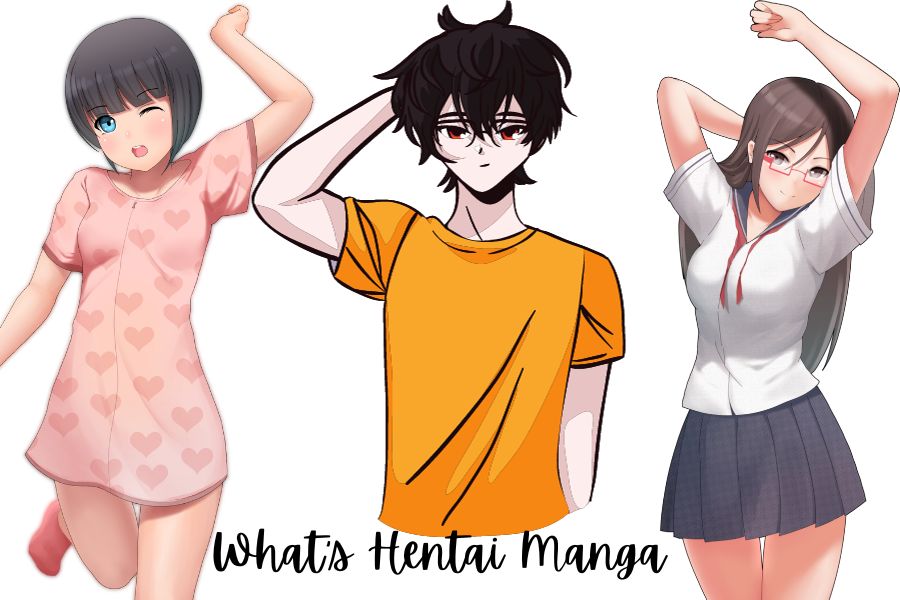
The word hentai (変態) comes from Japanese. It is a compound of 変 (hen — meaning “change” or “strange”) and 態 (tai — meaning “attitude” or “appearance”). Literally, the word means “transformation” or “abnormality.”
In Japan, hentai is not a genre label for pornography. It is simply a slang insult meaning “pervert.” Japanese speakers use words like ero anime, seijin anime, or ecchi to describe adult animated content. The Western meaning of hentai — as a catch-all term for Japanese pornographic anime and manga — developed through mistranslation and loose cultural adoption in the 1990s.
Outside Japan, hentai now broadly refers to sexually explicit anime, manga, illustrated comics, and adult video games (called eroge) from Japan or created in the Japanese animation style.
A Brief History of Hentai
Hentai’s roots go much deeper than the internet age. Japanese erotic art — known as shunga — dates back to the Heian period, roughly 794–1185 CE. These were woodblock prints depicting explicit scenes and were widely produced between the 16th and 19th centuries.
The modern hentai genre in animation traces back to the early 1980s. The first hentai OVA (Original Video Animation) was released in 1984 by Wonder Kids under the title Lolita Anime. That same year, Cream Lemon was released by Fairy Dust and became one of the most influential early titles in the genre.
In 1986, manga artist Toshio Maeda created the now-iconic Urotsukidoji series, which introduced the tentacle subgenre. The use of tentacles was reportedly a creative workaround to avoid Japan’s censorship laws, which prohibited explicit depictions of human genitalia. Maeda used tentacles as a symbolic substitute, and the trope became globally associated with hentai.
Western fans were introduced to hentai largely through VHS imports in the early 1990s. As the internet expanded in the late 1990s and 2000s, hentai content became widely accessible globally.
Why Hentai Became the #1 Most-Searched Term Worldwide
This is where the data gets genuinely interesting. Since 2021, hentai has held the number one spot as the most-searched term globally on Pornhub — four consecutive years in a row. That is not a small achievement on a platform that receives tens of billions of visits per year.
Researchers and media analysts have pointed to a few reasons behind this dominance.
The global rise of anime as mainstream entertainment has pulled a massive audience into Japanese animation culture. Many of that audience then discovers hentai as an adjacent genre. The barrier between anime fan and hentai viewer has essentially dissolved for a large portion of younger internet users.
Hentai also offers unlimited fantasy scenarios — content that would be impossible, impractical, or illegal to produce with real actors. This unbounded creative freedom attracts viewers who have exhausted more conventional categories.
AI-generated and animated content has surged in interest broadly, and hentai benefits from this wider trend of audiences gravitating toward illustrated or virtual content over live-action.
Hentai Search Trends: Top Data Points for 2026
| Category / Search Term | Trend Direction | Notes |
|---|---|---|
| Hentai (global) | #1 most searched | 4+ consecutive years at top |
| Anime | Top 10 globally | Grew alongside hentai |
| Tentacle | Stable top subgenre | Classic trope dating to 1814 |
| Yaoi (male–male) | Growing | Primarily female audience |
| Yuri (female–female) | Growing | Broad mainstream appeal |
| Ecchi | Rising | Softer, non-explicit variant |
| AI-generated hentai | Rapidly rising | New category gaining traction |
| Cosplay + hentai | Increased | Cross-genre search behavior |
| Isekai hentai | Rising | Tied to isekai anime boom |
| Vanilla hentai | Steady | Consensual, romantic content |
The 18–24 age group makes up the largest share of Pornhub traffic, accounting for roughly 27% of all visits. This demographic is also the most likely to consume anime and, by extension, hentai. The average Pornhub user is statistically 38 years old, which shows the audience spans a broad age range.
In 2024, anime rose to the seventh most-searched term globally — directly alongside hentai’s continued dominance. The two terms are clearly growing in tandem.
Major Hentai Subgenres Explained
Hentai is not a single uniform category. It is an umbrella term covering dozens of distinct subgenres, each with its own themes, audience, and conventions.
Yaoi (also called Boys’ Love or BL) features male–male romantic and sexual content. Despite being primarily about male characters, yaoi is mainly consumed by female audiences. It has grown into a massive global genre that extends far beyond explicit content.
Yuri (also called Girls’ Love or GL) features female–female romantic and sexual content. The definition of yuri has broadened over time to include non-explicit lesbian-themed animation and comics, making it one of the more mainstream-accessible subgenres.
Ecchi is a softer adjacent genre. It features suggestive or mildly sexual content without explicit depictions. Many mainstream anime series contain ecchi elements. It is not strictly hentai but occupies the adjacent space.
Tentacle is one of the most internationally recognized hentai subgenres, developed in Japan partly due to censorship laws. It involves fantasy creatures and is almost entirely fictional in nature.
Vanilla refers to hentai with consensual, romantic, non-violent content. It has grown a dedicated following among viewers seeking less extreme material.
Futanari features characters with both male and female sexual characteristics. It is one of the more well-known niche categories.
Isekai hentai has risen in parallel with the explosive popularity of isekai anime (stories where protagonists are transported to fantasy worlds). This crossover between mainstream anime trends and adult content is a clear example of how pop culture shapes hentai search behavior.
Hentai vs. Anime: What Is the Difference

This is a very common source of confusion, especially for people newer to Japanese animation.
Anime is a broad term for all Japanese animation — from children’s shows like Doraemon to action shonen like Demon Slayer to romance series. The vast majority of anime is not sexual in any way.
Hentai is specifically the adult, sexually explicit subset of anime and manga. Not all anime is hentai. Not even most anime is hentai. The two words describe overlapping but very distinct categories.
Ecchi anime sits in a middle zone — it features suggestive content, fan service, and mild nudity but stops short of being fully explicit. Series like To Love-Ru or High School DxD are ecchi, not hentai.
The misconception that anime equals pornography has largely faded in Western countries as anime has become mainstream entertainment, but the association still occasionally appears because hentai remains the top-searched term globally.
Is Hentai Safe for Adults
For consenting adults, hentai is animated content and carries none of the human exploitation concerns associated with live-action pornography. No real people are involved in production. This is one of the arguments frequently made by hentai advocates who describe it as more ethical than conventional pornography.
However, researchers and psychologists have raised several evidence-based concerns worth knowing.
Studies published in the Journal of Adolescence found that early exposure to sexually explicit internet material — including animated content — is associated with more permissive sexual attitudes and gender-stereotyped sexual beliefs, particularly in younger viewers.
Some hentai subgenres include depictions of non-consent, violence, or underage characters. While these are fictional, content involving minors is illegal in many countries regardless of whether it is animated or live-action. Laws vary significantly by jurisdiction.
For adults engaging with age-appropriate hentai content, the primary concerns cited by researchers are similar to concerns around pornography in general — the potential for unrealistic expectations about sex and relationships, and the possibility of compulsive use patterns.
Is Hentai Legal
Legality of hentai varies significantly by country and by content type.
In Japan itself, explicit depictions of genitalia must be censored under Article 175 of the Criminal Code (in effect since 1907). This is why so much hentai features blurring or pixelation on explicit content.
In the United States, animated sexual content is generally legal for adults unless it depicts minors, which falls under PROTECT Act provisions regardless of whether it is fictional or illustrated.
In the United Kingdom, the Criminal Justice and Immigration Act 2008 prohibits extreme pornographic content, which can include some hentai subgenres.
In many countries, hentai depicting minors — even in cartoon form — is explicitly criminalized. Australia, Canada, and several European nations have laws specifically targeting illustrated child sexual abuse material.
Always verify the laws in your specific country and jurisdiction before accessing or distributing any content.
| Country | General Adult Hentai | Hentai Depicting Minors |
|---|---|---|
| United States | Legal (adults) | Illegal (PROTECT Act) |
| Japan | Legal with censorship | Complex — varies by depiction |
| United Kingdom | Partially restricted | Illegal |
| Australia | Restricted | Illegal |
| Canada | Generally legal | Illegal |
| Germany | Restricted (youth protection laws) | Illegal |
Hentai and Child Safety: What Parents Should Know
This is one of the most important sections of this article for parents and guardians.
Children with internet access can encounter hentai accidentally. Searches for popular anime characters, cartoon names, or even general animation terms can lead to hentai content through image search, fan art sites, or social media platforms. This is not a hypothetical — it is a widely documented reality.
Most research suggests the majority of children are first exposed to pornography by age 12. Animated pornography, including hentai, is frequently part of that early exposure because it can appear less obviously adult than live-action content.
Parental controls, open conversations about what children encounter online, and regular monitoring of browsing history are the most commonly recommended protective strategies. Parental control apps and browser filters can specifically block adult content categories including hentai.
Speaking with children about what they may encounter online — without shaming or alarming them — creates a foundation for them to come to you when they see something confusing or disturbing.
How Hentai Trends Are Shaped by Pop Culture
One of the most fascinating aspects of hentai search data is how tightly it mirrors mainstream pop culture. Game releases, viral internet events, and popular anime series consistently create spikes in related hentai searches.
In 2024, Fortnite remained the top searched game-related term on Pornhub. Genshin Impact and Overwatch consistently appear in the top video game searches. When a major anime like Attack on Titan or Demon Slayer releases a popular season, related hentai searches spike in parallel.
Searches for fictional characters — particularly female characters from popular games, anime, and even Western animation and film — consistently appear in hentai search data. This reflects the broader human tendency to project sexual fantasy onto attractive fictional characters regardless of their source medium.
The isekai genre’s explosion in anime popularity from 2018 onward has directly contributed to a rise in isekai-themed hentai. As mainstream anime embraces new genres, hentai follows closely.
Hentai and AI: The Newest Trend
One of the most significant emerging developments in 2025–2026 is the rise of AI-generated hentai. Text-to-image AI models can now produce high-quality illustrated content in the anime style, and a growing number of platforms have emerged specifically to serve this demand.
This has raised new questions about content moderation. AI-generated content does not involve human creators in the traditional sense, creating regulatory gaps. Many existing laws were written before AI-generated images existed and struggle to address this new category.
AI hentai has also created concerns about the production of AI-generated content depicting minors, which several governments are now actively working to criminalize through new legislation.
For creators, AI tools have lowered the barrier to entry significantly. Traditional hentai requires skilled illustration, but AI tools allow anyone to generate content rapidly. This has led to an explosion in volume of AI-generated adult anime content across platforms.
The Psychology Behind Hentai’s Popularity
Clinical psychologist Dr. Laurie Betito of Pornhub’s Sexual Wellness Center has noted that the rise of animated and fantasy-based content — including hentai — reflects a broader desire among viewers to escape reality. This is particularly relevant in the post-pandemic period, where many people have reported higher levels of stress, isolation, and a desire for escapism.
The unlimited fantasy of animation offers scenarios impossible in reality. This appeals to the human imagination in ways live-action content cannot replicate. There are no physical limits to what can be depicted in illustration, which makes hentai inherently able to serve a wider range of specific fantasies.
Researchers also note that for some viewers, hentai provides a perceived distance from reality that makes it feel psychologically safer than live-action pornography. Whether that perception holds up under scrutiny is still debated in academic literature, but it clearly influences consumption behavior.
Key Terms and Glossary
| Term | Meaning |
|---|---|
| Hentai | Sexually explicit anime / manga (Western usage) |
| Ecchi | Suggestive but non-explicit anime content |
| Yaoi / BL | Male–male romantic or sexual content |
| Yuri / GL | Female–female romantic or sexual content |
| Eroge | Erotic Japanese video games |
| Doujinshi | Self-published fan-made manga, often adult |
| Shotacon | Fictional male minor characters in sexual content (illegal in many countries) |
| Lolicon | Fictional female minor characters in sexual content (illegal in many countries) |
| Vanilla | Consensual, romantic, non-violent hentai |
| Tentacle | Fantasy subgenre involving creature tentacles |
| Futanari | Characters with mixed sexual characteristics |
| Shunga | Traditional Japanese erotic woodblock art |
| Erotica | Sexually explicit literature, art, or media |
| Censored / Uncensored | Whether genitalia are blurred (Japan law requires censorship) |
Hentai Consumption Demographics in 2026

The data available from Pornhub’s Year in Review and external analytics gives us a clearer picture of who is actually consuming hentai.
Men rank Japanese content (including hentai) as their top category. Women place it second. Both genders have shown increased engagement with anime and animated content year-over-year. The crossover appeal of hentai across genders is one of the factors behind its continued dominance at the top of global search charts.
The 18–24 age group accounts for the largest share of traffic (27%), followed by 25–34. These are also the demographics most deeply embedded in anime culture, reinforcing the connection between anime fandom and hentai consumption.
Geographically, the United States drives the most global traffic to adult platforms, followed by France and the Philippines. Japan itself ranks in the top tier as well, though Japanese users are more likely to search using Japanese-language terms rather than the word “hentai.”
Frequently Asked Questions (FAQs)
What does hentai literally mean in Japanese?
In Japanese, hentai (変態) literally means “transformation” or “abnormality.” It is commonly used as slang for “pervert” in Japan and is not used to describe a specific media genre there.
Is hentai the same as anime?
No. Anime is all Japanese animation, most of which is completely non-sexual. Hentai is specifically the adult, sexually explicit subset of anime and manga, representing a small fraction of the total anime landscape.
Why is hentai the #1 most-searched term on Pornhub?
Hentai has topped global Pornhub searches since 2021 because of the massive growth of anime fandom, the unlimited fantasy scenarios animation allows, and the genre’s ability to cater to a vast range of specific interests.
Is hentai legal to watch?
For adults, hentai is generally legal in most Western countries. However, content depicting minors — even in animated form — is explicitly illegal in the US, UK, Australia, Canada, and many other nations.
What is the difference between hentai and ecchi?
Ecchi is suggestive or mildly sexual anime content without explicit depictions. Hentai is fully sexually explicit. Many mainstream anime series are ecchi but not hentai.
What is vanilla hentai?
Vanilla hentai refers to content that depicts consensual, romantic, non-violent sexual content between adult characters. It is considered one of the more tame categories within the broader genre.
Can children accidentally find hentai online?
Yes. Hentai can appear in image searches, fan art platforms, and social media when children search for popular anime or cartoon characters. Parental controls and open conversations about online safety are the most effective protective measures.
What are the most popular hentai subgenres in 2026?
The most popular subgenres include yaoi (male–male), yuri (female–female), tentacle, vanilla, futanari, ecchi, and the rapidly growing AI-generated category. Isekai-themed hentai has also risen significantly in recent years.
What is the difference between hentai and doujinshi?
Doujinshi are self-published fan-made manga or comics — many of which are sexually explicit. They are often hentai in content but represent fan creations rather than officially produced works. Much doujinshi features characters from existing popular anime and game franchises.
Is AI-generated hentai legal?
This varies by country and is an evolving legal area. AI-generated hentai depicting adult characters is generally unregulated in many places, but AI-generated content depicting minors is increasingly being criminalized under existing or new child protection laws.

Conclusion
Hentai is a term with deep roots in Japanese language and culture that has taken on an entirely distinct meaning in the Western world.
It describes a massive, globally dominant genre of animated and illustrated adult content that has topped worldwide search rankings for four consecutive years.
Understanding what hentai is — its origins, subgenres, cultural context, search trends, safety considerations, and legal status — is important for anyone curious about this topic, whether for personal knowledge, parenting, or media literacy.
It is animated content created for adults, surrounded by genuine conversations about its effects, its legal boundaries, and its relationship to mainstream anime culture. Knowing the facts is always better than operating on assumptions or internet rumors.
