

Sitting position names are essential terms that describe how we position our bodies while seated, whether on the floor, chair, or ground.
Understanding these sitting positions helps you communicate clearly about postures in yoga practice, daily life, medical consultations, and fitness routines.
From ancient yoga asanas like Padmasana to modern ergonomic chair positions, each sitting style serves specific purposes for comfort, health, and spiritual well-being.
What Are Sitting Position Names?
Sitting position names refer to the specific terminology used to describe various ways humans sit. These names originate from different sources including yoga traditions, cultural practices, medical terminology, and everyday language.
A sitting position involves the alignment and posture of your body when seated. The way you sit affects your spine, joints, muscles, and overall health. Proper sitting positions can prevent back pain, improve circulation, and enhance focus.
Types of Sitting Positions
Yoga Sitting Positions
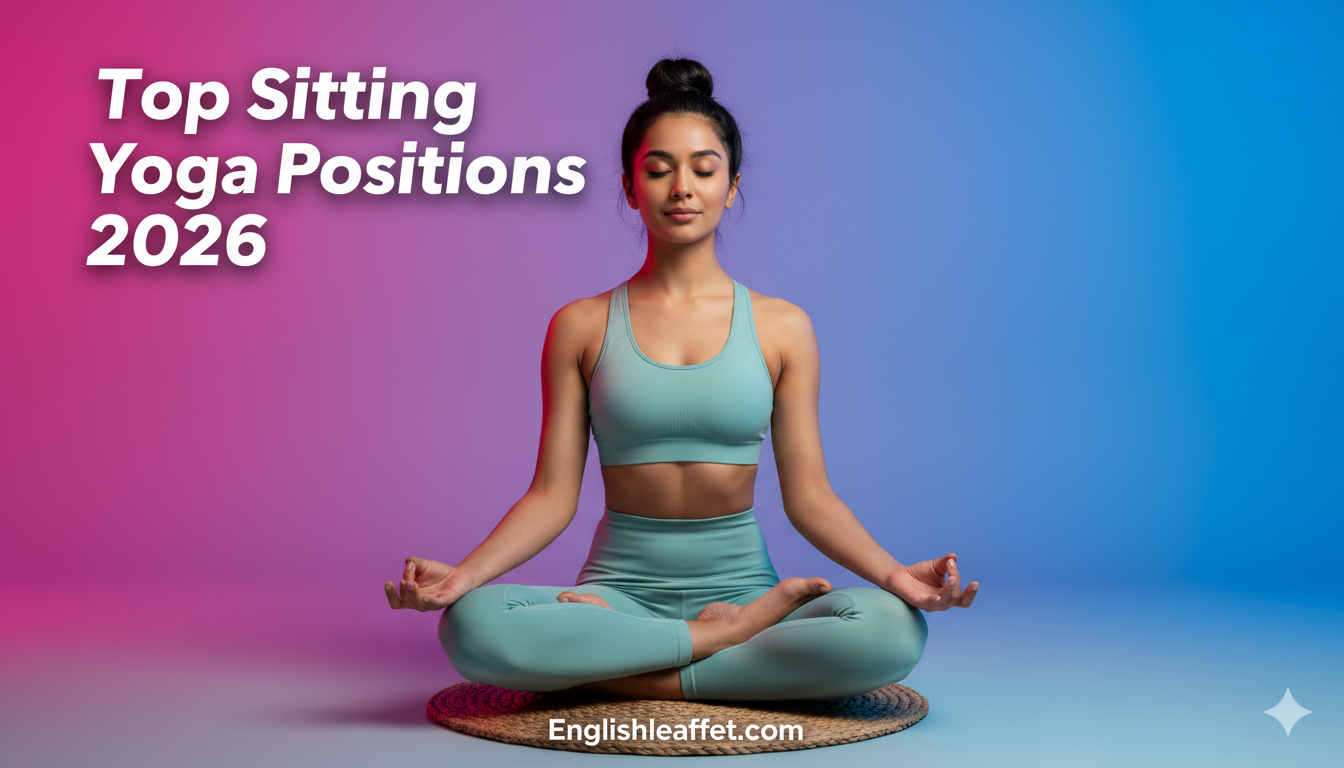
Yoga offers numerous sitting positions designed for meditation, breathing exercises, and flexibility training.
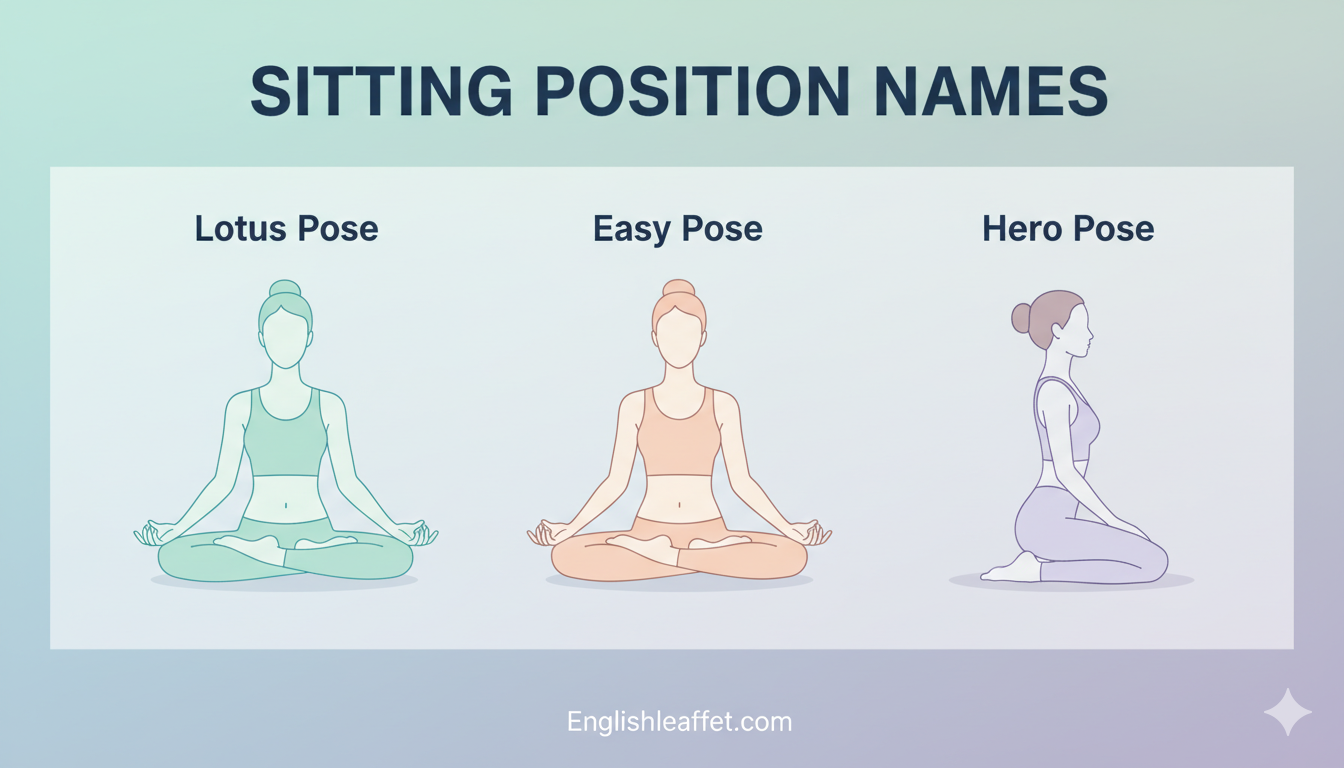
- Sukhasana (Easy Pose) Sukhasana is the most basic cross-legged position. Your legs cross comfortably at the shins with both feet resting under the opposite thigh. This position keeps the spine straight and promotes relaxation.
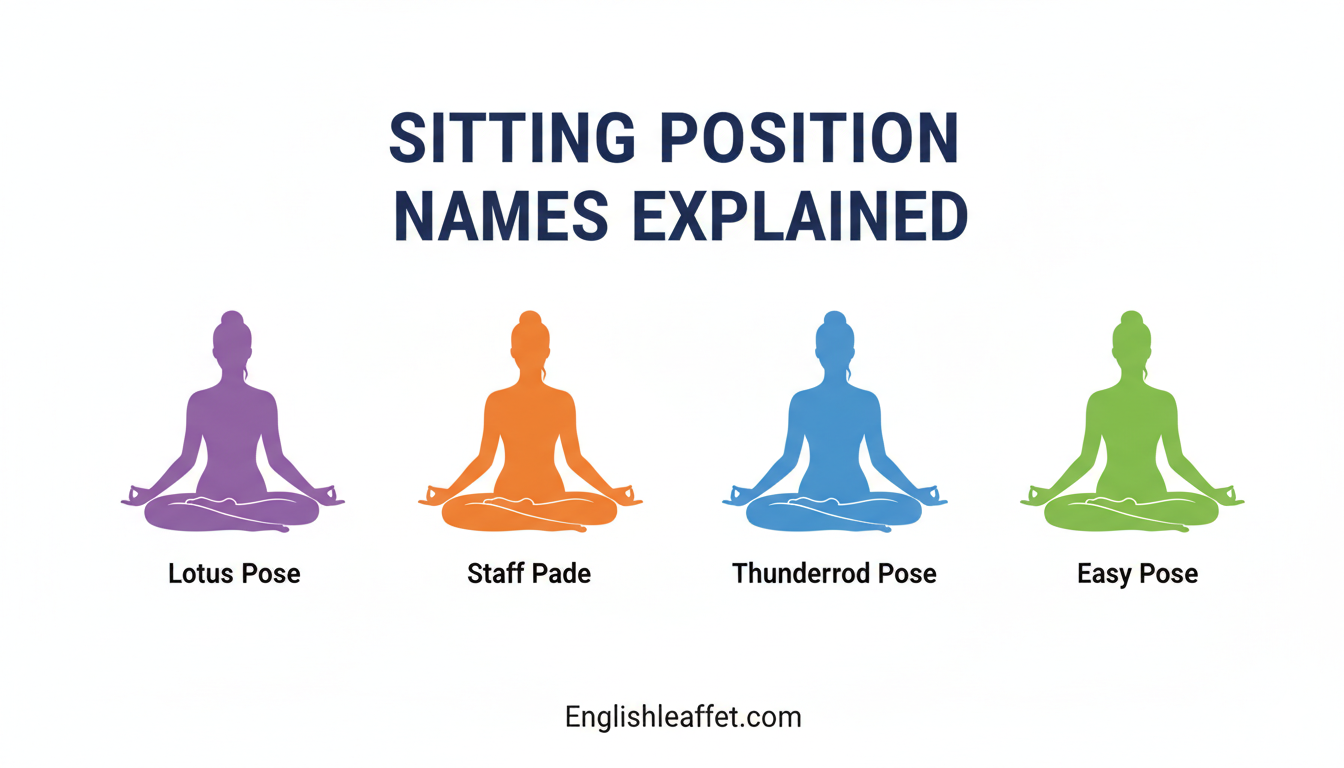
- Padmasana (Lotus Pose) Padmasana involves placing each foot on the opposite thigh with soles facing upward. This advanced pose opens the hips and creates a stable base for meditation. It requires significant flexibility in the hips and knees.
- Ardha Padmasana (Half Lotus) Half Lotus is a modified version where only one foot rests on the opposite thigh. The other leg remains in a simple cross-legged position. This pose bridges the gap between beginner and advanced practitioners.
- Vajrasana (Diamond Pose) Vajrasana requires kneeling with your buttocks resting on your heels. Your feet point backward with toes touching. This position aids digestion and is often practiced after meals.
- Siddhasana (Accomplished Pose) Siddhasana places one heel against the perineum while the other heel rests in front. This meditative pose enhances concentration and is considered one of the most important yoga sitting positions.
- Dandasana (Staff Pose) Dandasana involves sitting with legs extended straight forward. Your spine remains upright and hands press beside the hips. This foundational pose strengthens the back and improves posture.
Everyday Sitting Positions
Daily life involves various sitting positions beyond yoga practice.
- Cross-Legged Sitting Cross-legged sitting involves folding both legs and crossing them at the ankles or shins. This casual position appears in many cultures and provides a comfortable floor-sitting option.
- Tailor Sitting Tailor sitting describes a loosely cross-legged position similar to how tailors traditionally worked. Both legs fold comfortably without the formal alignment of yoga poses.
- Kneeling (Seiza) Seiza is a Japanese kneeling position where you sit on your heels with the tops of your feet flat on the ground. This formal sitting style appears in ceremonies, martial arts, and traditional settings.
- W-Sitting W-sitting occurs when the legs form a “W” shape with knees bent and feet splayed outward. This position commonly appears in children during play activities.
- Side Sitting Side sitting involves bending both legs to one side of the body. This position offers hip flexibility and provides an alternative to traditional cross-legged sitting.
- Long Sitting Long sitting extends both legs straight forward while seated on the ground. This position stretches the hamstrings and maintains spinal alignment.
Chair Sitting Positions
Modern life involves extensive chair sitting in offices, schools, and homes.
- Upright Sitting Upright sitting maintains the spine in vertical alignment with feet flat on the floor. This ergonomic position distributes weight evenly and prevents strain.
- 90-Degree Sitting 90-degree sitting positions the hips, knees, and ankles at right angles. This ergonomic standard promotes healthy posture during extended sitting periods.
- Slouched Sitting Slouched sitting curves the back and leans the body backward. While comfortable temporarily, prolonged slouching causes back pain and poor posture.
- Forward Leaning Sit Forward leaning involves tilting the torso slightly forward while remaining seated. This position engages during focused work or reading activities.
- Perching Perching describes sitting lightly on the edge of a seat. This position keeps the body ready for movement and maintains an active posture.
- Backward Chair Sit Backward chair sitting places the chest against the backrest while straddling the seat. This informal position appears in casual settings.
Cultural Sitting Positions
Different cultures have developed unique sitting traditions.
- Indian Style Sitting Indian style refers to cross-legged floor sitting common during meals and social gatherings. This position reflects traditional Indian culture and promotes community dining.
- Squatting Squatting lowers the body with bent knees and flat feet. This natural position appears in many Asian and Middle Eastern cultures for resting, eating, and toilet use.
- Straddle Sitting Straddle sitting spreads the legs wide apart. This position appears when riding horses, bicycles, or sitting on certain types of furniture.
- Butterfly Position (Baddha Konasana) The butterfly position brings the soles of feet together with knees dropping outward. This yoga pose stretches the inner thighs and improves hip flexibility.
Specialized Sitting Positions
Certain situations require specific sitting positions.
- Hurdler Sitting Hurdler sitting extends one leg forward while bending the other leg backward. This position mimics a track hurdler’s stretch and increases flexibility.
- Crouching Crouching keeps the body low with knees fully bent and weight on the feet. This transitional position combines elements of sitting and squatting.
- Reclining Sit Reclining sit involves leaning backward with support from arms or furniture. This relaxed position reduces pressure on the spine.
- One Knee Up One knee up raises one knee while the other leg folds on the ground. This casual position appears frequently in informal settings.
- Ankle Crossed Sit Ankle crossed sitting places one ankle over the other while seated in a chair or on the floor. This common position offers comfort during extended sitting.
Comparison Table: Sitting Positions Overview
| Position Name | Type | Difficulty Level | Primary Benefits | Best For |
|---|---|---|---|---|
| Sukhasana | Yoga | Beginner | Meditation, Relaxation | Beginners, Daily practice |
| Padmasana | Yoga | Advanced | Deep meditation, Hip opening | Experienced practitioners |
| Vajrasana | Yoga | Beginner | Digestion, Knee strength | After meals, Meditation |
| Cross-Legged | Everyday | Beginner | Comfort, Flexibility | Floor sitting, Casual use |
| Seiza | Cultural | Intermediate | Posture, Tradition | Formal settings, Martial arts |
| Upright | Chair | Beginner | Back health, Ergonomics | Office work, Studying |
| W-Sitting | Children | Easy | Play support | Short-term child activities |
| Squatting | Cultural | Intermediate | Hip mobility, Lower body strength | Traditional settings, Exercise |
Health Benefits of Different Sitting Positions
Yoga Positions Benefits
Yoga sitting positions offer numerous health advantages. Padmasana and Sukhasana improve hip flexibility and reduce knee stiffness. These positions enhance blood circulation in the lower body and strengthen the spine.
Vajrasana aids digestive health by applying gentle pressure to the abdominal organs. Regular practice reduces acidity and bloating. Dandasana strengthens back muscles and improves overall posture awareness.
Floor Sitting Benefits
Floor sitting positions activate core muscles more than chair sitting. Your body constantly engages to maintain balance and stability. This natural exercise strengthens abdominal and back muscles.
Floor positions increase joint flexibility over time. Regular practice improves hip mobility and ankle strength. These benefits translate to better movement patterns in daily activities.
Ergonomic Chair Sitting
Proper chair sitting prevents chronic pain and injury. The 90-degree position reduces strain on the spine and maintains natural curves. This ergonomic approach decreases fatigue during long work sessions.
Upright sitting improves breathing capacity and oxygen intake. Better posture enhances concentration and reduces headaches. Regular position changes prevent muscle stiffness and promote circulation.
Common Sitting Position Names in Different Languages
Sanskrit Names (Yoga)
Sanskrit provides the classical names for yoga positions. These ancient terms carry specific meanings related to the pose’s nature or benefits.
Asana means “seat” or “pose” in Sanskrit. Each yoga sitting position combines descriptive words with asana. For example, Sukh (ease) + Asana creates Sukhasana.
English Names
English names often describe the position’s appearance or function. Lotus Pose refers to the flower-like leg arrangement. Staff Pose describes the straight, staff-like spine.
Cultural names like “Indian style” or “tailor sitting” reflect traditional uses. These informal terms make yoga positions accessible to beginners.
Japanese Names
Japanese culture uses specific terms for sitting positions. Seiza means “proper sitting” and indicates its formal nature. Agura refers to casual cross-legged sitting.
Sitting Positions for Specific Purposes
Meditation Positions
Meditation requires stable, comfortable sitting positions. Padmasana offers the most stability for long practice sessions. The crossed legs create a solid base that prevents tipping.
Sukhasana provides a beginner-friendly alternative for meditation. This position maintains spinal alignment while allowing comfortable breathing. Siddhasana balances stability with accessibility for intermediate practitioners.
Work and Study Positions
Office work demands ergonomic sitting positions. The 90-degree position minimizes back strain during computer work. Regular adjustments prevent repetitive strain injuries.
Forward leaning works well for focused tasks like writing or reading. This position engages attention while maintaining reasonable posture. Periodic standing breaks complement any sitting position.
Relaxation Positions
Relaxation sitting positions reduce physical tension. Side sitting offers casual comfort during social activities. Reclining sit provides back support for extended rest periods.
Butterfly position combines relaxation with gentle stretching. This pose relieves hip tension while maintaining an alert state. Cross-legged positions balance comfort with proper alignment.
How to Choose the Right Sitting Position
Consider Your Flexibility
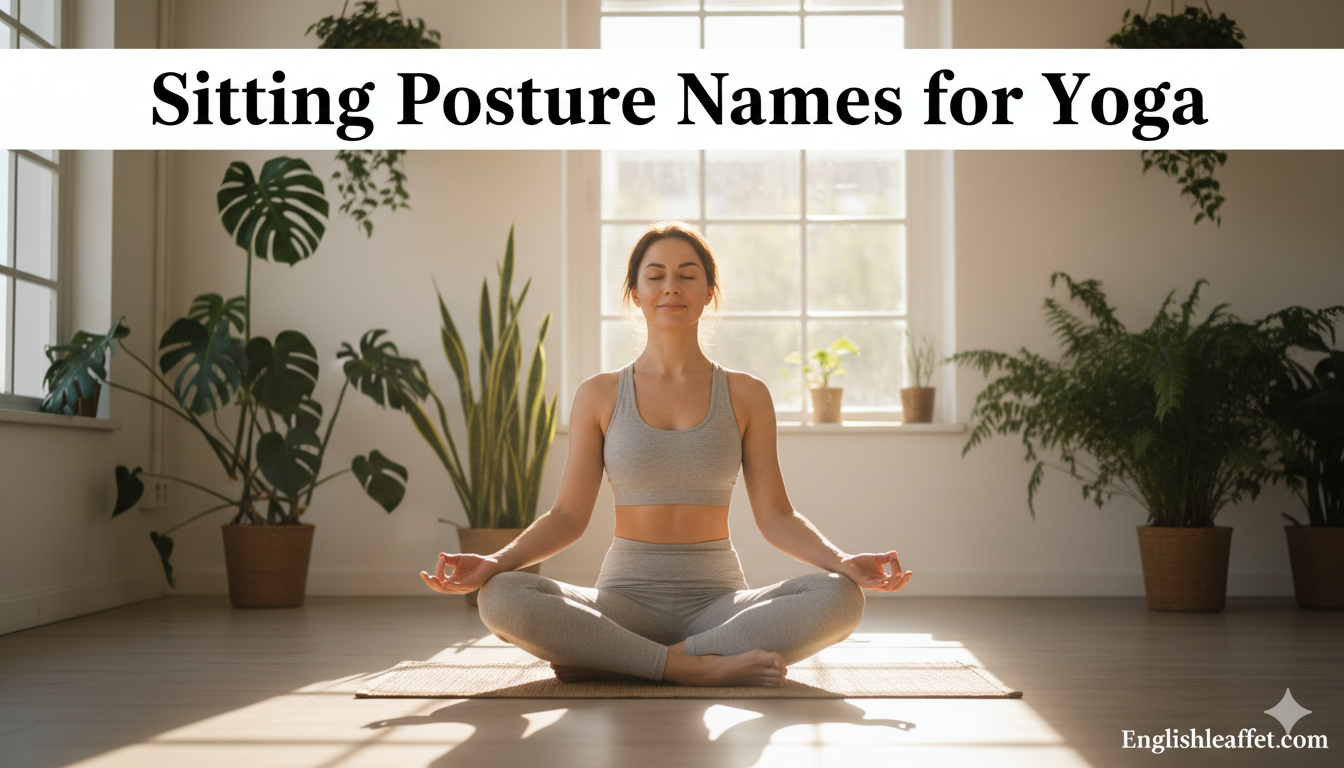
Your current flexibility level determines appropriate sitting positions. Beginners should start with simple positions like Sukhasana or cross-legged sitting. These positions place minimal demands on joint mobility.
Intermediate practitioners can explore positions like Half Lotus or Seiza. These poses require moderate flexibility and build strength over time. Advanced positions like full Lotus need significant hip opening.
Assess Your Purpose
Different activities require specific sitting positions. Meditation benefits from stable yoga poses that support long periods of stillness. Work situations need ergonomic positions that prevent fatigue.
Social settings allow casual positions like side sitting or cross-legged. Cultural contexts may require traditional positions like Seiza. Match your sitting position to the situation and duration.
Listen to Your Body
Pain signals indicate inappropriate positions or excessive duration. Mild discomfort during stretching differs from sharp joint pain. Stop immediately if you experience concerning sensations.
Individual body proportions affect position comfort. Some people naturally suit certain positions better than others. Experiment with variations to find your optimal sitting positions.
Common Mistakes in Sitting Positions
Poor Spinal Alignment
Rounded backs compromise sitting position benefits. Your spine should maintain its natural curves in most positions. Slouching increases pressure on spinal discs.
Excessive arching also causes problems. Over-correction creates tension in the lower back. Find the middle path between slumping and rigid posture.
Forced Flexibility
Forcing yourself into advanced positions causes injury. Flexibility develops gradually through consistent practice. Rushing the process damages ligaments and joints.
Use props like cushions or blocks to support your practice. These tools reduce strain while building capacity. Progress comes from patience and regular practice.
Extended Static Sitting
Remaining in one position too long creates stiffness. Even perfect posture becomes problematic without movement. Change positions every 30-45 minutes.
Regular movement breaks restore circulation and reduce fatigue. Simple stretches counteract sitting’s effects. Balance stillness with dynamic activity.
Sitting Position Names by Benefits Table
| Benefit Category | Recommended Positions | Duration | Frequency |
|---|---|---|---|
| Meditation | Padmasana, Sukhasana, Siddhasana | 20-60 minutes | Daily |
| Flexibility | Butterfly, Hurdler, Straddle | 5-10 minutes | 3-4x weekly |
| Digestion | Vajrasana, Sukhasana | 5-15 minutes | After meals |
| Back Health | Dandasana, Upright, 90-degree | Varies | Throughout day |
| Hip Opening | Padmasana, Butterfly, Side Sit | 10-20 minutes | 4-5x weekly |
| Relaxation | Reclining, Cross-legged, Side Sit | 15-30 minutes | As needed |
Sitting Position Examples for Daily Life
Morning Routine
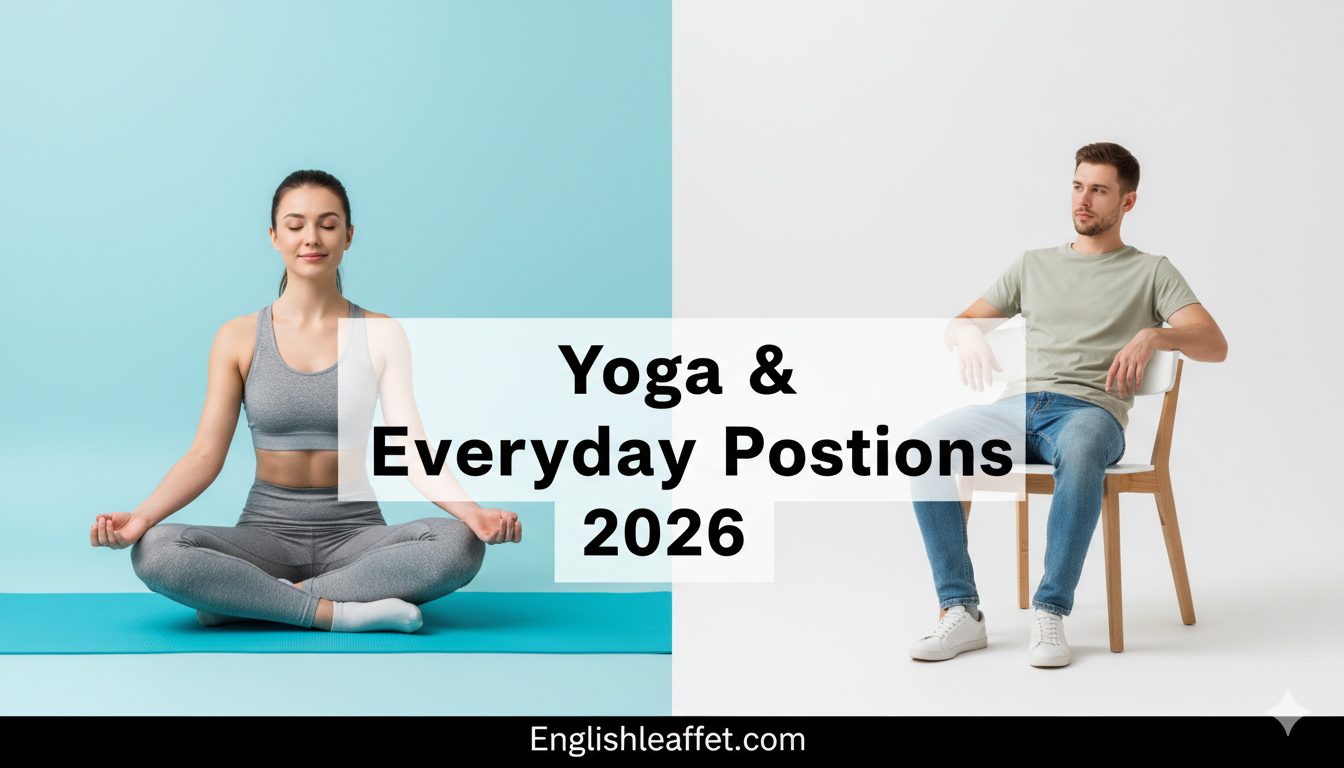
Start your day with Sukhasana for morning meditation or breathing exercises. This position awakens your body gently and sets a calm tone. Follow with Dandasana to stretch the back and hamstrings.
Transition to standing gradually through kneeling positions. This progression warms up joints and prepares muscles. Maintain awareness of posture throughout morning activities.
Office Work
Use 90-degree sitting for computer work and desk tasks. Set up your workspace to support this position naturally. Position your screen at eye level to prevent neck strain.
Take standing breaks every hour. Use these breaks for light stretches and position changes. Alternate between upright and slightly forward leaning as tasks demand.
Evening Relaxation
Wind down with gentle floor positions like cross-legged or side sitting. These positions encourage relaxation while maintaining awareness. Practice Vajrasana after dinner to support digestion.
End the day with reclining positions or restorative yoga poses. These positions signal your body to shift toward rest. Combine with deep breathing for maximum relaxation benefits.
Cultural Significance of Sitting Positions
Eastern Traditions
Eastern cultures emphasize floor sitting positions. These traditions view ground contact as grounding and humble. Yoga, meditation, and martial arts all incorporate specific sitting positions.
Japanese culture maintains strict sitting etiquette. Seiza demonstrates respect in formal situations. Agura offers informality in casual settings. Understanding these differences shows cultural awareness.
Western Practices
Western cultures traditionally favor chair sitting. Modern ergonomics emerged from office culture concerns. The focus emphasizes preventing workplace injuries and maintaining productivity.
Recent Western interest in yoga brought floor positions back. Many people now blend traditional sitting positions with chair use. This fusion approach recognizes benefits from multiple traditions.
Sitting Positions for Children
Developmental Considerations
Children naturally explore various sitting positions. W-sitting appears frequently during play activities. Recent research suggests this position is generally safe for short periods.
Encourage position variety rather than restricting specific positions. Multiple positions develop different muscle groups and flexibility. Provide options like cushions, small chairs, and floor space.
Educational Settings
Classroom sitting affects learning and behavior. Traditional “crisscross applesauce” works for some children but not all. Offer alternatives like long sitting, kneeling, or side sitting.
Some children concentrate better with movement options. Wobble cushions or therapy balls provide active sitting. Match seating choices to individual needs and preferences.
Sitting Position Modifications for Special Needs
Limited Flexibility
Use props to make positions accessible. Cushions elevate the hips in cross-legged positions. This elevation reduces hip and knee strain significantly.
Blocks provide support in forward-leaning positions. Straps help maintain leg positions without excessive effort. These tools make yoga positions available to everyone.
Back Problems
Choose positions that support spinal health. Wall support helps maintain upright posture. Avoid positions that cause pain or discomfort.
Chair modifications adapt yoga positions for limited mobility. Many yoga poses can be performed while seated in chairs. This approach maintains benefits while accommodating restrictions.
Pregnancy Considerations
Pregnant individuals need modified sitting positions. Side sitting with support prevents pressure on the abdomen. Avoid deep twisting or compressed positions.
Use extra cushions for comfort and support. Prop yourself up to maintain circulation. Listen to your body and adjust as pregnancy progresses.
Transition Between Sitting Positions
Smooth Movement Patterns
Move slowly between positions to prevent injury. Quick transitions strain muscles and joints. Use your hands for support during changes.
Engage your core muscles during transitions. This engagement protects your back and improves control. Practice transitions deliberately to build strength and coordination.
Building a Rotation
Create a sitting position rotation for long sessions. Alternate between three or four comfortable positions. This variety prevents stiffness and maintains circulation.
Set reminders to change positions regularly. Small movements make big differences over time. Listen to your body’s signals for when to change.
Sitting Positions and Breathing
Breathing in Different Positions
Sitting positions affect breathing capacity. Upright positions maximize lung expansion. Compressed positions restrict breath depth.
Practice conscious breathing in each position. Notice how different positions feel for breathing. Use this awareness to choose appropriate positions for breathing exercises.
Pranayama Practices
Pranayama (yogic breathing) requires stable sitting positions. Padmasana, Sukhasana, and Siddhasana support extended breathing practice. These positions keep the spine aligned for optimal breath flow.
Experiment with breathing in various positions. Some positions suit energizing breaths better. Others support calming breathing techniques more effectively.
Modern Ergonomics and Sitting Position Names
Office Ergonomics
Modern ergonomics developed specific sitting guidelines. The 90-degree rule protects joints during extended sitting. Chair height, desk position, and screen placement all matter.
Standing desks offer alternatives to constant sitting. However, standing also requires proper positioning. Balance sitting and standing throughout the workday.
Tech Neck Prevention
Forward head posture plagues modern device users. Maintain upright sitting when using phones or tablets. Bring devices to eye level rather than lowering your head.
Regular neck stretches counteract screen time effects. Combine proper sitting position with device positioning. This dual approach prevents tech-related neck problems.
Advanced Sitting Position Variations
Gomukhasana Arms
Combine sitting positions with arm variations. Gomukhasana arms bind behind the back. This addition deepens the practice and opens shoulders.
Add twists to basic sitting positions. Twisting variations enhance spinal mobility. These combinations create more comprehensive practices.
Balance Challenges
Explore balance-focused sitting variations. Remove hands from the floor in Dandasana. This challenge strengthens core and improves stability.
Rock forward and back in Vajrasana. These micro-movements build proprioception. Advanced practitioners explore handstands from sitting positions.
Sitting Position Practice Schedule
Weekly Practice Plan
- Monday: Focus on basic positions (Sukhasana, Cross-legged) – 20 minutes Practice basic positions to start the week fresh. Focus on proper alignment and breathing.
- Tuesday: Work positions (90-degree, Upright) awareness – 15 minutes Integrate ergonomic awareness into workday. Set hourly reminders for position checks.
- Wednesday: Hip opening (Butterfly, Padmasana prep) – 25 minutes Dedicate time to hip flexibility work. Use props as needed for support.
- Thursday: Rest and observe – Notice sitting throughout day Mindfully observe your sitting patterns. Note which positions you naturally choose.
- Friday: Cultural positions (Seiza, Squatting) – 20 minutes Explore traditional sitting positions. Research cultural contexts for deeper understanding.
- Saturday: Long practice (Multiple positions rotation) – 40 minutes Spend extended time rotating through various positions. Notice differences in comfort and stability.
- Sunday: Restorative positions (Reclining, Supported) – 30 minutes Use supportive props for gentle practice. Focus on relaxation and restoration.
Frequently Asked Questions (FAQs)
What is the healthiest sitting position for daily use?
The healthiest sitting position varies throughout the day with regular changes. For office work, maintain 90-degree sitting with feet flat on the floor. Change positions every 30-45 minutes to prevent stiffness and maintain circulation.
Can sitting positions improve flexibility?
Yes, regular practice of floor sitting positions significantly improves flexibility. Positions like Sukhasana and Butterfly stretch hip muscles and increase joint range of motion. Consistency matters more than duration for flexibility gains.
How long should I hold each sitting position?
For meditation, hold positions 20-60 minutes once comfortable. For flexibility work, hold stretching positions 5-10 minutes. For daily sitting, change positions every 30-45 minutes to prevent stiffness.
Is W-sitting harmful for children?
Recent research indicates W-sitting is generally safe for short periods. Children naturally grow out of this position by age eight. Encourage position variety rather than strictly prohibiting W-sitting.
Which sitting position is best for meditation?
Padmasana offers maximum stability for experienced meditators. Beginners should use Sukhasana for comfort during learning. The best meditation position supports an upright spine without causing pain.
Can sitting positions help with back pain?
Proper sitting positions can reduce back pain significantly. Upright positions with spinal alignment prevent strain. Floor positions strengthen core muscles that support the back over time.
What sitting position is best after eating?
Vajrasana is ideal after meals as it aids digestion. This kneeling position applies gentle pressure to abdominal organs. Sit for 5-15 minutes after eating for best results.
How do I know if I’m sitting correctly?
Correct sitting maintains natural spinal curves without strain. You should feel stable and able to breathe deeply. Pain or numbness indicates incorrect positioning or excessive duration.
Are there sitting positions for pregnant women?
Yes, side sitting with support works well during pregnancy. Avoid compressed abdominal positions and deep twists. Use extra cushions and props for comfort throughout pregnancy.
How often should I change sitting positions?
Change positions every 30-45 minutes during extended sitting. This frequency prevents stiffness and maintains circulation. Listen to your body for discomfort signals indicating time to move.
Conclusion
Understanding sitting position names empowers you to make informed choices about posture throughout your day.
From ancient yoga positions like Padmasana and Vajrasana to modern ergonomic principles, each sitting style serves specific purposes.
The key to healthy sitting involves variety, awareness, and regular movement. Whether you practice meditation, work at a desk, or simply relax at home, knowing proper sitting position names helps you communicate clearly and maintain physical well-being.
Start incorporating different positions gradually, listen to your body’s feedback, and enjoy the benefits of conscious sitting practices in your daily life.
