

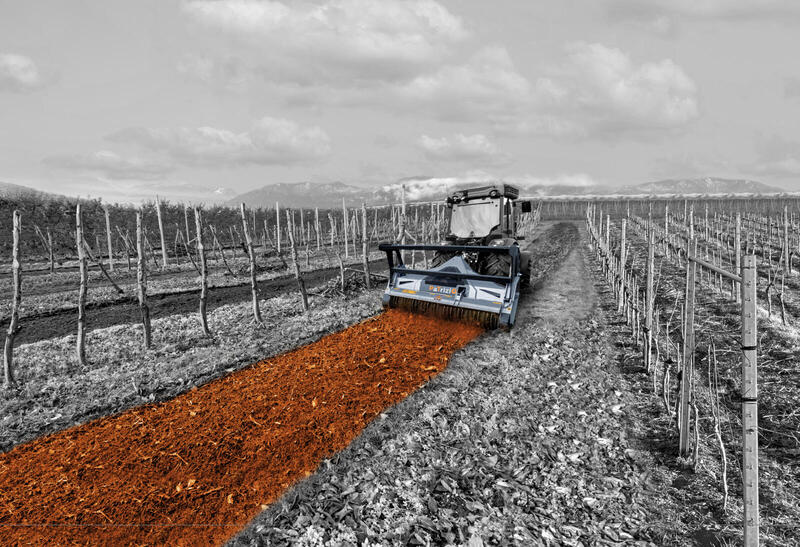
Land clearing: efficiency, safety, and operational control
Forestry mulchers are widely used for clearing overgrown or inaccessible land, preparing sites for agricultural use, construction, or infrastructure development. They process vegetation directly on-site, converting large volumes of biomass into fine mulch, eliminating the need for manual removal or burning. This method reduces soil disturbance and supports faster reclamation of the cleared area.
Compared to traditional techniques involving bulldozers or chainsaws, mulching offers greater operational control. Operators can target specific areas, avoid damaging the root systems of desired plants, and work efficiently in tight or rugged spaces. The result is a cleaner, safer worksite and reduced environmental impact.
Site preparation and habitat restoration
In addition to clearing, a forestry mulcher is ideal for preparing land for seeding, replanting, or ecological restoration. Whether reclaiming abandoned fields, maintaining crop rows, or restoring wildlife habitats, this type of equipment helps create a clean, workable surface without the need for extensive tillage.
Its ability to handle residual branches, stumps, and root systems makes the forestry mulcher suitable for projects involving native vegetation restoration or the removal of invasive species. The finely processed material it leaves behind aids in soil stabilization and moisture retention, contributing to faster regrowth and reduced erosion risks.
Fire mitigation: reducing fuel loads and creating buffer zones
Wildfire prevention is one of the most critical applications of forestry mulching. By reducing accumulated biomass, mulchers help lower fuel loads in fire-prone areas, making ignition and spread less likely. This approach is particularly effective in forested regions, under power lines, and near residential developments surrounded by unmanaged vegetation.
Mulchers are often deployed to create and maintain firebreaks – strategically cleared strips of land that slow or stop advancing flames. These buffer zones can be established more quickly and with greater consistency using a forestry mulcher rather than manual tools or heavy earthmoving equipment.
For public agencies and private land managers alike, forestry mulching provides a cost-effective and scalable strategy to address wildfire risk while maintaining the ecological integrity of the terrain.
Versatility and carrier integration: adapting to the terrain
One of the key advantages of forestry mulchers lies in their compatibility with a wide range of carriers. Whether mounted on tractors, excavators, skid steers, or tracked carriers, they can be configured to match specific terrain and jobsite requirements. This flexibility enables efficient operation in steep, uneven, or densely vegetated areas where maneuverability is essential.
Choosing the right carrier and mulcher combination ensures optimal performance and safety. For example, a compact skid steer-mounted unit may be ideal for narrow corridors, while a heavy-duty tracked carrier offers stability on slopes and soft ground. With proper setup, forestry mulchers can adapt to changing field conditions without sacrificing productivity.
One solution, multiple critical applications
From reclaiming overgrown land to establishing firebreaks in high-risk zones, forestry mulchers are a practical, high-value solution for professionals across sectors. Their ability to streamline operations, reduce manual labor, and support long-term land management goals makes them an essential tool in demanding environments.
Whether used for site development, ecological restoration, or wildfire mitigation, forestry mulchers bring efficiency, precision, and reliability to the forefront of modern land care strategies.
Reliable forestry solutions: the FAE approach to high-performance mulching
Since 1989, FAE has played a key role in the development of advanced attachments for a wide range of carriers, including tractors, excavators, skid steers, tracked carriers, and special vehicles. Operating across the forestry, agricultural, infrastructure, and demining sectors, the company delivers equipment engineered to tackle the toughest vegetation management and land clearing scenarios.
Its extensive catalog includes more than 400 models distributed across over 90 specialized product lines. Each solution is designed with a clear focus on real-world applications – such as forest maintenance, terrain preparation, and targeted biomass reduction – addressing the varied needs of professionals in the field.
FAE forestry mulchers are built with reinforced structures, top-tier components, and high-strength materials to ensure optimal reliability and longevity. Their technical design supports high efficiency shredding of trunks, branches, shrubs, roots, and stumps up to 20 inches in diameter, maintaining performance even under continuous load and in demanding terrain.
Adaptable to various carrier types, these machines are suited for use in steep, rugged, or post-fire environments, as well as along utility corridors and in densely vegetated areas. The company’s dedication to technological innovation and its decades of field experience have produced a product range trusted by operators seeking robust, versatile, and consistently effective forestry equipment.
