

Consonance literary definition represents one of the most powerful sound devices that writers use to create musical effects in their work.
You might think poetry and prose are just words on a page, but they’re actually filled with hidden musical patterns.
The truth is, understanding consonance can transform how you read, write, and appreciate literature forever.

What Is Consonance in Literature? (Featured Snippet Answer)
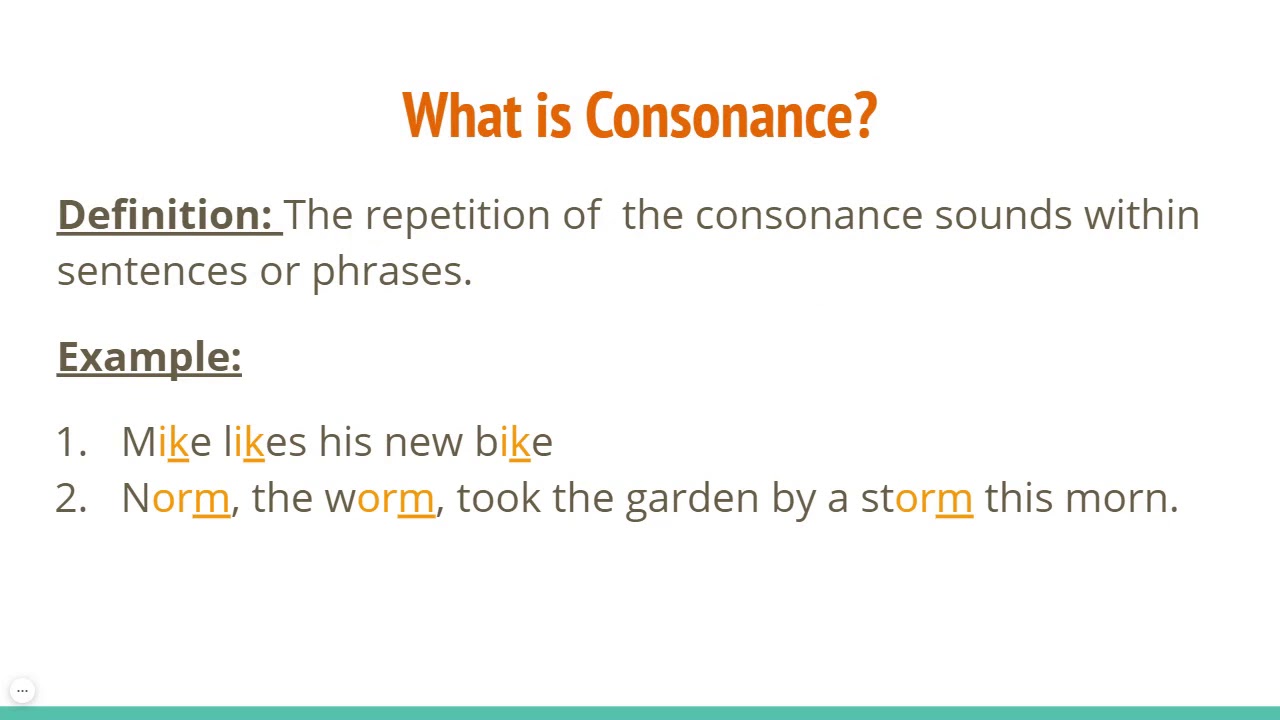
Consonance is the repetition of consonant sounds within or at the end of words in close succession.
Unlike alliteration, which focuses on initial sounds, consonance can occur anywhere in words.
Writers use this literary device to create rhythm, emphasis, and musical quality in their writing.
The repeated consonant sounds don’t have to be spelled the same way – they just need to sound similar.
Understanding Consonance Literary Definition
The Core Meaning of Consonance
- Consonance literary definition goes beyond simple sound repetition.
- This literary technique involves the deliberate placement of similar consonant sounds to achieve specific effects.
- Writers strategically position these sounds to enhance meaning, create atmosphere, or establish rhythm.
- The beauty of consonance lies in its subtlety – readers feel its impact without always noticing it consciously.
Key Characteristics of Consonance
- Consonance operates through several distinct features:
- The consonant sounds can appear at the beginning, middle, or end of words.
- These sounds create a pleasing auditory experience when read aloud.
- The repetition doesn’t require identical spelling – only similar sounds matter.
- Consonance works best when the repeated sounds appear in stressed syllables.
How Consonance Differs from Other Sound Devices
Understanding consonance requires distinguishing it from related literary techniques:
Alliteration repeats initial consonant sounds only.
Assonance focuses on vowel sound repetition instead of consonants.
Rhyme typically involves end-word sound patterns with both vowels and consonants.
Consonance can occur anywhere in words and focuses solely on consonant sounds.
Types of Consonance in Literature
Initial Consonance
- Initial consonance occurs when the same consonant sound appears at the beginning of words.
- “Peter Piper picked a peck of pickled peppers” demonstrates this type clearly.
- This form creates immediate impact and catches readers’ attention quickly.
- Writers often use initial consonance for memorable phrases and titles.
Medial Consonance
- Medial consonance places repeated consonant sounds in the middle of words.
- “The silken, sad, uncertain rustling” shows how middle sounds create atmosphere.
- This type works subtly to maintain rhythm throughout longer passages.
- Medial consonance often goes unnoticed but significantly impacts reading flow.
Final Consonance
- Final consonance repeats consonant sounds at word endings.
- “First and last” demonstrates how ending sounds create closure effects.
- This type provides satisfying conclusion sounds in sentences and stanzas.
- Writers use final consonance to create sense of completion or finality.
Clear Examples of Consonance in Literature
Classic Poetry Examples
William Shakespeare masterfully employed consonance throughout his sonnets:
“When to the sessions of sweet silent thought” uses ‘s’ sounds repeatedly.
The ‘s’ consonance creates a whispering, contemplative atmosphere.
Edgar Allan Poe used consonance to build tension in “The Raven”:
“Once upon a midnight dreary, while I pondered, weak and weary” repeats ‘w’ sounds.
Modern Literature Examples
J.K. Rowling uses consonance in character names and descriptions:
“Severus Snape” employs ‘s’ sounds to suggest serpentine qualities.
Dr. Seuss built entire books around consonant repetition:
“Green Eggs and Ham” uses ‘g’ and ‘m’ sounds throughout.
Song Lyrics and Rap Examples
Eminem frequently uses consonance in his rap lyrics:
“His palms are sweaty, knees weak, arms are heavy” repeats various consonant sounds.
Taylor Swift employs consonance in memorable hooks:
“Shake it off, shake it off” uses ‘sh’ and ‘k’ sounds effectively.
How Writers Use Consonance Effectively
Creating Mood and Atmosphere
Consonance helps writers establish specific emotional tones:
Harsh consonants (k, g, t, p) create tension and aggression.
Soft consonants (l, m, n, r) produce gentle, soothing effects.
Sibilant sounds (s, sh, z) generate mysterious or sinister atmospheres.
Writers choose consonant sounds based on their desired emotional impact.
Building Rhythm and Flow
Consonance contributes significantly to textual rhythm:
Repeated consonant sounds create predictable patterns readers expect.
These patterns help maintain consistent pacing throughout passages.
Strategic consonance placement guides readers through complex sentences.
The technique helps writers avoid monotonous or choppy prose.
Enhancing Memory and Recall
Consonance makes text more memorable through sound patterns:
- Brand names often use consonance for memorability
- Advertising slogans rely heavily on consonant repetition
- Political speeches employ consonance for impactful phrases
- Children’s books use consonance to aid learning and retention
Common Mistakes with Consonance
Overusing Consonance
- Beginning writers often make these consonance errors:
- Using too much consonance creates tongue-twisting effects.
- Excessive repetition distracts from meaning and content.
- Forced consonance sounds unnatural and contrived.
- Good consonance should enhance, not overwhelm, the message.
Ignoring Meaning for Sound
- Writers sometimes prioritize sound over sense:
- Consonance should support the text’s meaning, not replace it.
- Beautiful sounds mean nothing without coherent content.
- Effective consonance serves the story, not the reverse.
- Balance remains crucial between sound and substance.
Mixing Consonance Types Carelessly
- Combining different consonance types requires skill:
- Mixing harsh and soft consonants creates jarring effects.
- Random consonant repetition lacks purposeful direction.
- Successful consonance follows logical patterns and purposes.
- Writers must consider overall sound harmony throughout pieces.

Benefits of Understanding Consonance
For Readers
Understanding consonance enhances reading experiences:
Deeper appreciation for literary craftsmanship develops.
Enhanced comprehension of author intentions emerges.
Improved analytical skills for studying literature grow.
Greater enjoyment of poetic and prose works increases.
For Writers
Consonance knowledge provides powerful writing tools:
Rhythm control becomes more precise and intentional.
Mood creation gains additional layers of sophistication.
Reader engagement improves through strategic sound use.
Memorable passages become easier to craft and refine.
For Students
Consonance study offers educational advantages:
- Test performance improves on literary analysis questions
- Writing quality increases with sound device knowledge
- Critical thinking develops through pattern recognition
- Communication skills enhance through rhythm awareness
Consonance in Different Genres
Poetry and Verse
Poetry relies heavily on consonance for musical effects:
Free verse uses consonance to replace traditional rhyme schemes.
Sonnets employ consonance alongside meter and rhyme.
Haikus utilize consonance within strict syllable constraints.
Epic poetry uses consonance to aid memorization and recitation.
Prose Fiction
Novelists and short story writers use consonance differently:
Dialogue becomes more realistic with natural consonance patterns.
Descriptive passages gain atmosphere through consonant repetition.
Character names often employ consonance for memorable effects.
Narrative voice develops personality through consonance choices.
Drama and Theater
Playwrights consider consonance for performance effects:
Monologues use consonance to create emotional intensity.
Dialogue exchanges employ consonance for rhythm and pacing.
Character differentiation occurs through distinct consonance patterns.
Memorization becomes easier for actors with consonance cues.
Teaching Consonance to Students
Age-Appropriate Approaches
Different age groups require different consonance instruction:
Elementary students learn through fun tongue twisters and games.
Middle school students analyze simple poems and song lyrics.
High school students examine complex literary works and techniques.
College students study consonance theory and historical development.
Practical Exercises
Effective consonance teaching involves hands-on activities:
Sound identification exercises help students recognize patterns.
Creative writing assignments let students practice consonance use.
Literary analysis projects develop critical thinking skills.
Performance activities demonstrate consonance’s auditory impact.
Assessment Strategies
Teachers can evaluate consonance understanding through:
- Multiple choice questions testing pattern recognition
- Essay assignments analyzing consonance in literature
- Creative projects demonstrating practical application
- Oral presentations showing consonance effects in performance
Advanced Consonance Techniques
Subtle Consonance Applications
Master writers employ sophisticated consonance methods:
Incremental consonance gradually builds sound patterns.
Consonance clusters group related sounds strategically.
Cross-line consonance connects different sentences or stanzas.
Thematic consonance reinforces content through sound choice.
Consonance in World Literature
Different cultures approach consonance uniquely:
Japanese poetry uses consonance within strict syllable forms.
Arabic literature employs consonance alongside complex rhyme schemes.
Spanish poetry combines consonance with natural language rhythms.
German literature utilizes consonance with compound word structures.
Modern Digital Applications
Technology creates new consonance possibilities:
Rap production uses consonance with beat patterns.
Audiobook narration emphasizes consonance for listener engagement.
Video game dialogue employs consonance for character development.
Social media content uses consonance for viral appeal.
Historical Development of Consonance
Ancient Origins
Consonance has ancient roots in human communication:
Oral traditions used consonance for memorization aids.
Religious texts employed consonance for chanting and recitation.
Epic poems relied on consonance for performance support.
Folk songs developed consonance patterns naturally over time.
Medieval and Renaissance Periods
Literary consonance evolved during these eras:
Courtly poetry refined consonance for sophisticated audiences.
Religious verse used consonance for spiritual emphasis.
Dramatic works employed consonance for emotional impact.
Printing press spread consonance techniques more widely.
Modern Developments
Contemporary writers continue expanding consonance use:
Experimental poetry pushes consonance boundaries.
Multimedia works combine consonance with visual elements.
Global literature blends consonance traditions across cultures.
Digital platforms create new consonance distribution methods.
Consonance Analysis Tools and Methods
Traditional Analysis Approaches
Literary scholars use established methods for consonance study:
Close reading identifies patterns through careful examination.
Scansion techniques map consonance alongside meter patterns.
Comparative analysis examines consonance across different works.
Historical context explains consonance choices and effects.
Modern Digital Tools
Technology assists consonance analysis:
Text analysis software identifies consonance patterns automatically.
Audio analysis programs measure consonance effects in performance.
Database searches find consonance examples across literature.
Machine learning predicts consonance effectiveness in new works.
Research Applications
Scholars apply consonance analysis to various fields:
- Psychology studies examine consonance’s cognitive effects
- Linguistics research explores consonance in language development
- Education studies test consonance’s learning benefits
- Marketing research analyzes consonance in advertising effectiveness
Future of Consonance in Literature
Emerging Trends
New directions in consonance usage are developing:
Multilingual works blend consonance patterns across languages.
Interactive fiction allows readers to influence consonance choices.
AI collaboration explores machine-generated consonance patterns.
Virtual reality creates immersive consonance experiences.
Educational Evolution
Consonance teaching continues evolving:
Online platforms provide interactive consonance lessons.
Gamification makes consonance learning more engaging.
Collaborative projects connect students globally through consonance.
Adaptive learning personalizes consonance instruction.
Cultural Impact
Consonance influence extends beyond literature:
Music production increasingly incorporates literary consonance principles.
Public speaking training emphasizes consonance for impact.
Therapeutic applications use consonance for healing and comfort.
Cultural preservation maintains traditional consonance patterns.
FAQs
What is 5 example consonance?
Examples:
-
Pitter-patter
-
Mike likes his new bike
-
Lumpy bumpy road
-
The ship has sailed to the far off shores
-
I dropped the locket in the thick mud
These all repeat consonant sounds, especially at the end or middle of words.
What is consonance vs alliteration?
Consonance is the repetition of consonant sounds anywhere in words (often at the end), while alliteration repeats consonant sounds at the beginning of closely placed words.
Example:
-
Consonance: blank and think
-
Alliteration: wild winds whipped wildly
What is the difference between consonance and repetition?
Consonance is a type of repetition—specifically of consonant sounds. Repetition, more broadly, refers to repeating any word, phrase, or sound in a literary work for emphasis.
What is the difference between rhyme and consonance?
Rhyme involves repeated ending sounds (both vowels and consonants) in words—like cat and hat. Consonance only involves repeating consonant sounds, often not at the end.
What are 10 examples of consonant words?
Here are 10 words with strong consonant use:
Book, crack, drift, fact, blink, lamp, mask, quest, task, bring
These show repeated or strong consonant sounds and can be used in consonance-rich writing.
What is consonance in literature?
Consonance is a literary device where consonant sounds are repeated in nearby words, especially at the end or middle. It’s used to add rhythm, mood, or emphasis in poetry and prose.
Conclusion
Consonance literary definition encompasses far more than simple sound repetition.
This powerful literary device shapes how we experience language, emotion, and meaning.
Understanding consonance transforms readers into more sophisticated literary analysts.
Writers who master consonance create more engaging, memorable, and impactful works.
The journey of exploring consonance opens doors to deeper literary appreciation.
Whether you’re a student, teacher, writer, or literature lover, consonance knowledge enriches your relationship with language.
Remember that consonance works best when it serves the story, not the reverse.
Practice identifying consonance in your favorite works, and you’ll discover new layers of meaning.
The beauty of consonance lies in its ability to make ordinary words sing with extraordinary power.
