

The paradox literary device confuses readers at first, but here’s the truth. It’s one of the most powerful tools writers use to make you think twice about everything you believe.
A paradox creates statements that seem impossible but reveal deeper truths when you dig deeper.
This literary technique appears in famous works from Shakespeare to modern novels, making complex ideas stick in your mind forever.
Understanding paradoxes will transform how you read literature and communicate your own ideas.
What is a Paradox Literary Device?
A paradox literary device is a statement that contradicts itself yet contains a hidden truth.
Writers use this technique to challenge readers’ thinking and reveal deeper meanings.
The word “paradox” comes from the Greek word “paradoxon,” meaning “contrary to expectation.”
These contradictory statements force readers to pause and think about the real message behind the words.
Literary paradoxes work by presenting two opposing ideas that somehow make perfect sense together.
The beauty of paradoxes lies in their ability to express complex human experiences in simple, memorable phrases.
Types of Paradoxes in Literature
Logical Paradox
- A logical paradox presents a statement that defies reason but reveals truth through contradiction.
- These paradoxes challenge our understanding of logic and reality.
- Famous example: “This statement is false” creates an impossible situation that makes readers question truth itself.
Rhetorical Paradox
- Rhetorical paradoxes use contradiction to emphasize a point or create emotional impact.
- Writers employ these to make their messages more memorable and thought-provoking.
- Example: “I must be cruel to be kind” from Shakespeare’s Hamlet shows how opposite actions can serve the same purpose.
Situational Paradox
- Situational paradoxes occur when circumstances create unexpected contradictions.
- These paradoxes reveal irony in life situations and human behavior.
- Example: A fire station burns down while firefighters are out on a call.
Temporal Paradox
- Temporal paradoxes involve contradictions related to time and causality.
- These appear frequently in science fiction and philosophical discussions about time travel.
- Example: “The grandfather paradox” where traveling back in time creates logical impossibilities.
Famous Examples of Paradox Literary Device
Shakespeare’s Paradoxes
“Fair is foul, and foul is fair” – Macbeth
This paradox introduces the theme of deception and moral confusion throughout the play.
Shakespeare uses this contradiction to show how appearances can deceive us.
“Cowards die many times before their deaths” – Julius Caesar
This paradox reveals how fear creates multiple psychological deaths before physical death.
The contradiction emphasizes the courage needed to truly live.
Oscar Wilde’s Paradoxes
“I can resist everything except temptation”
Wilde’s paradox humorously reveals human weakness through contradiction.
This statement shows how our strongest resolutions crumble before desire.
“We are all in the gutter, but some of us are looking at the stars”
This paradox combines despair with hope in a single, powerful image.
Wilde demonstrates how perspective can transform any situation.
George Orwell’s Paradoxes
“War is peace, freedom is slavery, ignorance is strength” – 1984
Orwell’s paradoxes expose how totalitarian governments manipulate truth.
These contradictions show how language can be weaponized against citizens.
“All animals are equal, but some animals are more equal than others” – Animal Farm
This paradox reveals the hypocrisy of political systems that claim equality.
The contradiction exposes how power corrupts even the most noble ideals.
Religious and Philosophical Paradoxes
“The last shall be first, and the first shall be last” – Biblical
This paradox challenges conventional thinking about success and worth.
The contradiction reveals spiritual truths about humility and divine justice.
“The only thing I know is that I know nothing” – Socrates
This paradox demonstrates true wisdom through acknowledged ignorance.
The contradiction shows how learning begins with recognizing our limitations.
How Paradoxes Work in Literature
Creating Cognitive Dissonance
- Paradoxes force readers to hold two opposing thoughts simultaneously.
- This mental tension creates memorable moments that stick in readers’ minds.
- The brain works harder to resolve the contradiction, making the message more impactful.
Revealing Hidden Truths
- Paradoxes uncover truths that straight statements cannot express.
- They reveal the complexity of human experience through simple contradictions.
- These hidden truths often relate to universal themes like love, death, and meaning.
Enhancing Memorability
- Contradictory statements are easier to remember than conventional wisdom.
- The unusual nature of paradoxes makes them stand out in readers’ memories.
- This memorability helps important themes and messages last long after reading.
Encouraging Deep Thinking
- Paradoxes require active engagement from readers to understand their meaning.
- They prevent passive reading by demanding intellectual participation.
- This engagement creates stronger connections between readers and the text.
The Psychology Behind Paradoxes
Cognitive Processing
- The human brain struggles to process contradictory information simultaneously.
- This struggle creates mental friction that enhances memory formation.
- Paradoxes exploit this psychological quirk to make ideas more memorable.
Attention and Focus
- Contradictory statements grab attention more effectively than regular prose.
- The unexpected nature of paradoxes breaks reading patterns and forces focus.
- This attention-grabbing quality makes paradoxes excellent for emphasizing key points.
Emotional Impact
- Paradoxes often trigger emotional responses through their surprising nature.
- The contradiction can create confusion, delight, or profound realization.
- These emotional connections strengthen the impact of the literary message.
How to Identify Paradoxes in Literature
Look for Contradictory Elements
- Search for statements that seem to oppose themselves or common sense.
- These contradictions often appear in character dialogue or narrative descriptions.
- Pay attention to words that directly contradict each other within the same sentence.
Notice Impossible Situations
- Paradoxes often describe situations that cannot logically exist.
- These impossible scenarios usually contain deeper metaphorical meanings.
- Characters might express feelings or thoughts that defy normal expectations.
Examine Cause and Effect
- Look for situations where causes and effects seem reversed or contradictory.
- These paradoxes often reveal complex relationships between actions and consequences.
- The contradiction might expose hidden truths about human nature or society.
Consider Multiple Meanings
- Paradoxes often work through double meanings or wordplay.
- A single word might carry two different meanings that create the contradiction.
- These multiple meanings usually reveal the deeper truth within the paradox.

Creating Your Own Paradoxes
Start with Universal Truths
- Begin with commonly accepted ideas about life, love, or human nature.
- Find ways to express these truths through contradictory statements.
- Universal themes provide the foundation for meaningful paradoxes.
Use Familiar Concepts
- Combine familiar ideas in unexpected ways to create contradiction.
- The familiarity helps readers understand while the contradiction creates impact.
- Common experiences make paradoxes more relatable and powerful.
Test for Deeper Meaning
- Ensure your paradox contains genuine insight beyond the surface contradiction.
- Meaningless contradictions confuse without providing value to readers.
- The best paradoxes reveal truths that cannot be expressed through direct statements.
Practice with Simple Examples
- Start with basic contradictions before attempting complex philosophical paradoxes.
- Simple examples help you understand the mechanics of paradox creation.
- Build complexity gradually as you master the fundamental techniques.
Common Mistakes with Paradoxes
Overusing the Device
- Too many paradoxes can confuse readers and diminish their impact.
- Use paradoxes strategically to emphasize important points or themes.
- Quality matters more than quantity when employing this literary device.
Creating Meaningless Contradictions
- Not all contradictions qualify as meaningful paradoxes.
- Ensure your paradox serves a purpose beyond mere wordplay.
- The contradiction should reveal genuine insight or truth.
Ignoring Context
- Paradoxes work best when they fit naturally within the story or argument.
- Forced paradoxes feel artificial and reduce reader engagement.
- Consider how the paradox serves the overall narrative or message.
Explaining Too Much
- Paradoxes lose power when authors over-explain their meaning.
- Allow readers to discover the truth within the contradiction themselves.
- The discovery process creates stronger emotional connections to the text.
Paradoxes in Different Genres
Science Fiction
- Science fiction uses paradoxes to explore complex concepts about time, space, and reality.
- Time travel stories frequently employ temporal paradoxes to create conflict.
- These paradoxes help readers question the nature of causality and existence.
Fantasy Literature
- Fantasy writers use paradoxes to create magical systems and mysterious prophecies.
- These contradictions often drive plot development and character growth.
- Paradoxes in fantasy can represent the clash between logic and magic.
Poetry
- Poets use paradoxes to compress complex emotions into powerful images.
- The contradiction creates layers of meaning within limited space.
- Paradoxical poetry often expresses feelings that defy logical explanation.
Drama
- Dramatic paradoxes create tension and reveal character motivations.
- These contradictions often appear in monologues and crucial dialogue.
- Paradoxes in drama can expose the gap between appearance and reality.
Teaching Paradoxes to Students
Start with Simple Examples
- Begin with easily understood paradoxes before moving to complex ones.
- Use familiar situations to help students grasp the concept.
- Simple examples build confidence and understanding progressively.
Encourage Discussion
- Paradoxes naturally generate discussion and debate among students.
- Use this engagement to explore deeper meanings and interpretations.
- Discussion helps students discover insights they might miss individually.
Connect to Real Life
- Show how paradoxes appear in everyday situations and common expressions.
- Real-life connections make the concept more relevant and memorable.
- Students better understand literary paradoxes when they see practical applications.
Use Visual Aids
- Diagrams and visual representations can help explain paradoxical concepts.
- Visual aids make abstract ideas more concrete and understandable.
- Students with different learning styles benefit from multiple presentation methods.
Modern Applications of Paradoxes
Marketing and Advertising
- Advertisers use paradoxes to create memorable slogans and campaigns.
- These contradictions grab attention and stick in consumers’ minds.
- Paradoxical advertising often emphasizes product benefits through contradiction.
Political Rhetoric
- Politicians employ paradoxes to make complex policies seem simple.
- These contradictions can clarify positions or confuse opponents.
- Paradoxical statements often generate media attention and public discussion.
Social Media
- Paradoxes perform well on social media platforms due to their shareability.
- The contradiction creates engagement and encourages sharing.
- Paradoxical posts often go viral because they prompt discussion and debate.
Personal Development
- Self-help authors use paradoxes to challenge conventional thinking about success.
- These contradictions help readers reconsider their assumptions and beliefs.
- Paradoxical advice often provides fresh perspectives on common problems.
The Future of Paradoxes in Literature
Digital Age Adaptations
- Modern writers adapt paradoxes for digital media and interactive storytelling.
- These adaptations maintain the contradiction while using new formats.
- Digital paradoxes might include interactive elements or multimedia presentations.
Cultural Evolution
- Paradoxes evolve with changing cultural values and social norms.
- New contradictions emerge as society develops different perspectives.
- Contemporary paradoxes reflect current challenges and concerns.
Educational Innovation
- Educators develop new methods for teaching paradoxes using technology.
- These innovations make paradoxes more accessible to diverse learners.
- Interactive tools help students explore paradoxical concepts more deeply.
Global Perspectives
- Writers from different cultures contribute unique paradoxical traditions.
- These diverse perspectives enrich the global understanding of paradoxes.
- Cross-cultural paradoxes reveal universal truths about human experience.
FAQs
What is paradox with example?
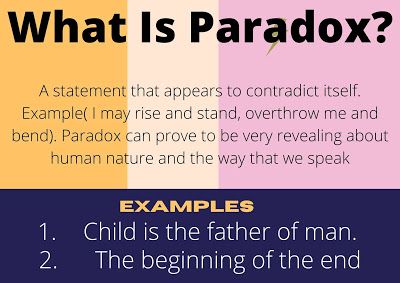
A paradox is a statement that appears self-contradictory but reveals a deeper truth.
Example: “Less is more.”
What is a paradox literary device?
As a literary device, a paradox is used to provoke thought, highlight irony, or uncover hidden truths through seemingly contradictory ideas.
What is the difference between paradox and oxymoron?
A paradox is a full statement or concept that contradicts itself yet is true, while an oxymoron is a figure of speech combining two contradictory words (e.g., “deafening silence”).
What is the literary effect of a paradox?
Paradox deepens meaning, challenges logic, and engages the reader’s critical thinking. It often adds complexity and tension to a text.
What is the best example of a paradox?
A famous literary paradox is from Orwell’s Animal Farm: “All animals are equal, but some animals are more equal than others.”
What is the best example of paradox value?
The paradox of value (also called the diamond–water paradox) refers to how essentials like water are cheap, while non-essentials like diamonds are expensive.
Conclusion
The paradox literary device transforms simple contradictions into profound insights about human nature.
Writers use these impossible statements to reveal truths that direct language cannot express.
Understanding paradoxes enhances your ability to read literature critically and communicate complex ideas effectively.
These contradictory statements appear throughout classic and modern literature, making them essential knowledge for any serious reader.
The power of paradoxes lies in their ability to make readers think deeply about life’s complexities.
Master this literary device, and you’ll discover new layers of meaning in everything you read.
Start noticing paradoxes in your daily reading, and watch how they transform your understanding of language and truth.
The contradiction that seems impossible today might reveal the wisdom you need tomorrow.
