

Why is my pinky toe sideways is one of the most common questions people type into search engines after noticing their little toe has shifted, tilted, or turned inward.
This change can happen slowly over years or seem to appear overnight.
In most cases, it comes down to footwear, foot structure, or genetics working together over time. Some people feel no pain at all, while others deal with rubbing, calluses, or swelling.
What Does a Sideways Pinky Toe Mean?
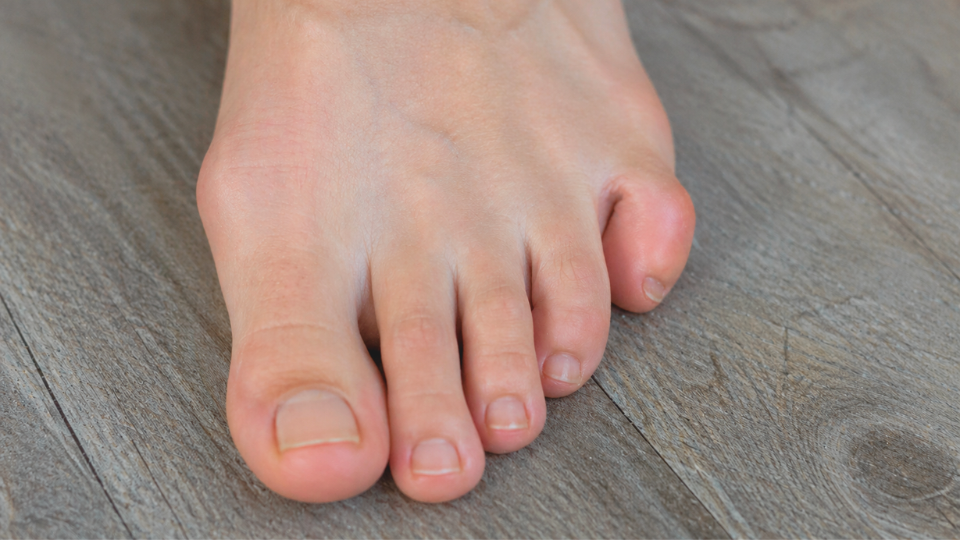
A sideways pinky toe means the fifth toe has rotated or tilted away from its normal straight position. It may point toward the fourth toe, twist outward, or slide slightly underneath the neighboring toe.
Doctors sometimes call this an adductovarus toe. The name simply describes the direction the toe has drifted.
This is not always a medical emergency. Many people live with a mildly turned pinky toe for years without any real problems.
Common Names for This Condition
Different sources and doctors use slightly different terms for the same basic issue. The table below clears up the confusion.
| Term Used | What It Means |
|---|---|
| Adductovarus toe | Clinical name for a toe that rotates and drifts sideways |
| Sideways pinky toe | Common phrase for a fifth toe out of alignment |
| Overlapping toe | Toe sits on top of the neighboring toe |
| Underlapping (curly) toe | Toe curls and slides beneath the neighboring toe |
| Crooked pinky toe | General term for any toe misalignment |
How Common Is This Condition?
A slightly curved or rotated fifth toe is extremely common in adults. Genetics and years of shoe pressure play a big role.
It affects people of all ages, from infants born with curly toe to older adults who develop it gradually.
Basic Anatomy of the Pinky Toe
The fifth toe has three small bones called phalanges, connected by two joints. It relies on tiny tendons and ligaments to stay straight.
Because these bones and tendons are so small, even minor imbalances in pressure or muscle pull can cause a noticeable shift in position.
The pinky toe also carries less body weight than the big toe, but it still plays a role in balance during walking and standing.
Related Foot Conditions You Should Know
A sideways pinky toe rarely shows up completely on its own. It often appears alongside other common foot conditions.
| Related Condition | How It Connects |
|---|---|
| Bunion (hallux valgus) | Crowds and pushes smaller toes out of place |
| Hammertoe | Can affect the fifth toe and cause rotation |
| Tailor’s bunion (bunionette) | Forms near the base of the pinky toe |
| Morton’s toe | Uneven toe length can shift pressure patterns |
| Plantar fasciitis | Linked to gait changes that affect toe alignment |
Causes of a Sideways Pinky Toe
Several separate issues can push, twist, or pull the pinky toe out of place. Often more than one cause is at work at the same time.
Tight or Narrow Footwear
Shoes with a narrow or pointed toe box squeeze the toes together. Over years, this steady pressure pushes the smallest toe out of its natural position.
High heels make this worse because they shift extra body weight onto the front of the foot.
Bunions and Forefoot Changes
A bunion at the base of the big toe can shift the entire alignment of the forefoot. As the big toe drifts, the smaller toes get crowded and can rotate in response.
This crowding effect is one of the most frequent reasons the pinky toe turns sideways later in life.
Hammertoe and Structural Deformities
Hammertoe causes an abnormal bend in the toe joint. When it affects the fifth toe, it often twists sideways at the same time.
These structural changes tend to get worse without treatment, so early attention matters.
Genetics and Inherited Foot Shape
Some people are simply born with foot bones, joints, or tendons shaped in a way that predisposes the pinky toe to rotate.
If a parent or grandparent had a crooked pinky toe, there is a higher chance of the same trait appearing in their children.
Arthritis and Joint Inflammation
Arthritis causes inflammation and stiffness inside the small toe joints. Over time, this can pull the toe out of its normal straight line.
This cause is more common in older adults and may come with visible swelling.
Obesity and Added Pressure
Extra body weight increases pressure across the entire forefoot with every step. The foot can compensate by shifting bone and joint alignment, including the pinky toe.
Weight management can reduce this pressure and slow further movement of the toe.
Trauma or Old Injuries
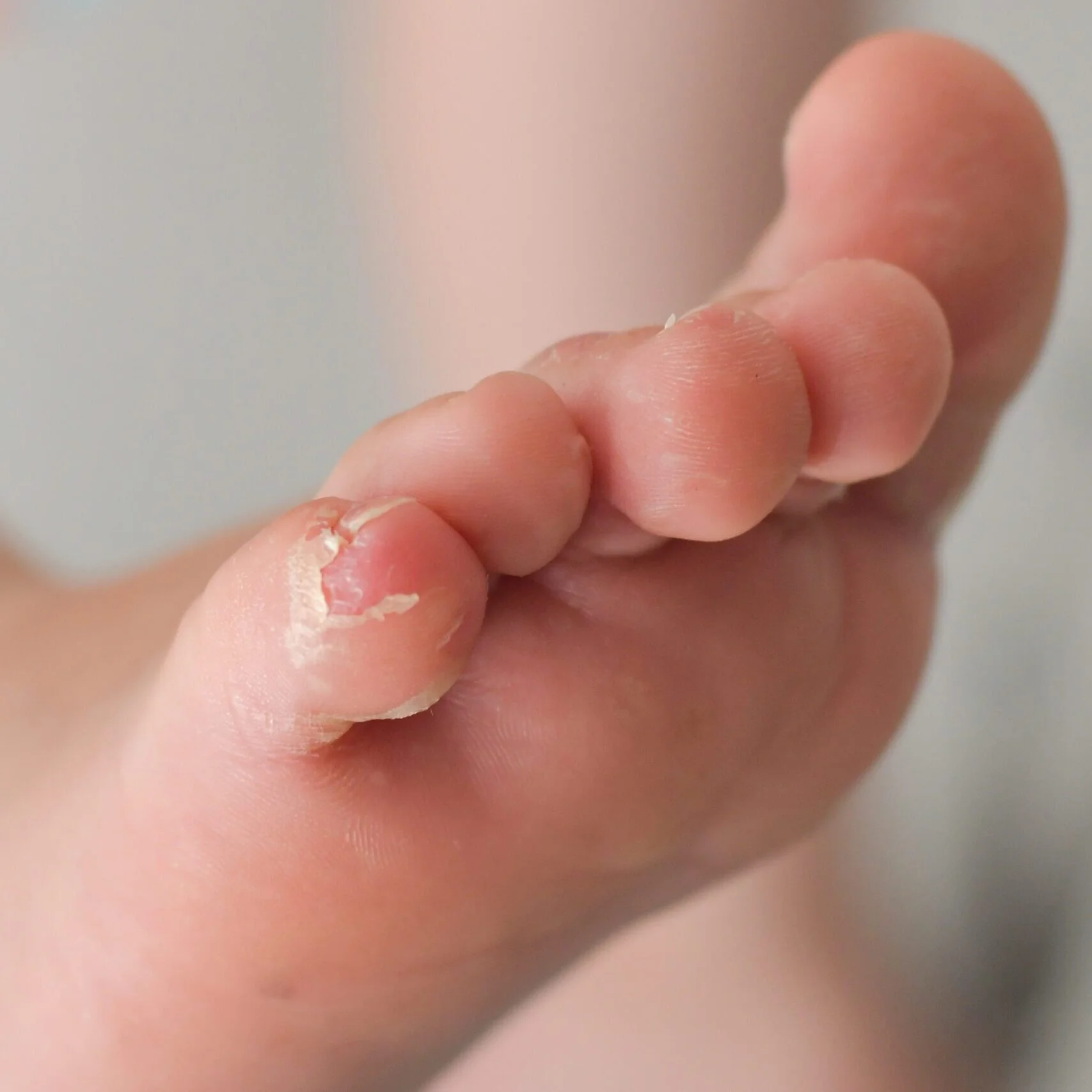
A broken toe, sprain, or stubbed toe injury that never fully healed correctly can leave the joint sitting at an angle.
Even minor trauma from years earlier can quietly change how the toe sits today.
Muscle and Tendon Imbalance
The small muscles and tendons in the foot are meant to hold each toe straight. When one side pulls harder than the other, the toe slowly rotates.
This imbalance can develop from repetitive movement patterns, old injuries, or inherited tendon length differences.
Overpronation and Gait Issues
Overpronation happens when the foot rolls too far inward while walking. This uneven pressure pattern is linked to overlapping and sideways toes.
A podiatrist can check your gait to see if this is contributing to the issue.
Congenital Curly Toe in Infants
Babies can be born with a curly or underlapping toe. Parents often notice it once the child starts standing or walking.
Many mild cases in infants correct themselves naturally without any treatment at all.
Symptoms to Watch For
Not every sideways pinky toe causes symptoms, but many people do notice changes over time. The table below lists what to look for.
| Symptom | What It Usually Means |
|---|---|
| Redness or rubbing on the toe | Friction from shoes against the shifted toe |
| Callus or corn formation | Repeated pressure on one part of the toe |
| Mild to moderate pain when walking | Joint stress from the misalignment |
| Stiffness in the toe joint | The toe may be becoming fixed in its rotated position |
| Skin irritation between toes | Moisture trapped by overlapping or curled toes |
| Difficulty fitting into shoes | The toe shape no longer matches standard shoe width |
When to See a Podiatrist
A doctor visit is a good idea if the toe is painful, swelling, or getting worse month after month.
You should also get checked if the toe has become stiff, rigid, or difficult to move manually.
Diabetics and people with circulation problems should see a podiatrist early, since skin irritation on the toe can turn into a bigger problem.
How Is a Sideways Pinky Toe Diagnosed?
A podiatrist usually starts with a simple visual exam and a check of how the joint moves.
They may also watch you walk to evaluate your gait and pressure distribution.
In some cases, X-rays are used to see the bone position and rule out arthritis or an old fracture.
Family history and past injuries are also part of a full evaluation, since both can point to the root cause.
Treatment Options
Treatment ranges from small at-home changes to surgery, depending on how severe the misalignment has become.
Footwear Changes
Switching to shoes with a wide, rounded toe box is often the first and easiest step. This removes the pressure that pushes the toe sideways.
Avoiding narrow, pointed, or high-heeled shoes gives the toe room to sit naturally.
Toe Spacers and Padding
Silicone toe spacers gently hold the toe in a straighter position and reduce friction against neighboring toes.
Soft padding can also protect calluses and rubbing spots while the toe adjusts.
Taping and Splinting
Taping the toe into a straighter position works especially well for infants and mild adult cases.
Splints can be worn for weeks or months to gradually retrain the toe’s position.
Custom Orthotics
Custom orthotic inserts rebalance pressure across the entire foot, not just the toe itself.
This can slow or stop the progression of the misalignment by correcting how weight moves through each step.
Stretching and Strengthening Exercises
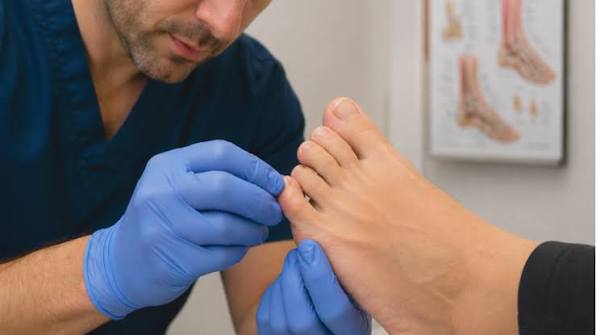
Toe-spreading stretches and towel-grasping drills help build strength and flexibility in the small foot muscles.
A physical therapist or podiatrist can design a simple daily routine based on your specific case.
Surgical Correction
Surgery is usually reserved for cases where the toe has become rigid or conservative treatment has not worked.
The procedure typically realigns the joint and may remove a small section of bone to straighten the toe permanently.
Home Remedies You Can Try Today
Many mild cases respond well to simple changes you can start right away.
| Home Remedy | How It Helps |
|---|---|
| Wear wide toe-box shoes | Removes daily pressure on the toe |
| Use silicone toe spacers | Encourages straighter alignment |
| Apply moisturizing foot cream | Prevents skin cracking around calluses |
| Do daily toe stretches | Improves flexibility and joint mobility |
| Avoid high heels | Reduces forward pressure on the forefoot |
| Ice after long walks | Calms mild swelling and discomfort |
Can a Sideways Pinky Toe Be Prevented?
Choosing supportive, properly fitted shoes from a young age is the single best prevention step.
Maintaining a healthy weight also reduces long-term pressure on the small toe joints.
Treating bunions or hammertoes early can stop the crowding effect before it reaches the pinky toe.
Sideways Pinky Toe in Babies vs Adults
Causes and treatment approaches can differ quite a bit depending on age.
| Factor | Babies | Adults |
|---|---|---|
| Common cause | Congenital curly toe | Footwear, bunions, arthritis, injury |
| First treatment step | Taping and observation | Shoe changes and spacers |
| Self-correction chance | Often resolves on its own | Rarely resolves without action |
| Surgery likelihood | Very low | Possible in severe or rigid cases |
Risks of Leaving It Untreated
An untreated sideways pinky toe can gradually become stiff and permanently fixed in its rotated position.
Ongoing friction can lead to painful corns, calluses, or skin breakdown, especially in people with diabetes.
Left alone long enough, the misalignment can also affect balance and how weight is distributed while walking.
Recovery Timeline After Treatment
Conservative treatments like spacers, taping, or orthotics can show improvement within a few weeks to a few months.
Surgical recovery typically involves a splint or walking boot for two to six weeks, with full healing taking longer.
Your podiatrist will give you a personalized timeline based on the treatment method and severity of your case.
Best Shoe Features for a Sideways Pinky Toe
The right shoe can make a bigger difference than most people expect. Look for these features when shopping.
| Shoe Feature | Why It Helps |
|---|---|
| Wide, rounded toe box | Gives the pinky toe room instead of squeezing it |
| Soft, flexible upper material | Reduces friction against a shifted toe |
| Low or flat heel | Keeps pressure off the front of the foot |
| Removable insole | Allows room for custom orthotics if needed |
| Breathable fabric | Lowers moisture buildup between toes |
Step-by-Step Toe Exercises
A short daily routine can help maintain flexibility and slow further movement of the toe.
First, sit down and manually spread all five toes apart using your fingers, holding for ten seconds.
Next, place a towel on the floor and use your toes to scrunch it toward you, repeating ten times.
Finally, loop a resistance band around the toes and gently stretch them outward for added strength.
Myths vs Facts About Sideways Pinky Toes
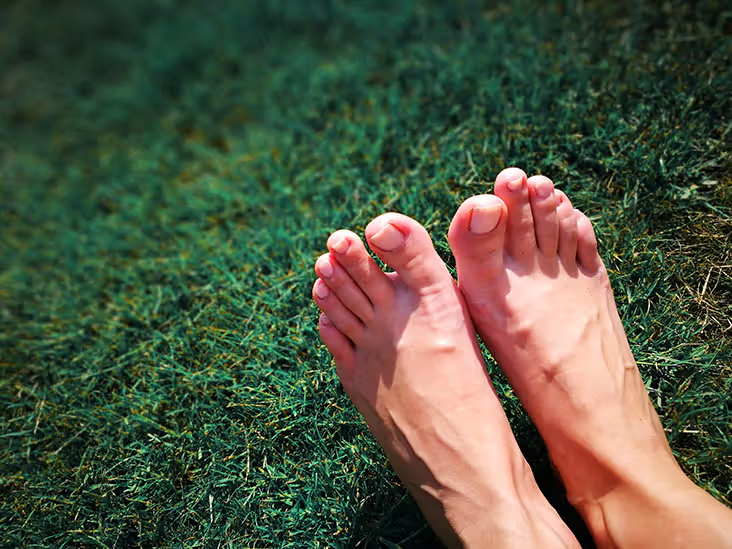
There is a lot of confusing information online about this condition. The table below sorts out common myths.
| Myth | Fact |
|---|---|
| It always needs surgery | Most mild cases improve with shoes, spacers, or orthotics |
| Only older adults get it | It can appear at any age, including infancy |
| It is purely cosmetic | It can cause real pain, calluses, and gait changes |
| Toe spacers fix it overnight | Improvement takes weeks of consistent use |
| Nothing can be done to prevent it | Proper footwear and early care can slow progression |
Cost Considerations for Treatment
Treatment costs vary widely depending on how severe the case is and which option you choose.
| Treatment Type | General Cost Range |
|---|---|
| Toe spacers or padding | Low cost, often under $20 |
| Taping or splinting supplies | Low to moderate cost |
| Custom orthotics | Moderate cost, often requires a podiatrist visit |
| Podiatrist consultation | Varies by clinic and insurance coverage |
| Surgical correction | Higher cost, depends on procedure and facility |
Living With a Sideways Pinky Toe Long-Term
Many people manage this condition for years with simple footwear adjustments and never need surgery.
Regular check-ins with a podiatrist help catch any worsening early, especially if the toe starts to stiffen.
Staying consistent with stretches and supportive shoes is usually the biggest factor in long-term comfort.
Podiatrist vs Orthopedist: Who Should You See?
Both specialists can treat foot conditions, but their training and focus differ slightly.
| Specialist | Best For |
|---|---|
| Podiatrist | Foot and ankle-specific issues, everyday toe misalignment |
| Orthopedic surgeon | Complex bone or joint surgery, broader musculoskeletal issues |
For most sideways pinky toe cases, a podiatrist is the right first stop.
Tips for Choosing the Right Toe Spacer
Not all toe spacers are the same, so it helps to know what to look for before buying one.
Choose a soft, medical-grade silicone spacer that fits comfortably between the fourth and fifth toes.
Make sure it is thin enough to wear inside your regular shoes without adding extra pressure.
Replace spacers regularly, since worn-out silicone loses its shape and stops providing proper support.
Signs You Need Immediate Medical Care
Most cases are not urgent, but a few warning signs mean you should not wait for a routine appointment.
Seek prompt care if the toe turns red, hot, or swollen, since this can signal infection.
Sudden, severe pain after an injury also warrants a same-day evaluation to rule out a fracture.
People with diabetes should treat any skin breakdown around the toe as urgent, due to a higher risk of complications.
Lifestyle Habits That Support Healthy Toe Alignment
Small daily habits can add up to real protection for your toe joints over time.
Rotating between a few pairs of supportive shoes prevents any single pressure pattern from dominating your feet.
Taking short breaks from tight shoes, like switching to sandals at home, gives your toes room to relax.
Keeping your weight in a healthy range reduces the overall load your forefoot has to absorb each day.
Frequently Asked Questions (FAQs)
1. Why is my pinky toe sideways all of a sudden?
Sudden shifts are usually linked to tight shoes, an injury, or a bunion pushing the toes together. A podiatrist can confirm the exact cause.
2. Is a sideways pinky toe dangerous?
It is usually not dangerous, but it can lead to pain, calluses, or skin irritation if ignored for too long.
3. Can I fix a sideways pinky toe without surgery?
Yes, many mild to moderate cases improve with wider shoes, toe spacers, taping, or orthotics.
4. Does a sideways pinky toe mean I have a bunion?
Not always, but bunions are a common cause since they crowd and shift the smaller toes over time.
5. Can toe spacers really straighten my pinky toe?
Toe spacers can improve mild rotation and reduce friction, but they work best when paired with proper footwear.
6. Is a sideways pinky toe genetic?
Yes, inherited foot shape and joint structure are common reasons this condition runs in families.
7. When should I worry about my sideways pinky toe?
See a podiatrist if it becomes painful, stiff, swollen, or keeps getting worse despite shoe changes.
8. Can a sideways pinky toe come back after surgery?
Recurrence is uncommon but possible, especially if tight footwear or the original cause is not addressed afterward.
9. Do babies grow out of a sideways pinky toe?
Many babies with a mild curly or sideways toe improve naturally as they grow, especially with early taping.
10. What type of doctor treats a sideways pinky toe?
A podiatrist, or foot and ankle specialist, is the right doctor to diagnose and treat this condition.
Final Thoughts Before You Take Action
Every foot is different, so what works for one person may not work exactly the same way for another.
Tracking your symptoms over a few weeks can help you and your podiatrist decide the best next step.
Conclusion
A sideways pinky toe is a common condition with many possible causes, from tight shoes and bunions to genetics and arthritis.
Most cases start mild and progress slowly, which means early attention can prevent bigger problems later. Simple steps like switching to wider shoes, using toe spacers, and stretching often make a real difference for people with mild to moderate cases.
More stubborn or rigid cases may need custom orthotics, taping, or eventually surgery to restore proper alignment.
If your toe is painful, stiff, or steadily getting worse, a podiatrist can pinpoint the exact cause and recommend the right treatment path. Acting early is the best way to protect your comfort, your gait, and your long-term foot health.
