

Why are my gums black? This is one of the most common dental concerns people search for online. Black or dark gums can feel alarming, but the cause is often harmless.
From natural melanin pigmentation to smoking and rare medical conditions, many factors can change gum color.
What Is the Normal Color of Gums?
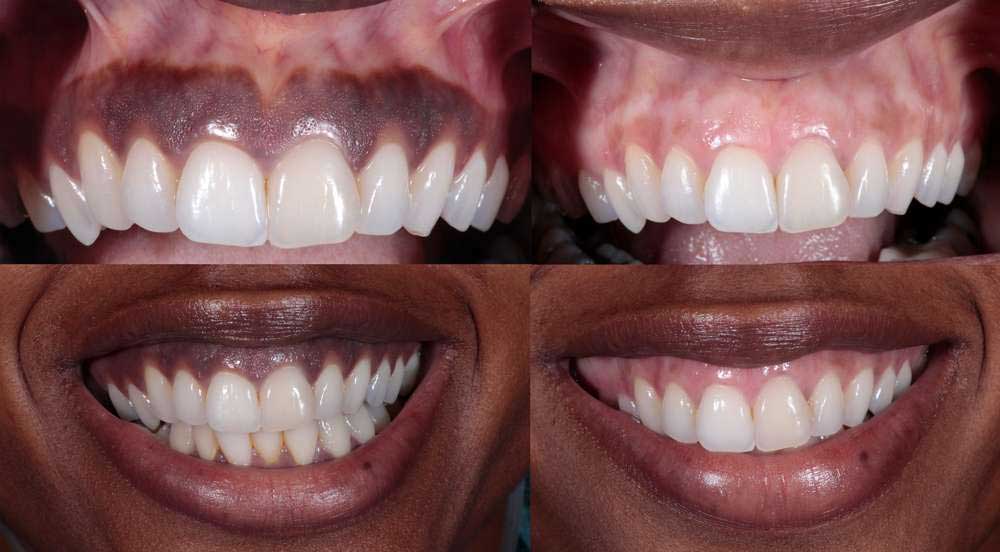
Healthy gums do not always have to be coral pink. Gum color varies widely from person to person, just like skin tone.
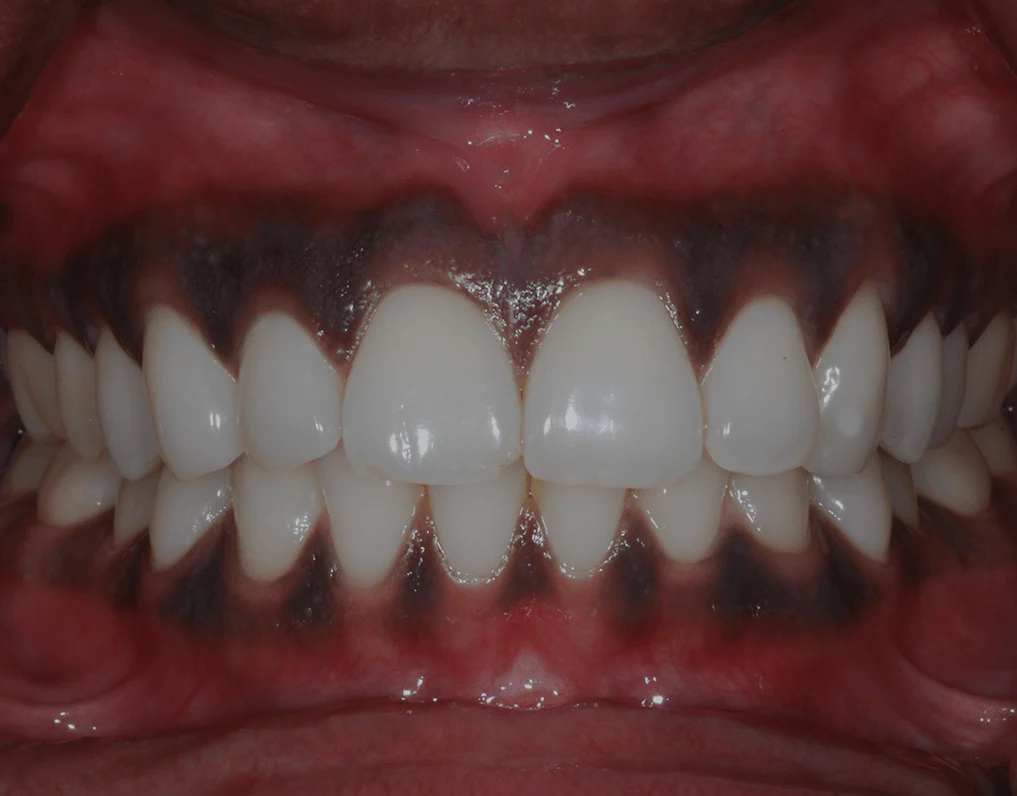
Normal gum colors range from pale pink to deep brown or black, depending on genetics, ethnicity, and melanin levels. People of African, Asian, Mediterranean, or Middle Eastern descent often have naturally darker gums from birth.
The key is consistency. If your gums have always been dark and show no pain, swelling, or bleeding, they are likely healthy.
Why Are My Gums Black? 10 Main Causes
Understanding the cause of black gums is the first step toward the right treatment. Below are the ten most common reasons.
1. Natural Melanin Pigmentation
Melanin is the pigment responsible for skin, hair, and eye color. When the body produces higher levels of melanin, it also darkens the gum tissue.
This is completely natural and requires no treatment. The discoloration appears even, consistent, and is present from an early age.
People with darker skin tones are most commonly affected. There is no pain or swelling associated with this type of pigmentation.
2. Smoker’s Melanosis
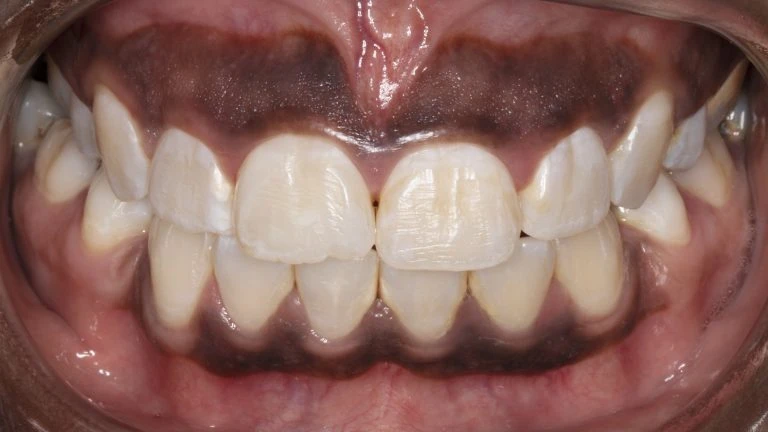
Smoking is one of the most well-known causes of black gums. Nicotine stimulates melanin-producing cells called melanocytes to overproduce pigment.
This creates brown or black patches, typically on the front gums of the lower jaw. The longer someone smokes, the darker the discoloration tends to become.
Quitting smoking can gradually lighten the gums, though this process may take months or even years.
3. Amalgam Tattoo
An amalgam tattoo is a harmless dark spot caused by silver dental filling material becoming embedded in the gum tissue during a dental procedure.
These spots are typically bluish-gray or black, painless, and located near an existing dental filling. They are permanent but pose no health risk.
A dentist can confirm an amalgam tattoo with an X-ray. No treatment is needed unless the appearance is a cosmetic concern.
4. Gum Disease (Gingivitis and Periodontitis)
Poor oral hygiene allows plaque and tartar to build up along the gum line. This leads to gum disease, which can cause gum discoloration.
In early-stage gingivitis, gums become red and swollen. As gum disease progresses to periodontitis, gums may darken and pull away from the teeth.
Left untreated, gum disease can lead to tooth loss and bone damage. Professional deep cleaning and scaling can reverse early-stage gum disease.
5. Acute Necrotizing Ulcerative Gingivitis (ANUG)
ANUG, also called trench mouth, is a severe bacterial gum infection that can cause gums to turn black or gray due to dead tissue buildup.
Symptoms include intense pain, bad breath, bleeding, fever, and rapid progression. This is a dental emergency that requires immediate professional treatment.
ANUG is more common in people with weakened immune systems, high stress, or poor nutrition.
6. Medication Side Effects
Certain medications can cause changes in gum color as a side effect. Minocycline, an antibiotic used to treat acne, is a common culprit.
Other drugs linked to gum discoloration include antimalarials, some antipsychotics, and medications containing heavy metals. The discoloration appears gradually as the medication builds up in the body.
Never stop a prescribed medication without consulting your doctor. Instead, ask about alternative options that do not cause this side effect.
7. Addison’s Disease
Addison’s disease is a rare endocrine disorder in which the adrenal glands fail to produce adequate hormones. One early sign is increased pigmentation in the mouth and gums.
Dark patches appear on the gums, lips, and inside the cheeks. This type of discoloration is typically accompanied by fatigue, weight loss, and low blood pressure.
If you suspect Addison’s disease, consult both a dentist and an endocrinologist for proper diagnosis and management.
8. Peutz-Jeghers Syndrome
Peutz-Jeghers syndrome is a rare genetic disorder characterized by dark freckle-like spots on the lips, gums, and inside the mouth, along with benign growths in the digestive tract.
The spots are caused by an overgrowth of pigment-producing cells and are usually present from childhood. Other symptoms include abdominal pain and vomiting.
Diagnosis requires genetic testing and imaging. Regular medical monitoring is essential for people with this condition.
9. Oral Melanoma (Rare)
In rare cases, a black spot on the gum could indicate oral malignant melanoma, a serious form of oral cancer. This is uncommon but must not be ignored.
Warning signs include a single dark patch that grows or changes shape, is irregular in border, and may or may not cause pain. A tissue biopsy is required for diagnosis.
If you notice a new or changing black spot on your gums, see a dentist or oral surgeon immediately for evaluation.
10. Hormonal Changes and Pregnancy
Hormonal fluctuations during pregnancy or puberty can temporarily affect gum color. Some pregnant women notice gum darkening due to increased blood flow and hormonal activity.
This type of discoloration is usually temporary and resolves after delivery. However, pregnant women should still maintain regular dental checkups.
Teething babies may also show temporary gum color changes, which are generally harmless.
Quick Cause Reference Table
| Cause | Harmful? | Treatment Needed? | Who Is Affected? |
|---|---|---|---|
| Melanin Pigmentation | No | No (cosmetic only) | Darker skin tones |
| Smoker’s Melanosis | Possibly | Quit smoking | Tobacco users |
| Amalgam Tattoo | No | No | Patients with silver fillings |
| Gum Disease | Yes | Yes | Poor oral hygiene |
| ANUG (Trench Mouth) | Yes (emergency) | Immediate treatment | Immunocompromised |
| Medication Side Effects | No | Consult doctor | Various |
| Addison’s Disease | Yes | Medical management | Endocrine disorder patients |
| Peutz-Jeghers Syndrome | Possibly | Medical monitoring | Genetic disorder |
| Oral Melanoma | Yes (serious) | Urgent biopsy | Any adult |
| Pregnancy/Hormones | No | Usually temporary | Pregnant women |
When Should You See a Dentist for Black Gums?
Not every case of black gums requires emergency care. However, certain warning signs should never be ignored.
See a dentist immediately if you notice:
- A sudden or rapid change in gum color
- A black spot that is growing or changing shape
- Gum pain, swelling, or bleeding alongside discoloration
- Bad breath or loose teeth with dark gums
- Dark patches on the lips or cheeks along with gum changes
If your gums have always been dark and show none of these symptoms, a routine dental visit is sufficient. Regular checkups every six months help catch changes early.
Treatments for Black Gums
The right treatment for black gums depends entirely on the underlying cause. Here is a breakdown of the most effective options available in 2026.
Laser Gum Depigmentation
Laser gum depigmentation is the gold standard cosmetic treatment for dark gums caused by excess melanin. A dental laser gently removes the top layer of pigmented gum tissue, revealing pinker tissue underneath.
The procedure typically takes 20 to 60 minutes and is minimally invasive. Recovery takes one to two weeks, and results are long-lasting. It is safe, virtually painless, and does not damage surrounding tissue.
Cost ranges from $800 to $1,500 in the US, £495 to £795 in the UK, and varies widely in other regions. Since it is a cosmetic procedure, insurance usually does not cover it.
Scaling and Root Planing
If gum disease is causing black gums, scaling and root planing is the most effective treatment. This deep-cleaning procedure removes plaque and tartar from above and below the gum line.
Scaling removes hardened tartar deposits. Root planing smooths the tooth roots to prevent bacteria from reattaching. The procedure can reverse early-stage gum disease and restore healthier gum color.
Scalpel Surgery and Gingival Grafting
For severe or extensive pigmentation, a dentist may remove darkened gum tissue with a scalpel. Gingival grafting involves taking lighter, unpigmented tissue from the roof of the mouth and transplanting it over dark areas.
This provides natural, long-lasting results using the patient’s own tissue. It requires a surgical recovery period but is a reliable option when other treatments are insufficient.
Chemical Peels
Professional chemical peels exfoliate the surface layer of darkened gum tissue, revealing lighter tissue underneath. This is a less invasive option suitable for mild pigmentation.
Multiple sessions may be required. Results are semi-permanent and may not last as long as laser treatment. This approach is best for patients who want a non-surgical option.
Cryosurgery
Cryosurgery uses controlled freezing to destroy pigmented gum cells. It is an older technique that is less commonly used today due to the superior precision of laser treatments.
It may still be used in specific clinical scenarios. Recovery time and outcomes vary. A periodontist can advise whether this is appropriate for your case.
Home Remedies (Supportive Only)
Home remedies cannot remove natural melanin pigmentation or treat gum disease, but they can support gum health and prevent further darkening.
- Oil pulling with coconut oil may reduce bacteria
- Salt water rinses reduce inflammation and kill bacteria
- Aloe vera gel soothes irritated gum tissue
- Green tea has anti-inflammatory properties that benefit the gums
- Baking soda paste can remove light surface stains
These are supportive measures only. Always see a dentist if you suspect gum disease or a medical condition.
Treatment Comparison Table
| Treatment | Best For | Invasiveness | Duration | Cost (Approx.) |
|---|---|---|---|---|
| Laser Depigmentation | Melanin pigmentation | Minimal | 20–60 min | $800–$1,500 |
| Scaling & Root Planing | Gum disease | Moderate | 1–2 visits | Covered by insurance |
| Gingival Grafting | Severe pigmentation | Surgical | 1+ hours | $600–$3,000 |
| Chemical Peels | Mild pigmentation | Low | Multiple sessions | Varies |
| Cryosurgery | Localized spots | Moderate | 1 session | Varies |
| Quit Smoking | Smoker’s melanosis | None | Months | Free |
How to Prevent Black Gums
Prevention is always better than treatment. Good daily habits protect gum color and overall oral health.
Brush twice daily using a soft-bristled toothbrush and fluoride toothpaste. Focus on the gum line where plaque accumulates most.
Floss daily to remove food and bacteria from between teeth and under the gums. Skipping flossing allows tartar to form, which leads to gum disease and discoloration.
Quit tobacco use whether cigarettes, cigars, or smokeless tobacco. Smoking is the number one lifestyle cause of black gums and significantly increases the risk of gum disease and oral cancer.
Visit your dentist every six months for professional cleanings and oral examinations. Early detection of gum changes allows for faster and easier treatment.
Eat a gum-friendly diet rich in vitamin C, vitamin D, omega-3 fatty acids, and antioxidants. Include leafy greens, citrus fruits, dairy, and fatty fish in your regular meals.
Stay hydrated by drinking plenty of water throughout the day. Water rinses away food particles and bacteria that contribute to plaque buildup.
Black Gums in Children: What Parents Should Know
Children can also develop dark-colored gums. In many cases, this is simply natural melanin pigmentation based on genetics and is completely normal.
However, if a child develops new dark spots on the gums accompanied by pain, swelling, or behavioral changes, a pediatric dentist should be consulted. Teething may cause temporary gum color changes.
Parents should establish good oral hygiene habits early, including brushing as soon as the first tooth appears and scheduling the first dental visit by age one.
Black Gums After Dental Procedures
Some patients notice dark discoloration near a tooth after getting a silver filling. This is known as an amalgam tattoo and is harmless.
The discoloration appears because small particles of amalgam filling material embed into the surrounding gum tissue during the procedure. It is permanent but does not cause pain or health problems.
If the appearance bothers you, a dentist can use laser treatment or minor surgery to reduce or eliminate the dark spot. Always confirm with an X-ray before assuming it is an amalgam tattoo.
Gum Color and Ethnicity: What Is Normal?
Gum color is as individual as skin color. People of African, South Asian, Southeast Asian, and Middle Eastern heritage very commonly have naturally brown or black gums.
This is a result of higher baseline melanin production in the body. It is a natural biological variation, not a medical condition.
Medical professionals and dentists are well aware of this diversity. If your dark gums have been consistent throughout your life and cause no discomfort, no treatment is necessary unless you prefer a cosmetic change.
The Connection Between Black Gums and Gum Disease
While melanin pigmentation is harmless, black gums can sometimes mask or occur alongside gum disease. This makes regular dental checkups critical.
Gum disease begins with gingivitis, marked by red, puffy, bleeding gums. As it progresses into periodontitis, the gums may darken, recede, and pull away from the teeth.
Plaque, tartar, and bacterial toxins are the root cause. Treating gum disease early with professional cleaning prevents irreversible damage to the teeth and bone.
Black Spots on Gums vs. Dark Gums: Key Differences
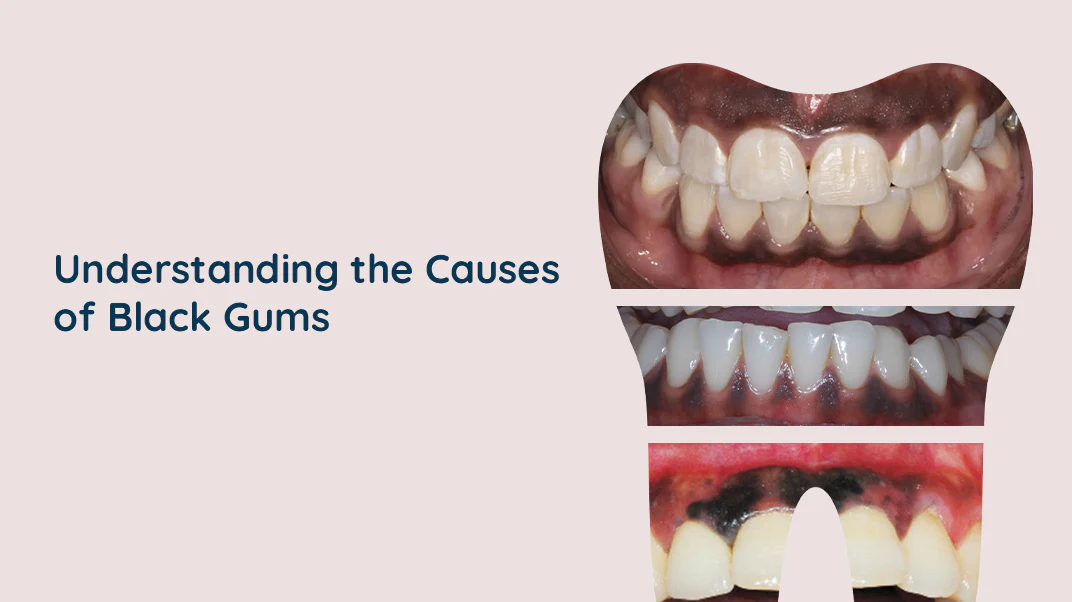
There is an important difference between a single black spot and overall gum darkening. Each has different causes and implications.
| Feature | Single Black Spot | Overall Dark Gums |
|---|---|---|
| Common Causes | Amalgam tattoo, melanoma | Melanin, smoking, medication |
| Urgency | See dentist promptly | Routine checkup |
| Pain | Usually none (but check) | Usually none |
| Treatment | Biopsy if changing, cosmetic if stable | Laser, quit smoking |
A single dark spot that is new, growing, or changing shape always warrants urgent dental evaluation to rule out oral melanoma.
Lifestyle Factors That Affect Gum Color
Beyond genetics and disease, everyday lifestyle choices affect the appearance and health of your gums in meaningful ways.
Tobacco use in any form triggers excess melanin production and promotes bacterial growth that leads to gum disease. Both smoking and smokeless tobacco darken gum tissue over time.
Alcohol consumption dries out the mouth and reduces saliva flow, which allows bacteria to thrive. Chronic alcohol use is linked to higher rates of gum disease.
Stress weakens the immune system, making the gums more susceptible to infection, inflammation, and discoloration. Managing stress through exercise, sleep, and mindfulness supports gum health.
Poor nutrition lacking vitamins C and D impairs the body’s ability to fight gum infections and maintain healthy tissue color and integrity.
Black Gums and Oral Cancer: What to Watch For
Oral melanoma is a rare but serious condition that can appear as a black or dark patch on the gums. Most black gums are harmless, but this possibility should never be dismissed.
Warning signs of oral melanoma include a rapidly growing dark lesion, irregular borders, change in size or color, and ulceration. Unlike an amalgam tattoo, which is stable and near a filling, melanoma tends to grow and change.
The Oral Cancer Foundation notes that diagnosis requires a tissue biopsy. Early detection dramatically improves outcomes. When in doubt, always get evaluated.
Frequently Asked Questions (FAQs)
Why are my gums black around my teeth?
Black gums around teeth are most commonly caused by melanin pigmentation, plaque buildup, or smoker’s melanosis. See a dentist if accompanied by pain or swelling.
Can black gums turn pink again?
Yes, in many cases. Quitting smoking gradually lightens gums, and laser depigmentation is an effective cosmetic treatment to restore a pinker appearance.
Are black gums a sign of gum disease?
They can be, but not always. Gum disease causes discoloration alongside swelling, bleeding, and bad breath. Natural melanin alone does not indicate disease.
Is laser treatment for black gums safe?
Yes, laser gum depigmentation is safe, minimally invasive, and painless when performed by a qualified dental professional. Recovery takes one to two weeks.
Do black gums mean poor oral hygiene?
Not necessarily. Natural melanin pigmentation is unrelated to hygiene. However, poor hygiene can cause gum disease, which may also lead to gum discoloration.
What is an amalgam tattoo on gums?
It is a harmless dark spot caused by silver dental filling material becoming embedded in gum tissue during a procedure. It requires no treatment unless cosmetically undesired.
Can pregnancy cause black gums?
Hormonal changes during pregnancy can alter gum color temporarily. It usually resolves after delivery but should still be monitored by a dentist.
When should I be worried about black gums?
Be concerned if a dark spot is new, rapidly growing, changing shape, or accompanied by pain, swelling, bleeding, or loose teeth. See a dentist immediately.
How much does laser gum depigmentation cost?
In the United States, it costs approximately $800 to $1,500. In the UK, around £495 to £795. The procedure is cosmetic and is generally not covered by insurance.
Can children have black gums?
Yes, children can have naturally dark gums based on genetics. New or changing dark spots in children should be evaluated by a pediatric dentist to rule out any underlying issues.
Conclusion
Black gums are rarely a reason for panic, but they should never be completely ignored. In most cases, dark or black gum color is a natural result of melanin pigmentation, especially in people with darker skin tones.
However, causes like smoking, gum disease, medication side effects, amalgam tattoos, and rare systemic conditions such as Addison’s disease or oral melanoma also need to be considered.
The most important step is to know your baseline. If your gums have always been dark and show no other symptoms, you are likely healthy.
If gum color has changed suddenly, or if you notice a growing black spot, pain, or bleeding, consult a dentist without delay.
Treatments in 2026 are more effective and less invasive than ever. Laser gum depigmentation offers long-lasting cosmetic results.
Scaling and root planing treats disease-related discoloration. Quitting tobacco remains the single most impactful lifestyle change for smoker’s melanosis.
