

Why does Bolivia have two capitals is one of the most searched geography questions about South America. The short answer traces back to a civil war and a political compromise that has lasted more than a century.
Sucre is the official constitutional capital of Bolivia, named so in the country’s founding documents. La Paz, on the other hand, is the seat of government, where the president and congress actually work.
Understanding Bolivia’s Two Capitals
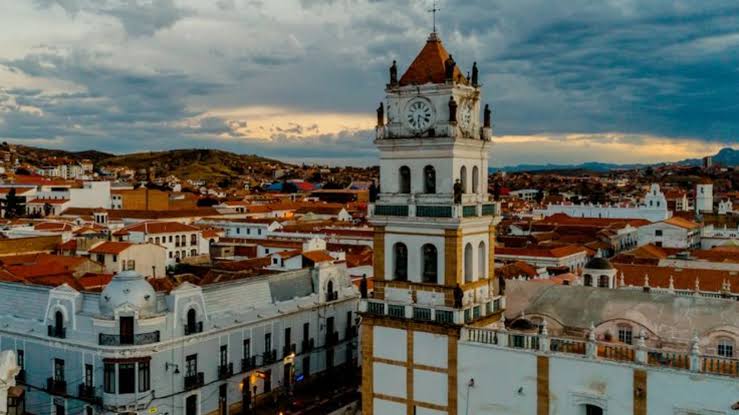
Bolivia is often listed alongside a small group of countries that split their capital functions between two cities.
Sucre holds the legal and constitutional title, while La Paz houses the executive and legislative branches of government.
This division confuses many travelers, students, and even quiz-makers, since most countries have just one clear capital city.
A Quick History of Bolivia’s Capital
Before Bolivia became independent, the city now known as Sucre was called La Plata, later Chuquisaca.
It served as a center of Spanish colonial administration and was closely tied to the silver wealth of nearby Potosí.
When Bolivia gained independence in 1825, this city was named the nation’s first official capital.
Why Sucre Was Chosen First
Sucre was already an established center of law, education, and religion under Spanish rule.
It hosted a Real Audiencia, a high colonial court, giving it institutional importance before independence even began.
This existing infrastructure made Sucre a natural choice for Bolivia’s first constitutional capital in 1825.
The Rise of La Paz
While Sucre held political prestige, La Paz slowly grew into an economic powerhouse during the late 1800s.
Its location gave it strong trade connections with Peru and access to growing international commerce routes.
As mining activity shifted away from the south, La Paz gained wealth, population, and influence that Sucre could not match.
What Is Sucre? The Constitutional Capital
Sucre remains Bolivia’s official capital according to the national constitution. This title has never been formally removed.
The Supreme Court of Bolivia is based in Sucre, making it the country’s judicial capital.
Sucre is known for its whitewashed colonial buildings and is often called the “White City” of Bolivia.
What Is La Paz? The Seat of Government
La Paz functions as the administrative capital, hosting the President, the cabinet, and the National Congress.
Most foreign embassies and government ministries are also located in La Paz rather than Sucre.
Because of this, many people mistakenly assume La Paz is Bolivia’s only official capital.
Sucre vs La Paz at a Glance
| Feature | Sucre | La Paz |
|---|---|---|
| Official Title | Constitutional capital | Seat of government |
| Government Branch | Judicial (Supreme Court) | Executive and Legislative |
| Historical Role | Colonial center of law | Economic and trade hub |
| Altitude | Around 2,800 meters | Over 3,600 meters |
| Nickname | The White City | Highest capital in the world |
The Federal War of 1899 Explained
The core reason Bolivia has two capitals is a civil conflict known as the Federal War of 1899.
This war was fought between liberal forces based in the north and conservative elites centered in the south.
Its outcome permanently reshaped where political power in Bolivia would be held.
Why the War Started
Tensions had been building for years as economic power shifted from the silver mines near Sucre toward growing trade in La Paz.
Liberals in La Paz wanted more political influence to match their growing economic importance.
Conservatives in Sucre wanted to protect their traditional hold over the national government.
Regional Rivalry and Economic Power
Bolivia’s economy was changing rapidly in the late nineteenth century. Silver mining, once centered near Sucre, was declining.
Tin mining and international trade routes near La Paz were expanding quickly during this same period.
This economic shift naturally pulled political ambition and influence toward the north.
How the War Ended and the Compromise
The Federal War ended in a liberal victory, giving La Paz supporters the upper hand in negotiations.
Rather than stripping Sucre of its title entirely, a compromise preserved its constitutional status.
Sucre kept the name and legal recognition, while La Paz received the actual seat of government.
The 1899 Compromise Explained
| Outcome | City |
|---|---|
| Kept constitutional capital title | Sucre |
| Gained executive and legislative branches | La Paz |
| Retained judicial branch | Sucre |
| Became economic and political center | La Paz |
Why Two Capitals Exist Today
The 1899 compromise was meant to calm regional tensions rather than create a permanent dual system.
Over time, however, this arrangement simply became the accepted norm across Bolivia.
Today, both cities carry distinct government responsibilities that have never been fully reunited under one location.
Role of Sucre Today
Sucre continues to host Bolivia’s Supreme Court and remains the symbolic, constitutional capital of the nation.
Tourists visiting Sucre often note its preserved colonial architecture and slower, quieter pace of life.
Despite its reduced political power, Sucre still carries significant historical and cultural weight in Bolivia.
Role of La Paz Today
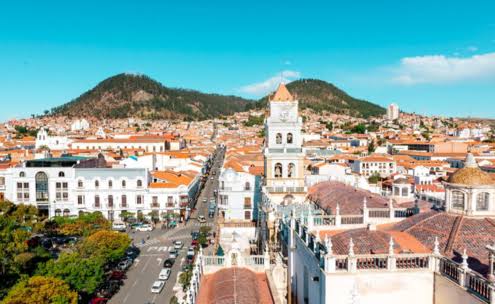
La Paz is where daily governance actually happens, housing the President’s offices and the National Congress.
It functions as Bolivia’s economic, administrative, and diplomatic center for both citizens and foreign visitors.
Most international news about Bolivian politics originates from events happening in La Paz.
Government Functions by City
| Government Function | Location |
|---|---|
| President’s Office | La Paz |
| National Congress | La Paz |
| Supreme Court | Sucre |
| Foreign Embassies | La Paz |
| Constitutional Capital Title | Sucre |
Is La Paz the Real Capital of Bolivia?
This is one of the most common follow-up questions people ask after learning about Bolivia’s dual capital system.
Technically, Sucre remains the official capital according to Bolivia’s constitution, even though La Paz functions like one.
Because of daily media coverage, many world maps and quizzes list La Paz as the capital instead.
Why This Question Confuses So Many People
Most reference materials and general knowledge quizzes simplify complicated arrangements into a single answer.
Since La Paz hosts visible political activity, it’s often listed as the capital in casual conversation and travel guides.
This mismatch between constitutional fact and everyday practice is exactly why the topic sparks so much curiosity.
Geography and Altitude of La Paz
La Paz sits more than 3,600 meters above sea level, making it the highest seat of government in the world.
The city spreads across a dramatic canyon, with neighborhoods stretching up steep surrounding mountainsides.
Many visitors need a day or two to adjust to the thin air before exploring comfortably.
Historical Significance of Sucre
Sucre played a central role in Bolivia’s path to independence and even hosted the signing of its founding constitution.
Its colonial-era buildings have been carefully preserved, earning the city UNESCO World Heritage recognition.
This deep historical connection is a major reason Sucre retained its constitutional capital title after the war.
Other Countries With Multiple Capitals
Bolivia is not alone in splitting capital functions across more than one city. Several nations use similar arrangements.
South Africa famously divides its capital duties among three separate cities entirely.
The Netherlands and Malaysia also separate ceremonial or administrative functions from where actual governing takes place.
Countries With Split Capital Cities
| Country | Cities Involved | Reason for Split |
|---|---|---|
| Bolivia | Sucre and La Paz | Federal War of 1899 compromise |
| South Africa | Pretoria, Cape Town, Bloemfontein | Union of separate regional powers |
| Netherlands | Amsterdam and The Hague | Historical and administrative tradition |
| Malaysia | Kuala Lumpur and Putrajaya | Reducing overcrowding, new planned city |
Common Misconceptions About Bolivia’s Capital
Many people assume Bolivia simply renamed its capital at some point, rather than splitting government functions.
Others believe La Paz officially replaced Sucre, which is not accurate under Bolivia’s constitution.
Clearing up these misconceptions helps travelers, students, and trivia enthusiasts understand the country more accurately.
Why Textbooks Often List Only One Capital
Simplified textbooks and world maps frequently avoid nuance to keep information easy to memorize.
As a result, many students grow up believing Bolivia has a single, straightforward capital city.
This is exactly why the question “why does Bolivia have two capitals” remains so widely searched today.
How This Affects Travelers and Students
Travelers heading to Bolivia benefit from understanding both cities, since each offers a very different experience and cultural atmosphere.
Students studying geography or political science often encounter this topic as a classic example of regional compromise.
Knowing the real history adds depth to any visit or academic discussion about South American governance.
Planning a Visit to Both Capitals
Many travel itineraries include both Sucre and La Paz to experience Bolivia’s contrasting political and cultural centers.
La Paz offers bustling markets, high-altitude scenery, and access to nearby attractions like Lake Titicaca.
Sucre provides a quieter, colonial atmosphere with well-preserved architecture and a slower travel pace.
Fun Facts About Bolivia’s Two Capitals
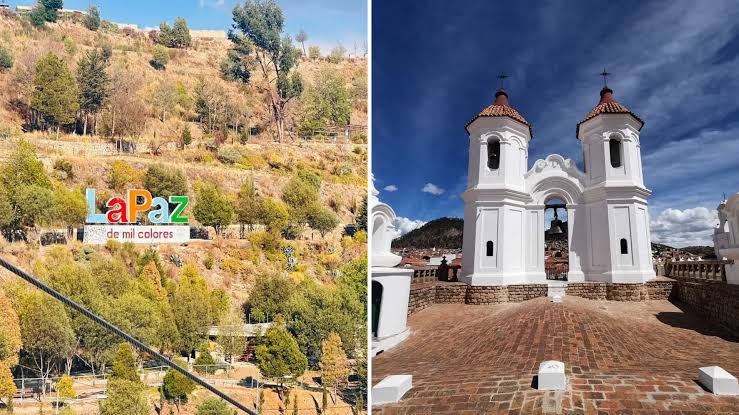
Bolivia’s capital arrangement is filled with surprising historical details that rarely appear in short summaries.
La Paz holds the record as the highest administrative capital city in the entire world.
Sucre’s preserved colonial core has helped it become a popular stop for history-focused travelers exploring South America.
Quick Facts Table
| Fact | Detail |
|---|---|
| Year Sucre became capital | 1825 |
| Year La Paz became seat of government | 1899 |
| War responsible for the split | Federal War of 1899 |
| Highest capital city in the world | La Paz |
| UNESCO recognition | Sucre’s historic center |
The Origin of Bolivia’s Name
Bolivia was named in honor of Simón Bolívar, the revolutionary leader who helped liberate much of South America from Spanish rule.
This naming reflected the pride and identity of a newly independent nation in 1825.
Understanding this origin helps explain why Bolivia’s early capital choice carried such strong symbolic weight.
Colonial Roots of Sucre’s Importance
During Spanish colonial rule, Sucre was known first as La Plata and later as Chuquisaca, serving as a regional judicial center.
Its Real Audiencia gave the city legal authority over a large surrounding territory, long before independence was even considered.
This colonial legacy is a major reason Sucre was the natural choice for Bolivia’s first constitutional capital.
The Independence Movement and Sucre’s Role
Bolivia’s declaration of independence was signed in Sucre in 1825, cementing the city’s place in national history.
Antonio José de Sucre, the city’s namesake, was a key military leader during the independence campaign.
This direct connection to independence gave the city lasting symbolic authority that still matters today.
Economic Shifts That Changed Everything
Throughout the 1800s, Bolivia’s economy depended heavily on silver mining centered near Potosí, close to Sucre.
As silver reserves declined, tin mining became more profitable, and this industry was concentrated closer to La Paz.
This economic transition slowly shifted national wealth, population, and influence away from the south and toward the north.
How Trade Routes Favored La Paz
La Paz benefited from strong trade connections with neighboring Peru and access to Pacific shipping routes.
This gave the city growing commercial importance during a period when international trade was expanding rapidly across South America.
As merchants and investors gravitated toward La Paz, its political influence grew alongside its economic strength.
The Human Cost of the Federal War
The Federal War of 1899 was not just a political dispute. It involved real military conflict between opposing regional forces.
Thousands of soldiers took part in battles that ultimately determined how power would be distributed across Bolivia.
The war’s outcome reshaped the country’s political structure for well over a century afterward.
Life in La Paz Today
Modern La Paz is a bustling, high-altitude city filled with markets, government buildings, and steep cobblestone streets.
Its dramatic canyon setting means neighborhoods rise and fall across dramatic elevation changes within the same urban area.
The city blends Aymara cultural traditions with modern political and commercial activity.
Life in Sucre Today
Sucre offers a noticeably slower pace of life, with whitewashed buildings and wide plazas reflecting its colonial heritage.
Universities and cultural institutions remain central to the city’s identity, alongside its judicial functions.
Many visitors describe Sucre as one of the most charming and walkable cities in South America.
Cultural Identity Tied to Each Capital
Sucre represents Bolivia’s historical and legal foundation, while La Paz represents its modern political and economic engine.
This cultural split mirrors the broader north-south divide that shaped the country’s political development.
Both cities remain proud of their distinct roles within the national identity.
A Simple Timeline of Bolivia’s Capital History
| Year | Event |
|---|---|
| 1538 | Spanish colonial settlement established near future Sucre |
| 1825 | Bolivia gains independence, Sucre named constitutional capital |
| Late 1800s | Silver mining declines, tin trade grows near La Paz |
| 1899 | Federal War ends, La Paz becomes seat of government |
| Today | Sucre remains constitutional capital, La Paz remains seat of government |
Why the Compromise Has Lasted So Long
Political compromises are often temporary, yet Bolivia’s dual capital arrangement has remained stable for well over a hundred years.
Neither side has pushed strongly to reunify the capital under a single city since the early twentieth century.
This stability suggests the arrangement, while unusual, has generally served both regions reasonably well.
Attempts to Change the System
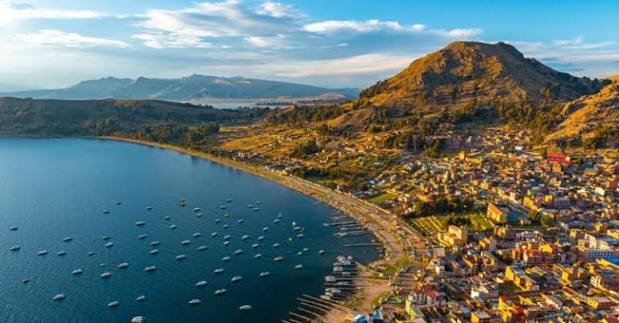
Over the decades, occasional political movements in Sucre have called for restoring full capital status to the city.
These movements have generally failed to gain enough national support to change the current arrangement.
As a result, the dual capital system remains firmly in place heading into 2026.
Why This Topic Keeps Trending in Searches
Geography quizzes, trivia games, and travel blogs frequently reference Bolivia as an example of an unusual capital arrangement.
This constant attention keeps the question “why does Bolivia have two capitals” popular among students and curious readers alike.
Understanding the full history behind the question makes the answer far more memorable than a simple one-line fact.
What Makes Bolivia’s Case Unique
Unlike some countries that planned separate capitals from the beginning, Bolivia’s split emerged unexpectedly from conflict rather than design.
This makes Bolivia a frequently cited case study in political science courses discussing regional compromise and power sharing.
The arrangement also shows how history, not just law, can shape how a country actually functions day to day.
Key Takeaways Before You Go
Bolivia’s two capitals are not a modern invention. They are the direct result of a war fought more than a century ago.
Sucre carries the constitutional title and judicial branch, while La Paz holds the executive and legislative power.
Remembering this simple split makes it far easier to answer confidently whenever the question comes up again.
Frequently Asked Questions (FAQs)
These are the most common questions people ask after learning about Bolivia’s unusual capital arrangement, answered simply below.
Why does Bolivia have two capital cities?
A civil war in 1899 led to a compromise where Sucre kept the constitutional title and La Paz became the seat of government.
What is the official capital of Bolivia?
Sucre is the official constitutional capital of Bolivia, as stated in the country’s founding legal documents.
Is La Paz considered the capital of Bolivia?
La Paz functions as the seat of government, but it is not the official constitutional capital according to Bolivia’s laws.
What war caused Bolivia’s two-capital system?
The Federal War of 1899 between northern liberals and southern conservatives led directly to this political compromise.
Which city holds Bolivia’s Supreme Court?
Sucre hosts Bolivia’s Supreme Court, making it the country’s judicial capital even today.
Why is La Paz called the highest capital in the world?
La Paz sits over 3,600 meters above sea level, making it the highest seat of government globally.
Do other countries have two capital cities like Bolivia?
Yes, countries like South Africa, the Netherlands, and Malaysia also split capital functions across multiple cities.
Why did Sucre lose political power to La Paz?
Economic shifts toward trade and mining near La Paz gave it growing influence that Sucre could not match.
Is Sucre still an important city in Bolivia?
Yes, Sucre remains historically significant and still holds the constitutional capital title and judicial branch today.
Can tourists visit both capitals of Bolivia?
Yes, many travelers visit both Sucre and La Paz to experience their contrasting history, culture, and architecture.
Final Thoughts on Bolivia’s Dual Capitals
Bolivia’s split capital system is a rare and fascinating example of how history can permanently shape modern governance.
It reflects a century-old compromise that balanced regional pride with practical political and economic realities.
Whether you’re a traveler, student, or trivia fan, this small South American nation offers a genuinely unique lesson in geography.
Conclusion
Bolivia’s two-capital system exists because of a civil war fought over regional power, economic shifts, and political pride.
The Federal War of 1899 ended with a lasting compromise: Sucre kept its constitutional title, while La Paz became the true seat of government.
This arrangement has lasted for more than a century, shaping how Bolivia is governed and how the world understands its capital.
Sucre remains historically significant, hosting the Supreme Court and preserving colonial-era architecture recognized by UNESCO.
La Paz, meanwhile, functions as the highest administrative capital in the world, home to the president and congress.
Understanding this split helps clear up a common point of confusion for travelers, students, and trivia fans alike. Bolivia’s dual capitals are a living reminder of how history can shape a nation’s identity for generations.
