

Why do cows wear bells? It is one of those questions that sounds simple but opens up a rich world of farming tradition, animal behavior, cultural heritage, and even modern animal welfare debate.
Cowbells have been hanging around the necks of cattle for over 600 years, and the reasons go far beyond just a charming sound drifting across a mountain meadow.
From tracking herds across vast alpine pastures to warding off predators and marking social status within a herd, the cowbell serves more purposes than most people realize.
What Is a Cowbell?
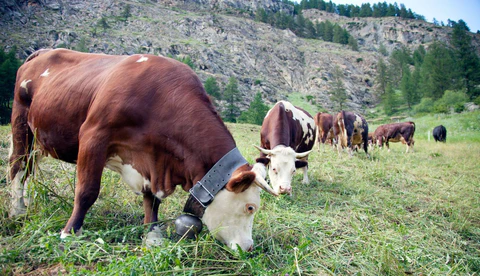
A cowbell is a bell attached to a collar and worn around the neck of a cow or other livestock. The sound it produces travels across long distances, giving farmers an audio signal of where their animals are at any given moment.
The bell and clapper are typically made from iron, bronze, brass, or copper. The collar holding the bell is traditionally crafted from leather and wood fibers. Most cowbells are made from thin, flat pieces of shaped and plated sheet metal, though cast metal versions also exist.
There are two main types used in Alpine regions. The first is the Glocken — round or pear-shaped bells that produce a bright, ringing tone. The second is the Treicheln — acorn-shaped bells made by hammering sheets of brass that produce a deeper, richer sound.
How Big Are Cowbells?
Cowbell sizes vary widely depending on the purpose and the size of the cow wearing it. Small decorative bells for festivals can be just a few centimeters across, while working cowbells can reach 23 cm or larger.
The largest cowbells weigh over 5 kg and can produce sound levels exceeding 113 decibels. For context, 113 decibels is louder than a chainsaw at close range and well above the occupational safety threshold for humans. This noise level is one of the key concerns raised by animal welfare advocates today.
| Bell Type | Shape | Sound | Primary Use |
|---|---|---|---|
| Glocken | Round/Pear | Bright, ringing | Ceremonies, festivals |
| Treicheln | Acorn | Deep, resonant | Daily grazing |
| Small decorative | Various | Light jingle | Souvenirs, parades |
| Large working bell | Flat-sided | Loud, carrying | Alpine tracking |
The Ancient History of Cowbells
Why do cows wear bells? The answer starts thousands of years ago. The earliest known livestock bells date back roughly 5,000 years, with pottery bells discovered in China. In Europe, the earliest written record of bells worn by livestock traces to a Frankfurt archive entry from 1410 in Germany.
In 15th-century Germany, a cowbell was a mark of distinction. Only the most prized and valuable cows in a herd wore them. The bell signaled worth and status — both for the cow and for the farmer who owned it.
The phrase “to bear the bell,” meaning to hold first place, was already in use by the time Chaucer wrote Troilus and Criseyde in 1374. It originally referred to the leading cow or sheep of a drove wearing the bell at the front of the herd.
By the 16th century, the practice had spread more widely across Europe. In France, Francois Rabelais references bells on livestock in his 1532 work Gargantua and Pantagruel, noting it was common custom for cart animals to wear jingling bells.
How Cowbell Use Expanded Over Time
The gradual spread of cowbells from elite livestock to entire herds happened across the Early Modern period in Europe. Farmers quickly recognized that bells tuned to different pitches could communicate different information.
A larger cow wore a larger bell. The deeper tone identified not just the location of the animal but its size and approximate value. Over time, farmers could identify individual animals by the pitch of their particular bell — useful when managing herds of hundreds of cattle across unfenced alpine terrain.
By the 18th century in the Swiss Alps, cowbell making had become a specialized craft. Iron gave way to brass as the preferred material because brass produced a louder, more resonant sound that carried farther across mountain valleys. The Appenzell region of northeastern Switzerland became the center of Swiss cowbell production, with craftsmen passing the tradition down for generations.
The 8 Main Reasons Cows Wear Bell
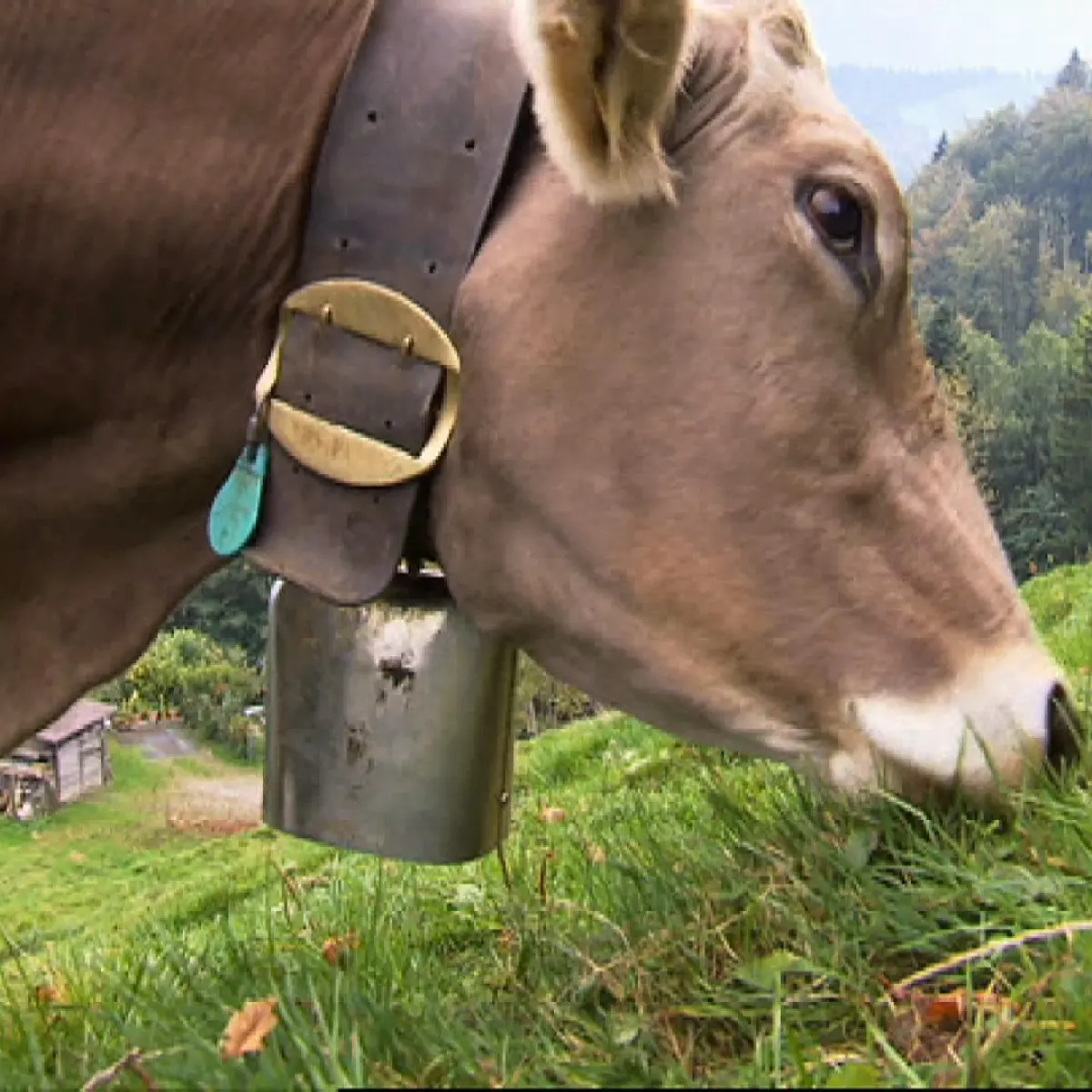
Herd Tracking Across Large Terrain
The most fundamental reason cows wear bells is location tracking. Cows can roam up to 10 miles in a single day when searching for food. In alpine regions, where mountainous terrain, fog, and dense vegetation make visual tracking nearly impossible, a bell provides continuous audio information about where the herd is.
Farmers simply follow the sound. When bells go quiet, the farmer knows either the herd has settled down to rest or something is wrong and the animals are too far away to hear.
Safety and Ownership Identification
A bell signals to everyone nearby that the cow wearing it is domesticated and owned. This is especially important where farmland and wild terrain overlap, or where property lines are unclear.
If a cow wanders onto a neighbor’s land or crosses a road, the bell immediately communicates that this animal belongs to someone nearby. This simple signal has prevented countless disputes and helped return lost cattle to their owners across centuries of farming.
Predator Deterrence
The constant noise of a large cowbell carries over significant distances. Predators including coyotes, bobcats, wolves, and feral dogs learn to associate human activity with danger.
The constant sound of bells across a grazing herd signals that people are nearby and tracking these animals. However, some research has shown a complicating effect: over time, certain predators can develop a learned association between bell sounds and the presence of prey animals. This effectively turns the bell into a dinner bell for experienced predators in some areas.
Status Symbol Within the Herd
In Swiss and Austrian farming tradition, bells serve as a status symbol. The cow who wears the largest bell is considered the queen of the herd — typically the highest-ranking and best milk-producing cow.
Bell size reflects milk production and overall quality of the animal. During Alpine festivals, the finest milk-producing cow from each farm leads the procession and wears the largest, most ornate bell. This tradition has been ongoing for centuries and remains a source of enormous local pride.
Human Safety Warning System
A less obvious but genuinely important reason for cowbells is protecting the people working around cattle. Cows are large, heavy animals that can move quickly, and they do not make much sound when walking on soft ground.
Farm workers who are distracted by other tasks may not notice a cow approaching or charging. The rapid, loud clanging of a bell when a cow breaks into a run gives workers an early warning they can hear even without looking up. This early warning has prevented serious injuries on farms.
Cultural and Festival Traditions
Cowbells are central to some of the most cherished agricultural festivals in Europe. The Alpaufzug is the spring celebration when cattle are driven up to high alpine meadows after the winter. Villages celebrate with processions, music, and decorated cows.
The return in autumn is called Alpabzug or Almabtrieb — known as Viehscheid in Southern Germany. The best cows, called Kranzkuh (Crowned Cow), lead the procession adorned with elaborate floral crowns and large ornamental bells. These festivals draw thousands of tourists each year and the earliest documented versions date back to the mid-18th century in Tyrol, Austria.
Belief in Spiritual Protection
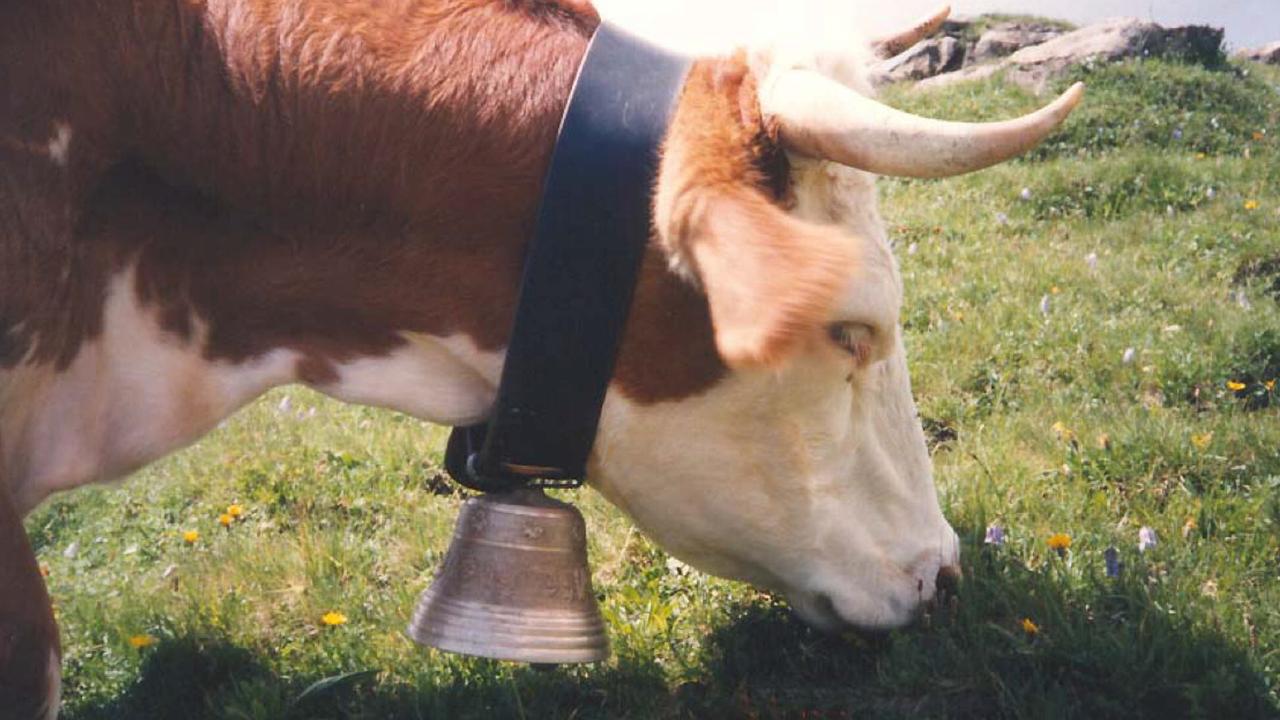
In the 15th century, people believed cowbells did more than locate animals. The sound was thought to ward off sickness, evil spirits, and bad luck. As cows wearing bells roamed the land, their sound was believed to purify the surrounding area.
Many cowbells feature decorative engravings or symbols that some cultures believed provided magical protection — such as the power to prevent fever and illness in the herd. This spiritual dimension gave cowbells a significance well beyond the practical, making them objects of both function and faith.
Marking Domestication
A bell is one of the clearest signals that an animal is domesticated and belongs to someone. Throughout history, bells were hung on cows, goats, sheep, horses, and even elephants to communicate their domesticated status.
In regions where wild and domesticated animals share the same landscape, this distinction matters enormously. A belled animal is immediately recognizable as someone’s property, reducing the risk of it being harmed, hunted, or claimed by someone else.
Cowbells in Swiss Culture
Switzerland has one of the deepest relationships with cowbells of any country in the world. The sound of a cowbell is immediately synonymous with Switzerland internationally and serves as a cultural ambassador for the country.
Swiss airports and train stations play cowbell recordings as ambient sound. Tourism campaigns feature Swiss dairy traditions prominently. Businesses, homes, and chalets display cowbells as decorations and family heirlooms. Souvenir cowbells are one of the most popular gifts for visitors leaving Switzerland.
When regulations restricting cowbell use have been proposed, they have triggered genuine political controversy in Switzerland, demonstrating just how deeply embedded this tradition is in Swiss national identity.
The Bevin Brothers Manufacturing Company in East Hampton, Connecticut has been making cowbells since 1832 and remains the only bell-making company still operating in the United States. In Europe, cowbell craftsmanship continues in Korea, Indonesia, India, and across Alpine communities where the bells are still made as village handicrafts.
Cowbell Size and the Hierarchy of the Herd
The relationship between bell size and herd hierarchy is one of the most interesting aspects of cowbell culture. It is not random which cow gets which bell.
In many Alpine farming traditions, bell assignment reflects the order of the herd. The lead cow — typically the most dominant, highest milk-producing animal — wears the largest and heaviest bell. Younger or lower-ranking cows wear smaller bells. Calves do not wear bells at all, partly because the collar would need constant adjustment as the calf grows, and partly because calves stay close to their mothers and their location is thus always known.
| Herd Rank | Bell Size | Bell Sound | Notes |
|---|---|---|---|
| Lead cow (queen) | Largest | Deepest tone | Best milk producer |
| Senior cows | Medium-large | Rich tone | Based on productivity |
| Younger cows | Medium | Clear tone | Growing animals |
| Calves | None | — | Stay near mothers |
How Farmers Read Cowbell Sounds
Experienced farmers develop an impressive ability to interpret cowbell sounds over time. A steady, rhythmic ringing pattern indicates the herd is actively grazing and moving around the pasture normally.
When the bells fall silent for an extended period, the herd has likely settled down to rest or ruminate. If the bells suddenly ring rapidly and chaotically, something is disturbing the herd — possibly a predator, a loud noise, or a cow in distress. This audio intelligence system gives farmers passive, real-time information about herd behavior without requiring them to visually check on the animals constantly.
Do Cowbells Harm Cows?
This is where the cowbell story gets more complicated and more contested. Animal welfare researchers and advocates have raised genuine concerns about the impact of cowbells on cattle.
The Noise Problem
The largest cowbells can produce sounds of up to 113 decibels at close range. That level exceeds occupational safety limits established for human workers. Cows have superior hearing sensitivity compared to humans — they can hear sounds between 23 Hz and 35 kHz, with peak sensitivity at 8 kHz. This means bells that seem merely loud to humans may be genuinely intense to a cow wearing one around its neck all day.
What Research Has Found
A 2015 study from Switzerland found that cows wearing bells over three days spent measurably less time feeding, less time ruminating, and less time lying down compared to cows without bells. These are significant behavioral changes since feeding, ruminating, and resting are core to a cow’s health and milk production.
A 2017 study published in Frontiers in Veterinary Science tested 96 Brown Swiss dairy cows on 24 farms. Cows regularly exposed to cowbells showed different behavioral reactivity to noise stimuli compared to bell-inexperienced cows, suggesting changes in acoustic perception. The study found no evidence of habituation — meaning cows did not appear to simply get used to the bells over time.
The Welfare Debate
Animal welfare organizations including the German Animal Welfare Society have called for bans on cowbells on subsidized alpine pastures. A campaign group called GPS-statt-Kuhglocken (GPS instead of cowbells) has pushed for a binding phase-out of cowbells on subsidized alpine pastures in Bavaria by 2030.
Approximately 53,000 cattle are driven to Bavaria’s 1,450 alpine pastures each summer, wearing bells for up to six months continuously. Critics argue that six months of continuous exposure to 90–113 dB noise close to the ears is not a welfare-neutral practice.
Most cattle farmers counter that their animals continue to produce milk, graze, and thrive while wearing bells. They argue proper collar fitting, regular adjustment, and appropriate bell sizing prevent harm.
Modern Alternatives to Cowbells
Technology now offers alternatives that accomplish the same tracking goals without noise.
GPS trackers attach to a collar and transmit real-time location data to a farmer’s phone or computer. They are silent, accurate, and increasingly affordable. Some GPS systems also monitor movement patterns and alert farmers to unusual behavior that could signal illness, injury, or predator disturbance.
Some farmers have experimented with electronic cowbells that emit a periodic beep or chime rather than continuous clanging. These produce a much lower overall noise dose while still providing an audio tracking signal.
Despite these options, traditional cowbells remain widely used. Their reliability, zero battery requirement, long lifespan, and deep cultural significance ensure they are not disappearing from Alpine farms anytime soon.
| Tracking Method | Cost | Noise | Battery | Cultural Value |
|---|---|---|---|---|
| Traditional cowbell | Low | High | None | Very high |
| GPS tracker | Medium | None | Required | Low |
| Electronic bell | Low-medium | Low | Required | Low |
| Physical fence | High | None | None | Low |
Cowbells Beyond the Farm
The cowbell has taken on a life well beyond its agricultural origins. In sports, cowbells are rung enthusiastically by spectators at Alpine skiing events, cyclocross races, and cycling events like the Tour de France. Their loud, distinctive clang cuts through crowd noise and creates atmosphere in outdoor sporting venues.
Alpenglocken — traditional tuned cowbells — are used as musical instruments, typically in sets of 13 bells covering one octave. Each bell is a different size and produces a different pitch, enabling melodies to be played.
In pop culture, the cowbell is immortalized by the famous Saturday Night Live sketch “More Cowbell” from 2000, featuring Christopher Walken and Will Ferrell. The sketch refers to the faintly audible cowbell in Blue Öyster Cult’s 1976 song “(Don’t Fear) The Reaper,” and has made “more cowbell” a lasting cultural reference in English-speaking countries.
Where Do You See Cows Wearing Bells Today?
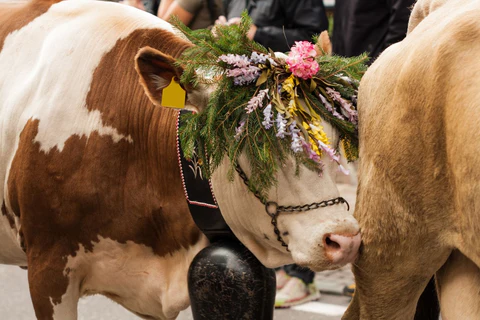
Cowbells are used most commonly in Switzerland, Austria, Germany, France, and other Alpine countries. They are also widespread across Latin America, the Mediterranean, and parts of Africa and Asia where nomadic pastoral traditions continue.
In the United States, cowbell use is less common, though some dairy farms, particularly in New England and areas with European heritage farming traditions, still use them. The practice is most visible in America in souvenir shops and sporting events rather than on actual farms.
Switzerland remains the global symbol of cowbell culture, and you are almost guaranteed to hear bells ringing if you take any rural walk in Swiss mountain country, especially between spring and autumn when cattle are on the high alpine meadows.
The Craftsmanship Behind a Cowbell
Making a quality cowbell is a skilled process. Traditional Swiss cowbell making involves several distinct stages.
Molten brass is poured into a mold to form the bell shape. After cooling, the bell is hammered to refine the shape and tune the sound. The surface is smoothed and may be engraved or embossed with decorative patterns. Finally, the leather collar is attached and fitted to the appropriate size.
The pitch of the finished bell depends on the thickness of the metal, the exact shape, and the size of the clapper. Skilled craftsmen in the Appenzell region of Switzerland can produce bells with specific, consistent tones that farmers use to distinguish between individual animals by sound alone.
Frequently Asked Questions (FAQs)
Why do cows wear bells around their necks?
Cows wear bells primarily so farmers can track their location across large pastures where visual monitoring is impossible. The bell sound travels long distances, giving farmers constant audio information about where their herd is grazing.
Do cowbells hurt cows?
Research suggests cowbells cause behavioral changes including reduced feeding and ruminating time, but the full extent of harm is still debated. Large bells can reach 113 dB, which exceeds safe noise levels for humans and may affect cow hearing and stress levels over time.
What is the history of cowbells?
The earliest European written record of livestock bells dates to 1410 in Frankfurt, Germany. Originally only the most valuable cows wore bells. The practice gradually spread to entire herds during the Early Modern period, with Swiss brass cowbell craftsmanship developing fully by the 18th century.
Why do lead cows wear the biggest bells?
In Alpine tradition, the lead cow is the highest milk producer and most dominant animal in the herd. Wearing the largest bell signals her status. During festivals, she leads the procession adorned with the most ornate bell and an elaborate floral crown.
Do calves wear cowbells?
No, calves do not wear cowbells. Calves stay close to their mothers, so their location is always known. Collars would also need constant adjustment as a calf grows, and the weight and noise of a bell can be distressing to young animals.
Can cowbells deter predators?
Historically yes, but modern research shows mixed results. Some predators avoid the sound, but others develop a learned association between bell noise and the presence of prey, actually making belled cattle easier for experienced predators to locate.
What are the cultural festivals involving cowbells?
The Alpaufzug celebrates cattle going up to summer alpine pastures in spring. The Almabtrieb or Viehscheid celebrates their return in autumn. The best cow leads the procession wearing the largest ceremonial bell and a floral crown, a tradition dating back to 18th-century Tyrol, Austria.
Are GPS trackers replacing cowbells?
GPS trackers are growing in use as a silent alternative to cowbells. They provide real-time location data without noise. However, cowbells remain widely used due to their zero battery requirement, low cost, long lifespan, and deep cultural significance in Alpine communities.
Why are cowbells used at sports events?
Cowbells produce a loud, distinctive clang that cuts through crowd noise outdoors. Spectators at Alpine skiing, cyclocross, and cycling events like the Tour de France use handheld cowbells to cheer on athletes. Their sound carries clearly over windy, open terrain where other noise-makers fall flat.
What is the “More Cowbell” reference?
It comes from a 2000 Saturday Night Live sketch in which a music producer insists that the key to improving a rock song is adding more cowbell. The sketch references the faint cowbell heard in Blue Öyster Cult’s 1976 hit “(Don’t Fear) The Reaper” and became one of the most quoted comedy sketches in American pop culture.
Conclusion
Why do cows wear bells? The answer covers six centuries of farming tradition, cultural identity, practical livestock management, and an ongoing animal welfare debate that is more relevant in 2026 than ever before. Cowbells began as a mark of status for only the finest animals in a herd.
They evolved into an essential tracking tool that let Alpine farmers manage cattle across terrain that made visual monitoring impossible.
They grew into cultural symbols woven into national identity, festival tradition, and even music.
Today they sit at the intersection of heritage and science, with farmers, researchers, and animal welfare advocates debating whether tradition can be balanced with what we now know about noise and animal wellbeing.
Whether you encounter a cowbell ringing across a Swiss meadow, clanging at a cycling race, or displayed on a kitchen shelf, its story is older, deeper, and more layered than the cheerful jingle suggests.
