

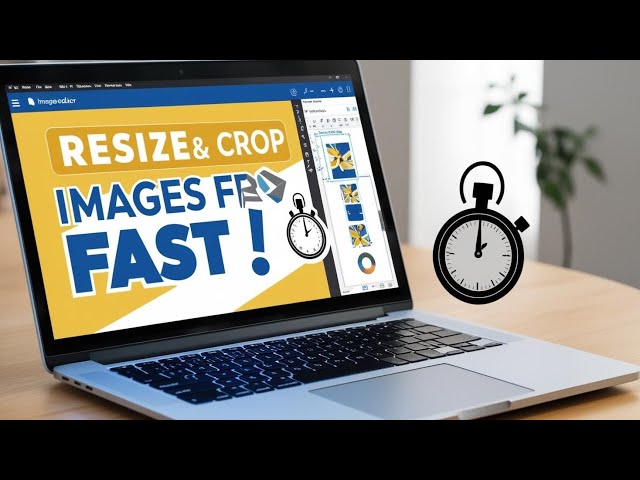
Digital content creation moves fast, and the tools you use to prepare images need to keep up. Whether you are scaling photos for social media, adding filters for a brand aesthetic, or polishing visuals for a blog or website, having reliable online tools at your fingertips makes the difference between content that looks professional and content that looks rushed. This guide covers the best approaches for resizing images and adding creative effects online, with practical tips to help you get great results every time.
Why Online Image Editing Tools Have Become the New Standard
Not long ago, resizing an image or applying a visual effect meant opening a desktop application, waiting for it to load, and navigating a complex interface built for professional designers. Today, a browser tab can handle the same tasks in a fraction of the time. Online image editors have closed the gap significantly when it comes to features, and they offer something desktop software cannot: instant access from any device, with no installation required.
This shift matters for anyone producing digital content regularly. Social media managers, small business owners, bloggers, and freelance creatives all need to move quickly from raw image to polished visual. The best online tools make that possible without requiring a steep learning curve or a large software budget. The challenge is knowing which tools are genuinely capable and which ones look good on the surface but fall short when you actually need them.
The other reality is that resizing and adding effects are rarely standalone tasks. Most content workflows involve both, often in the same session. A tool that handles sizing adjustments cleanly and also offers a useful range of creative effects is far more valuable than two separate single-purpose tools that require you to download and re-upload files between steps.
Understanding Image Resizing: More Than Just Changing Dimensions
Resizing sounds simple, but there are several distinct things the term can mean depending on what you need. Understanding the difference will help you choose the right approach and avoid common mistakes that reduce image quality.
Scaling by pixel dimensions changes the actual width and height of the image in pixels. This is what most people mean when they say they want to resize an image. It is useful when a platform requires specific pixel dimensions, such as a profile picture that must be exactly 400 by 400 pixels or a banner with a fixed width.
Resizing by file size compresses the image to meet a maximum file size requirement without necessarily changing the pixel dimensions. Many upload forms cap file sizes, and this type of resizing reduces the kilobytes or megabytes while preserving as much visual quality as possible.
Cropping changes the framing of an image by removing edges, which effectively resizes the composition even if you are not changing the resolution of the remaining portion.
Aspect ratio adjustments change the proportional relationship between width and height. This is important for platforms with specific format requirements, such as a 9:16 aspect ratio for vertical video thumbnails or a 1:1 square ratio for certain social media posts.
Knowing which type of resizing your project actually calls for will save you from applying the wrong technique and then wondering why the result does not look right.
Tips for Resizing Images and Adding Effects Online
1. Always Start With the Highest-Resolution Version of Your Image
When you resize an image downward, quality is usually preserved well. When you resize upward, you are asking the software to invent pixel information that was never there, which leads to blurring and soft edges. Starting with the largest, sharpest version of your image gives you the most flexibility and the best output regardless of where the final file is headed.
If you only have a small version of an image and need a larger one, some tools offer AI-powered upscaling that does a reasonable job of filling in missing detail. But this is always a fallback option, not a preferred workflow. Whenever possible, go back to the original source to get a high-resolution file before you start editing.
2. Use Adobe Express as Your All-in-One Image Editor
For a browser-based tool that handles both resizing and creative effects without requiring a download or a credit card for basic use, the Adobe Express photo editor is one of the most capable options available. It supports precise pixel dimension input for resizing, along with a full range of creative tools including filters, overlays, text, background removal, and adjustment controls for brightness, contrast, saturation, and more.
What sets it apart from many free browser tools is the quality of the output and the depth of the feature set. It is not a stripped-down version of a professional tool but a purpose-built platform for the kind of fast, high-quality content creation that bloggers, social media managers, and small business teams actually do every day. Because it runs in the browser, there is nothing to install, and work can be saved and continued across sessions when you are signed in.
3. Match Your Export Dimensions to Platform Specifications Before You Start
One of the fastest ways to waste time in an image editing workflow is to finish a design and then realize it is the wrong size for where it is going. Every major platform has specific image dimension recommendations, and these change periodically. Before you open a resizing tool, look up the current recommended dimensions for the platform and format you are targeting.
Keep a simple reference document with the image sizes you use most often. Dimensions for Instagram posts, Facebook cover photos, LinkedIn banners, YouTube thumbnails, blog feature images, and email headers are the ones most content creators need repeatedly. Having these on hand means you can set the canvas size correctly at the start of every project rather than guessing or resizing after the fact.
4. Understand the Difference Between Lossy and Lossless Resizing
When you resize and export an image, the file format you choose determines how much quality is retained. JPEG is a lossy format, meaning every time you save a JPEG it discards some image data to reduce file size. If you open a JPEG, edit it, and save it again multiple times, quality degrades with each pass. PNG is lossless, meaning no data is discarded during saving, which preserves quality but results in larger files.
For images that will go through multiple editing passes, work in PNG until the final export. If the destination requires a JPEG, convert at the last step only. This small habit has a noticeable impact on the sharpness and color accuracy of your final images, particularly for graphics with text, logos, or sharp lines where JPEG compression artifacts are most visible.
5. Use Creative Effects to Build a Consistent Visual Identity
Adding effects to images is not just about making individual photos look more interesting. Used consistently, a defined set of filters, color adjustments, and overlays becomes part of a visual identity. Audiences recognize content from creators and brands they follow in part because of visual consistency, and online image editors make it easier than ever to apply the same treatment to every piece of content you produce.
Choose two or three adjustments that work well for your content type and brand personality, whether that is a warm color grade, a slightly desaturated matte finish, or a clean high-contrast treatment. Apply these consistently across your images rather than picking a different filter for every post. Consistency builds recognition, and recognition builds audience trust over time.
6. Remove Backgrounds Before Adding Effect Layers
Background removal is one of the most transformative things you can do to a product photo or portrait before adding creative effects. A cluttered or distracting background competes with the subject and makes effect layers look messy. Removing the background first gives you a clean subject that can be placed on a solid color, a gradient, a texture, or a branded template with much better results.
Most modern online image editors include a background removal tool, often powered by AI that can detect and separate the subject from the background in a single click. The results are not always perfect on highly complex images, but for most product shots, portraits, and illustrations, the output is clean enough to use without manual cleanup. This one step can elevate the professionalism of your images significantly.
7. Resize for Retina and High-DPI Screens When Producing Web Graphics
Standard screen resolutions have been overtaken by high-DPI and retina displays on modern laptops, phones, and monitors. If you are producing images for a website and you only export at the standard pixel dimensions, those images may look slightly soft on high-density screens. The general approach is to export at double the intended display size and let the browser or platform scale the image down for standard displays.
For example, if a blog feature image displays at 800 pixels wide on the page, exporting at 1600 pixels wide ensures it looks sharp on retina screens. The file size is larger, but the visual difference on modern displays is noticeable. Most online image editors make it simple to enter custom export dimensions, so this adjustment adds very little time to the workflow.
8. Use Overlay Effects to Add Depth Without Overcomplicating the Design
Overlays are one of the most underused tools in the online image editing toolkit. A subtle gradient overlay can add depth to a flat image. A light texture overlay can give a digital graphic an organic, tactile quality. A semi-transparent color overlay can make an image more brand-consistent by tinting it toward your primary brand color.
The key word is subtle. Overlay effects work best when they enhance an image without announcing themselves. Aim for an opacity level where the effect is visible but the viewer is not immediately sure what you have done. When overlays are too heavy, they distract from the subject. When they are calibrated well, they make the whole image feel more intentional and polished.
9. Batch Resize When You Are Preparing Content for Multiple Platforms
If you are launching a campaign, publishing a blog post with multiple images, or populating a new social media profile, you will often need the same image in several different sizes. Doing this one file at a time is slow and creates opportunities for inconsistency. Some online tools support batch resizing, where you upload one image and specify multiple output dimensions to download as a set.
This approach is particularly valuable for social media content calendars, where the same piece of artwork needs to be adapted for a square post, a horizontal banner, a vertical story, and a thumbnail, all from a single source file. Setting up a batch resize workflow once can save hours over the course of a content season.
10. Check the Visual Weight of Your Image After Resizing
Visual weight refers to how an image feels in terms of density, contrast, and attention. When you resize an image, particularly when scaling down significantly, fine details can compress in ways that shift the visual balance. A photo that looked light and airy at full size may look heavy and cluttered when reduced to thumbnail dimensions. A graphic with thin typography may become illegible at small sizes.
After every resize, view the image at its intended display size, not at 100 percent zoom in the editor. This is how your audience will actually see it. If the visual weight has shifted in a way that does not work, a small contrast or brightness adjustment at the target size can often correct it without needing to go back to the full-size version.
FAQ: Online Image Resizing and Creative Effects for Digital Content
What is the easiest online tool for resizing images to specific social media dimensions?
The most practical approach for social media image sizing is to use a tool that includes preset dimension templates for the platforms you use most. Adobe Express, for example, offers built-in templates sized correctly for Instagram posts, stories, Facebook covers, LinkedIn banners, Pinterest graphics, and more. Rather than looking up dimensions and entering them manually each time, you can select the format you need and the canvas is automatically set to the correct size. Beyond presets, the best tools also let you enter custom pixel dimensions when you need a size that is not covered by the built-in templates. For creators who work across multiple platforms, this combination of presets and custom sizing is the most efficient workflow available.
How do I resize an image without losing quality?
Quality loss during resizing is primarily a concern when scaling an image up beyond its original dimensions, or when repeatedly saving a lossy format like JPEG. To minimize quality loss, always start with the highest-resolution source image available, work in a lossless format like PNG during the editing process, and only convert to JPEG or other compressed formats at the final export stage. When scaling down, most online tools do a good job of preserving quality because they are reducing the amount of data rather than inventing new data. When scaling up, look for tools that use AI-powered upscaling or bicubic interpolation rather than basic nearest-neighbor scaling, as these produce noticeably sharper results. For web use, a tool like Squoosh can help you optimize image quality and file size simultaneously, letting you compare the original and compressed versions side by side before exporting.
What kinds of creative effects are most useful for social media content?
The effects that tend to have the most practical impact for social media content are color grading adjustments, vignettes, background removal, and text overlays. Color grading, which involves adjusting the warmth, saturation, and contrast of an image, is the most versatile because it can be applied consistently across a content feed to create a recognizable aesthetic. Vignettes, which darken the edges of an image slightly, draw attention toward the center subject in a subtle way. Background removal allows subjects to be placed on branded or contextually appropriate backgrounds. Text overlays are essential for creating shareable quote graphics, announcements, and educational content. Effects like grain, blur, and artistic filters can be used selectively for variety, but building a consistent base treatment from a small set of adjustments is a more effective long-term strategy than reaching for novelty effects on every post.
Can I use online image editors to resize and edit photos on a mobile device?
Yes, and the experience has improved considerably in recent years. Most well-built online image editors are responsive, meaning they adapt their layout to fit the screen size of the device you are using. Adobe Express, in particular, offers both a browser-based tool that works on mobile and a dedicated mobile app, so you have the option to work in whichever environment suits the task. For quick resizes and simple effect applications on the go, the mobile browser experience is usually sufficient. For more detailed editing work that involves precise adjustments, a larger screen tends to be more comfortable and forgiving. The important thing is that your editing workflow is no longer tied to a desktop computer, which gives content creators a lot more flexibility in how and when they work.
Are there any risks to uploading personal or professional images to online editing tools?
This is a reasonable concern and one worth thinking through before establishing a workflow around any specific tool. The main risk is that uploaded images are stored temporarily on the tool’s servers and could theoretically be accessed, retained longer than expected, or used in ways not clearly disclosed. To minimize this risk, read the privacy policy of any tool you plan to use regularly, particularly the sections that cover how uploaded files are handled and how long they are retained. Reputable tools from established companies will state clearly that files are deleted after a defined period and that user content is not used for training or advertising purposes. For images containing sensitive information, proprietary products, or identifiable private individuals, using a tool from a company with a clear and transparent data policy is especially important. When in doubt, a tool backed by a large, accountable company is a safer choice than an anonymous free service with no stated privacy practices.
Conclusion
Resizing images and adding creative effects online has never been more accessible, and the tools available in 2026 are genuinely capable of producing professional-quality results without a design background or expensive software. The key is building a small, reliable toolkit suited to the kind of content you produce most often, understanding the technical basics well enough to make smart choices at each step, and applying effects with consistency rather than novelty.
Whether you are producing content for a single platform or managing visuals across a full digital presence, the tips in this guide will help you work more efficiently and produce images that look deliberate and polished. Start with a high-quality source image, use a capable all-in-one editor for your core workflow, export at the right dimensions for your destination, and apply effects with intention. Those habits, repeated consistently, are what separate content that looks considered from content that looks assembled in a hurry.
