

Why did George kill Lennie is one of the most discussed questions in American literature classrooms.
At the end of John Steinbeck’s 1937 novella Of Mice and Men, George Milton shoots his closest friend Lennie Small in the back of the head while Lennie looks out over the Salinas River, dreaming of rabbits.
It is one of the most emotionally devastating endings in modern fiction.
George’s decision was not born from anger, selfishness, or cruelty.
It came from love, loyalty, and the terrible logic of a world that had no mercy left for people like Lennie.
Background: Who Are George and Lennie?
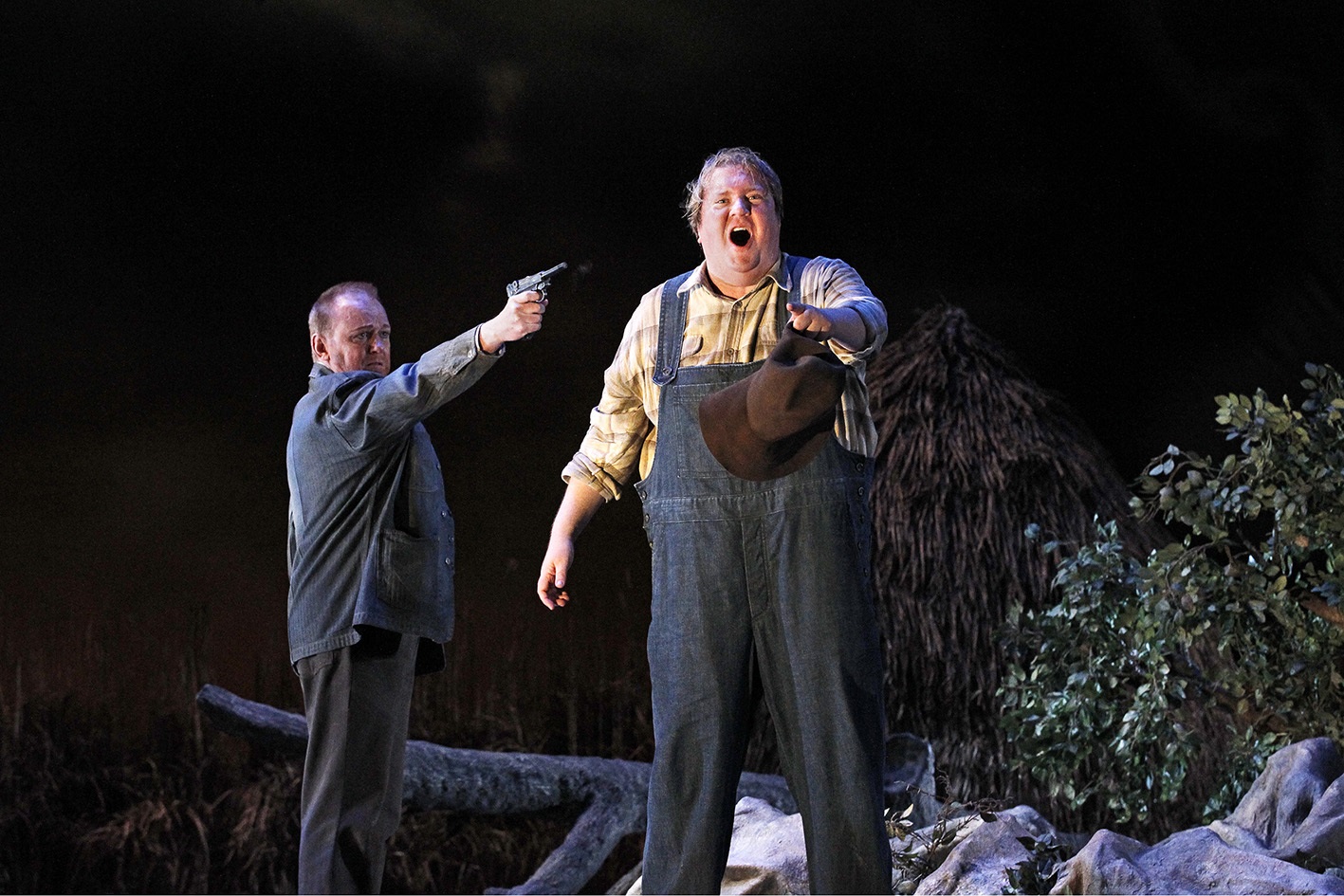
George Milton is a small, sharp-minded migrant worker in Depression-era California. He is quick-tempered but deeply loyal. He plans ahead, thinks practically, and carries a dream of owning a small piece of land where he and Lennie can live independently.
Lennie Small is the physical opposite of George in almost every way. He is enormous, immensely strong, and intellectually disabled. He is childlike in his emotions, forgetful of almost everything except the dream of tending rabbits on the farm he and George plan to own one day.
They have been together since they were young. George made a promise to Lennie’s Aunt Clara to look after him. That promise became a bond that defined both their lives.
The World They Lived In: Great Depression Context
Steinbeck set the novella in 1930s California during the Great Depression, a period of widespread poverty, unemployment, and social instability. Migrant ranch workers like George and Lennie were among the most vulnerable people in America.
These men traveled alone, worked for poor wages, had no security, and were discarded the moment they stopped being useful. Friendship, loyalty, and shared dreams were rare luxuries in this world.
Steinbeck used this brutal social backdrop deliberately. The world of the novel does not reward goodness, innocence, or loyalty. It favors the strong and disposes of the weak. Understanding this is essential to understanding why George did what he did.
What Happened Before George Killed Lennie
The events that forced George’s hand did not begin with Curley’s wife. They began long before, and each incident escalated the danger Lennie posed despite his completely innocent intentions.
The Incident in Weed
Before the events of the novella, George and Lennie worked on a ranch in Weed. Lennie, drawn by the softness of fabric, grabbed a girl’s red dress and held on when she screamed. He did not understand why she was afraid. He was panicking, not assaulting.
The girl reported it as a rape attempt. A lynch mob formed. George and Lennie hid in an irrigation ditch for hours before escaping under the cover of night.
This established the pattern. Lennie’s innocence and his lack of understanding of social consequences made him a recurring danger despite never intending harm.
The Dead Mouse and the Dead Puppy
In the opening of the novella, Lennie is found carrying a dead mouse in his pocket. He was petting it because it was soft. He pet it until it died. He did not understand that he had killed it.
Later at the ranch, Slim gives Lennie one of his dog’s puppies. Lennie pets the puppy too hard in the barn and kills it before the story reaches its climax. He is upset and confused, not cruel.
These incidents are not random details. Steinbeck builds a deliberate escalating pattern. Mice, then a puppy, then a woman. Each death more significant than the last. Each one accidental. Each one inevitable given Lennie’s nature and strength.
Curley’s Wife and the Breaking Point
On the afternoon that ends the story, Lennie is alone in the barn mourning the dead puppy when Curley’s wife enters. She is lonely, bored, and starved for connection. She invites Lennie to stroke her soft hair.
Lennie obliges happily. When she tells him to stop and begins to struggle, Lennie panics. He holds on tighter, telling her not to make noise or George will be angry. He shakes her to quiet her. He breaks her neck.
Lennie does not understand what he has done. He covers her body with straw and runs to the hiding place by the river that George had told him to go to if anything went wrong.
The Mob That Came for Lennie
When Candy finds the body and alerts George, the ranch erupts. Curley, already furious with Lennie for crushing his hand in an earlier fight, immediately demands revenge.
His instructions to Carlson were explicit and deliberate. He wanted Lennie to suffer. He told them to aim for his stomach so the wound would be slow and agonizing.
The group that formed was not a police search party seeking justice. It was a mob seeking vengeance. There was no jail, no trial, and no mercy waiting for Lennie at the end of their search.
Why Did George Kill Lennie? The Real Reasons
George’s decision to shoot Lennie was driven by several overlapping reasons, all of which Steinbeck weaves together in the final chapter. None of these reasons operate alone. Together, they form an act that is impossible to reduce to a simple moral judgment.
To Protect Lennie from a Brutal Death
The most immediate reason George killed Lennie was to spare him from what the mob had planned. A painful, drawn-out death from a gut wound, or worse, a lynching, waited for Lennie if George did not act first.
George took Carlson’s gun and reached Lennie at the riverbank before the mob arrived. He shot him in the base of the skull, at the point where the neck and head join, exactly as Carlson had shot Candy’s dog. It was designed to be instant and painless.
The method mattered. George chose the most merciful death available in that moment and place.
To Give Lennie a Happy Final Moment
George did not just shoot Lennie. He chose what Lennie’s last experience of the world would be. He sat beside him, looked out over the water, and told him again about the farm.
He described the house with the little stove. The garden. The rabbits Lennie would tend. The fat of the land they would live off. Lennie asked questions, excited and happy, just as he always was when they talked about the dream.
George told him: “I ain’t mad. I never been mad, an’ I ain’t now. That’s a thing I want ya to know.” Lennie died believing the dream was still alive, still possible, still minutes away. That was George’s final act of love.
Lennie Had No Sustainable Future
Even if the mob had not been coming, there was no safe future for Lennie. Every ranch they went to ended the same way. Lennie could not control his strength, could not remember instructions beyond a few minutes, and could not survive in society without constant supervision.
Jail or an institution would have been torture for Lennie. He could not have understood why he was locked up. He would have been terrified, confused, and alone.
George had protected Lennie for years. He knew better than anyone that there was no version of the future in which Lennie was safe and free and not a danger to others.
An Act of Mercy Rooted in Love
Steinbeck frames George’s act as euthanasia in the ethical sense. It is a mercy killing: a decision made not for the benefit of the person pulling the trigger but entirely for the person who is dying.
George had nothing to gain from this death. He lost everything. He lost the dream, the companionship, and the future. The only thing George achieved by pulling the trigger was that Lennie did not suffer.
That selflessness is central to Steinbeck’s point. George gave up his own hope so Lennie would not feel pain or fear in his final moments.
The Role of Candy’s Dog as Foreshadowing
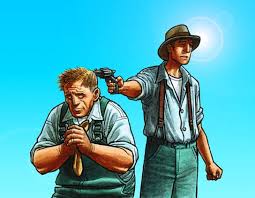
Steinbeck did not arrive at the ending of Of Mice and Men without carefully preparing the reader. The killing of Candy’s old sheepdog in Chapter 3 is the most important piece of structural foreshadowing in the novella.
Carlson convinces Candy to let him shoot the dog because it is old, in pain, and no longer useful. Candy reluctantly agrees. The dog is led outside and shot in the back of the head. Candy regrets it immediately and deeply.
Afterward, Candy tells George: “I ought to have shot that dog myself, George. I shouldn’t ought to have let no stranger do it.” This is one of the most important lines in the book.
George heard Candy. He remembered it. When the moment came for Lennie, George made sure he was the one holding the gun. He did not let a stranger, or Curley, end Lennie’s life. That detail is not coincidence. Steinbeck put it there intentionally.
| Parallel | Candy’s Dog | Lennie Small |
|---|---|---|
| Relationship to the shooter | Candy and his dog | George and Lennie |
| Why killed | Old, suffering, no future | Dangerous, no future, mob coming |
| Who pulled the trigger | Carlson (a stranger) | George (his closest friend) |
| Method | Shot in base of skull | Shot in base of skull |
| Candy’s regret | Yes, deeply | Candy weeps at Curley’s wife’s body |
| Lesson applied | Stranger should not have done it | George makes sure he does it himself |
The parallel is one of the most structurally deliberate moments in American literary fiction.
What Does George Killing Lennie Symbolize?
Steinbeck packed the ending with symbolic meaning that extends far beyond the two characters in the scene.
The Death of the American Dream
The farm George and Lennie dreamed of was never just about land. It was about independence, dignity, and freedom from the exploitative system of ranch labor. The moment George shot Lennie, the dream died completely.
The American Dream theme in Of Mice and Men is not optimistic. Steinbeck presents it as something the working poor need to survive psychologically, a story they tell themselves. But the world of the Great Depression crushes those dreams without sentiment.
Lennie’s death is the physical embodiment of that crushing. The rabbits, the little stove, the garden, the self-sufficiency, all of it ended at the riverbank.
The Impossibility of Innocence in a Cruel World
Lennie is the most innocent character in the novel. He has no malice, no greed, no cruelty. He only ever wants to pet soft things and tend his rabbits. Yet he causes more destruction than any other character.
Steinbeck uses this paradox deliberately. Innocence and good intentions are not enough to survive in a world structured against the vulnerable. The system does not make exceptions for disability, childlike purity, or loving friendships.
Lennie’s death is the price the world extracts from innocence that cannot adapt.
Sacrifice and the True Nature of Friendship
George is frequently read as Lennie’s caretaker, but their relationship is far more balanced than that framing suggests. Lennie gave George a reason to work, a reason to dream, and the one thing that set George apart from every other lonely ranch hand: someone who gave a damn.
George himself articulates this early in the novel. He describes men who work on ranches as the loneliest people in the world, with nobody to talk to. He and Lennie had each other.
By killing Lennie, George did not just lose his friend. He became exactly what he always described: alone, with nothing ahead but the next ranch, the next bunkhouse, and no dream left to sustain him.
The Recurring Theme of Mercy Killing in the Novella
It is worth noting that mercy killing appears multiple times in the story, not just at the end.
Slim kills puppies that cannot be fed because there are too many for the mother dog to nurse. Carlson shoots Candy’s aging, suffering sheepdog. George shoots Lennie. Each instance is framed by Steinbeck as a compassionate choice made in a world where no good options exist.
This is not an accident of plot. Steinbeck constructed a novella in which mercy killing is the only form of dignity available to the vulnerable. Every instance reinforces the same thematic argument: the world of the Great Depression had no mercy to offer, so individuals had to provide it themselves.
Was George Justified in Killing Lennie?
This is the central ethical debate the novella invites, and Steinbeck does not answer it definitively. He presents the circumstances and leaves the judgment to the reader.
| Argument For Justification | Argument Against Justification |
|---|---|
| Lennie faced torture and a brutal death | George could have helped Lennie flee |
| George prevented Lennie’s suffering | Running away had worked before in Weed |
| Lennie died happy, mid-dream | Lennie had no say in his own death |
| George acted out of love, not self-interest | George could have sought institutional help |
| No humane alternative existed in that moment | Taking a life is never fully justified |
The most honest answer is that George was in an impossible situation created by systemic failures, social cruelty, and the brutal circumstances of the Great Depression. His choice was the most merciful available to him in that moment, and that is not the same as saying it was right.
What Happens to George After He Kills Lennie?
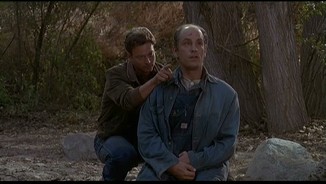
The novella ends almost immediately after the shooting. Slim puts his arm around George and leads him away. He says quietly, “You hadda, George. I swear you hadda.” George does not speak.
Carlson and Curley stand nearby, puzzled. Carlson asks Curley why he thinks they are upset. Neither of them understands. Slim does.
Steinbeck closes with George walking away, having lost the only meaningful thing in his life. The ending offers no redemption, no catharsis in the conventional sense, only the quiet confirmation that Slim understood, and that was the only witness George had for the most important act of his life.
The Title, the Robert Burns Poem, and the Larger Theme
Steinbeck took the title of the novella from a line in the Robert Burns poem “To a Mouse,” written in 1785. The relevant line is: “The best-laid schemes o’ mice an’ men / Gang aft agley,” which translates as the best-laid plans of mice and men often go wrong.
Burns wrote the poem after accidentally destroying a mouse’s nest while plowing a field. He reflects that humans and animals share the same vulnerability to forces beyond their control.
Steinbeck applied this idea directly to George and Lennie. Their plans were not foolish or unrealistic. They were the simple, human hope of owning a small piece of land. The world destroyed those plans not because George and Lennie failed, but because the world they lived in did not permit people like them to succeed.
How Steinbeck Builds to the Ending: Chapter by Chapter
The ending of Of Mice and Men does not arrive by surprise. Steinbeck constructs it brick by brick through five chapters of deliberate setup.
| Chapter | Key Event | What It Foreshadows |
|---|---|---|
| 1 | Dead mouse in Lennie’s pocket | Pattern of accidental killing |
| 2 | Curley’s aggression toward Lennie | Danger Lennie faces from vengeful men |
| 3 | Candy’s dog is shot | Method and mercy of the ending |
| 3 | George confides the Weed incident to Slim | Established pattern of Lennie’s danger |
| 4 | Crooks warns the dream is impossible | American Dream cannot be achieved |
| 5 | Lennie kills Curley’s wife and the puppy | The triggering event for the ending |
| 6 | George kills Lennie at the riverbank | Inevitable conclusion of all prior threads |
Every element of the ending was prepared for. Nothing is accidental in Steinbeck’s construction.
Lennie’s Final Scene: A Close Reading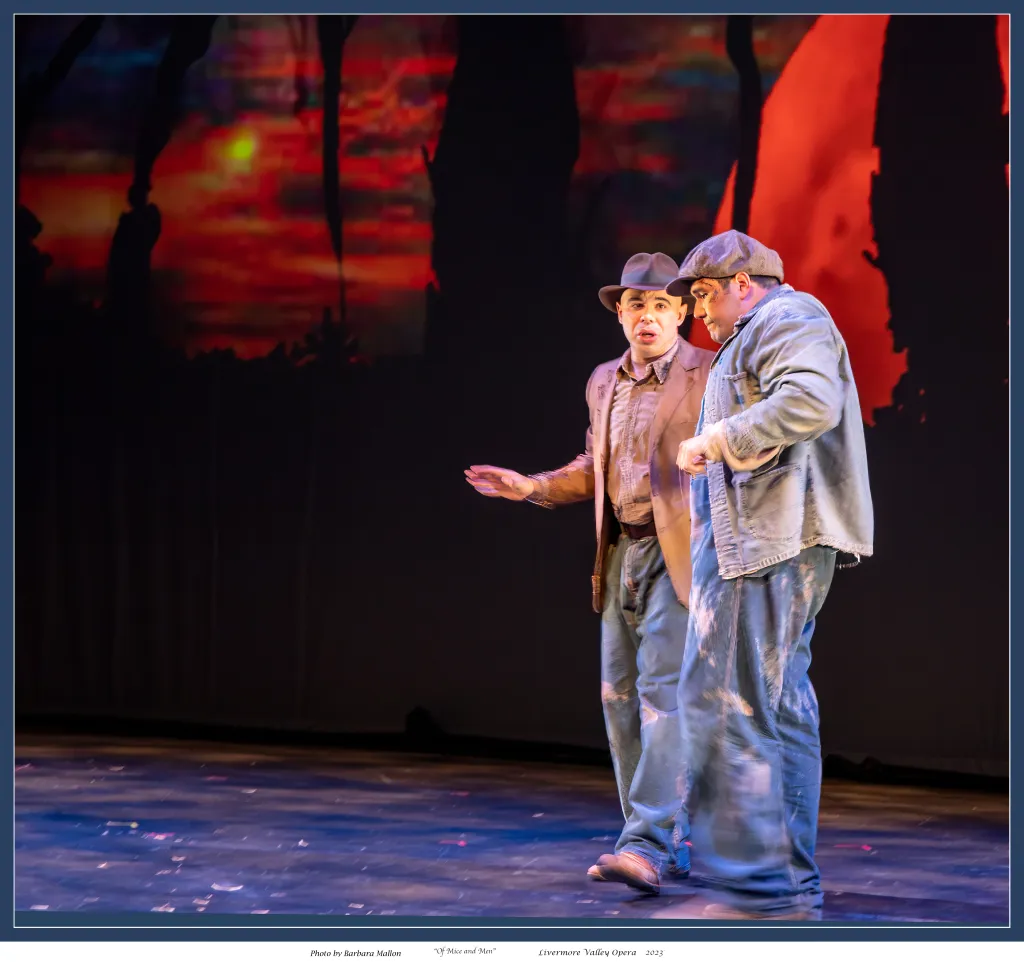
The final chapter is one of the most carefully written passages in American literature. Steinbeck returns to the setting of Chapter 1, the same pond and riverbank where George and Lennie camped on their first night. The circle is deliberately closed.
A heron hunts and kills a water snake in the opening of the chapter. This small act of natural predation sets the tone. Death in nature is not cruel, not personal. It simply is.
Lennie arrives at the riverbank, frightened. He hallucinates Aunt Clara and a giant rabbit who scolds him. These hallucinations reveal Lennie’s deep inner guilt and fear of George’s disapproval.
When George arrives, Lennie immediately asks if George is mad. George reassures him. Then he tells the dream one final time, and while Lennie is mid-sentence, looking out over the water, George pulls the trigger.
Steinbeck’s decision to have this happen mid-dream, mid-sentence, mid-joy, is the most humane death the scene could offer. Lennie never saw fear. He never felt what was coming.
Critical Perspectives on George’s Decision
Literary critics and scholars have read George’s act through multiple frameworks over the decades since the novella was published in 1937.
Humanitarian reading: George’s act is the ultimate expression of compassionate friendship. He prioritized Lennie’s peace over his own survival of their dream.
Social critique reading: The act indicts a society that created conditions where this was the only merciful option. George was not the villain. The economic and social system was.
Tragic fatalism: Some critics read the ending as Steinbeck’s argument that men of George and Lennie’s class were structurally doomed. The system would always destroy their dreams regardless of personal virtue.
Ethical complexity reading: George’s act raises unresolved questions about autonomy, consent, and who has the right to end another person’s life, even mercifully. Lennie could not consent, which some readers find deeply troubling regardless of George’s intentions.
Each of these readings is supported by the text. The richness of the ending is that it does not close off interpretation. It opens it.
Frequently Asked Questions(FAQs)
Why did George kill Lennie instead of letting him run away?
Running had worked in Weed but Lennie always caused the same problems elsewhere. George knew there was no version of the future where Lennie was truly safe.
Did George have any other options besides killing Lennie?
George could have helped Lennie flee, but the mob was closing in fast and there was no institution or support system equipped to care for Lennie humanely in 1930s America.
Was George killing Lennie an act of mercy?
Yes. Steinbeck frames it explicitly as a mercy killing. George ensured Lennie died painlessly, mid-dream, without fear or suffering, instead of being tortured by Curley’s mob.
How does Candy’s dog foreshadow Lennie’s death?
Candy’s dog is shot by a stranger in the base of the skull. Candy regrets not doing it himself. George heard this and made sure he, not a stranger, was the one to end Lennie’s life.
What does Lennie’s death symbolize in Of Mice and Men?
Lennie’s death symbolizes the destruction of the American Dream, the impossibility of innocence surviving in a cruel world, and the cost of loyalty in a society that does not reward it.
Did George feel guilty about killing Lennie?
The text shows George walking away in silence, led by Slim. He does not speak again. Steinbeck implies grief and devastation, not guilt in the sense of regret about the choice itself.
What were George’s last words to Lennie before he shot him?
George told Lennie he was not mad and had never been mad. He recited the dream about the farm and the rabbits one final time while Lennie looked out at the river.
Why did George use Carlson’s gun to kill Lennie?
George took Carlson’s gun when the mob formed. It was the only firearm available to him and it was the same method used on Candy’s dog, a death Steinbeck presents as swift and painless.
What does the ending of Of Mice and Men mean thematically?
The ending argues that in a society built against the vulnerable, mercy can only come from personal sacrifice. Systems and institutions failed. Only individuals could offer each other dignity.
Is George a hero or a murderer at the end of Of Mice and Men?
Steinbeck does not answer that. Slim tells George he had to do it. Curley and Carlson do not understand the grief. The ambiguity is intentional and is central to the novella’s lasting power.
Conclusion
Why did George kill Lennie is not a question with a clean answer, and Steinbeck designed it that way deliberately.
George killed his best friend because the world they lived in gave him no alternative that preserved Lennie’s dignity, peace, or safety.
He killed him to prevent the mob from torturing him.
He killed him so Lennie’s last moment was a happy one, mid-dream, at the river they had camped by together.
He killed him because he had promised Aunt Clara and because no amount of running would change what Lennie was capable of.
The parallel with Candy’s dog is not accidental. The recurring theme of mercy killing in the novella is not accidental.
The deliberate return to the opening riverbank setting is not accidental.
Steinbeck built this ending with extraordinary care to make George’s act feel inevitable, tragic, and rooted entirely in love.
George sacrificed the dream, the friendship, and his own future so Lennie would not suffer.
That is what makes Of Mice and Men one of the most emotionally powerful works in American literature, and why the question of why George killed Lennie still matters in 2026.
