

Why did Van Gogh cut off his ear is one of the most searched questions in art history. On the night of December 23, 1888, Vincent van Gogh sliced off part of his left ear in Arles, France.
The act shocked the world then, and it still fascinates millions today. Was it madness, heartbreak, or a desperate cry for help? The truth is layered — a collision of mental illness, broken friendships, alcohol abuse, and raw emotional pain.
The Night It Happened: December 23, 1888
The date was December 23, 1888. Van Gogh was living in a small rented house in Arles, France — a place he called the Yellow House.
He had been sharing that house for two months with fellow artist Paul Gauguin. Their relationship was already under serious strain.
That evening, after a heated argument, Van Gogh used a razor to cut off a significant portion of his left ear. He then wrapped it in cloth and delivered it to a woman at a nearby brothel.
Where Did It Happen?
| Detail | Information |
|---|---|
| Location | Yellow House, 2 Place Lamartine, Arles, France |
| Date | December 23, 1888 |
| Age of Van Gogh | 35 years old |
| Ear delivered to | A woman at a local brothel |
| Treated by | Dr. Félix Rey at Arles hospital |
| Doctor’s diagnosis | Acute mania with generalized delirium |
What Exactly Did Van Gogh Cut Off?
There is debate about how much of the ear was removed. For over a century, history books said only the lobe was cut.
A 2009 book by researcher Bernadette Murphy uncovered a sketch made by Dr. Rey showing the full ear had been removed — not just the lobe.
Most historians now believe Van Gogh cut off the majority, if not all, of his left ear using a straight razor.
The Paul Gauguin Connection
Van Gogh had invited Gauguin to Arles in October 1888. He dreamed of building an artists’ colony in the south of France.
The two men had very different personalities and artistic visions. Arguments became frequent, especially during long rainy days when they were stuck indoors together.
On the night of December 23, Gauguin announced he was leaving Arles and returning to Paris. This was a devastating blow to Van Gogh.
Did Gauguin Actually Cut Van Gogh’s Ear?
In 2009, German historians Hans Kaufmann and Rita Wildegans proposed a shocking alternative theory. They argued that Gauguin — an expert fencer — actually sliced off Van Gogh’s ear with a sword during the argument.
According to them, both men agreed to a “pact of silence” to protect Gauguin from legal consequences.
Most mainstream historians reject this theory. Van Gogh’s own letters, police reports, and medical records all point to self-inflicted injury.
The Real Reasons: Why Did Van Gogh Do It?
There is no single answer. Research points to a combination of factors that converged on that terrible night.
Mental Illness and Psychiatric Breakdown
Van Gogh had struggled with mental health his entire adult life. His father once wrote that Vincent “always has the inclination to melancholy.”
After the ear incident, his doctor in Arles diagnosed him with “acute mania with generalized delirium.” Dr. Félix Rey also suspected a form of mental epilepsy.
A landmark 2020 study published in the International Journal of Bipolar Disorders concluded Van Gogh most likely had a bipolar mood disorder combined with borderline personality disorder traits.
What Mental Conditions Did Van Gogh Likely Have?
| Possible Condition | Evidence |
|---|---|
| Bipolar Disorder | Extreme mood swings, intense creativity followed by deep depression |
| Borderline Personality Disorder | Unstable relationships, impulsive behavior |
| Temporal Lobe Epilepsy | Seizures, hallucinations, altered states |
| Alcohol Use Disorder | Heavy absinthe and wine consumption |
| Psychotic Depression | Hallucinations, severe depressive episodes after 1888 |
Research published in BJPsych Bulletin in 2026 confirmed multiple comorbid conditions likely played a role in his breakdown.
Theo’s Engagement: A Hidden Trigger
A key theory from researcher Martin Bailey suggests the true trigger was not the fight with Gauguin — it was a letter from his brother Theo.
Theo van Gogh had recently met Jo Bonger and proposed to her within days. He wrote to Vincent on December 23 to share the news.
Van Gogh depended on Theo completely — both emotionally and financially. The idea that Theo would now have a wife and family of his own felt like a threat to their bond and to Van Gogh’s livelihood.
Isolation and Loneliness in Arles
Van Gogh had moved to Arles to escape the hectic Paris art scene. But rural life brought its own kind of suffering.
He was far from friends, from galleries, from intellectual company. He sold only one painting during his entire lifetime.
The isolation deepened his depression and made each small setback feel unbearable. Gauguin’s departure was not just a personal loss — it was the collapse of Van Gogh’s entire dream.
Absinthe and Alcohol Abuse
Van Gogh was a heavy consumer of absinthe, a potent spirit with hallucinogenic properties. At the time it contained up to 70% alcohol.
A 2020 study noted that his worsening mental state in late 1888 was preceded by increased alcohol consumption combined with malnutrition and poor sleep.
Researchers believe he may have experienced delirium from alcohol withdrawal — a condition that causes hallucinations, seizures, and extreme confusion.
The Bullfighting Theory
Van Gogh had recently attended bullfights in Arles. He was captivated by a specific ritual: when a matador wins, the bull’s ear is cut off and presented to a lady in the crowd as a token of devotion.
Some historians believe Van Gogh unconsciously re-enacted this ritual — presenting his ear to the woman at the brothel as a strange, distorted act of devotion or significance.
The Biblical Inspiration Theory
Van Gogh was deeply religious earlier in his life. He had recently painted a scene of Simon Peter cutting off the ear of the servant of the High Priest — a New Testament story from the moment of Christ’s arrest.
Some psychologists theorize that Van Gogh, in a dissociated or psychotic state, may have been acting out this Biblical scene in a literal way.
The Self-Punishment Theory
Research psychologist W.M. Runyan at UC Berkeley outlined 13 prevailing hypotheses in a 1981 paper. One of the most compelling is that Van Gogh was punishing himself.
He felt he had failed Gauguin. He felt he had failed Theo. He had failed as an artist in the eyes of the world.
The act may have been a brutal, self-directed expression of that shame and guilt — a physical manifestation of internal collapse.
What Happened After Van Gogh Cut Off His Ear?
The night ended with Van Gogh unconscious in his blood-soaked bed. Police found him the following morning and took him to the hospital in Arles.
Dr. Félix Rey treated him. The severed ear tissue was brought to the hospital but could not be reattached — too much time had passed.
Timeline of Events After the Ear Incident
| Date | Event |
|---|---|
| December 23, 1888 | Van Gogh cuts off ear, delivers it to brothel |
| December 24, 1888 | Police find him unconscious; admitted to hospital |
| December 25, 1888 | Theo arrives at hospital |
| January 1889 | Van Gogh returns to Yellow House, paints Self-Portrait with Bandaged Ear |
| May 8, 1889 | Voluntarily checks into Saint-Rémy asylum |
| July 29, 1890 | Van Gogh dies from self-inflicted gunshot wound |
The Famous Self-Portrait with Bandaged Ear
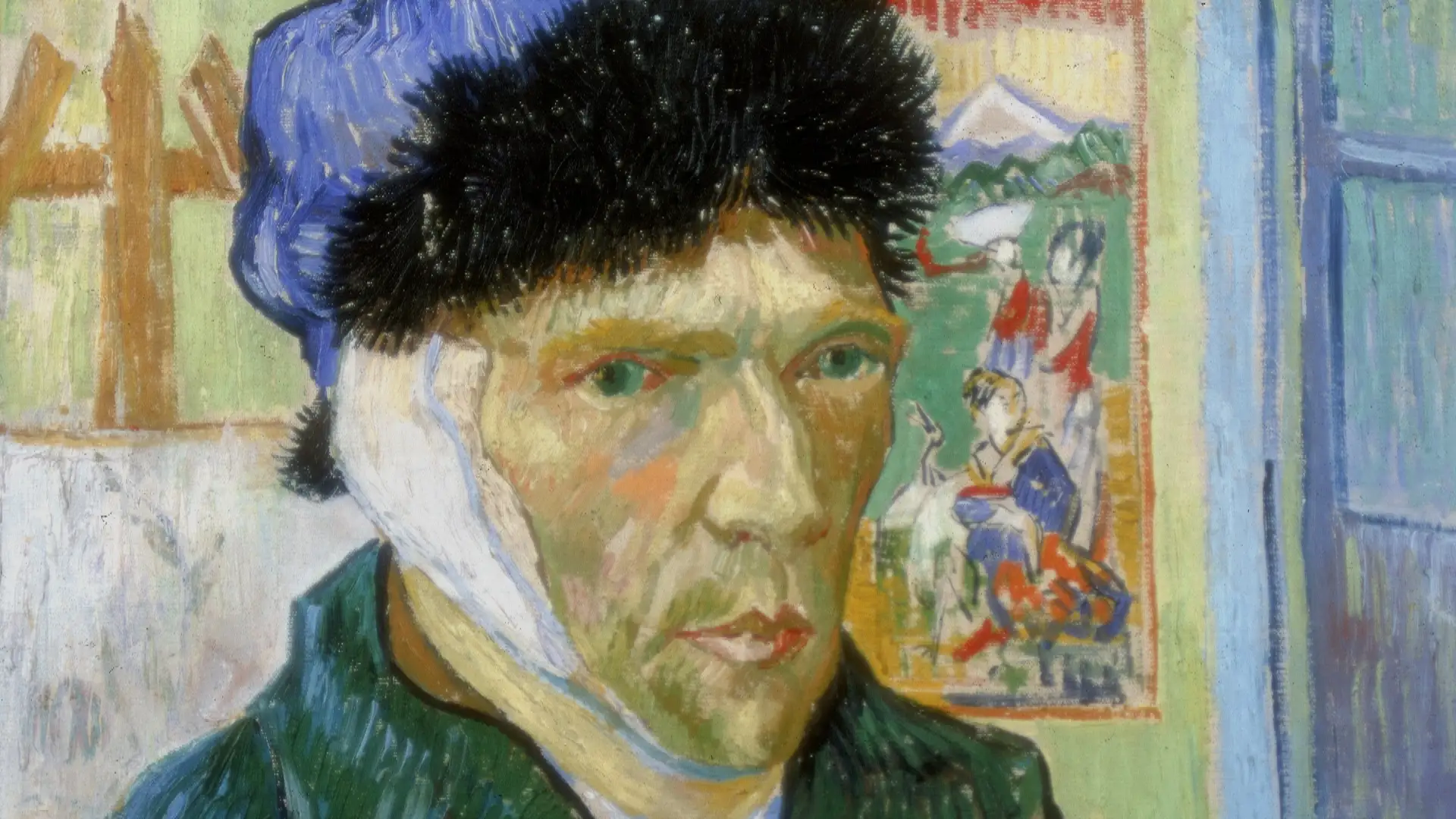
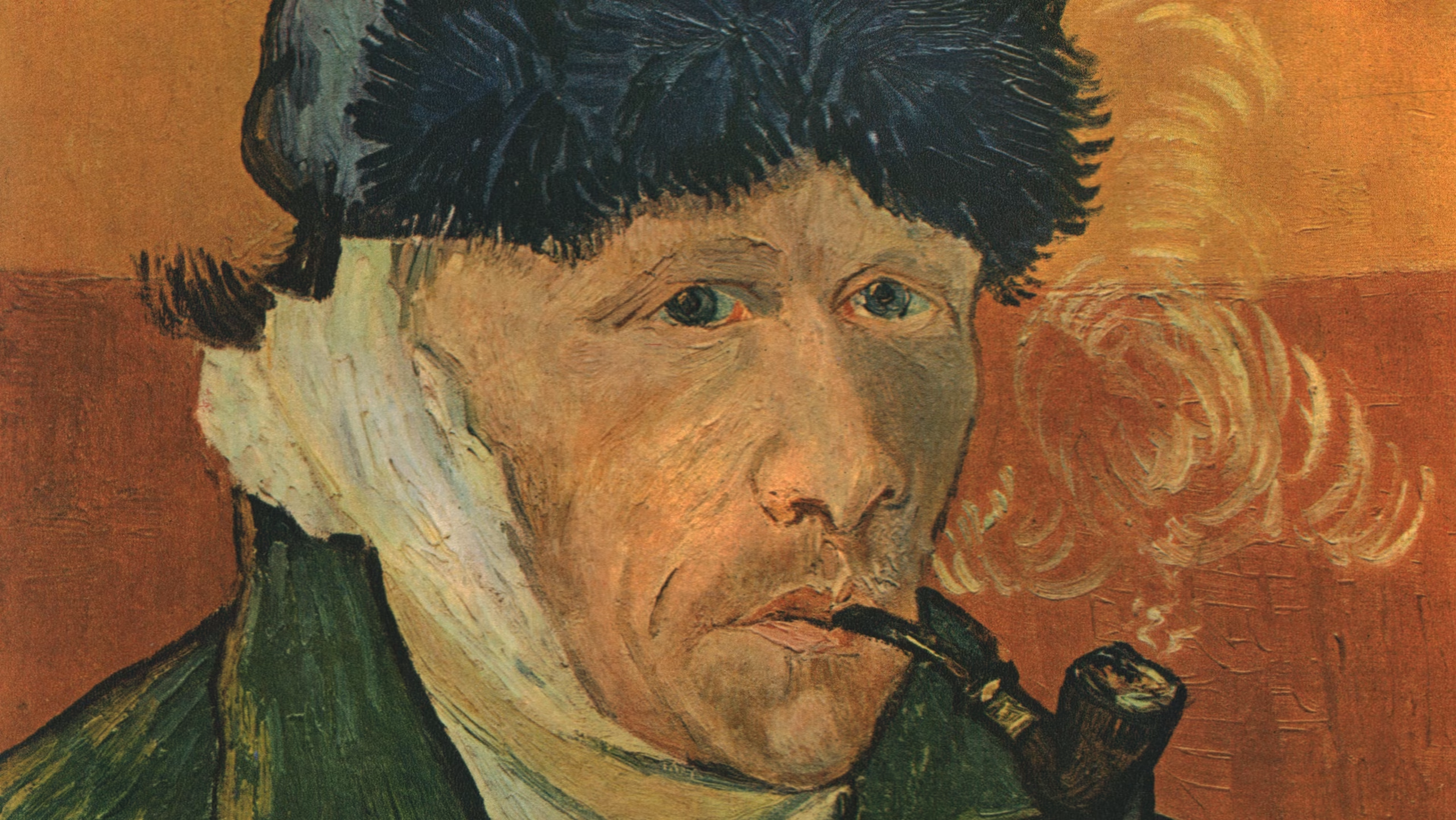
Just days after leaving the hospital in January 1889, Van Gogh painted one of his most recognized works: Self-Portrait with Bandaged Ear.
The painting shows him wearing a fur hat and heavy coat, with a thick bandage wrapped from his jaw to his temple. A Japanese woodblock print hangs on the wall behind him.
The painting is now held at The Courtauld Institute of Art in London. It is considered one of the most emotionally raw self-portraits ever created.
Van Gogh’s Time at Saint-Rémy Asylum
On May 8, 1889, Van Gogh voluntarily admitted himself to the Saint-Paul-de-Mausole asylum in Saint-Rémy-de-Provence.
He spent about a year there, continuing to paint prolifically even during episodes. It was during this period that he created The Starry Night (June 1889).
He suffered multiple episodes of hallucinations and severe depression while at the asylum.
Why Van Gogh Gave the Ear to a Woman at the Brothel
The exact identity of the woman has been debated for decades. For most of history she was described as a prostitute named Rachel.
Bernadette Murphy’s 2016 research identified her as Gabrielle Berlatier — a young local woman working at the brothel as a cleaning maid, not a sex worker.
The woman reportedly fainted when she opened the package. Van Gogh told her to “keep this object carefully.”
No one knows exactly why he chose her. She may have been someone he knew personally, or the act may have been entirely irrational.
What Did Van Gogh Say About It?
Van Gogh remembered almost nothing of the night afterward. When asked, he said the reason was “purely a personal matter” and refused to elaborate.
He repeatedly asked hospital staff about Gauguin and did not seem to understand that their friendship was over.
He never spoke publicly about why he did it. His letters from this period show confusion, remorse, and a deep desire to simply move forward.
The Legacy of the Ear Incident
At the time, the local community in Arles was frightened. Neighbors petitioned to have Van Gogh removed from the area, calling him dangerous.
Newspapers that covered the story misspelled his name. One described him as “a Polish painter.” He was completely obscure to the public.
Today, the incident is the most famous moment in art history after the creation of the works themselves. It has been the subject of dozens of books, films, documentaries, and academic papers.
The story of the ear has made Van Gogh a symbol of the tortured genius — though Van Gogh himself never romanticized his suffering. He saw his mental illness as an obstacle to his work, not a source of it.
Debunking Common Myths About Van Gogh’s Ear
Myth vs. Fact
| Myth | Fact |
|---|---|
| He cut off his entire ear | He cut off most of the ear — possibly all of it, not just the lobe |
| He gave it to a prostitute | The woman may have been a serving maid, not a sex worker |
| Gauguin drove him to it | Multiple factors were involved, including Theo’s engagement news |
| He was just “crazy” | He had complex, diagnosable psychiatric conditions |
| The incident made him famous | He was still unknown at the time; fame came decades after death |
What Experts Say Today
Modern psychiatric researchers have moved away from simple explanations. The consensus is that Van Gogh suffered from multiple overlapping conditions.
The International Journal of Bipolar Disorders study from 2020 concluded: a probable bipolar mood disorder, combined with borderline personality traits, worsened by alcohol use disorder and malnutrition, led to the crisis.
The ear incident was not a single event caused by a single reason. It was the breaking point of a man whose mental and physical health had been deteriorating for years.
Van Gogh’s Full Mental Health Timeline
| Period | Mental State |
|---|---|
| Childhood/Youth | Described as melancholic, intense, socially difficult |
| 1880–1885 | Increasingly unstable relationships, deep poverty |
| 1886–1888 | Drinking heavily, working obsessively in Paris and Arles |
| December 23, 1888 | Ear incident — acute mental crisis |
| January 1889 | Returned home, experienced hallucinations of being poisoned |
| May 1889 | Voluntary asylum admission at Saint-Rémy |
| 1890 | Severe depressive episodes; continued painting |
| July 27, 1890 | Shot himself in a wheat field |
| July 29, 1890 | Died at age 37 |
Frequently Asked Questions (FAQs)
Why did Van Gogh cut off his ear in simple terms?
He was in a severe mental health crisis triggered by a fight with Gauguin, news of his brother’s engagement, and years of depression and alcohol abuse. It was an act of breakdown, not premeditated harm.
Did Van Gogh cut off his whole ear or just the lobe?
Most recent research, including a sketch found by Bernadette Murphy, suggests he cut off the majority or entirety of his left ear — not just the lobe as older accounts claimed.
Who did Van Gogh give his ear to?
He gave it to a woman at a brothel in Arles. For over a century she was identified as a prostitute named Rachel, but recent research suggests she was a local girl named Gabrielle working there as a maid.
Did Gauguin cut off Van Gogh’s ear?
This is a minority theory from German historians Kaufmann and Wildegans. Mainstream scholars reject it. Van Gogh’s letters, police records, and medical documents support that it was self-inflicted.
What mental illness did Van Gogh have?
Modern research points to bipolar disorder and borderline personality disorder as primary conditions, compounded by alcohol use disorder, malnutrition, and possibly temporal lobe epilepsy.
What did Van Gogh say about cutting off his ear?
He said it was “purely a personal matter” and claimed he remembered almost nothing from that night. He never gave a fuller explanation in his letters or conversations.
Did Van Gogh regret cutting off his ear?
His letters suggest confusion and distress, but not dramatic regret. He wanted to move forward and return to painting as quickly as possible after leaving the hospital.
What painting did Van Gogh make after the ear incident?
He painted Self-Portrait with Bandaged Ear in January 1889, just weeks after the incident. It now hangs at the Courtauld Institute of Art in London.
When did Van Gogh die and how?
Van Gogh died on July 29, 1890, at age 37, from a self-inflicted gunshot wound sustained two days earlier in a wheat field near Auvers-sur-Oise, France.
Is the Yellow House in Arles still standing?
No. The Yellow House at 2 Place Lamartine in Arles was destroyed during World War II bombing in 1944. A plaque marks the location today.
Conclusion
Why did Van Gogh cut off his ear? The honest answer is: we do not know for certain, and we may never know fully. What we do know is that it was not one moment, one fight, or one reason.
It was the culmination of years of mental illness, financial desperation, social isolation, alcohol dependence, and shattered personal relationships.
The argument with Gauguin was a trigger — not the cause. The news of Theo’s engagement may have been the spark.
The underlying conditions had been building for years. Van Gogh was not a man who romanticized his pain. He painted not because of his suffering, but in spite of it.
Understanding the real story behind the ear reminds us that he was not a myth or a symbol — he was a deeply human person who struggled, created, and ultimately could not find his way through the darkness. His art remains. His story deserves honesty.
