

Words that start with A and end with E form one of the largest and most versatile categories in the English language, encompassing over 1,800 different words ranging from simple two-letter combinations to complex fifteen-letter terms.
These words appear in everyday conversation, academic writing, professional communication, and popular word games like Scrabble, Wordle, and Words With Friends. Understanding this word pattern helps expand vocabulary, improve writing skills, and enhance performance in word puzzles and games.
From common words like “apple,” “above,” and “alone” to sophisticated terms like “authenticate,” “appropriate,” and “approximate,” words beginning with A and ending with E serve countless purposes across all forms of communication.
Understanding the A-E Word Pattern
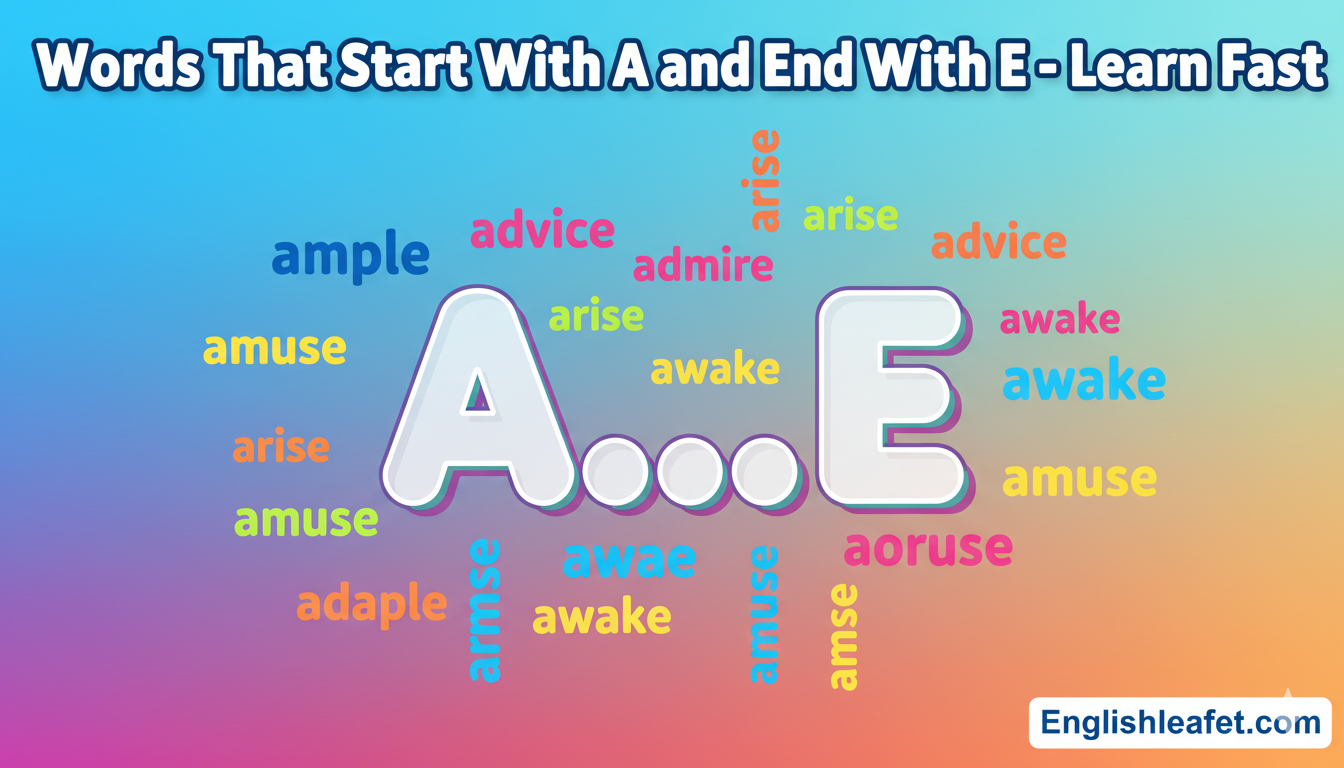
The pattern of words starting with A and ending with E represents a significant portion of English vocabulary. This letter combination creates words across all grammatical categories including nouns, verbs, adjectives, and adverbs.
Why This Pattern Matters
The A-E pattern is fundamental to English language structure. The letter ‘A’ serves as a common starting point for many word roots, prefixes, and basic terms. Meanwhile, the letter ‘E’ is the most frequently used letter in English and commonly serves as a word ending.
Together, these create a productive word-building pattern that generates thousands of meaningful terms. Understanding this pattern helps with spelling, word recognition, vocabulary building, and strategic gameplay in word-based games.
Frequency in English Language
According to linguistic research, words starting with A represent approximately 8-9% of all English words. When combined with the E-ending requirement, this still yields nearly 2,000 distinct words, making it one of the most productive letter combinations.
Two-Letter Words Starting With A and Ending With E
The shortest words in this category contain just two letters. These simple words pack significant meaning despite their brevity.
Complete List of 2-Letter A-E Words
| Word | Definition | Example Sentence |
|---|---|---|
| ae | One (Scottish) | “I’ll take ae piece of pie, please.” |
| are | Plural form of “be” | “We are going to the store.” |
These two-letter words are essential building blocks in the English language. “Are” is particularly important as one of the most frequently used verbs in English.
Usage in Communication
While limited in number, these two-letter words appear constantly in everyday speech and writing. “Are” serves as a fundamental linking verb and appears in questions, statements, and various grammatical constructions.
The word “ae” is less common in standard English but appears in Scottish dialects and poetic usage. It’s valuable for word game enthusiasts who need short, high-value plays.
Three-Letter Words Starting With A and Ending With E
Three-letter words offer more variety while remaining concise and versatile for communication and gaming.
Common 3-Letter A-E Words
| Word | Part of Speech | Definition | Scrabble Points |
|---|---|---|---|
| ace | Noun/Verb | Expert; highest card | 5 |
| age | Noun/Verb | Period of time; to grow older | 4 |
| ale | Noun | Type of beer | 3 |
| ape | Noun/Verb | Primate; to imitate | 5 |
| are | Verb | Plural of “be” | 3 |
| ate | Verb | Past tense of “eat” | 3 |
| awe | Noun/Verb | Wonder; to inspire wonder | 6 |
| axe | Noun/Verb | Cutting tool; to cut | 10 |
| aye | Adverb | Yes; affirmative vote | 6 |
Practical Applications
These three-letter words appear frequently in everyday communication. Words like “age,” “ate,” and “are” form essential vocabulary for basic English communication.
For word game players, three-letter words are crucial for fitting into tight spaces on the board. High-value letters like X in “axe” make these short words strategically important.
Four-Letter Words Starting With A and Ending With E
Four-letter words beginning with A and ending with E include many common, everyday terms used across all types of communication.
Essential 4-Letter A-E Words
| Word | Definition | Example Usage |
|---|---|---|
| able | Having ability or skill | “She is able to solve complex problems.” |
| ache | Pain or suffering | “My head started to ache after hours of work.” |
| acne | Skin condition | “Teenagers often struggle with acne.” |
| acre | Unit of land measurement | “They purchased a five-acre farm.” |
| aide | Assistant or helper | “The presidential aide accompanied him everywhere.” |
| aisle | Passage between rows | “The bride walked down the aisle.” |
| ante | Poker stake | “Everyone must ante up to play.” |
Word Formation Patterns
Many four-letter A-E words follow common phonetic patterns. Words ending in “-able” (like “able”), “-ache” (like “ache”), and “-ine” patterns are particularly common.
Understanding these patterns helps with spelling and vocabulary recognition. It also assists in predicting word structures when playing games or solving puzzles.
Five-Letter Words Starting With A and Ending With E
Five-letter words represent the sweet spot for many word games, particularly Wordle, where five-letter words are the standard format.
Popular 5-Letter A-E Words
| Word | Part of Speech | Definition | Wordle Friendly |
|---|---|---|---|
| abase | Verb | To humiliate or degrade | Yes |
| abate | Verb | To reduce in intensity | Yes |
| abide | Verb | To accept or tolerate | Yes |
| abode | Noun | Home or residence | Yes |
| above | Preposition/Adverb | Higher than; overhead | Yes |
| abuse | Noun/Verb | Mistreatment; to misuse | Yes |
| acute | Adjective | Sharp; intense; severe | Yes |
| adage | Noun | Traditional saying or proverb | Yes |
| addle | Verb | To confuse or muddle | Yes |
| adobe | Noun | Clay building material | Yes |
| adore | Verb | To love deeply | Yes |
| agape | Adjective/Noun | Wide open; unconditional love | Yes |
| agate | Noun | Semi-precious stone | Yes |
| agave | Noun | Desert plant | Yes |
| agile | Adjective | Quick and nimble | Yes |
| agree | Verb | To concur or consent | Yes |
| aisle | Noun | Passageway | Yes |
| alike | Adjective/Adverb | Similar; in the same manner | Yes |
| alive | Adjective | Living; animated | Yes |
| alone | Adjective/Adverb | By oneself; solitary | Yes |
| amaze | Verb | To astonish or surprise | Yes |
| amble | Verb | To walk leisurely | Yes |
| ample | Adjective | Plentiful; abundant | Yes |
| amuse | Verb | To entertain | Yes |
| angle | Noun/Verb | Geometric figure; to fish | Yes |
| ankle | Noun | Joint connecting foot to leg | Yes |
| apple | Noun | Common fruit | Yes |
| arise | Verb | To emerge or get up | Yes |
| arose | Verb | Past tense of arise | Yes |
| aside | Adverb/Noun | To the side; private remark | Yes |
| awake | Adjective/Verb | Not sleeping; to rouse | Yes |
Wordle Strategy with 5-Letter A-E Words
For Wordle enthusiasts, five-letter words starting with A and ending with E provide excellent starting options. Common vowels and consonants in these words help eliminate or confirm letter positions quickly.
Words like “abide,” “above,” “adore,” and “agile” contain frequently used letters and common vowel patterns. This makes them strategic choices for narrowing down possibilities in puzzle games.
Six-Letter Words Starting With A and Ending With E
Six-letter words beginning with A and ending with E offer more complexity and specificity in meaning.
Common 6-Letter A-E Words
| Word | Definition | Example Sentence |
|---|---|---|
| ablaze | On fire; brightly lit | “The building was ablaze within minutes.” |
| accrue | To accumulate over time | “Interest will accrue on your savings account.” |
| active | Engaged in action; energetic | “She maintains an active lifestyle.” |
| admire | To regard with respect | “I admire your dedication to the cause.” |
| advice | Guidance or recommendations | “She gave me excellent advice about careers.” |
| advise | To give counsel | “I advise you to reconsider your decision.” |
| affable | Friendly and easy to approach | “The professor was affable and approachable.” |
| alpine | Related to mountains | “They enjoyed alpine skiing in Switzerland.” |
| ampere | Unit of electric current | “The circuit handles fifteen amperes.” |
| anyone | Any person | “Anyone can learn to play piano with practice.” |
| apache | Native American people | “Apache warriors were known for their courage.” |
| apogee | Highest point; culmination | “The empire reached its apogee in the 15th century.” |
| appease | To pacify or placate | “They tried to appease the angry customers.” |
| arcade | Covered passage with shops | “We spent the afternoon at the video game arcade.” |
| arrive | To reach a destination | “The train will arrive at noon.” |
| assume | To suppose or take for granted | “We assume everyone will attend the meeting.” |
Vocabulary Building
Six-letter words demonstrate increased sophistication in language use. They appear frequently in professional writing, academic texts, and formal communication.
Learning these words expands your ability to express complex ideas precisely. Words like “advise,” “assume,” and “active” are fundamental to effective communication in business and academic contexts.
Seven-Letter Words Starting With A and Ending With E
Seven-letter words offer even greater precision and are commonly used in advanced vocabulary and professional contexts.
Important 7-Letter A-E Words
| Word | Part of Speech | Definition | Professional Use |
|---|---|---|---|
| abolish | Verb | To officially end or eliminate | Legal/Political |
| absolve | Verb | To free from blame or obligation | Legal/Religious |
| acquire | Verb | To obtain or gain | Business |
| advance | Noun/Verb | Forward movement; to progress | General/Business |
| adverse | Adjective | Harmful; unfavorable | Medical/Legal |
| amplify | Verb | To increase or enlarge | Technical/General |
| analyze | Verb | To examine in detail | Academic/Scientific |
| antique | Adjective/Noun | Old and valuable | Art/History |
| anyone | Pronoun | Any person whatsoever | General |
| approve | Verb | To officially accept | Business/Legal |
| archive | Noun/Verb | Collection of records | Academic/Business |
| arrange | Verb | To organize or plan | General |
| article | Noun | Written composition; item | Academic/General |
| athlete | Noun | Sports competitor | Sports |
| average | Noun/Adjective | Typical; mean value | Mathematics/General |
| awesome | Adjective | Inspiring awe; excellent | Informal |
Professional Applications
Seven-letter words frequently appear in business documents, academic papers, and technical writing. Terms like “acquire,” “analyze,” and “approve” are essential business vocabulary.
Understanding and using these words correctly demonstrates professional competence and strong communication skills. They allow for more precise expression of complex concepts.
Eight-Letter Words and Longer
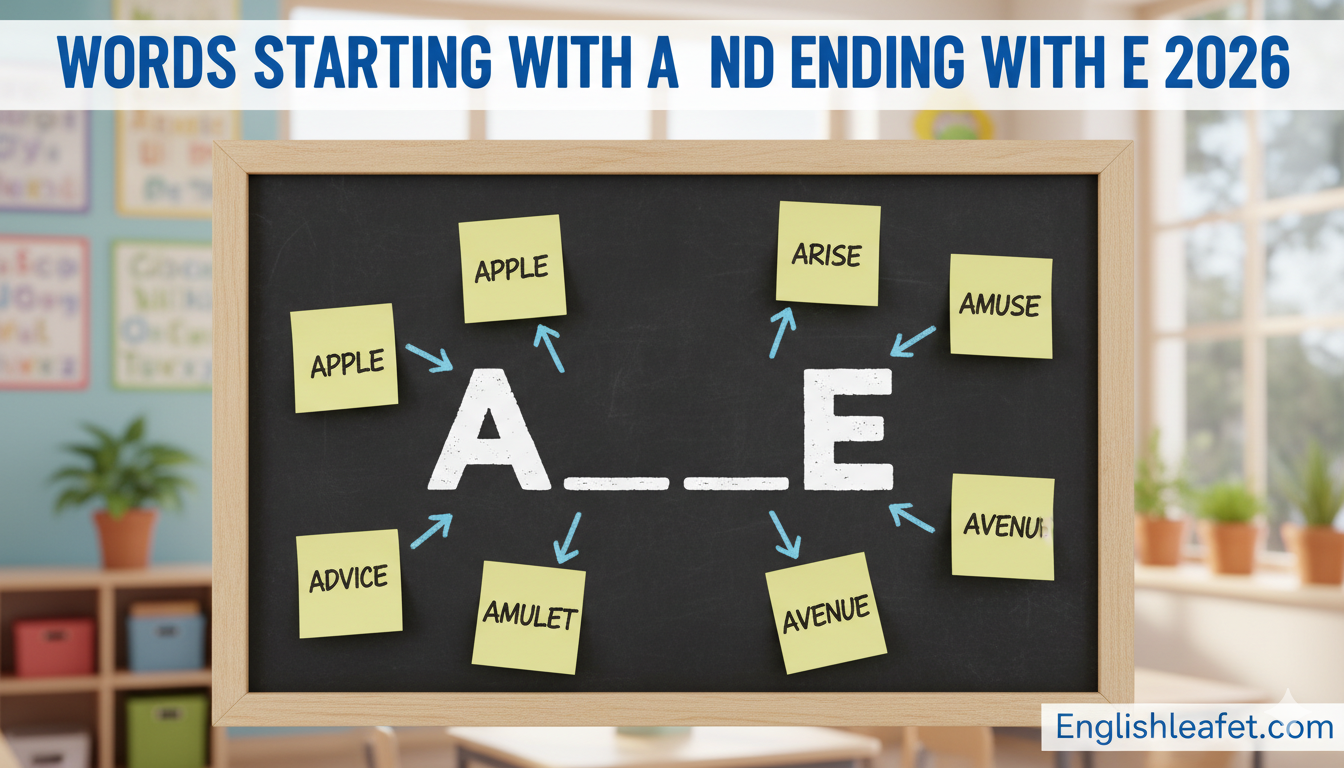
Longer words starting with A and ending with E tend to be more specialized and technical in nature.
Notable 8+ Letter A-E Words
| Word Length | Word | Definition | Field of Use |
|---|---|---|---|
| 8 letters | absolute | Complete; total; perfect | General/Science |
| 8 letters | accurate | Precise; correct | General/Science |
| 8 letters | adequate | Sufficient; satisfactory | General |
| 8 letters | advocate | To support publicly | Legal/Political |
| 8 letters | announce | To make known publicly | General |
| 8 letters | appetite | Desire for food | General |
| 8 letters | appraise | To assess value | Business/Finance |
| 8 letters | audience | Group of spectators | General |
| 8 letters | automate | To make automatic | Technology |
| 9 letters | advertise | To promote publicly | Business/Marketing |
| 9 letters | aggregate | Combined total | Mathematics/Business |
| 9 letters | alongside | Next to; beside | General |
| 9 letters | alternate | Every other; substitute | General |
| 9 letters | apologize | To express regret | General |
| 9 letters | associate | To connect; colleague | Business/General |
| 10 letters | abbreviate | To shorten | General |
| 10 letters | accelerate | To speed up | Science/General |
| 10 letters | accentuate | To emphasize | General |
| 10 letters | accessible | Easy to reach or use | General |
| 10 letters | anticipate | To expect or predict | General |
| 10 letters | appreciate | To value; to increase in value | General/Finance |
| 10 letters | apprentice | Person learning a trade | Business/Education |
| 10 letters | appropriate | Suitable; to take for oneself | General/Legal |
Academic and Technical Usage
Longer A-E words often appear in specialized fields including science, law, medicine, and academia. Terms like “abbreviate,” “accelerate,” and “appreciate” serve important technical functions.
These words demonstrate sophisticated vocabulary and are essential for professional and academic success. Mastering them indicates advanced language proficiency.
Words by Grammatical Category
Understanding how A-E words function grammatically helps with proper usage in writing and speech.
A-E Nouns
Nouns are naming words that identify people, places, things, or concepts.
Common A-E Nouns: apple, article, archive, advice, attitude, avenue, audience, automobile, adventure, abdicate, architecture, appetite, apprentice, apocalypse, apostrophe, atmosphere, avalanche, analogue
These nouns represent tangible objects (apple, automobile), abstract concepts (advice, attitude), and specialized terms (architecture, apocalypse).
A-E Verbs
Verbs express actions, occurrences, or states of being.
Common A-E Verbs: achieve, acquire, admire, advise, agree, amplify, analyze, announce, appreciate, approve, arise, arrange, arrive, assemble, associate, assume, authenticate, automate, acknowledge, anticipate
Action verbs describe physical or mental activities. These A-E verbs are essential for expressing what subjects do or experience.
A-E Adjectives
Adjectives describe or modify nouns.
Common A-E Adjectives: able, active, acute, adverse, agile, alive, alone, ample, awesome, affable, absolute, accurate, adequate, antique, appropriate, attractive, attentive, argumentative, assertive
Descriptive adjectives like these allow for precise characterization of people, places, things, and ideas.
A-E Adverbs
Adverbs modify verbs, adjectives, or other adverbs.
Common A-E Adverbs: alone, aside, alike, ashore, awake, aware, anywhere, anymore, anytime
Adverbs provide information about how, when, where, or to what extent actions occur.
Words for Different Contexts
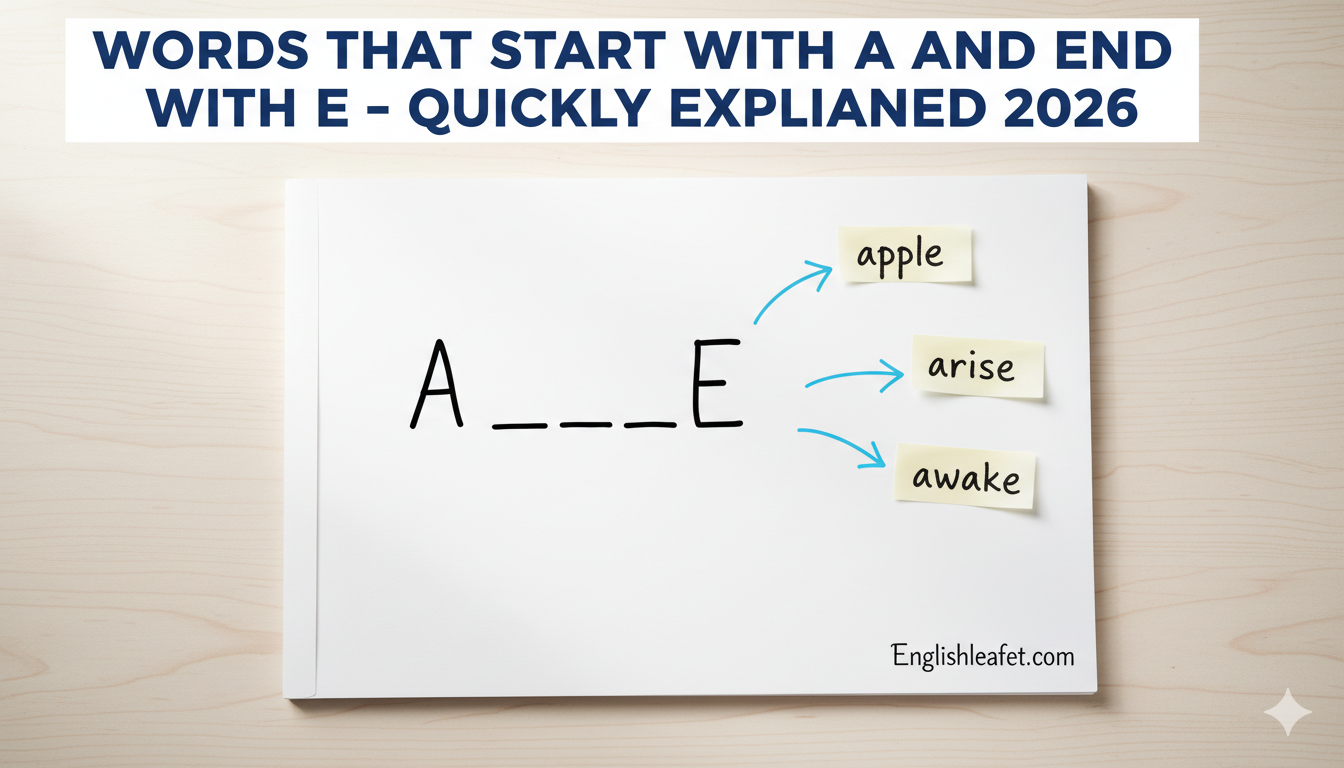
Different situations call for different vocabulary choices from the A-E category.
Everyday Conversation
Common Conversational A-E Words: able, above, age, agree, alive, alone, anyone, anymore, anywhere, apple, are, arise, around, arrive, aside, awake, aware, awesome, awhile
These words form the backbone of daily communication. They’re understood universally and work in both formal and informal contexts.
Academic Writing
Scholarly A-E Words: acknowledge, acquire, adequate, adverse, advocate, analyze, anticipate, appreciate, appropriate, approximate, articulate, associate, assume
Academic contexts require precise, formal language. These words demonstrate scholarly rigor and analytical thinking.
Business Communication
Professional A-E Words: achieve, acquire, adequate, advance, advantage, advertise, advise, affordable, aggregate, allocate, alternative, analyze, announce, approve, archive, arrange, associate, assurance
Business writing demands clarity and professionalism. These words convey competence and strategic thinking.
Creative Writing
Descriptive A-E Words: ablaze, alone, awesome, azure, argentine, articulate, ameliorate, apocalypse, adventure, allure, ambiance, antique, archaic
Creative contexts allow for vivid, evocative language. These words create imagery and emotional resonance.
Word Game Applications
Words starting with A and ending with E are valuable assets in popular word games.
Scrabble Strategy
High-Scoring A-E Words for Scrabble:
| Word | Points | Strategic Value |
|---|---|---|
| axe | 10 | Short, high X value |
| azure | 14 | Valuable Z usage |
| amaze | 16 | Good Z placement |
| antique | 16 | Long word, Q usage |
| analyze | 19 | Excellent Y and Z |
| apothesize | 25+ | Very high scoring |
Scrabble Tips
Focus on words with high-value letters (Q, X, Z) when they start with A and end with E. Words like “axe,” “azure,” and “analyze” maximize point potential.
Use longer words to hit premium squares. Seven-letter words earn a 50-point bonus. Words like “archive,” “average,” and “awesome” can achieve this.
Wordle Strategy
Excellent Wordle Starter Words (A-E Pattern):
- ADORE (common letters, good vowel placement)
- AGILE (tests common consonants)
- ALIVE (two common vowels)
- ALONE (frequently used word)
- ARISE (strong consonant-vowel mix)
Wordle Tips
Start with five-letter A-E words that contain common letters and multiple vowels. This helps eliminate or confirm letters quickly.
Words like “arise” and “adore” test frequently used consonants (R, S, D) along with common vowels (A, E, I, O).
Words With Friends
Words With Friends uses similar scoring to Scrabble but with different tile values. The same strategic principles apply.
Top WWF A-E Words: Words with J, Q, X, Z letters; longer words for bonus points; words that create multiple new words simultaneously
Common Spelling Patterns
Recognizing patterns helps with spelling and word recognition.
The -ABLE Pattern
Many A-E words end in “-able,” indicating capability or suitability: able, amiable, acceptable, achievable, adaptable, admirable, adorable, affordable, agreeable, allowable, applicable, available, actionable
This suffix transforms verbs and nouns into adjectives meaning “capable of being” or “worthy of being.”
The -ATE Pattern
Words ending in “-ate” often function as verbs or adjectives: abate, abbreviate, accelerate, accentuate, accommodate, accurate, activate, adequate, advocate, aggregate, allocate, alternate, ameliorate, animate, annotate, anticipate, appreciate, appropriate, approximate, articulate, associate
The -IZE Pattern
The “-ize” ending creates verbs meaning “to make” or “to become”: agonize, analyze, alphabetize, amortize, antagonize, apologize, authorize, anesthetize
The -IVE Pattern
The “-ive” suffix creates adjectives indicating tendency or disposition: abrasive, abusive, active, adaptive, addictive, adhesive, adjective, adoptive, aggressive, alternative, argumentative, assertive, attentive, attractive, automotive
Etymology and Word Origins
Understanding word origins enriches vocabulary knowledge and aids memorization.
Latin-Derived A-E Words
Many A-E words come from Latin roots:
- absolute (from Latin “absolutus” – complete)
- accurate (from Latin “accuratus” – done with care)
- advance (from Latin “abante” – from before)
- adverse (from Latin “adversus” – turned against)
- advocate (from Latin “advocatus” – one called to aid)
Greek-Derived A-E Words
Greek contributes specialized and technical vocabulary:
- apocalypse (from Greek “apokalypsis” – revelation)
- apostrophe (from Greek “apostrophos” – turning away)
- archive (from Greek “arkheion” – public records)
- athlete (from Greek “athletes” – contestant)
French-Derived A-E Words
French influence on English created many A-E words:
- advice (from Old French “avis”)
- announce (from Old French “anoncier”)
- antique (from French “antique”)
- appetite (from Old French “apetit”)
- arrange (from Old French “arangier”)
Vocabulary Building Exercises
Practice using A-E words to improve your language skills.
Exercise 1: Fill in the Blanks
Complete these sentences with appropriate A-E words:
- The witness was _______ at the shocking testimony. (Answer: aghast)
- You should _______ your decision carefully before proceeding. (Answer: analyze)
- The house was completely _______ after the fire started. (Answer: ablaze)
- Her _______ towards work impressed her employer. (Answer: attitude)
- We must _______ to the new climate conditions. (Answer: acclimate)
Exercise 2: Synonym Matching
Match A-E words with their synonyms:
- Ample = Abundant
- Arduous = Difficult
- Adequate = Sufficient
- Acute = Sharp
- Amiable = Friendly
Exercise 3: Word Categorization
Categorize these A-E words by part of speech:
- Nouns: apple, archive, article, athlete, avenue, advice
- Verbs: analyze, arrange, arrive, achieve, acquire, approve
- Adjectives: able, active, acute, alive, alone, awesome
Advanced Vocabulary: Rare and Specialized A-E Words
Expand your vocabulary with these less common but valuable words.
Rare 15-Letter A-E Words
| Word | Definition | Usage Context |
|---|---|---|
| apophthegmatize | To speak in aphorisms | Literary/Philosophical |
| anthropophagite | Cannibal; person-eater | Anthropological |
| archiepiscopate | Archbishop’s office | Religious/Historical |
Specialized Scientific A-E Words
- Medical/Scientific: acetaminophene (pain reliever), aminopeptidase (digestive enzyme), androstenedione (hormone precursor), azidothymidine (antiviral medication)
- Technical/Academic: aluminosilicate (mineral compound), antepenultimate (third from the end), autosuggestive (related to self-hypnosis)
Legal and Formal Terms
Legal A-E Words: adjudicate (to judge formally), arbitrage (simultaneous buying and selling), assignee (person receiving rights), compliance (conformity to rules)
Word Length Distribution
Understanding the distribution of A-E words by length helps with strategic word selection.
Word Count by Length
| Letter Count | Approximate Number | Common Examples |
|---|---|---|
| 2 letters | 2 | are, ae |
| 3 letters | 15-20 | ace, age, ale, ape, are, ate, awe, axe, aye |
| 4 letters | 50-70 | able, ache, acne, acre, aide, alive |
| 5 letters | 150-200 | abide, above, abuse, acute, adore, agree, alive, alone, amaze |
| 6 letters | 200-300 | ablaze, accrue, active, admire, advice, anyone, arrive |
| 7 letters | 300-400 | abolish, absolve, acquire, advance, analyze, antique, approve |
| 8 letters | 400-500 | absolute, accurate, adequate, advocate, audience, automate |
| 9 letters | 300-400 | advertise, aggregate, apologize, associate, attribute |
| 10+ letters | 200-300 | abbreviate, accelerate, appreciate, appropriate |
The sweet spot for useful vocabulary falls in the 5-8 letter range. These words balance specificity with usability.
Memory Techniques for Learning A-E Words
Use these strategies to remember and recall A-E words effectively.
Grouping by Theme
- Nature Words: alpine, ashore, atmosphere, avenue, avalanche
- Emotion Words: admire, adore, amuse, appreciate
- Action Words: achieve, acquire, advance, arrange, arrive, assemble
Grouping related words aids memory through association and context.
Creating Mnemonics
- For “Accurate”: “Always Check Carefully Until Results Are Total Excellence”
- For “Appreciate”: “Always Praise People Regularly – Everyone Cherishes It And Thanks Everyone”
Mnemonics provide memorable frameworks for spelling and meaning.
Visualization Techniques
Create mental images linking words to their meanings:
- Ablaze: Visualize flames engulfing a building
- Alpine: Imagine snow-capped mountain peaks
Visual associations strengthen memory retention significantly.
Common Usage Mistakes
Avoid these frequent errors when using A-E words.
Confusing Similar Words
- Advice vs. Advise: “Advice” (noun) = guidance given. “Advise” (verb) = to give guidance. Correct: “I advise you to take her advice.”
- Assure vs. Ensure: “Assure” (verb) = to guarantee to someone. “Ensure” (verb) = to make certain. Correct: “I assure you I will ensure its completion.”
Spelling Challenges
- Double Letters: accommodate (two C’s, two M’s), abbreviate (one B in prefix, two in root), aggravate (two G’s)
- Silent Letters: aisle (silent S), antique (silent U in pronunciation)
Frequently Asked Questions (FAQs)
How many words start with A and end with E in English?
There are approximately 1,800-2,000 words that start with A and end with E in the English language, ranging from two-letter words like “are” to complex fifteen-letter terms like “apophthegmatize.”
What are the most common words starting with A and ending with E?
The most frequently used words include “are,” “able,” “above,” “alone,” “age,” “alive,” “agree,” “anyone,” “anymore,” “anywhere,” “apple,” “arrive,” and “awesome” in everyday communication.
What is the longest word starting with A and ending with E?
The longest words are typically 15 letters long, including “apophthegmatize” (to speak in aphorisms), “anthropophagite” (cannibal), and “archiepiscopate” (archbishop’s office or jurisdiction).
Are there any two-letter words starting with A and ending with E?
Yes, there are two main two-letter words: “are” (the plural form of be) and “ae” (Scottish word meaning “one”), though “ae” is less commonly used in standard English.
What are good Wordle starter words that start with A and end with E?
Excellent Wordle starters include “arise,” “adore,” “agile,” “alive,” “alone,” and “abuse” because they contain common vowels and frequently used consonants that help eliminate or confirm letters quickly.
Which A-E words score highest in Scrabble?
High-scoring Scrabble words include “apothesize” (25+ points), “analyze” (19 points), “azure” (14 points), and any words containing Q, X, or Z like “antique,” “axe,” and “amaze.”
What’s the difference between “advice” and “advise”?
“Advice” is a noun meaning guidance or recommendations (pronounced ad-VICE), while “advise” is a verb meaning to give counsel or recommendations (pronounced ad-VIZE). Example: “I advise you to take my advice.”
Can you give examples of A-E adjectives for describing people?
Common A-E adjectives for people include “able,” “active,” “affable,” “agile,” “amiable,” “argumentative,” “assertive,” “attentive,” “attractive,” “awesome,” and “aware,” each describing different personality traits or characteristics.
What are some academic A-E words for formal writing?
Academic A-E words include “analyze,” “acknowledge,” “adequate,” “adverse,” “advocate,” “anticipate,” “appreciate,” “appropriate,” “approximate,” “articulate,” “associate,” and “assume” for scholarly and professional contexts.
Are there pronunciation rules for words starting with A and ending with E?
The “A” can be pronounced multiple ways (long A in “age,” short A in “apple,” schwa in “alone”). The final “E” is often silent (as in “able,” “alone”) but sometimes pronounced (as in “apostrophe”). Each word must be learned individually.
Conclusion
Words that start with A and end with E comprise a vast and versatile category within English vocabulary, offering over 1,800 options spanning from simple two-letter words to complex fifteen-letter terms.
These words serve essential functions across all communication contexts—from everyday conversation with words like “are,” “able,” and “alone” to professional discourse using terms like “analyze,” “appropriate,” and “advocate.”
Whether you’re expanding vocabulary for academic success, enhancing writing skills for professional advancement, or improving performance in word games like Scrabble and Wordle, mastering A-E words provides significant advantages.
Understanding their patterns, etymologies, grammatical functions, and proper usage enables more precise and effective communication.
By categorizing these words by length, context, and function, and practicing with the examples and exercises provided, you can confidently incorporate this essential vocabulary into your 2026 language toolkit and beyond.
