

Why does my cat bite me when I pet her — even when she seems to be enjoying it? You are not alone in asking this question.
Millions of cat owners experience the same confusing moment: your cat is purring, she looks relaxed, and then suddenly she turns and bites your hand.
This behavior is called petting-induced aggression or overstimulation, and it is one of the most common feline behaviors misunderstood by owners. It is not about aggression or hatred. Your cat is simply communicating in the only language she knows.
What Is Petting-Induced Aggression?
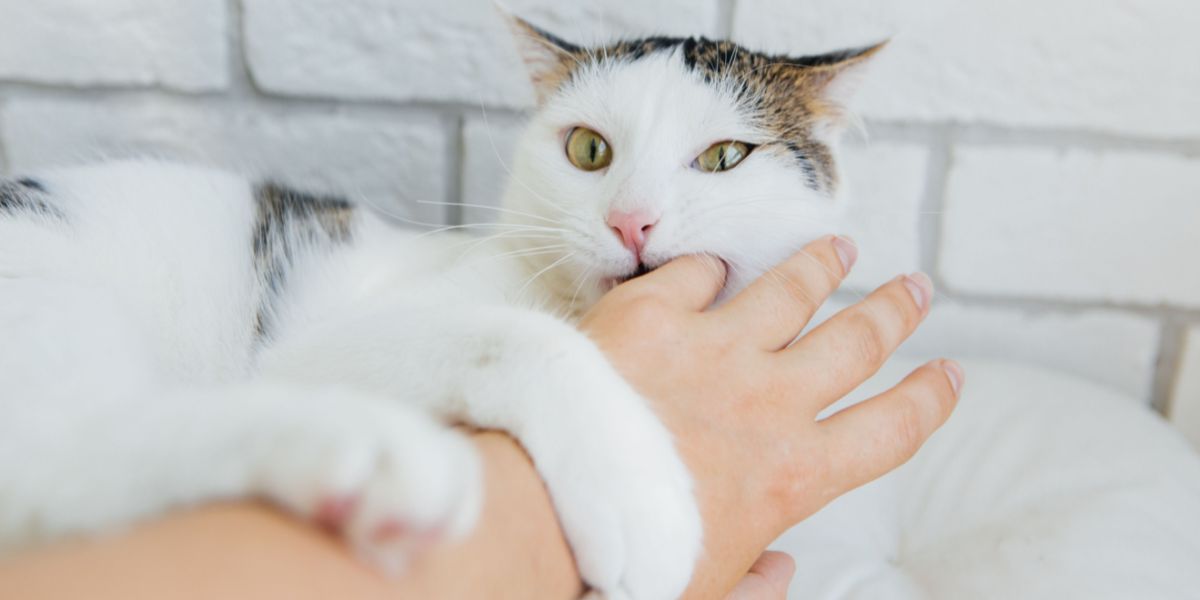
Petting-induced aggression is when a cat bites or scratches during or after a petting session. It is also called overstimulation aggression.
It does not mean your cat dislikes you. It means she has reached her personal tolerance limit for physical contact and is telling you — in the most direct way she can — to stop.
Cats have a much lower threshold for touch than dogs. What feels like affection to you can quickly feel overwhelming to her.
Why Does My Cat Bite Me When I Pet Her? The Real Reasons
There is never just one reason behind this behavior. Here are the most common causes explained clearly:
1. Overstimulation — The Most Common Reason
Overstimulation is the number one reason cats bite during petting. Repetitive stroking, especially along the back and tail, overloads the nerve endings in your cat’s skin.
Think of it like someone tickling you. It starts out pleasant, but if it goes on too long, it becomes intensely irritating. Your cat feels the exact same way — she just cannot say “please stop” in words.
2. She Is Giving You a Love Bite
Not every bite is a bad bite. Cats sometimes give what is called a love bite — a soft, gentle nibble that does not break the skin.
Love bites often follow a period of licking and happen when your cat feels deeply comfortable. It is a bonding behavior that mimics how cats groom each other. If your cat bites gently and then goes back to purring, it is almost certainly affectionate.
3. Pain or an Underlying Medical Condition
If your cat has never bitten during petting before and suddenly starts, pain could be the cause. Conditions like arthritis, dental disease, a skin abscess, or an ear infection can make being touched deeply uncomfortable.
A cat in pain will bite to protect the sore area from further contact. If the behavior is sudden or the bite is hard and unprovoked, schedule a vet visit to rule out medical causes.
4. Poor Socialization as a Kitten
Kittens that were weaned too early, hand-raised without littermates, or not handled enough by humans often grow into cats that tolerate less petting.
They never learned proper bite inhibition from their mother or siblings. As a result, they may bite more quickly and harder than well-socialized cats, even during gentle interactions.
5. You Are Petting the Wrong Spots
Cats are very specific about where they like to be touched. Most cats enjoy being stroked on the head, cheeks, under the chin, and behind the ears.
Areas like the belly, the base of the tail, and along the lower back are much more sensitive. Stroking these zones for too long almost always leads to a bite — even in otherwise tolerant cats.
6. Play Aggression
Cats are natural hunters. When your hand moves during petting, it can trigger their prey drive and shift them from relaxed mode into hunting mode.
Kittens are the most likely to do this, but adult cats can too. If your cat grabs your hand, kicks it with her back feet, and bites down, she has entered play mode — not aggressive mode.
7. Redirected Aggression
Sometimes a cat bites you not because of anything you did, but because she was already aroused or stressed by something else — like seeing another cat outside the window or hearing a loud noise.
You simply happened to be the nearest available target. This type of bite can seem completely random and is often harder than a typical overstimulation nip.
8. Fear or Feeling Threatened
A cat that feels cornered, trapped, or handled in a way she dislikes may bite out of fear. This is a defensive response, not an affectionate one.
Cats with a history of rough handling or past trauma are more likely to react this way. If your cat bites when you pick her up or restrain her, fear is likely the driving factor.
9. Stress and Environmental Changes
Changes in the home — a new pet, a new baby, visitors, renovations, or even rearranged furniture — can raise your cat’s overall anxiety level.
A stressed cat has a much lower tolerance for petting. Interactions that used to feel comfortable may now trigger a bite because her baseline stress level is already elevated.
10. Hormonal Influences
Unspayed female cats in heat experience significant hormonal fluctuations that affect their behavior and sensitivity to touch. They may be unusually affectionate one moment and reactive the next.
Male cats with higher testosterone levels can also be more prone to biting. Spaying or neutering typically reduces these hormone-driven behavior patterns.
Love Bites vs. Aggressive Bites: How to Tell the Difference
Knowing which type of bite you are dealing with changes how you should respond. Here is a clear breakdown:
| Feature | Love Bite | Aggressive / Overstimulation Bite |
|---|---|---|
| Intensity | Gentle, does not break skin | Harder, may break skin |
| Body language | Relaxed, purring, slow blinking | Tense, tail flicking, stiff posture |
| Preceded by | Licking, kneading, nuzzling | Warning signs ignored |
| Context | During calm affectionate petting | After prolonged or unwanted petting |
| Cat’s reaction after | Returns to relaxed state | May hiss, run away, or remain tense |
| Meaning | “I love you / pay attention to me” | “Please stop, I have had enough” |
Never punish either type. Both are forms of communication, not deliberate attacks.
Reading Your Cat’s Body Language Before the Bite
Almost every cat bite during petting is preceded by warning signs. The problem is that most owners miss them. Here is what to watch for:
Early Warning Signs (Green to Yellow Zone)
Your cat is starting to feel uncomfortable but is not yet at her limit.
- Tail begins to flick or twitch slowly
- Skin along the back ripples or twitches
- Eyes shift from half-closed to more alert
- She stops purring or starts purring differently
- Her body becomes slightly tense
Late Warning Signs (Yellow to Red Zone)
She is very close to biting. Stop petting immediately.
- Ears flatten or rotate backward
- Pupils dilate rapidly
- Tail slaps or thumps the surface
- She turns her head sharply toward your hand
- Her whole body goes rigid or freezes
- She leans away from your touch
Immediate Pre-Bite Signal
Her skin ripples intensely, her tail thrashes, and she makes direct eye contact with your hand. A bite is seconds away if you do not stop.
The moment you notice any early warning sign, stop petting, sit still, and let her leave on her own terms.
Where Cats Like and Dislike Being Petted
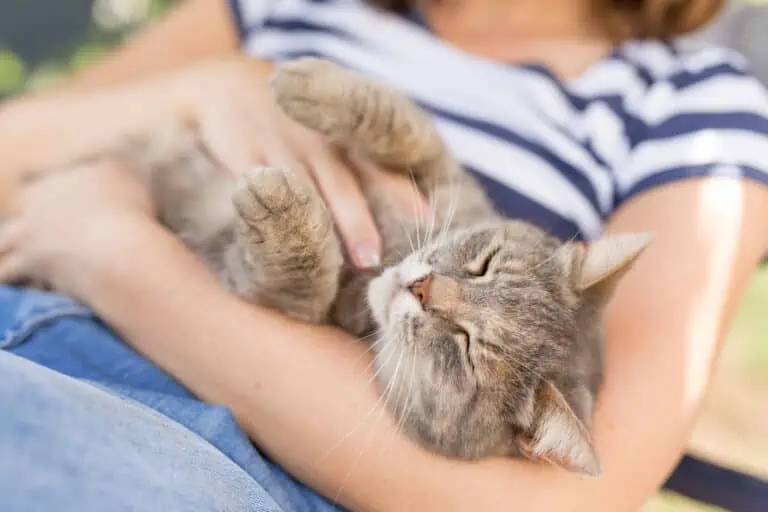
Understanding your cat’s preferred touch zones prevents most biting incidents before they happen.
| Body Area | Most Cats’ Preference | Risk Level |
|---|---|---|
| Top of the head / forehead | Enjoy | Very Low |
| Cheeks and chin | Love | Very Low |
| Behind the ears | Usually enjoy | Low |
| Back of the neck | Generally tolerate | Low |
| Along the back (spine) | Tolerate briefly | Medium — High with repetition |
| Base of the tail | Sensitive — many dislike | High |
| Belly | Most cats dislike | Very High |
| Paws and legs | Most dislike | High |
| Tail | Most dislike being grabbed | Very High |
Every cat is an individual. Some cats love belly rubs while others bite instantly. Pay attention to your specific cat’s reactions over time.
How to Stop Your Cat From Biting You When You Pet Her
Stop Before She Reaches Her Limit
The most effective strategy is never letting your cat get to the point of biting in the first place. Time how long your cat tolerates petting before the warning signs start.
If she gets restless after three minutes, always stop at two and a half. Consistently stopping before her limit builds trust and actually increases her tolerance over time.
Use Consent Testing
Before you start petting, let your cat choose whether she wants contact. Hold your hand out near her face and wait.
If she sniffs it and head-butts your hand or leans in, she is inviting contact. If she turns away, walks off, or shows no interest, she is not in the mood. Respect that decision every single time.
Keep Petting Sessions Short
Shorter, more frequent petting sessions work far better than one long one. A thirty-second focused scratch behind the ears that ends on your cat’s terms feels better to her than a ten-minute full-body stroke that ends in a bite.
Always end the session while she is still enjoying it. Leave her wanting more rather than pushing past her limit.
Pet Head and Neck Only
Stick to the safest zones — head, cheeks, chin, and behind the ears — especially if your cat has a history of biting.
Avoid the belly, the base of the tail, and repeated full-length strokes down the spine. These are the zones most likely to trigger overstimulation in even normally tolerant cats.
Do Not Pull Your Hand Away Quickly
If your cat bites or grabs your hand, pulling away fast activates her prey instinct and makes the situation worse. She will bite down harder.
Instead, freeze your hand completely. Most cats will release on their own once the movement stops. Then calmly and slowly withdraw your hand and end the interaction.
Use Positive Reinforcement
Reward calm, non-biting behavior with treats or quiet praise. This teaches your cat that relaxed petting leads to good things.
Over several weeks of consistent reward-based training, you can gradually increase the length of petting sessions by small increments. This is called desensitization and it is highly effective.
Never Punish Your Cat for Biting
Yelling, spraying water, or physically correcting your cat after a bite will not stop the behavior. It will make her more anxious, less trusting, and more likely to bite again.
Any negative reaction from you becomes a reason for her to associate petting with unpleasant outcomes. Calm withdrawal is always the correct response.
Provide More Play and Mental Stimulation
Boredom and pent-up energy contribute to overstimulation and play aggression. A cat that has burned off energy through active play is calmer and more tolerant of petting.
Use wand toys, laser pointers, feather teasers, and puzzle feeders daily. At least two ten-to-fifteen minute play sessions per day reduce frustration-based biting significantly.
Use Toys Instead of Hands During Play
Never use your bare hands as toys. If your cat learns that hands are prey items, she will treat them that way during petting too.
Always redirect biting and grabbing toward appropriate toys — a kicker toy, a wand toy, or a stuffed animal your cat can wrestle. This is one of the most important habits to build, especially with kittens.
How to Train a Cat That Bites During Petting: Step-by-Step
Use this gradual process to build a more tolerant and trusting relationship with a biting cat:
| Step | Action | Goal |
|---|---|---|
| 1 | Time how long before warning signs appear | Identify your cat’s current tolerance |
| 2 | Stop petting two strokes before warning signs | Prevent overstimulation entirely |
| 3 | Give a treat immediately after stopping | Associate end of petting with reward |
| 4 | Repeat daily for one week | Build the positive pattern |
| 5 | Add one extra stroke, then treat | Slowly increase tolerance threshold |
| 6 | Continue adding one stroke per week | Gradual desensitization |
| 7 | Always let cat re-initiate contact | Keep her in control of interactions |
Patience is essential. This process takes weeks, not days, especially with cats that have been biting for a long time.
Petting Positions and Handling Tips
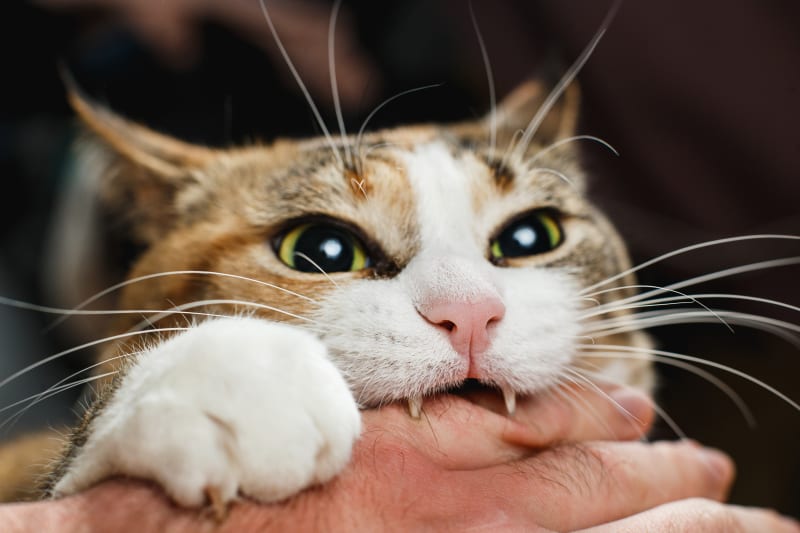
How you pet your cat matters just as much as where you pet her. Here are the best practices:
Pet with one or two fingers first. A single finger stroked gently along the cheek is far less overwhelming than a full hand.
Move slowly and predictably. Sudden movements trigger startle responses. Keep your motions smooth and calm.
Never pick up a biting cat to remove her. If she is on your lap and getting tense, toss a treat or toy on the floor. She will jump off on her own. Picking her up when she is already overstimulated guarantees a bite.
Let her rub on you instead of stroking her. Many cats prefer to rub their face and body against your hand rather than being stroked. Hold your hand still and let her control the contact entirely.
When to See a Vet About Biting Behavior
Most petting bites are behavioral and manageable at home. However, see a vet if:
- The biting is sudden and new — especially in an older cat
- Bites are hard, drawing blood every time
- Your cat seems painful when touched in specific spots
- The biting is accompanied by other behavioral changes like hiding, loss of appetite, or lethargy
- You notice limping, swelling, or sensitivity in a particular area
A vet can rule out arthritis, dental pain, skin conditions, neurological issues, or other medical causes that make touch painful. If no medical cause is found, ask for a referral to a certified feline behavior consultant.
What to Do After a Cat Bite
Cat bites carry a high risk of infection due to bacteria in a cat’s mouth. Take every bite that breaks the skin seriously.
Immediately wash the wound thoroughly with soap and warm water for several minutes. Apply an antiseptic.
Watch for signs of infection over the next 24 to 48 hours: increasing redness, swelling, warmth, pus, red streaks spreading from the wound, or fever.
See a doctor if the bite is deep, if you cannot confirm your cat’s vaccination status, or if any signs of infection develop. Cat bites can cause serious infections including cellulitis.
Do not punish your cat afterward. She will not connect the punishment to the bite after the fact. All it will do is make her more fearful of you.
Special Situations: Kittens, Rescue Cats, and Senior Cats
Kittens
Kittens bite during petting because they are still learning bite inhibition. They are also teething between 10 and 16 weeks of age, which makes them want to chew everything.
Redirect biting toward toys every single time. Never use fingers as toys. Consistent redirection during kittenhood prevents the habit from carrying into adulthood.
Rescue Cats
Rescue cats may have histories of rough handling, neglect, or abuse. They need far more time to build trust before they tolerate extended petting.
Go very slowly. Let them set the pace entirely. Short, calm interactions over weeks and months build the confidence they need to feel safe with human touch.
Senior Cats
Older cats become more sensitive to touch as their bodies age. Arthritis is extremely common in cats over seven years old and often goes undiagnosed.
If your senior cat has become increasingly intolerant of petting, pain management through veterinary care can make a dramatic difference in her behavior and quality of life.
The Role of Breed in Petting Tolerance
Some cat breeds are naturally more tolerant of handling than others. Understanding breed tendencies helps set realistic expectations.
| Breed | Petting Tolerance | Notes |
|---|---|---|
| Ragdoll | Very High | Known for going limp when held |
| Maine Coon | High | Gentle, dog-like temperament |
| Siamese | Medium | Affectionate but vocal about limits |
| Bengal | Low–Medium | High energy, may bite during play |
| Russian Blue | Medium | Bonds closely but on their terms |
| Persian | High | Generally calm and tolerant |
| Scottish Fold | Medium–High | Affectionate but sensitive ears |
| Domestic Shorthair | Varies widely | Depends entirely on individual |
Even within breeds, every cat is a unique individual. Personality, early socialization, and past experiences matter more than breed alone.
Building a Stronger Bond Without Getting Bitten
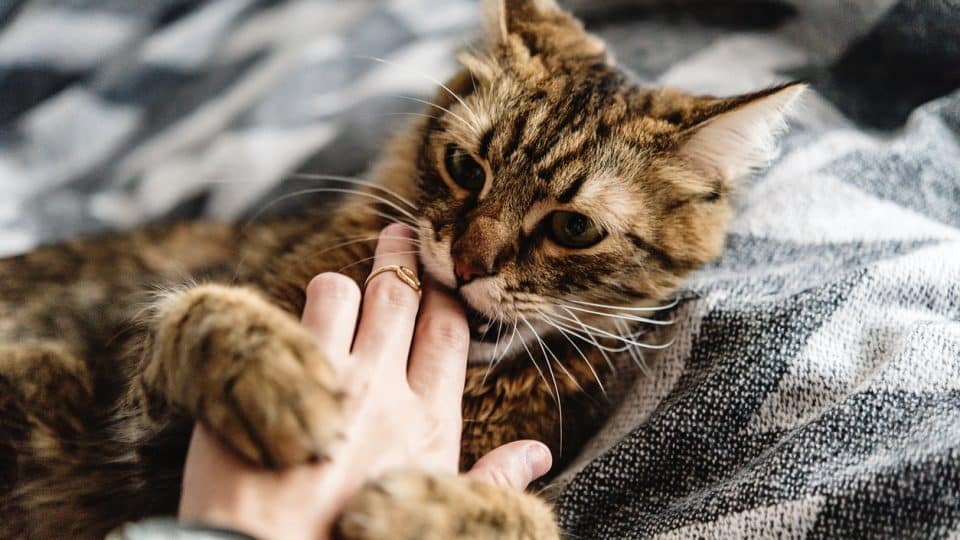
The goal is not to eliminate all physical contact. It is to build an interaction style your cat genuinely enjoys.
Follow her lead every time. The more you let your cat initiate and control contact, the more she will seek it out. Cats that feel in control of interactions are more affectionate, not less.
Sit near her without touching. Simply being in the same room, talking softly, or reading near your cat builds comfort and trust without triggering overstimulation.
Use slow blinks. A slow, deliberate blink directed at your cat is a sign of trust and calm in feline communication. Many cats will slow-blink back, signaling relaxation.
Offer your scent. Let your cat sniff your hand before any petting session. This small act of consent-seeking makes a big difference to a cat’s sense of security.
Frequently Asked Questions (FAQs)
Why does my cat bite me when I pet her even though she is purring?
Purring does not always mean happiness — cats also purr when stressed or overstimulated. She may be giving you a warning that she has reached her limit.
Is it normal for a cat to bite when being petted?
Yes, it is completely normal and very common. It is called petting-induced aggression and usually means your cat has reached her stimulation threshold, not that she is aggressive.
What are cat love bites and are they bad?
Love bites are gentle nibbles that do not break the skin, often paired with licking and purring. They are a sign of affection and bonding, not aggression.
Why does my cat bite me and then lick me?
Licking followed by a gentle bite is allogrooming — the way cats groom each other as a bonding behavior. It means your cat considers you part of her family.
Why does my cat bite me when I stop petting her?
She is telling you she wants more contact. This type of bite is a demand for attention, not a sign she dislikes you. Redirecting her to a toy can help break the habit.
Should I punish my cat for biting me during petting?
Never. Punishment increases anxiety and makes biting worse over time. Calmly end the interaction and withdraw your attention — that is the most effective response.
Why does my cat bite me out of nowhere while I pet her?
It likely was not out of nowhere. There were probably warning signs — tail flicking, skin rippling, ear changes — that were easy to miss. Watch more closely during future petting sessions.
Can a medical condition cause my cat to bite during petting?
Yes. Arthritis, dental pain, skin infections, and other conditions can make touch painful. If the biting is sudden or new, especially in an older cat, see a vet.
How do I get my cat to stop biting me when I pet her?
Stop petting before she reaches her threshold, stick to head and chin areas, keep sessions short, use consent testing, and reward calm behavior with treats consistently.
When should I be worried about my cat biting me?
See a vet if the biting is new, the bites are severe, your cat seems to be in pain, or the behavior is accompanied by other changes like hiding, appetite loss, or lethargy.
Conclusion
Why does my cat bite me when I pet her? In almost every case, the answer comes back to communication. Your cat is not being mean, spiteful, or aggressive.
She is telling you — in the clearest way she knows how — that she has had enough, that something hurts, or that she needs you to slow down and listen.
Understanding her body language, respecting her boundaries, and adjusting how and how long you pet her transforms the dynamic entirely.
With patience, consistency, and the right techniques, most cats become more tolerant, more affectionate, and far less likely to bite.
The relationship you build when you learn to speak your cat’s language is deeper and more rewarding than any forced cuddle session could ever be. Start small, go slow, and always let her lead.
