

Verbs that start with N are powerful action words that bring energy and precision to your writing. From everyday terms like “need” and “notice” to more expressive ones like “nurture” and “navigate,” these N-verbs add depth to communication.
Whether you’re a student, writer, or language enthusiast, understanding these verbs helps you express actions more effectively.
This comprehensive guide explores over 200 verbs beginning with N, complete with definitions, examples, and practical usage tips. Let’s dive into the wonderful world of N-verbs and discover how they can transform your vocabulary and writing skills.
What Are Verbs?
Verbs are action words that express what someone or something does. They’re the heartbeat of every sentence, conveying motion, states of being, and occurrences.
In English grammar, verbs typically appear after the subject and before the object. For example, in “Nancy needs a new notebook,” “needs” is the verb showing action.
Verbs can be regular (adding -ed for past tense) or irregular (changing form completely). They’re essential for clear, dynamic communication in both spoken and written English.
Why Learn Verbs That Start With N?
Learning N-verbs expands your vocabulary significantly. These action words help you communicate more precisely and expressively in daily conversations.
N-verbs range from common words like “name” to specialized terms like “neologize.” This variety gives you multiple options for describing similar actions with different nuances.
Understanding these verbs improves both writing and speaking skills. You’ll be able to choose the perfect word that captures exactly what you mean to convey.
Common Verbs That Start With N (50 Essential Words)

These are the most frequently used N-verbs in everyday English. Mastering these will immediately improve your communication skills.
- Navigate – To find your way through or plan a route. Example: She learned to navigate the busy city streets confidently.
- Need – To require something essential. Example: Plants need sunlight and water to grow properly.
- Notice – To become aware of something. Example: Did you notice the beautiful sunset this evening?
- Name – To give a title or identify. Example: They decided to name their daughter Emma.
- Negotiate – To discuss to reach agreement. Example: The teams will negotiate contract terms tomorrow.
- Nourish – To provide food or nutrients. Example: Healthy meals nourish both body and mind.
- Nurture – To care for and encourage growth. Example: Teachers nurture creativity in their students.
- Nod – To move head up and down. Example: He gave a quick nod of approval.
- Notify – To inform someone officially. Example: The school will notify parents about schedule changes.
- Note – To observe and record. Example: Please note the important dates on your calendar.
- Number – To assign numerical values. Example: Let me number these pages sequentially.
- Narrate – To tell a story or describe events. Example: The documentary narrator will narrate the historical events.
- Narrow – To make less wide or reduce options. Example: The path begins to narrow after the bridge.
- Naturalize – To grant citizenship or make native. Example: Many immigrants work hard to naturalize in their new country.
- Necessitate – To make something necessary. Example: The emergency will necessitate immediate action.
- Neglect – To fail to care for properly. Example: Don’t neglect your health during busy periods.
- Negate – To nullify or prove false. Example: New evidence could negate the earlier theory.
- Network – To build professional connections. Example: Professionals network at conferences regularly.
- Neaten – To make tidy and organized. Example: She decided to neaten her workspace before starting.
- Nestle – To settle comfortably. Example: The cat loves to nestle in warm blankets.
- Neutralize – To make ineffective or counterbalance. Example: This solution will neutralize the acid safely.
- Nibble – To take small bites. Example: The mouse would nibble on cheese all night.
- Nickname – To give an informal name. Example: His friends nickname him “Ace” because of his skills.
- Nip – To pinch or bite lightly. Example: The cold air seemed to nip at their faces.
- Nominate – To propose for position or honor. Example: The committee will nominate three candidates today.
- Normalize – To make normal or standard. Example: Therapy helps normalize conversations about mental health.
- Notarize – To certify a signature legally. Example: You must notarize the document before submission.
- Nourish – To provide sustenance. Example: Reading good books can nourish the mind.
- Nudge – To push gently. Example: She gave him a gentle nudge toward the stage.
- Nullify – To make legally void. Example: The court decided to nullify the contract.
- Nurse – To care for health needs. Example: She worked tirelessly to nurse patients back to health.
- Nuzzle – To rub gently with nose. Example: The puppy loves to nuzzle against your hand.
- Nab – To catch or seize suddenly. Example: Police managed to nab the suspect at dawn.
- Nag – To persistently annoy or urge. Example: Please don’t nag me about finishing homework.
- Nail – To fasten with nails or succeed perfectly. Example: She worked hard to nail her presentation.
- Nap – To sleep briefly. Example: A quick nap can refresh your energy levels.
- Nationalize – To bring under government control. Example: The government decided to nationalize the railway system.
- Nauseate – To cause sickness or disgust. Example: The strong smell began to nauseate everyone nearby.
- Needle – To provoke or annoy persistently. Example: Stop trying to needle your brother constantly.
- Neigh – To make a horse sound. Example: The horses began to neigh loudly at feeding time.
- Nest – To build or settle into shelter. Example: Birds nest in the trees every spring.
- Nettle – To irritate or annoy. Example: His constant criticism would nettle even patient people.
- Neuter – To remove reproductive ability. Example: Responsible pet owners neuter their animals.
- Nick – To make a small cut. Example: Be careful not to nick yourself while shaving.
- Niggle – To complain about minor details. Example: He tends to niggle about small imperfections.
- Nitpick – To criticize minor faults. Example: Don’t nitpick every tiny mistake in the draft.
- Nonconform – To refuse to follow standards. Example: Rebels often nonconform to societal expectations.
- Notate – To write down in symbols. Example: Musicians notate their compositions carefully.
- Numb – To make without feeling. Example: The dentist will numb your mouth before starting.
- Numerate – To count or calculate. Example: Students learn to numerate in early grades.
Positive Verbs That Start With N (Building Optimism)
Positive N-verbs convey constructive, uplifting actions. These words inspire growth, connection, and encouragement in communication.
- Nourish – Feed and promote healthy development. Example: Good friendships nourish the soul deeply.
- Nurture – Care for with tenderness and support. Example: Parents nurture their children’s natural talents.
- Navigate – Guide through challenges successfully. Example: She helps others navigate difficult life transitions.
- Network – Build meaningful professional relationships. Example: Successful entrepreneurs network with industry leaders.
- Normalize – Make accepted and standard. Example: Open dialogue helps normalize important conversations.
- Notify – Keep others informed respectfully. Example: Always notify your team about schedule changes.
- Notice – Pay attention with appreciation. Example: Take time to notice the small beautiful moments.
- Nominate – Recognize someone’s achievements. Example: They will nominate her for the leadership award.
- Nestle – Create comfort and security. Example: The family loves to nestle together on movie nights.
- Neaten – Organize for better functionality. Example: He takes time to neaten his desk daily.
- Naturalize – Welcome and integrate newcomers. Example: Communities should naturalize immigrants with kindness.
- Neutralize – Reduce tension and conflict. Example: Mediators neutralize hostile situations effectively.
- Nod – Show agreement and understanding. Example: She would nod encouragingly during presentations.
- Name – Honor by giving recognition. Example: The scholarship will name deserving students annually.
- Newfound – Embrace fresh opportunities. Example: She embraced her newfound confidence completely.
Negative Verbs That Start With N (Understanding Challenges)
Negative N-verbs describe undesirable actions or states. Understanding these helps identify behaviors to avoid in communication.
- Neglect – Fail to give proper attention. Example: Never neglect your personal well-being.
- Negate – Cancel out positive effects. Example: One mistake shouldn’t negate all your efforts.
- Needle – Persistently annoy someone. Example: Don’t needle people about their choices.
- Nag – Complain repeatedly and irritatingly. Example: Constant nagging damages relationships significantly.
- Nauseate – Cause disgust or sickness. Example: The graphic images may nauseate sensitive viewers.
- Nettle – Irritate or provoke anger. Example: His rude comments nettle everyone around him.
- Nix – Reject or cancel abruptly. Example: Management decided to nix the entire proposal.
- Nitpick – Find fault unnecessarily. Example: Managers who nitpick create stressful work environments.
- Nullify – Make void or worthless. Example: Legal technicalities can nullify important contracts.
- Numb – Make emotionally unresponsive. Example: Trauma can numb people to future experiences.
Action Verbs That Start With N (Dynamic Movement)
Action N-verbs describe specific physical or mental activities. These words bring energy and movement to your sentences.
- Nab – Catch or arrest quickly. Example: Detectives worked tirelessly to nab the thief.
- Nail – Hit precisely or succeed completely. Example: The carpenter will nail the boards together securely.
- Navigate – Steer or find direction. Example: Pilots navigate through challenging weather conditions.
- Nestle – Settle into a comfortable position. Example: Children nestle into bed after story time.
- Nibble – Eat with small bites. Example: Rabbits nibble on fresh carrots all day.
- Nick – Cut or notch slightly. Example: Try not to nick the paint while working.
- Nip – Pinch or bite sharply. Example: The cold wind will nip at exposed skin.
- Nod – Move head in acknowledgment. Example: Simply nod if you understand the instructions.
- Nominate – Propose formally for position. Example: Voters will nominate candidates in primary elections.
- Note – Write down for reference. Example: Students note important points during lectures.
- Notify – Give formal notice. Example: Airlines notify passengers about flight delays.
- Number – Count or assign numbers. Example: Teachers number tests to track them easily.
- Nurse – Provide medical care. Example: Healthcare workers nurse patients with dedication.
- Nurture – Encourage development carefully. Example: Gardeners nurture plants from seeds to flowers.
- Nuzzle – Rub affectionately with nose. Example: Dogs nuzzle their owners to show affection.
Uncommon and Rare Verbs That Start With N
These lesser-known N-verbs add sophistication and precision to your vocabulary. They’re perfect for formal writing or specialized contexts.
- Neologize – Create new words or expressions. Example: Writers often neologize to express modern concepts.
- Nidify – Build a nest. Example: Birds nidify in protected tree branches annually.
- Nictitate – Blink or wink rapidly. Example: Eyes naturally nictitate to stay moist.
- Nitrify – Convert nitrogen compounds chemically. Example: Soil bacteria nitrify organic matter naturally.
- Nebulize – Convert liquid to fine mist. Example: Medical devices nebulize medications for inhalation.
- Nunciate – Announce or proclaim formally. Example: Officials will nunciate the decree tomorrow.
- Novelize – Adapt into novel form. Example: Studios often novelize popular movies into books.
- Necrose – Undergo tissue death. Example: Damaged cells begin to necrose without proper blood flow.
- Natter – Chat casually and idly. Example: Friends natter over coffee for hours.
- Nuddle – Walk feebly or slowly. Example: The elderly man would nuddle along the path daily.
- Naysay – Express doubt or refusal. Example: Critics always naysay innovative ideas initially.
- Nidulate – Rest in a small space. Example: Kittens nidulate in cozy blankets contentedly.
- Neovascularize – Form new blood vessels. Example: Healing tissues neovascularize to restore blood supply.
- Noctambulate – Walk during sleep. Example: Sleepwalkers noctambulate without conscious awareness.
Verbs That Start With N in Different Contexts
Business and Professional Context
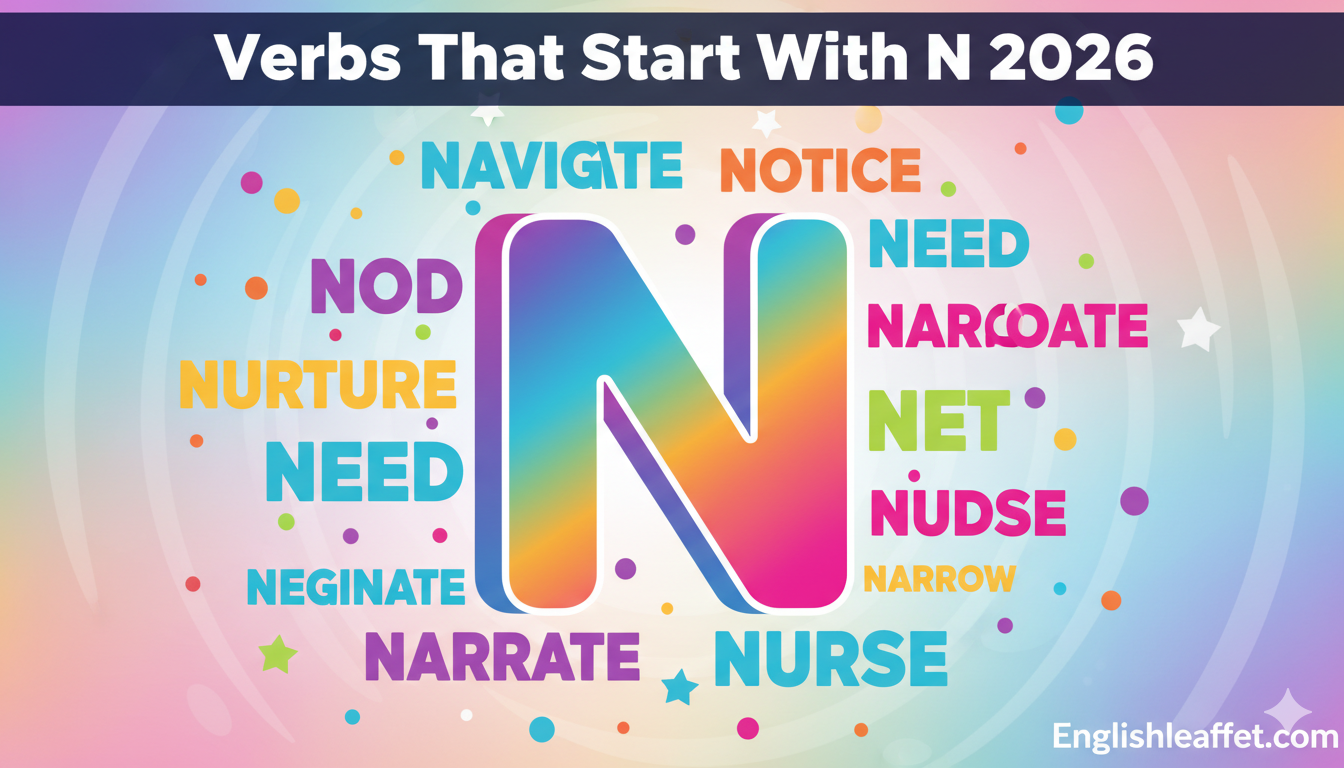
- Negotiate – Reach mutually beneficial agreements. Example: Executives negotiate merger terms carefully.
- Network – Build strategic business relationships. Example: Entrepreneurs network at industry conferences.
- Notify – Communicate important business updates. Example: HR will notify employees about policy changes.
- Nominate – Propose for leadership positions. Example: Boards nominate qualified directors annually.
- Normalize – Establish standard operating procedures. Example: Companies normalize remote work policies.
Education and Learning Context
- Note – Record information for study. Example: Students note key concepts during classes.
- Narrate – Tell stories with educational purpose. Example: Teachers narrate historical events vividly.
- Nurture – Develop student potential. Example: Educators nurture critical thinking skills.
- Number – Organize information sequentially. Example: Professors number course modules logically.
- Notice – Observe student progress carefully. Example: Attentive teachers notice struggling learners quickly.
Creative and Artistic Context
- Novelize – Transform into narrative form. Example: Screenwriters novelize successful films.
- Neologize – Invent creative new terms. Example: Poets neologize to express unique emotions.
- Narrate – Provide artistic storytelling voice. Example: Skilled actors narrate audiobooks beautifully.
- Note – Compose musical notation. Example: Composers note melodies on staff paper.
- Nest – Create artistic installations. Example: Artists nest objects within sculptures creatively.
Phrasal Verbs Starting With N
Phrasal verbs combine verbs with prepositions or adverbs to create new meanings. These N-phrasal verbs are commonly used in everyday English.
- Narrow down – Reduce options to fewer choices. Example: Let’s narrow down the list to three finalists.
- Nod off – Fall asleep unintentionally. Example: Grandpa tends to nod off during evening television.
- Nose around – Investigate or snoop curiously. Example: Don’t nose around in other people’s business.
- Note down – Write information for reference. Example: Please note down these important phone numbers.
- Nip out – Leave briefly and return quickly. Example: I’ll just nip out to grab some coffee.
- Nail down – Finalize or secure definitely. Example: We need to nail down the meeting date today.
- Knock around – Spend time casually. Example: They knock around the neighborhood after school.
- Nag at – Persistently bother someone. Example: The problem continued to nag at her conscience.
Grammar Tips for Using N-Verbs
Regular vs Irregular Forms
Most N-verbs are regular, forming past tense with -ed. Examples: “noticed,” “navigated,” “nurtured.”
However, some have irregular forms or archaic variations. For instance, “nim” (to take) historically became “nam” in past tense.
Understanding these patterns helps you use N-verbs correctly in different tenses and maintain grammatical accuracy in writing.
Subject-Verb Agreement
N-verbs must agree with their subjects in number. Singular subjects take singular verbs: “She navigates.”
Plural subjects require plural verb forms: “They navigate.” This basic rule applies to all N-verbs consistently.
Pay special attention when subjects and verbs are separated by phrases that might confuse the agreement pattern.
Tense Consistency
When using N-verbs in writing, maintain consistent tenses throughout your narrative. Don’t switch randomly between past and present.
Choose the appropriate tense for your context. Present tense creates immediacy: “She notices the details.” Past tense narrates events: “She noticed the details.”
Future tense indicates upcoming actions: “She will notice the details.” Proper tense usage clarifies when actions occur.
Tips for Expanding Your N-Verb Vocabulary
Daily Practice Methods
Use one new N-verb daily in conversation. This practical application helps cement the word in your active vocabulary.
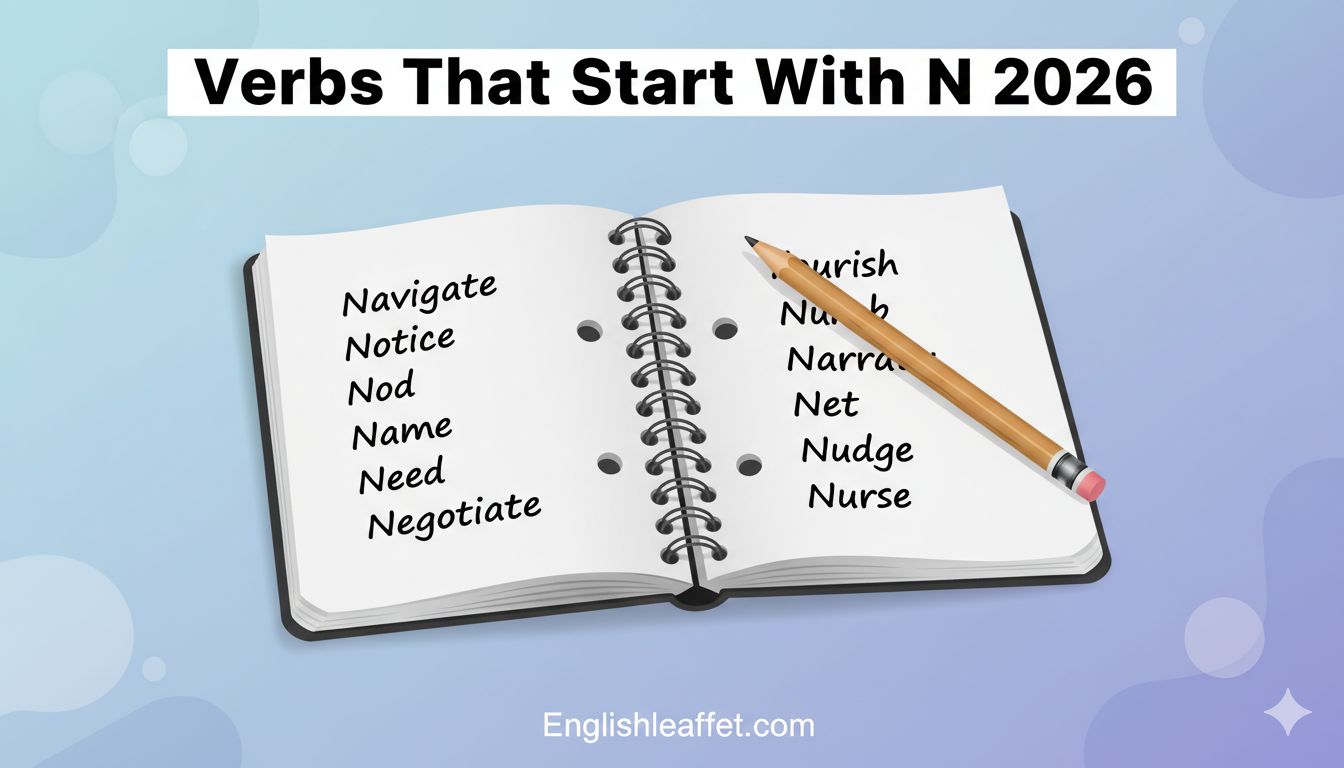
Keep a vocabulary journal specifically for N-verbs. Write definitions, examples, and personal sentences using each new word.
Create flashcards with N-verbs on one side and definitions with examples on the other for quick review sessions.
Reading and Context Learning
Read diverse materials where N-verbs appear naturally. Notice how professional writers employ these action words effectively.
Pay attention to context clues that reveal verb meanings. Surrounding words often clarify unfamiliar N-verbs without dictionary consultation.
Analyze how different authors use the same N-verb in various ways to convey subtle meaning differences.
Writing Practice Exercises
Write short paragraphs using multiple N-verbs intentionally. Challenge yourself to include five different N-verbs per paragraph.
Rewrite familiar sentences replacing common verbs with more specific N-verbs. This exercise improves precision in expression.
Create stories or descriptions focusing specifically on N-verb usage. This targeted practice builds confidence with these action words.
Common Mistakes to Avoid With N-Verbs
Confusing Similar Verbs
Don’t confuse “notify” (inform officially) with “notice” (become aware). These have distinct meanings despite similar spelling.
“Negate” means to nullify, while “neglect” means to fail in care. Using these interchangeably creates confusion.
“Nurture” implies active care and development, whereas “nourish” focuses specifically on providing sustenance. Choose the precise verb needed.
Overusing Certain N-Verbs
Avoid repeating “need” excessively in writing. Vary your vocabulary with alternatives like “require,” “necessitate,” or “demand.”
Don’t overuse “notice” when other observation verbs work better. Consider “observe,” “perceive,” or “discern” for variety.
Balance common N-verbs with less frequent ones to create more sophisticated and engaging writing that captures reader attention.
Incorrect Tense Formation
Remember most N-verbs add -ed for past tense: “navigated,” “negotiated,” “nurtured.” Don’t create non-standard forms.
Avoid confusion with spelling changes. “Nap” becomes “napped” with doubled consonant, not “naped.”
Check irregular forms carefully. While rare among N-verbs, some historical or specialized terms have unique past tenses.
The Power of N-Verbs in Writing
N-verbs strengthen writing by adding specificity and clarity. Instead of vague actions, these precise verbs show exactly what’s happening.
They create rhythm and flow in sentences. Well-chosen N-verbs move readers smoothly through your narrative or argument.
Master writers use N-verbs strategically to evoke emotions, convey authority, and maintain reader engagement throughout their work.
How N-Verbs Enhance Communication Skills
Using diverse N-verbs demonstrates vocabulary sophistication in professional and academic settings. This linguistic competence impresses audiences and colleagues.
Precise N-verbs reduce misunderstanding by expressing exact actions. Clear communication prevents confusion and improves interaction quality.
Mastering N-verbs gives you flexibility to adjust tone and formality. Choose sophisticated terms for formal contexts or simple ones for casual conversation.
Interesting Facts About N-Verbs
Many N-verbs trace origins to Old English and Norse languages. Historical influences shaped these words over centuries of linguistic evolution.
The letter N ranks among the most frequent consonants in English. This frequency means N-verbs appear commonly in daily communication.
Several N-verbs function as both nouns and verbs. Words like “name,” “note,” and “nest” demonstrate English’s grammatical flexibility.
Scientific terminology includes numerous specialized N-verbs. Fields like biology use “nidify,” “nitrify,” and “neovascularize” for precise descriptions.
Positive N-verbs outnumber negative ones significantly. Words like “nourish,” “nurture,” and “navigate” suggest growth and improvement.
Frequently Asked Questions
What are the most common verbs that start with N?
The most common N-verbs include need, notice, name, navigate, negotiate, nod, note, notify, number, and nurture. These appear frequently in everyday conversation and writing across all contexts.
How many verbs start with the letter N?
English contains approximately 200-300 verbs starting with N, depending on whether you include rare, archaic, or highly specialized technical terms in your count.
Are there any irregular verbs that start with N?
Most N-verbs are regular, but some archaic forms exist like “nim/nam” (to take). However, modern English has very few common irregular N-verbs.
What’s the difference between “notice” and “notify”?
“Notice” means to become aware of something through observation, while “notify” means to formally inform someone about something. Notice is passive awareness; notify is active communication.
Can verbs starting with N be used as nouns?
Yes, many N-verbs also function as nouns, including name, note, nap, nest, nod, and number. This dual functionality is common in English grammar.
What are positive verbs that start with N?
Positive N-verbs include nourish, nurture, navigate, network, normalize, nestle, neaten, nominate, nuzzle, and notify. These convey constructive, supportive, or beneficial actions.
What are some rare verbs beginning with N?
Rare N-verbs include nidify (build nest), neologize (create new words), nictitate (blink rapidly), nebulize (convert to mist), and noctambulate (sleepwalk).
How do I use N-verbs in professional writing?
Choose precise N-verbs that match your context: negotiate for business, notify for formal communication, navigate for problem-solving, and nurture for development-focused writing.
What phrasal verbs start with N?
Common N-phrasal verbs include narrow down, nod off, nose around, note down, nip out, and nail down. These combine verbs with prepositions for idiomatic meanings.
Why should I learn verbs that start with N?
Learning N-verbs expands vocabulary, improves communication precision, enhances writing quality, and demonstrates language sophistication in academic and professional settings.
Conclusion
Verbs that start with N offer incredible variety and expressiveness for effective communication. From common words like “need” and “notice” to sophisticated terms like “neologize” and “nidify,” these action words enrich your vocabulary significantly.
Mastering N-verbs improves both written and spoken English. They help you express actions precisely, create engaging narratives, and communicate ideas clearly across all contexts.
Whether you’re writing professionally, studying for exams, or simply enhancing your language skills, understanding these verbs proves invaluable.
Start incorporating new N-verbs into your daily communication. Practice using them in different contexts, pay attention to how others employ them, and watch your language skills flourish. The journey to vocabulary mastery begins with one verb at a time.
