

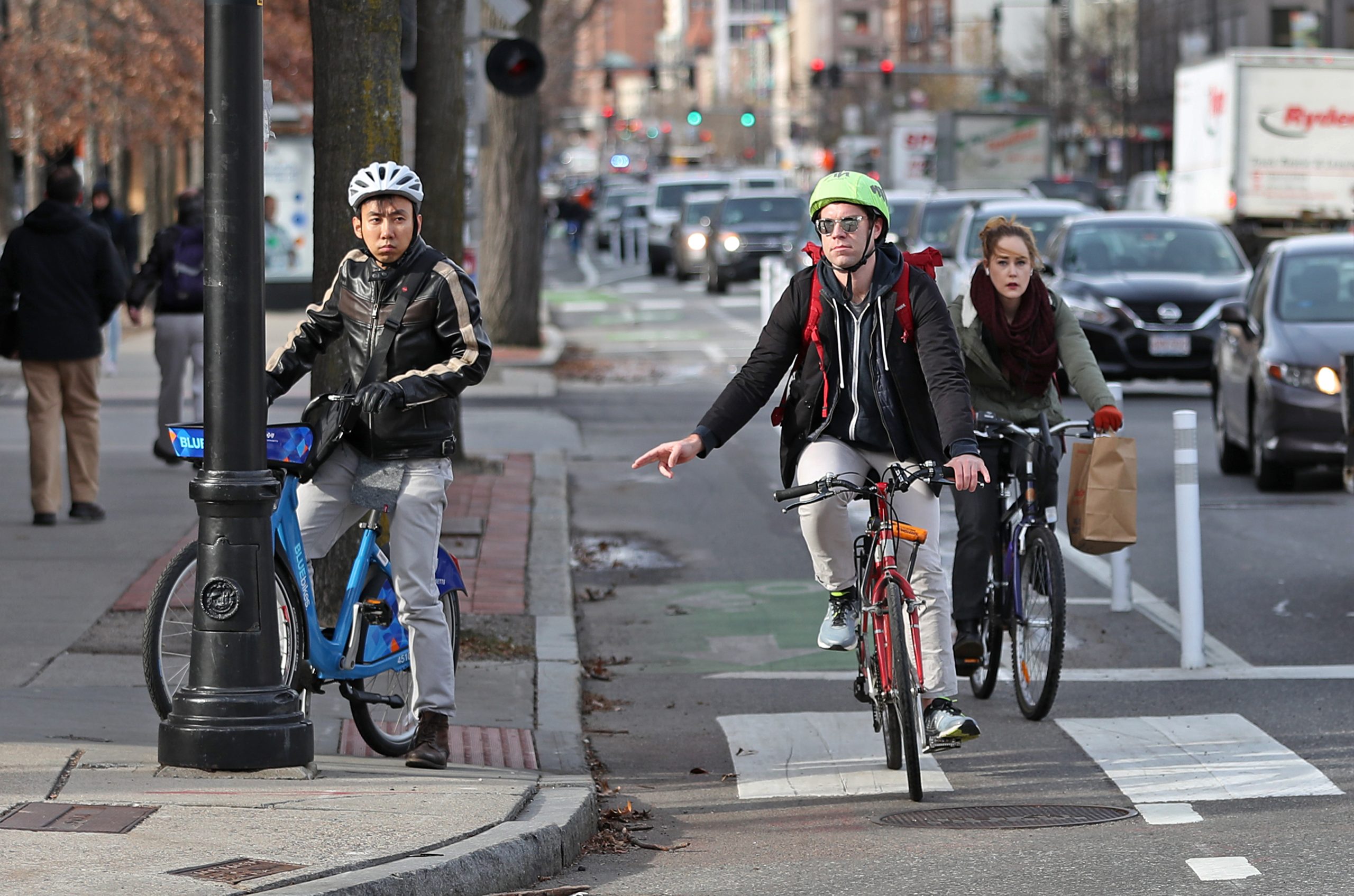
If you have ever tried to cross Massachusetts Avenue during rush hour or cycle through Porter Square without white-knuckling your handlebars, you know the truth: Cambridge traffic is its own unique ecosystem.
It’s not just the volume of cars; it’s the mix. You have 18-wheelers delivering to biotech labs, university shuttles making tight turns, thousands of students staring at their phones, and aggressive Boston-area drivers trying to beat the light. This density creates what locals sometimes call the “Cambridge Crunch”—a high-pressure environment where one small mistake can lead to serious injury.
Whether you are a student biking to class at MIT, a tourist walking the Freedom Trail, or a local commuter, staying safe requires more than just following the green light. It requires a defensive mindset and specific knowledge of the city’s trouble spots to ensure you do not suffer from a personal injury.
The “Vision Zero” Context
Before diving into specific intersections, it helps to understand what the city is doing. Cambridge has adopted “Vision Zero,” a strategy to eliminate traffic fatalities and severe injuries. This has led to lower speed limits (25 mph citywide, and often 20 mph in squares) and new infrastructure like separated bike lanes.
However, infrastructure is always playing catch-up with reality. Construction zones often push pedestrians into the street, and new bike lanes can sometimes confuse drivers who aren’t used to looking for cyclists behind parked cars.
The Danger Zones: Cambridge’s Most Notorious Intersections
Not all intersections are created equal. Some are statistically more dangerous due to confusing layouts, heavy truck traffic, or poor sightlines.
1. Porter Square (Mass Ave, Somerville Ave, and White St)
Porter Square is widely considered one of the most intimidating intersections in the city. It acts as a funnel for traffic coming from the suburbs into Cambridge.
- The Risk: The layout involves multiple “jug-handle” turns and a confusing array of signals. Drivers often speed up to catch the light before the intersection splits.
- For Cyclists: Be hyper-aware of the “right hook.” Cars turning right onto Somerville Ave often don’t see cyclists continuing straight on Mass Ave.
- For Pedestrians: The crosswalks here are long. Do not try to sprint across as the hand starts flashing. You will not make it, and the turning cars have a blind spot.
2. Inman Square (Cambridge St and Hampshire St)
Inman Square was recently redesigned into a “peanut-about” (a modified roundabout) to reduce accidents. While statistically safer, it is still confusing for anyone new to the area.
- The Risk: Drivers are often looking at their GPS to figure out the new lane patterns rather than watching for people.
- For Cyclists: Stick to the separated bike lanes. If you try to merge with traffic in the roundabout, you are putting yourself in a driver’s blind spot while they are actively navigating a turn.
- For Pedestrians: Use the designated crossings. Jaywalking here is extremely dangerous because traffic flows continuously rather than stopping and starting like a normal intersection.
3. Massachusetts Avenue near MIT (Vassar St to Memorial Dr)
This stretch is treacherous because of the volume of delivery trucks servicing MIT and the biotech companies.
- The Risk: Large trucks have massive blind spots. A common tragedy in Cambridge involves a cyclist or pedestrian being caught by the rear wheels of a turning truck.
- Safety Rule: Never, ever pass a truck on the right side at an intersection. If a truck is stopped, wait behind it, not next to it.
4. Memorial Drive Crossings
Crossing from the city side to the Charles River side is a high-stakes game. Cars on Memorial Drive move at highway speeds, even though the limit is lower.
- The Risk: Drivers often blow through red lights here because they treat the road like a freeway.
- For Pedestrians: When the walk sign turns on, wait three seconds. Look left, then right, then left again. Assume the first car you see is not going to stop.
Essential Safety Tips for Cyclists
Cycling in Cambridge is a great way to get around, but it requires defensive riding.
Watch the “Door Zone”
This is the number one cause of injury for cyclists on streets without protected lanes. If you ride too close to parked cars, a driver opening their door can send you flying into traffic.
- The Fix: Ride at least three feet away from parked cars, even if it means taking the lane. It is legal to take the full lane in Massachusetts if it is necessary for your safety.
The “Right Hook” Defense
We mentioned this in Porter Square, but it happens everywhere. A car passes you, then immediately slows down to turn right, cutting you off.
- The Fix: Don’t ride in a driver’s blind spot at an intersection. If you see a car slowing down, assume they are turning.
Use Your Lights
Cambridge police enforce light laws. You need a white light on the front and a red light on the rear. But more importantly, you need them so you don’t disappear in the glare of oncoming headlights and streetlamps.
Essential Safety Tips for Pedestrians
You have the right of way, but physics doesn’t care about the law.
The “Zombie Walk”
We see it every day: a student steps off the curb while looking down at a text message, wearing noise-canceling headphones. In a city with electric vehicles (which are silent) and bikes (also silent), this is a recipe for disaster.
- The Fix: Eyes up, phone down. If you are crossing the street, take the headphones off. You need your hearing to detect a car accelerating around a corner.
Understand the “LPI”
Many Cambridge intersections now have a “Leading Pedestrian Interval” (LPI). This means the Walk sign turns on 3-5 seconds before the cars get a green light.
- The Tip: Use this head start! It puts you in the middle of the crosswalk where you are most visible before cars start moving. If you wait, you lose that visibility advantage.
Eye Contact is Key
Never assume a driver sees you. If a car is inching forward at a stop sign, look the driver in the eye. If they aren’t looking at you, do not step in front of the car.
What to Do If You Are Involved in an Accident
Despite your best efforts, accidents happen. If you are hit by a car while walking or biking, the adrenaline will kick in immediately. You might feel fine, but you need to protect yourself.
- Do Not Leave the Scene: It is a crime for the driver to leave, but you should stay put too.
- Call 911: Get the police there to file an official report. This is vital for insurance later.
- Get Driver Info: Take a picture of their license plate, their ID, and their insurance card. Do not rely on them writing it down for you.
- Seek Medical Attention: Even if you think you just have a bruise, go to the doctor. Injuries like adrenaline-masked fractures or concussions can show up days later.
- Talk to a Lawyer: Cambridge has specific laws regarding “comparative negligence” and insurance thresholds. Navigating a claim against an insurance company alone is difficult. A specialized attorney can help you understand your rights, especially if your injuries keep you out of work or school.
The Bottom Line
Cambridge is a walkable, bikeable, beautiful city. But the dense mix of history and modern traffic requires respect. Whether you are navigating the chaos of Harvard Square or the speed of Memorial Drive, your safety is largely in your own hands. Stay alert, follow the rules, and assume that drivers might not see you.
Enjoy the city, but keep your head on a swivel. Your destination isn’t going anywhere—make sure you get there in one piece.
