

Detroit Pistons vs Cleveland Cavaliers timeline is one of the most fascinating yet underrated stories in NBA history.
Two Central Division neighbors have been battling since 1970, creating a rivalry filled with Bad Boys brawls, LeBron James takeovers, and young-core showdowns.
Detroit Pistons vs Cleveland Cavaliers: All-Time Head-to-Head Snapshot
Before diving into the full timeline, here is a quick look at where the rivalry stands today.
| Category | Detroit Pistons | Cleveland Cavaliers |
|---|---|---|
| All-Time Regular Season Record | 134 Wins | 109 Wins |
| Total Games Played | 243 | 243 |
| Playoff Series Won | 1 | 3 |
| Overall Record (Including Playoffs) | 139 Wins | 123 Wins |
| Longest Win Streak | 8 Games (2002–2003) | 12 Games (2022–2025) |
| Last Game Result | Won 133–122 (Mar 28, 2025) | Lost 122–133 |
Detroit leads the all-time regular season series convincingly. Cleveland holds the playoff edge at 3–1 in series. Both numbers tell a different part of the story.
The 1970s: Two Franchises Finding Their Feet
The Cleveland Cavaliers joined the NBA in 1970 as an expansion team. The Detroit Pistons had already been around since 1957, originally the Fort Wayne Pistons before moving to Motor City.
In the early 1970s, neither team was a true powerhouse. Detroit had Bob Lanier, a dominant center with elite post skills. Cleveland had early fan favorites like Austin Carr and Lenny Wilkens, but playoff runs were rare.
Games between the two teams were competitive but low-stakes. Think of this decade as the prequel to the rivalry — both organizations were still building their identities and figuring out their long-term direction.
The 1976–77 Miracle of Richfield Era
Cleveland had a brief golden moment in the mid-1970s that got fans excited about what was possible. The 1975–76 Cavaliers won 49 games and advanced deep into the playoffs in what became known as the Miracle of Richfield season.
Detroit was competitive during this stretch but not dominant. The Pistons were in a transitional phase between their Fort Wayne roots and their future Motor City identity.
This era showed that Cleveland could be a serious team when the right pieces came together. It planted the seeds for bigger moments to come in the 1980s.
The 1980s: Bad Boys Rise and Cavaliers Push Back
The late 1980s completely changed the Detroit Pistons vs Cleveland Cavaliers timeline. Detroit built the legendary Bad Boys roster under coach Chuck Daly.
Isiah Thomas ran the point with controlled aggression. Bill Laimbeer and Rick Mahorn brought physical toughness that the league had never seen quite like this. Joe Dumars and Dennis Rodman added elite defense on the perimeter.
Cleveland responded with a talented core of their own. Mark Price was one of the best point guards in the East. Brad Daugherty gave them a reliable post presence. Larry Nance added athleticism and two-way ability.
The matchups between these two teams during this period were fierce, physical, and genuinely entertaining. Neither side backed down.
1989 Playoffs: Detroit Sweeps Cleveland in Round One
The first major playoff meeting in the Detroit Pistons vs Cleveland Cavaliers timeline came in 1989. Detroit was on their way to the first of back-to-back NBA Championships.
The Pistons swept the Cavaliers in the first round with dominant defensive performances. Cleveland had the talent to compete but could not match Detroit’s experience, physicality, or playoff poise.
This series showed the gap between a championship team and an aspiring playoff team. Detroit was operating at a different level in 1989, and Cleveland had to accept that reality.
1992 Playoffs: Cleveland Finally Breaks Through
One of the most symbolically important moments in the Detroit Pistons vs Cleveland Cavaliers timeline happened in the 1992 playoffs. Cleveland defeated the Pistons in a hard-fought six-game series.
This win marked the symbolic end of the Bad Boys era. Detroit’s roster was aging and the championship window had closed. Cleveland’s younger, more athletic squad was ready to take control of the Central Division.
Mark Price outplayed Isiah Thomas in the backcourt duel. Brad Daugherty’s consistent post play gave Cleveland an interior advantage. The result showed that power in the Eastern Conference was shifting.
| 1992 Playoff Series Stats | Detroit Pistons | Cleveland Cavaliers |
|---|---|---|
| Series Result | Lost 4–2 | Won 4–2 |
| Key Player | Isiah Thomas | Mark Price |
| Decisive Factor | Aging roster | Youth and athleticism |
The 1990s: A Decade of Reset for Both Teams
After the early 1990s drama, both franchises entered rebuilding phases. The Detroit Pistons transitioned through the Grant Hill era, trying to build around their young star forward.
Cleveland lost key pieces when Price and Daugherty dealt with injuries and eventually left. The Cavaliers spent most of the mid-to-late 1990s searching for a new identity and their next franchise cornerstone.
Head-to-head games during this decade were more about division competition than playoff-level stakes. The rivalry was consistent but not electric. Both teams were in similar positions — talent without championships.
Detroit did make some noise with Grant Hill becoming a face of the league in the mid-1990s. But neither team was able to break through to the Finals during this stretch.
Early 2000s: Detroit Builds a New Powerhouse
The early 2000s brought a major Detroit comeback that stunned the basketball world. Larry Brown assembled a defense-first roster that became one of the most respected teams in NBA history.
Chauncey Billups quarterbacked the offense with calm precision. Ben Wallace was a defensive force unlike anything the league had seen at center. Rip Hamilton used screens and movement to create offense consistently. Tayshaun Prince locked down opponents on the wing.
This group won the 2004 NBA Championship, upsetting the Los Angeles Lakers in five games. Detroit became a regular Eastern Conference Finals team for several years running.
Cleveland was still searching for their next superstar at the start of this phase. That was about to change in a massive way.
2003 NBA Draft: LeBron James Changes Everything
The 2003 NBA Draft was the most important event in the modern Detroit Pistons vs Cleveland Cavaliers timeline. Cleveland won the lottery and drafted LeBron James out of Akron, Ohio.
LeBron was an 18-year-old phenomenon who arrived in the league already looking like a complete player. His combination of size, vision, athleticism, and basketball IQ was unlike anything the NBA had seen at that age.
Within three seasons, LeBron had transformed Cleveland into a genuine playoff team. The Cavaliers went from lottery regulars to one of the most dangerous teams in the Eastern Conference.
Detroit now had a new challenge on their doorstep — a superstar playing just over 100 miles away in the same division.
2006 Playoffs: LeBron Announces Himself to Detroit
The 2006 first-round playoff series between these two teams was a turning point in the Detroit Pistons vs Cleveland Cavaliers timeline. LeBron James was 21 years old and ready to compete with the best team in the East.
Detroit won the first two games convincingly at the Palace of Auburn Hills. LeBron responded by leading back-to-back wins in Cleveland to even the series at two games each.
Game 6 was a physical war, and the Pistons escaped. Game 7 in Detroit ended Cleveland’s season but made it crystal clear that LeBron was no longer an underdog. This young Cavaliers team had just taken the defending champions to seven games.
The 2006 series set the stage for what was coming the following season in one of the most memorable postseason matchups in NBA history.
2007 Eastern Conference Finals: LeBron’s 48-Point Masterpiece
The 2007 Eastern Conference Finals is the single most iconic moment in the Detroit Pistons vs Cleveland Cavaliers timeline. Detroit was in their fifth straight Conference Finals and had the experience and depth to win again.
LeBron had other plans entirely. In Game 5, with the series tied at two games each, LeBron delivered one of the greatest individual playoff performances in NBA history.
He scored the Cavaliers’ final 25 points of regulation. He scored 29 of their final 30 points. He finished with 48 total points in a double-overtime road victory at the Palace of Auburn Hills.
The crowd sat in stunned silence. Cleveland won the series in six games and advanced to the NBA Finals for the first time in franchise history. Detroit’s reign as Eastern Conference kings was officially over.
| 2007 ECF Key Stats | LeBron James (CLE) | Chauncey Billups (DET) |
|---|---|---|
| Series PPG | 35.7 | 21.0 |
| Series Result | Won 4–2 | Lost 4–2 |
| Game 5 Points | 48 | 22 |
| Impact | Defined a generation | End of an era |
2007–2010: Cleveland Rises, Detroit Fades
After the 2007 ECF, the power dynamic in this rivalry shifted permanently during LeBron’s first tenure in Cleveland. The Cavaliers became Eastern Conference title contenders while Detroit began a gradual decline.
Cleveland built around LeBron with veteran additions and complementary pieces. They reached the Finals in 2007 and remained a top seed in the East for several seasons.
Detroit cycled through coaching changes and struggled to maintain their championship-level roster. The Billups era was over when he was traded to Denver in the Allen Iverson deal in 2008.
Regular season meetings between the two teams during this period often felt one-sided. Cleveland was competing for seeds, Detroit was competing for relevance.
2008 Playoffs: Cleveland Sweeps Detroit
The 2008 first-round playoff series was a complete reversal of the 2007 outcome. Cleveland swept Detroit in four games without much resistance.
This series was less about the games themselves and more about what it represented. Detroit’s dynasty era was definitively finished. The Cavaliers, led by LeBron, had become the clear dominant team in the Central Division.
Detroit scored a notable win by trading for Allen Iverson but the experiment did not produce playoff success. Cleveland was operating at a completely different level with LeBron leading the way.
2010–2014: The Rebuilding Years for Both Teams
When LeBron left for Miami in the summer of 2010, both the Pistons and Cavaliers entered difficult rebuilding periods. Neither team had a clear franchise cornerstone or championship path.
Detroit drafted Andre Drummond in 2012, hoping to build around the physical center. They also had Greg Monroe and Brandon Knight as part of their rebuild. The pieces were there but the chemistry never fully materialized.
Cleveland drafted Kyrie Irving in 2011, getting an elite point guard who was as skilled as almost anyone in the league. Anthony Bennett in 2013 was a bust at number one overall, but the organization was clearly building toward LeBron’s return.
Head-to-head games during this period were often close because both teams were operating at similar competitive levels — good enough to win on any given night, not good enough to be real playoff threats.
| Rebuild Era Draft Picks | Detroit Pistons | Cleveland Cavaliers |
|---|---|---|
| Key Pick | Andre Drummond (2012) | Kyrie Irving (2011) |
| Position | Center | Point Guard |
| Impact | Rebounding force | Elite scoring PG |
| Long-term Result | Traded away | Won 2016 title with CLE |
2014: LeBron Returns to Cleveland, Rivalry Shifts Again
LeBron James announced his return to Cleveland in the summer of 2014, instantly making the Cavaliers a championship contender. With Kyrie Irving and Kevin Love joining him, Cleveland built one of the most talented rosters in the league.
Detroit was in no position to compete with this version of Cleveland in the regular season or postseason. The Pistons had Drummond and Brandon Jennings but lacked the star power or depth to match a LeBron-led team.
Regular season meetings during this stretch showed the clear gap between a championship contender and a rebuilding organization. Cleveland won these matchups consistently and decisively.
2016: Cleveland Wins the NBA Championship
The 2016 NBA Championship run by Cleveland was the defining moment in franchise history and a massive moment for the entire state of Ohio. LeBron, Kyrie, and Love overcame a 3–1 deficit against the Golden State Warriors.
While Detroit was not a playoff obstacle during that championship run, the Cavaliers’ success fundamentally changed the perception of the franchise. Cleveland was now a city with an NBA champion.
This championship also underscored how far the power balance in the rivalry had shifted since the LeBron era began. Detroit was rebuilding while Cleveland was celebrating a title.
2017–2020: Both Teams in Transition
LeBron left Cleveland again in 2018, heading to the Los Angeles Lakers. Once again, both franchises found themselves in similar situations — talented enough to be interesting, not yet ready to contend.
Cleveland drafted high every year, accumulating young talent around Collin Sexton. Detroit had Blake Griffin for a short stretch but injuries derailed his time with the Pistons. Both teams were genuine lottery-level franchises.
Head-to-head matchups during this era were often competitive and entertaining because neither team had a dominant advantage. Games could go either way, which made the rivalry feel genuine again at a lower stakes level.
2021–2023: Young Cores Emerge
Both franchises made significant steps forward in the early 2020s by committing to youth development and high draft picks. The rivalry entered a new chapter with completely different faces on each side.
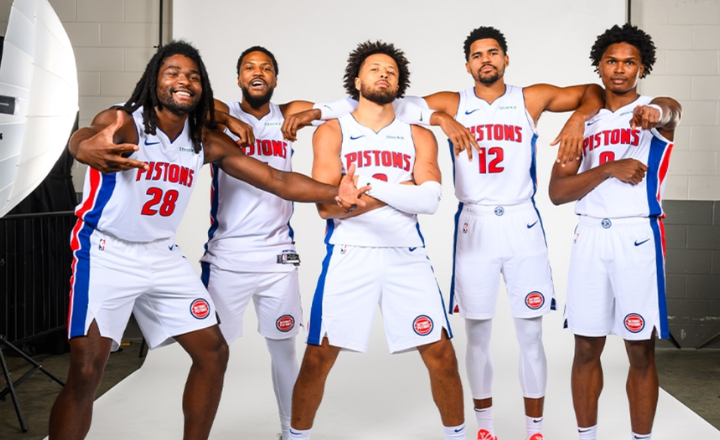
Detroit selected Cade Cunningham with the first overall pick in 2021. The Oklahoma State product was seen as a franchise cornerstone — a tall point guard with elite playmaking and scoring ability.
Cleveland had already been building around Darius Garland, Evan Mobley, and Jarrett Allen. When they added Donovan Mitchell via trade in 2022, the Cavaliers instantly became a genuine playoff contender.
The gap between the two teams became very clear when Mitchell arrived. Cleveland was competing for playoff position while Detroit was still developing their young core.
Cleveland’s 12-Game Winning Streak: 2022–2025
One of the most dominant stretches in the modern Detroit Pistons vs Cleveland Cavaliers timeline was Cleveland’s 12-game winning streak against Detroit that ran from March 2022 through February 2025.
This is the longest winning streak either team has posted against the other in the history of the rivalry. Cleveland was simply better during this stretch — more experienced, better coached, and with a clear star in Donovan Mitchell.
Detroit was going through the growing pains of building a young team. Losses happened regularly and the streak reflected the competitive gap at that moment in time.
The streak finally ended on March 28, 2025, when Detroit earned a significant 133–122 road victory in Cleveland — one of the most meaningful wins of the young Cade Cunningham era.
March 28, 2025: Detroit Ends the Streak
The March 28, 2025 game was a major moment in the Detroit Pistons vs Cleveland Cavaliers timeline. Detroit won 133–122 on the road in Cleveland, ending a 12-game Cavaliers winning streak in the series.
This win showed that the Pistons were developing real competitive teeth. Cade Cunningham orchestrated a complete team performance that Cleveland could not stop. The young Detroit core proved it could beat an elite Eastern Conference team on the road.
For Cleveland, it was a reminder that no winning streak lasts forever. The Cavaliers had dominated the series for nearly three years, but Detroit was ready to compete at a higher level.
2025–26 Season: Detroit’s Continued Rise
The 2025–26 season has added new chapters to the Detroit Pistons vs Cleveland Cavaliers timeline with Detroit showing genuine growth as a team. Cade Cunningham has become one of the better two-way players in the Eastern Conference.
On February 18, 2026, Detroit secured another road victory over Cleveland, winning 114–110 at Rocket Arena. Cunningham scored 27 points while Daniss Jenkins added 25, including a dominant second-quarter burst that swung the game.
Cleveland had Donovan Mitchell providing his usual scoring output, but Detroit’s defensive stops in the fourth quarter proved decisive. The Pistons have now shown they can beat Cleveland consistently, not just occasionally.
This season feels different for Detroit. The wins are not flukes — they reflect genuine roster improvement and better team cohesion under their current system.
All-Time Playoff Series Between Detroit Pistons and Cleveland Cavaliers
| Year | Series | Winner | Games |
|---|---|---|---|
| 1989 | First Round | Detroit Pistons | 3–0 (sweep) |
| 1992 | First Round | Cleveland Cavaliers | 4–2 |
| 2006 | First Round | Detroit Pistons | 4–3 |
| 2007 | Eastern Conference Finals | Cleveland Cavaliers | 4–2 |
| 2008 | First Round | Cleveland Cavaliers | 4–0 (sweep) |
Cleveland currently leads the all-time playoff series count 3–1. Detroit has won the regular season series for most of the rivalry’s history.
Key Players Who Defined the Rivalry
Detroit Pistons Legends in This Rivalry
Isiah Thomas was the heart of the Bad Boys era and the player who made Detroit a championship contender. His leadership and will to win defined the Pistons in their 1989–1990 championship years.
Bill Laimbeer brought physical toughness that opponents hated playing against. His hard fouls and vocal leadership made Cleveland’s players uncomfortable every time they visited the Palace.
Chauncey Billups orchestrated the early 2000s championship team with steady point guard play. His clutch shooting and defensive effort made Detroit nearly unbeatable during their Conference Finals runs.
Cade Cunningham is writing the next chapter for Detroit. His growth into a franchise-level player has reignited hope that the Pistons can return to Eastern Conference relevance.
Cleveland Cavaliers Legends in This Rivalry
Mark Price was Cleveland’s first true star in this rivalry. His precision point guard play during the late 1980s and early 1990s gave Cleveland a legitimate weapon against Detroit’s physical defense.
LeBron James completely redefined the rivalry starting in 2003. His 2007 Game 5 performance against Detroit remains one of the greatest individual playoff games in NBA history and the defining moment of this entire matchup.
Donovan Mitchell has become the current face of Cleveland’s franchise. His scoring ability and competitive fire have kept the Cavaliers as a consistent Eastern Conference playoff team in the post-LeBron era.
Era-by-Era Power Rankings
| Era | Dominant Team | Key Reason |
|---|---|---|
| 1970s | Even | Both teams in early development |
| 1980s–1992 | Detroit Pistons | Bad Boys dynasty, back-to-back titles |
| 1993–2002 | Even | Both teams in transition/rebuild |
| 2003–2009 | Split | Detroit regular season, Cleveland playoffs |
| 2010–2014 | Even | Both teams rebuilding |
| 2014–2018 | Cleveland Cavaliers | LeBron’s return and 2016 title |
| 2018–2022 | Cleveland Cavaliers | Experienced core vs young Detroit |
| 2022–2026 | Shifting to Detroit | Cade Cunningham’s emergence |
Detroit Pistons vs Cleveland Cavaliers Timeline: Season-by-Season Recent Results
| Season | Detroit W-L vs CLE | Notable Game |
|---|---|---|
| 2021–22 | 0–4 | Cleveland dominance begins |
| 2022–23 | 0–4 | Cavaliers win streak grows to 8 |
| 2023–24 | 1–3 | Detroit wins one game to show progress |
| 2024–25 | 2–2 | Detroit ends 12-game CLE streak |
| 2025–26 | Active season | Detroit wins Feb 18 game 114–110 |
What the Current Rivalry Looks Like Heading into 2026
Both teams are at genuinely interesting crossroads in 2026. Cleveland is an established Eastern Conference playoff team with a clear star, experienced role players, and good coaching.
Detroit is ascending. Cade Cunningham is maturing into the type of franchise player who can carry a team. The supporting cast around him has improved significantly over the last two seasons.
The next phase of this rivalry could be the most competitive since the Bad Boys era faced the Mark Price Cavaliers in the late 1980s. Two teams in the same division, both capable of making deep playoff runs, meeting multiple times every season.
If Detroit continues their development arc, the matchups between these two Central Division neighbors will only become more important and more meaningful from a standings perspective.
Why This Rivalry Matters to the NBA
The Detroit Pistons vs Cleveland Cavaliers rivalry matters because it represents the backbone of the Eastern Conference’s Central Division. These two Ohio-Michigan neighbors have been shaping the standings for over five decades.
Neither team needed to be a superteam or a glamour franchise to keep this rivalry compelling. The Bad Boys were gritty and physical. The LeBron Cavaliers were built around one transcendent talent. The current era is a youth movement competition.
Both cities have passionate fan bases that understand basketball at a deep level. Detroit’s Palace of Auburn Hills and Cleveland’s Rocket Mortgage FieldHouse have hosted some of the best games in NBA history between these two clubs.
The rivalry rewards long-term fans who pay attention to the details — the coaching adjustments, the player development arcs, the draft decisions that eventually determine which team holds power in any given era.
Geographic and Cultural Context of the Rivalry
Detroit and Cleveland are roughly 170 miles apart, connected by Interstate 90 along the southern shore of Lake Erie. Both are Midwestern industrial cities with similar economic histories and deeply passionate sports cultures.
Both cities know what it feels like to suffer as sports fans and what it feels like to celebrate a championship. Detroit won back-to-back titles in 1989 and 1990. Cleveland finally broke through in 2016 after years of heartbreak.
This shared Midwestern identity gives the rivalry a working-class toughness that fans from both cities genuinely respect. Neither fan base backs down, and neither team typically comes into the rivalry looking for an easy night.
The Great Lakes corridor has produced some of the most intense regular season basketball in NBA history, and these two franchises have been at the center of that tradition since 1970.
Frequently Asked Questions (FAQs)
Who leads the all-time series between the Detroit Pistons and Cleveland Cavaliers?
Detroit leads the all-time regular season series 134–109 across 243 games. Cleveland holds the playoff edge at 3–1 in series.
What is the most iconic moment in the Detroit Pistons vs Cleveland Cavaliers timeline?
LeBron James scoring 48 points in the 2007 ECF Game 5 double-overtime road win in Detroit is widely considered the defining moment of this entire rivalry.
How many times have the Pistons and Cavaliers met in the playoffs?
They have met in the playoffs four times — in 1989, 1992, 2006, 2007, and 2008 — across five postseason series.
Did LeBron James ever lose to the Detroit Pistons in the playoffs?
Yes. In 2006, Detroit defeated Cleveland 4–3 in the first round. It was LeBron’s first major playoff test, and Detroit won Game 7 on their home floor.
What ended Cleveland’s 12-game winning streak against Detroit?
Detroit ended the streak with a 133–122 road win in Cleveland on March 28, 2025, one of the biggest wins of the Cade Cunningham era.
Are the Detroit Pistons and Cleveland Cavaliers in the same division?
Yes. Both teams compete in the Central Division of the Eastern Conference, meaning they face each other multiple times every regular season.
Who is the current face of the Detroit Pistons in this rivalry?
Cade Cunningham, the 2021 first overall pick, has established himself as the franchise cornerstone and the player who will define Detroit’s next competitive era.
Who is the current face of the Cleveland Cavaliers in this rivalry?
Donovan Mitchell is Cleveland’s primary star, providing elite scoring and clutch play that keeps the Cavaliers as a consistent playoff contender.
What was the score of the most recent game between these two teams in 2026?
On February 18, 2026, Detroit won 114–110 on the road against Cleveland, with Cade Cunningham scoring 27 and Daniss Jenkins adding 25 points.
What does the future of this rivalry look like?
Both teams have young talent and promising trajectories. As Detroit continues to develop under Cade Cunningham, this rivalry could become one of the most competitive in the Eastern Conference over the next several years.
Conclusion
The Detroit Pistons vs Cleveland Cavaliers timeline 1970–2026 is a story of shifting power, generational talent, and Midwestern basketball pride.
Detroit dominated the early decades with the Bad Boys, Cleveland rewrote the rivalry with LeBron James, and now both franchises are building toward a new competitive era.
Over 262 combined games, five playoff series, and 56 years of history, this matchup has produced some of the greatest moments in Eastern Conference basketball.
With Cade Cunningham leading Detroit’s ascent and Donovan Mitchell anchoring Cleveland’s consistent contention, the next chapter of this rivalry may be the most compelling yet.
Whether you bleed blue and white or wine and gold, this rivalry deserves every bit of attention it gets heading into 2026 and beyond.
