

Why does my cat sleep on my chest — if you have asked this question, you are far from alone.
Millions of cat owners wake up to find their feline friend curled up on their chest, purring softly, completely unbothered by the world.
It feels like the ultimate compliment, and honestly, it is one. This behavior goes much deeper than a preference for a warm nap spot.
It is rooted in your cat’s instincts, emotions, and the bond they have built with you.
Understanding Why Your Cat Chooses Your Chest
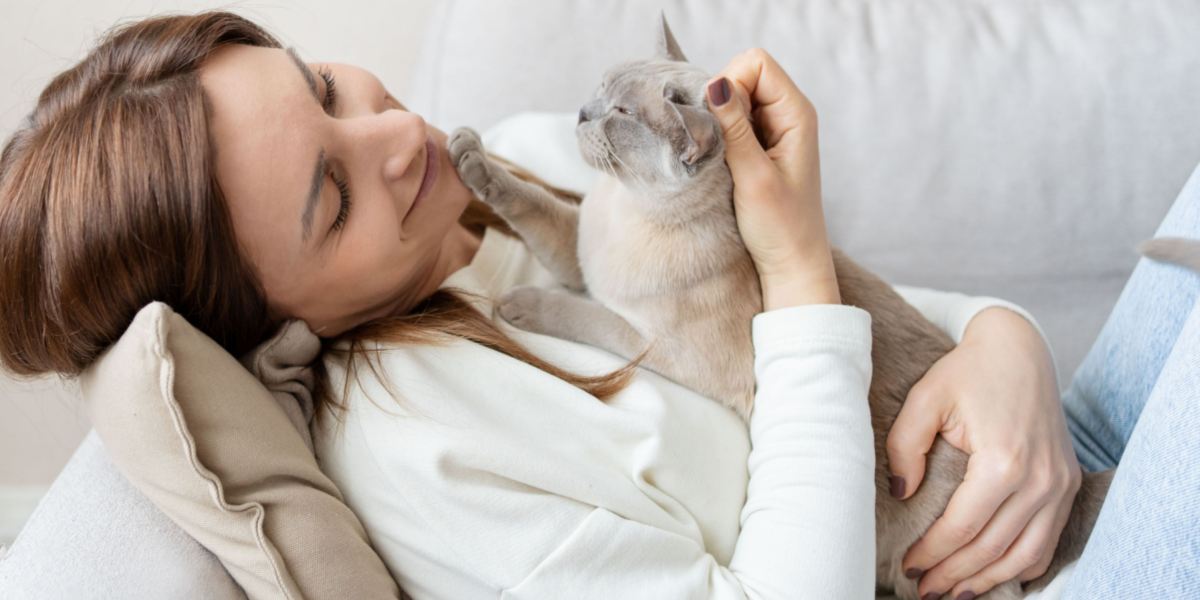
Your chest is not just a convenient resting place for your cat. It is a very deliberate choice driven by multiple physical and emotional factors working together.
Your chest is one of the warmest parts of your body. It rises and falls rhythmically with every breath. Your heartbeat creates a steady, soothing sound. You carry your own familiar scent. All of these things combine to make your chest the single most comforting spot your cat can find.
Cats are highly selective about where they sleep. They only rest in places they consider completely safe. Choosing your chest is their way of saying you are the safest place they know.
Reason 1 — Your Cat Trusts You Completely
Trust is the foundation of this entire behavior. Cats sleep for up to 16 hours a day, and during sleep they are at their most vulnerable. Choosing to sleep directly on your chest means your cat trusts you with their safety at their most defenceless moment.
Cats are naturally cautious animals. They do not give trust easily or quickly. A cat that has earned your care through consistent, gentle interactions and feels no threat from you will eventually express that trust by sleeping as close to you as possible.
Sleeping on your chest is one of the strongest trust signals a cat can give. It goes beyond simply sleeping beside you — it is full contact, full surrender.
Reason 2 — Your Heartbeat Reminds Them of Kittenhood
One of the most scientifically interesting reasons your cat sleeps on your chest is the sound of your heartbeat. Cats are highly sensitive to rhythmic sounds, and your heartbeat is one of the most consistent rhythms they can find.
As kittens, they would sleep pressed against their mother’s belly, soothed by her heartbeat and the sounds of her breathing. That early experience creates a deep emotional imprint. Your heartbeat reactivates those feelings of warmth, safety, and being nurtured.
The steady rise and fall of your chest while breathing adds another layer of comfort. It is like a gentle, living cradle that calms your cat’s nervous system and helps them drop into deep, restful sleep.
Reason 3 — You Are the Warmest Spot in the Room
Cats run hot. Their normal body temperature ranges from 99.5°F to 102.5°F (37.5°C to 39.2°C), and maintaining that temperature takes energy. They are always searching for external heat sources to help conserve that energy.
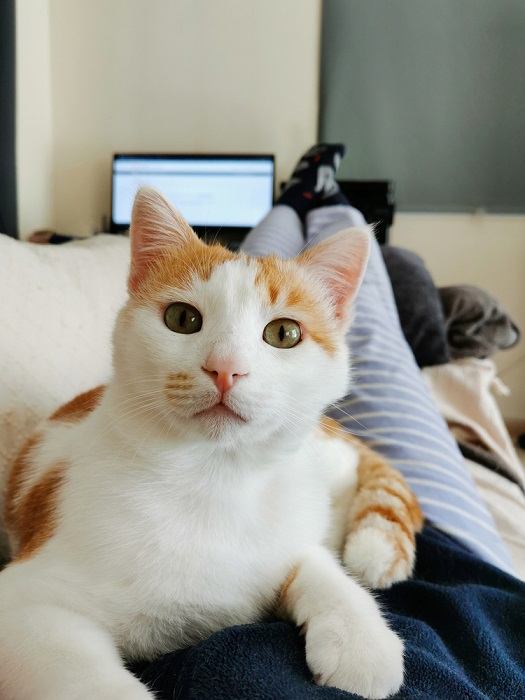
Your face and chest are the warmest parts of your body. Your cat absolutely knows this. It is why they also gravitate toward your laptop, sunny windowsills, warm vents, and radiators. You are simply the best heated surface available.
This warmth-seeking behavior becomes even more pronounced at night, in colder months, or in cooler rooms. If your cat suddenly starts sleeping on your chest more in winter, your body heat is a big part of the reason.
Reason 4 — Deep Emotional Bonding and Affection
Cats show love very differently from dogs, but that does not mean the love is any less real. Sleeping on your chest is one of the clearest expressions of feline affection that exists.
Research published in the journal Current Biology found that some cats form strong emotional attachments to their caregivers — attachments similar in structure to those that dogs and human infants form with their caregivers. This secure attachment drives cats to seek physical closeness with the person they are bonded to.
When your cat curls up on your chest, they are not just looking for warmth. They are actively choosing to be with you. It is their version of a hug.
Reason 5 — Scent Marking and Territory
Cats are territorial by nature, and scent is their primary language for communicating ownership and familiarity. They have scent glands on their cheeks, lips, forehead, and paws. When they rest against you, they are leaving their scent signature on you.
This behavior is called scent marking, and it is not possessive in a negative sense. When your cat scent-marks you, they are saying you belong to their safe world. You are part of their territory in the most affectionate way possible.
In multi-cat households, this marking behavior becomes even more deliberate. One cat sleeping on your chest is also quietly communicating to other cats that you are claimed — firmly and comfortably theirs.
Reason 6 — Your Scent Comforts Them
Humans have around 5 million scent receptors. Cats have approximately 200 million. They experience the world in scent in a way we can barely imagine. Your personal scent — carried through your skin, sweat, and pheromones — is deeply familiar and calming to a bonded cat.
Cats detect pheromones through a special organ called the Jacobson’s organ (also known as the vomeronasal organ), located in the roof of the mouth. This organ allows them to essentially taste the scents in their environment.
Your scent tells your cat everything is normal, safe, and good. Sleeping on your chest means they are surrounded by that scent on all sides, which promotes the deepest possible relaxation.
Reason 7 — Security and Protection
Your chest also functions as an elevated, protected position for your cat. Cats instinctively feel safer when they are slightly raised above ground level and close to a trusted being.
For elderly cats or cats that feel unwell, sleeping on an owner’s chest provides extra reassurance. Being close to their trusted human reduces their sense of vulnerability during a time when they feel less able to defend themselves.
This is especially true in homes with multiple pets. A cat that feels slightly anxious around other animals may choose your chest specifically because it is the single spot where they feel truly untouchable.
Reason 8 — They Are Seeking Your Emotional Energy
Cats are surprisingly sensitive to human emotions. Many owners report that their cat climbs onto their chest during moments of stress, sadness, or illness — situations where they had not been doing this routinely before.
Research and anecdotal evidence suggest cats can detect changes in their owner’s mood, breathing patterns, hormone levels, and even heart rate. When these signals change, some cats respond by moving closer, as if offering comfort.
If your cat only comes to sleep on your chest when you are upset or unwell, this is not coincidence. They are responding to a change in you and doing what they know best — being close, warm, and present.
Reason 9 — The Kneading Connection
If your cat kneads your chest while lying on it — the gentle rhythmic pressing of paws sometimes called “making biscuits” — this adds another layer of meaning to the behavior.
Kneading is an instinctive behavior that begins in kittenhood. Kittens knead their mother’s belly to stimulate milk flow during nursing. It is one of the first associations cats form between physical action and feelings of comfort, nourishment, and love.
When adult cats knead on your chest, they are expressing the same deep contentment they felt as kittens with their mother. It is among the highest compliments a cat can pay you. It means you are their safe person — their equivalent of home.
Reason 10 — Cat Imprinting on Their Owner
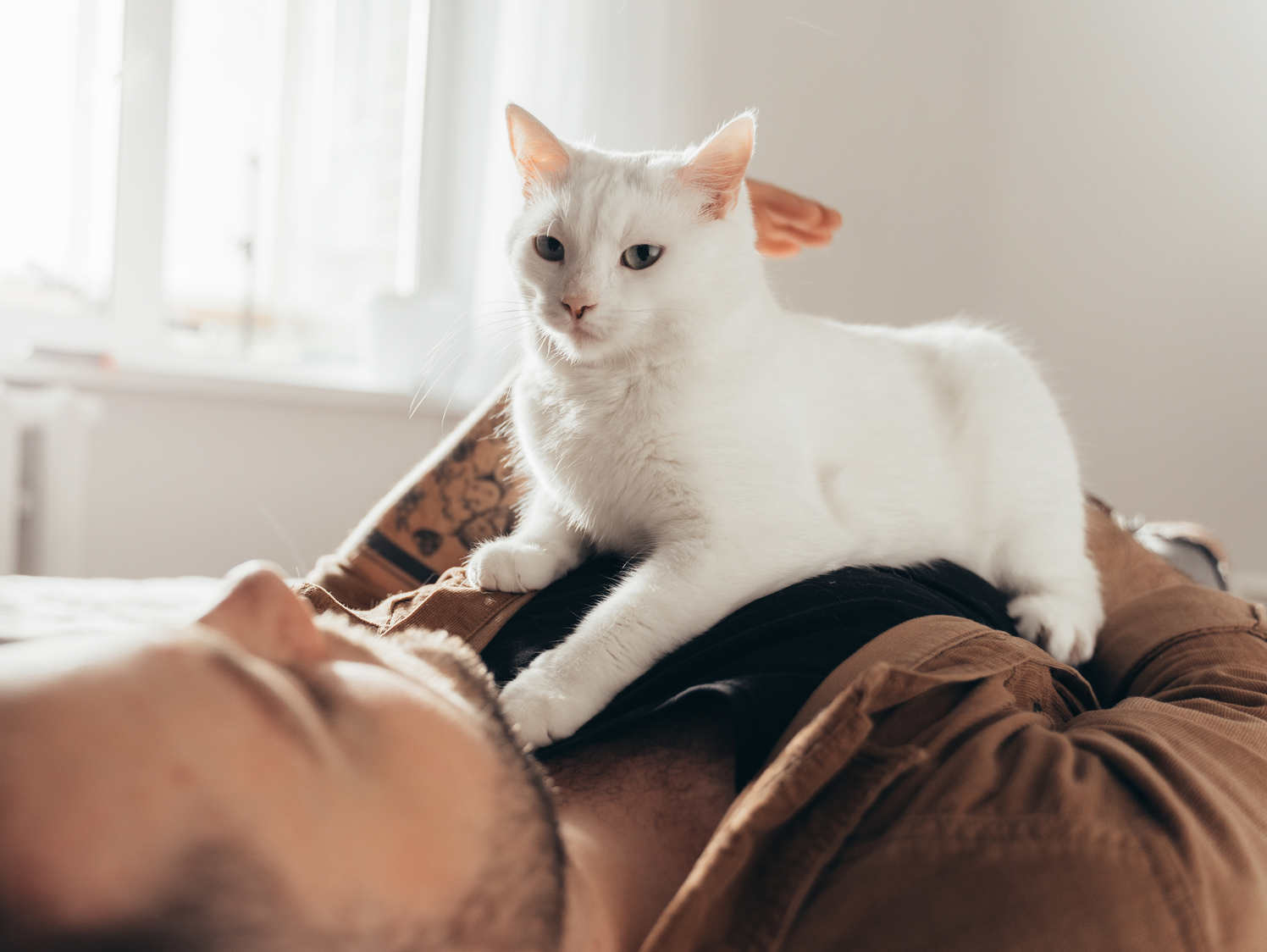
Cat imprinting is a process where a cat forms an extremely strong bond with a specific person. Once a cat has imprinted on you, they treat you as their primary attachment figure — the being they seek out for comfort, safety, and social connection.
Imprinted cats often follow their owners from room to room, sleep on them whenever possible, and show visible distress when separated for long periods. Sleeping on your chest is one of the clearest expressions of this imprint.
According to certified cat behaviorists, imprinting is influenced by early socialization, consistent care, and gentle positive interactions. If your cat has imprinted on you, sleeping on your chest is simply them being as close to their most important relationship as physically possible.
What Your Cat’s Sleeping Position on You Means
The exact position your cat chooses when sleeping on or near you provides additional signals about how they feel.
| Position | What It Communicates |
|---|---|
| Curled ball on your chest | Deeply relaxed, fully comfortable, total trust |
| Stretched flat across your chest | Maximum warmth-seeking, complete comfort |
| Head tucked under your chin | Extreme bonding, seeking your scent closely |
| Paws on your chest, body on bed | Bonded but wants personal space |
| Beside you, touching slightly | Trust with a preference for a small buffer zone |
| On your legs or feet | Bonded, but can exit easily — less secure cat |
| On your stomach | Trusting, drawn to warmth, slightly different energy |
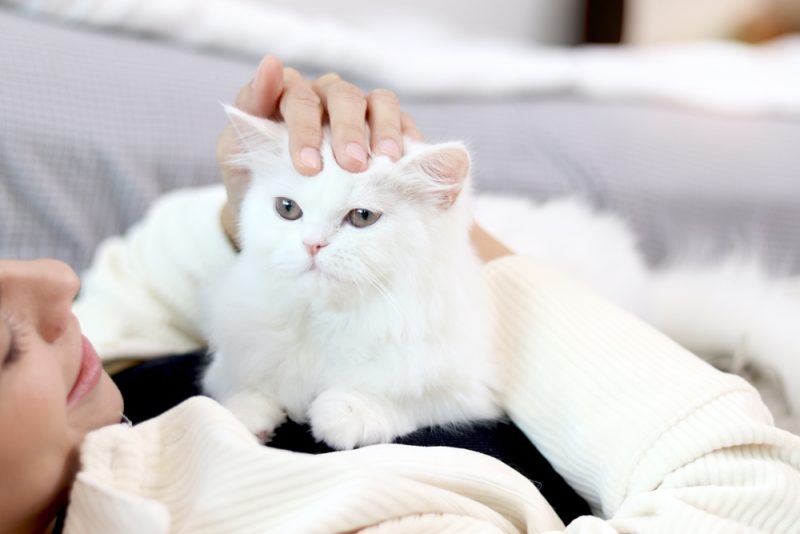
No position is better or worse than another. Every position reflects something real about your cat’s personality and current emotional state.
Health Benefits of Letting Your Cat Sleep on Your Chest
The benefits of this behavior go both ways. While your cat gains warmth, comfort, and security, you gain something meaningful too.
For Your Mental Health
Stroking a purring cat on your chest is one of the most effective natural stress relievers known. It lowers cortisol — the stress hormone — and triggers the release of oxytocin, the bonding hormone also released during human hugging.
Multiple studies have found that cat owners report lower levels of anxiety and depression compared to non-pet owners. The physical presence of a cat — especially one purring against your chest — contributes significantly to this effect.
The Healing Power of the Purr
A cat’s purr is not just a sound. It is a vibration. Cats purr within a frequency range of approximately 20 to 150 Hertz. Research has found that several specific frequencies within this range correspond to the therapeutic frequencies used in human medicine to promote bone healing, reduce swelling (edema), and stimulate tissue regeneration.
Catster and other sources report that a cat’s purr frequency range of 25–50 Hz has been associated with increased bone density in studies. While more research is needed, some scientists speculate that regular exposure to purring may have genuine physical health benefits for humans.
Lower Blood Pressure and Heart Health
Simply being near a cat — and especially feeling the warmth and vibration of a cat sleeping on your chest — has been shown to lower blood pressure. Research has found that people who own cats have a statistically lower risk of fatal cardiovascular events compared to non-cat owners.
The calming effect of a cat’s presence, combined with the tactile experience of gentle contact, mimics the physiological effects of meditation and slow deep breathing.
The Weighted Blanket Effect
The gentle weight of a cat lying on your chest creates an effect similar to a weighted blanket. The slight pressure activates the parasympathetic nervous system — the body’s rest-and-digest mode — promoting a calmer, more relaxed state.
This effect is subtle but real. Many cat owners report sleeping more deeply on nights their cat chooses to sleep on them, even though the cat occasionally moves or adjusts during the night.
Downsides of Letting Your Cat Sleep on Your Chest
While the behavior is sweet and the benefits are real, there are a few practical considerations worth knowing.
Sleep Disruption
A cat that shifts position, kneads, purrs loudly, or decides the night is a good time to play can absolutely disrupt your sleep. Broken sleep accumulates into fatigue over time. If your cat consistently wakes you up, the benefits of having them close may be outweighed by the cost to your rest.
Allergy Concerns
If you have a cat allergy, sleeping with your cat directly on your chest means breathing in dander and fur at extremely close range throughout the night. This can trigger breathing problems, itchy eyes, and worsened allergy symptoms that affect your sleep quality and daytime functioning.
Hygiene Considerations
Cats groom themselves meticulously, but they also walk through litter boxes and outdoor environments. Allowing a cat to sleep directly on you, especially near your face, is something you may want to consider carefully if you are immunocompromised or have open wounds.
For Very Young Infants
Pediatric experts advise keeping cats off the chest and face of newborns and very young infants. While the risk is low, the concern is that a cat lying across an infant’s face could obstruct breathing. This is purely a safety precaution and does not reflect any intent on the cat’s part.
When Sudden Chest-Sleeping Could Signal Something More
Most of the time, a cat sleeping on your chest is entirely normal and positive. But if the behavior starts suddenly after a period of not doing it, it can sometimes indicate something worth paying attention to.
When your cat may be telling you something:
A sudden increase in clinginess — including sleeping on your chest when they never did before — can indicate your cat is feeling anxious, stressed, or unwell. Cats under stress seek extra reassurance from their trusted human.
Watch for other signs alongside the sudden change: excessive meowing, changes in appetite, hiding, unusual aggression, or changes in litter box use. If several of these appear together, a veterinary visit is a good idea.
Your cat may also be responding to changes in your own health or emotional state. If you have been unwell, emotionally distressed, or even running a fever, your cat’s thermal and emotional sensitivity may draw them to you more than usual.
How to Redirect Your Cat If You Need Space
There is absolutely nothing wrong with wanting uninterrupted sleep or simply not wanting a cat on your chest. You can love your cat deeply and still have boundaries. Here is how to redirect the behavior kindly.
Create an Irresistible Alternative Spot
The key to redirecting a cat is offering something equally appealing. Place a soft, warm cat bed near your sleeping area — ideally elevated, since cats feel safer at height. Add a worn T-shirt or pillowcase with your scent to make it feel familiar and safe.
Many cat owners find heated cat beds (or beds with self-warming material) to be the most effective alternative. They replicate the warmth your cat is seeking without needing you as the heat source.
Use Positive Reinforcement
Never punish a cat for sleeping on you — it damages trust and teaches nothing useful. Instead, reward them with treats and praise when they choose to use their own bed. The goal is to make the alternative spot feel as positive and safe as you do.
Consistency matters. Every time they go to their bed willingly, reinforce it. Over several weeks, most cats will begin to prefer their own warm, scented bed.
Keep Your Bedroom Door Closed
If all else fails and you need solid, uninterrupted sleep, closing your bedroom door is the most reliable option. Your cat will likely protest at first — possibly loudly. But if you remain consistent and do not let them in when they scratch or meow, they will eventually adapt.
Make sure they have access to food, water, a litter box, and a comfortable sleeping spot outside your room so the transition is as comfortable as possible for them.
Breeds That Are More Likely to Sleep on Your Chest
While any cat can develop this behavior, some breeds are significantly more inclined toward physical closeness and chest-sleeping than others.
| Breed | Personality Traits | Tendency to Chest-Sleep |
|---|---|---|
| Ragdoll | Extremely affectionate, floppy, loves being held | Very high |
| Maine Coon | Dog-like loyalty, follows owners, social | High |
| Burmese | Devoted, people-oriented, craves attention | Very high |
| Siamese | Vocal, social, deeply bonded to one person | High |
| Scottish Fold | Calm, gentle, loves being near people | High |
| Sphynx | Hairless, needs warmth, extremely cuddly | Very high |
| Persian | Quiet, calm, affectionate on their own terms | Moderate |
| Bengal | Energetic but deeply bonded, curious | Moderate |
Hairless breeds like the Sphynx are particularly drawn to sleeping on owners because they lack the insulating fur coat that other breeds rely on to stay warm. Your body heat is even more essential to them.
Signs Your Cat Has Truly Bonded with You
Chest-sleeping is one of many signs of a deep cat-human bond. If you are seeing several of these behaviors together, you have a cat that is strongly attached to you.
Key bonding signals to look for:
Slow blinking at you — often called a “cat kiss,” this is a sign of relaxed trust and affection. Blinking back at your cat slowly is a way of returning the signal.
Head bunting — when your cat presses their forehead against your face or hand. This deposits scent glands on you and is a strong affection marker.
Following you from room to room — cats that track their owner’s movements are showing attachment behavior, not just curiosity.
Chirping or trilling at you — this soft vocalization is used by mother cats to communicate with their kittens and is reserved for people cats feel deeply comfortable with.
Showing their belly — the belly is the most vulnerable part of a cat’s body. A cat that rolls over and shows their belly to you is expressing maximum trust, though not always an invitation to touch it.
Grooming you — when a cat licks your hair or face, they are treating you as a member of their social group. This is one of the most intimate behaviors cats share with beings they consider family.
The Science of the Human-Cat Bond
The relationship between cats and humans has evolved over roughly 10,000 years, beginning with early agricultural societies where cats were drawn to human settlements by rodents and eventually welcomed in for pest control.
Over millennia, cats that were comfortable around humans reproduced more successfully, gradually selecting for traits that made domestic cats more socially attuned to people than their wild ancestors.
Modern research has confirmed what cat owners have always suspected: cats recognize their owner’s voice, can distinguish their owner’s face, notice when their owner is absent, and experience measurable stress when separated from their primary caregiver.
The behavior of sleeping on your chest is a product of this deep evolutionary history. It is not random. It is the result of thousands of years of gradual co-adaptation between two very different species who found mutual benefit in each other’s company.
Quick Reference: Why Your Cat Sleeps on Your Chest
| Reason | Root Cause | What It Means for You |
|---|---|---|
| Warmth | Body temperature regulation | You are a preferred heat source |
| Heartbeat comfort | Kittenhood imprint on rhythmic sounds | You remind them of their mother |
| Trust | Feeling completely safe | Deep bond and long-term attachment |
| Affection | Emotional bonding | Your cat genuinely loves you |
| Scent marking | Territorial behavior | You are part of their safe world |
| Security | Instinctive vulnerability management | They feel safest with you |
| Kneading | Nursing behavior from kittenhood | Highest expression of contentment |
| Stress response | Anxiety or emotional sensitivity | They may need extra reassurance |
Frequently Asked Questions (FAQs)
Why does my cat sleep on my chest and not anywhere else?
Your chest combines warmth, your heartbeat, your scent, and physical closeness all in one spot. No bed, blanket, or cushion in your home offers all four of those things simultaneously, which is why your chest is uniquely appealing.
Does my cat sleeping on my chest mean they love me?
Yes, it absolutely does. Cats are cautious and selective animals. Choosing to sleep on your chest — their most vulnerable state — in your most direct contact zone is one of the clearest love signals a cat can give.
Is it safe to let my cat sleep on my chest?
For most healthy adults it is completely safe and even beneficial. The exception is newborns and very young infants, where pediatric safety guidelines recommend keeping cats away from the face and chest during sleep.
Why does my cat purr so loudly when sleeping on my chest?
Loud purring on your chest is a sign your cat is extremely comfortable and content. Purring during sleep can also be a self-soothing behavior that helps regulate their emotional state and deepens their relaxation.
My cat suddenly started sleeping on my chest — should I be worried?
A sudden change in behavior can sometimes signal stress, anxiety, or illness in your cat. If the change is accompanied by other signs like loss of appetite, excessive meowing, hiding, or litter box changes, a vet check is a good idea.
Can sleeping with my cat on my chest affect my sleep quality?
It can. If your cat moves frequently, kneads, purrs loudly, or wakes you to play, your sleep can be disrupted. If you are waking up tired regularly, consider gently redirecting your cat to their own warm bed nearby.
Why does my cat knead while sleeping on my chest?
Kneading is a behavior that originates in kittenhood when kittens press their mother’s belly to stimulate milk. When your adult cat kneads your chest, they are expressing the same deep contentment and comfort they felt as a nursing kitten. It is the highest compliment.
Does my cat sleeping on my chest have any health benefits for me?
Yes. Research supports that a cat’s purring frequency (20–150 Hz) can reduce stress, lower blood pressure, and may promote tissue healing. The warmth and gentle weight of a cat on your chest also activates the parasympathetic nervous system, promoting calm.
Why does my cat only sleep on my chest and not on my partner?
Cats bond to individuals, not households. Your cat has identified you as their primary attachment figure based on who feeds them most, spends the most time with them, or whose energy and scent they find most comforting. It is entirely personal.
How can I get my cat to sleep somewhere else without hurting our bond?
Offer a warm, elevated alternative bed with something that carries your scent — like a worn T-shirt. Reward them with treats and praise when they use it. Never punish chest-sleeping, as it damages trust. Consistency over several weeks makes the alternative feel just as safe.
Conclusion
Why does my cat sleep on my chest comes down to one beautiful, multilayered answer: because you are their everything.
You are warmth, safety, familiarity, comfort, and home all rolled into one person.
When your cat chooses your chest over every other surface in your home, they are communicating trust and affection in the most direct, physical way their nature allows.
The heartbeat you take for granted is the lullaby that sends them to sleep.
The body heat you barely notice is the warmth they travel across the bed to find.
The scent you carry without thinking is the smell that tells them the world is okay.
Whether your cat is a devoted chest-sleeper every single night or only climbs on you on particularly cozy evenings, every moment they choose you is a genuine expression of the bond you have built together.
That is something genuinely worth waking up for.
