

your tire pressure light is blinking and you need answers fast. A blinking TPMS (Tire Pressure Monitoring System) light is your car’s way of telling you something is wrong beyond just low air pressure.
Understanding the difference between a solid light and a blinking one could save your tires — and your life.
What Is the TPMS and Why Does It Matter
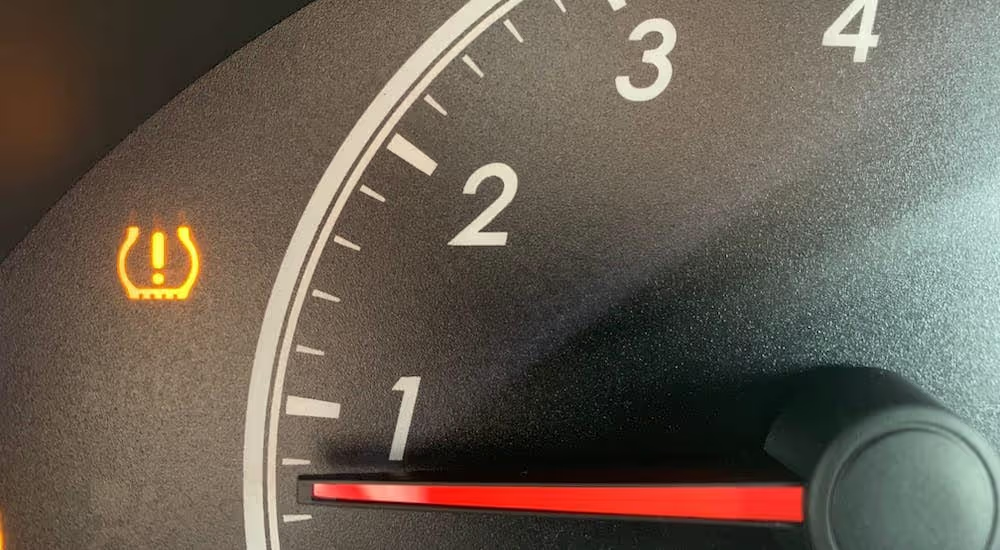
TPMS stands for Tire Pressure Monitoring System. It is an electronic safety system built into your vehicle to track real-time tire pressure in each wheel.
Since 2008, every passenger car sold in the United States is required by federal law to have a TPMS installed. The system triggers a dashboard warning when one or more tires drop 25% below the manufacturer-recommended PSI.
Ignoring the TPMS light can lead to poor fuel economy, uneven tire wear, dangerous blowouts, and reduced vehicle handling. A tire underinflated by just 6 PSI can overheat and blow out at highway speeds.
Blinking vs Solid: What Is the Difference
This is the most important thing to understand first. The two light behaviors mean two completely different things.
| Light Behavior | What It Means | Urgency |
|---|---|---|
| Solid ON | One or more tires have low pressure | Moderate — check pressure soon |
| Blinks 60–90 sec then stays solid | TPMS system fault or sensor error | High — system is not monitoring properly |
| Blinks randomly while driving | Borderline pressure or weak sensor battery | Medium — top off tires and monitor |
| Blinks then turns off | Pressure was low but self-corrected (temperature change) | Low — still worth checking |
A solid light is a pressure problem. A blinking light is almost always a system problem.
Why Is My Tire Pressure Light Blinking — The 7 Main Cause
1. TPMS Sensor Battery Is Dead or Dying
Each TPMS sensor contains a small internal battery. These batteries are sealed inside the sensor and cannot be replaced separately.
Most TPMS sensor batteries last between 5 to 10 years. Once the battery weakens or dies, the sensor stops transmitting pressure data to the control module and the TPMS light begins to blink.
This is the single most common cause of a blinking tire pressure light in vehicles over 5 years old.
2. Faulty or Damaged TPMS Sensor
Road debris, potholes, and corrosion can physically damage a TPMS sensor. A cracked or corroded sensor sends incomplete or false signals to your dashboard.
This can also happen after a tire service. If a technician replaces a tire without properly handling the sensor valve stem, the sensor can crack or get knocked loose inside the wheel.
3. Low Tire Pressure Triggered by Cold Weather
Air contracts in cold temperatures. For every 10-degree Fahrenheit drop in temperature, your tires lose approximately 1 PSI of pressure.
If your tires are already near the minimum recommended PSI, a cold night can push them below the threshold and trigger the TPMS light. In winter, a blinking light in the morning that disappears after driving for a few minutes is often cold weather related.
Always check tire pressure when tires are cold, before you have driven more than a mile, for the most accurate reading.
4. Slow Leak or Puncture
A nail, screw, or damaged valve stem can cause a slow and gradual air leak. The pressure drops slowly enough that you may not notice a visibly flat tire, but the TPMS will catch it.
This type of leak often causes the light to flicker on and off as pressure fluctuates near the threshold while driving.
5. Incorrect Sensor After Tire Service
If you recently had your tires replaced or rotated, there is a chance the wrong TPMS sensor was installed. Sensors must match your vehicle’s frequency and protocol.
Installing an incompatible sensor will cause constant communication errors and trigger the blinking light immediately after service.
6. The TPMS Was Never Reset After Tire Rotation
After rotating your tires, the system may not automatically know which sensor is in which position. Some vehicles require a manual TPMS reset or relearn procedure after any tire or wheel change.
Skipping the relearn step causes the system to show a fault and the light will blink until recalibration is complete.
7. TPMS Module or Wiring Fault
Less common but possible. The TPMS module is the brain of the system that receives signals from all four sensors. If this module has a software glitch, wiring issue, or hardware failure, it can cause the light to blink even when all sensors and tires are fine.
This type of fault usually requires a professional OBD2 scanner to diagnose.
How to Read Your TPMS Light Pattern
Blinks for 60–90 Seconds Then Stays Solid
This is the most important pattern. It specifically means the TPMS system has detected a fault within itself, not just low pressure. One or more sensors may be dead, missing, or miscommunicating.
Your car cannot properly monitor tire pressure until this is repaired. Do not ignore this pattern.
Light Comes On and Stays Solid
This means actual low tire pressure in one or more tires. Check all four tires including the spare with a gauge and inflate to the recommended PSI listed on your driver’s door jamb sticker.
Light Flickers On and Off While Driving
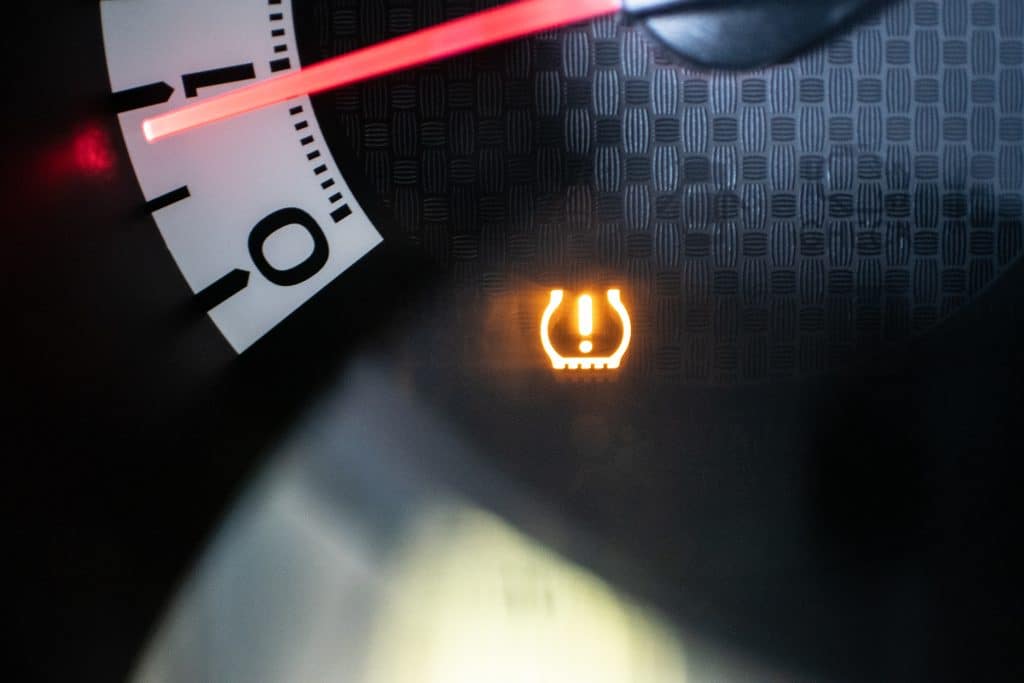
This usually points to borderline tire pressure that dips below threshold during cold start and recovers as the tires warm up. It can also indicate a weak sensor battery that intermittently loses signal.
Recommended PSI Guide by Vehicle Type
| Vehicle Type | Typical PSI Range | Check Frequency |
|---|---|---|
| Passenger Car | 32 – 35 PSI | Monthly |
| SUV / Crossover | 33 – 36 PSI | Monthly |
| Truck / Van | 35 – 44 PSI | Every 2 weeks |
| Spare Tire (full size) | 60 PSI | Every 3 months |
| Spare Tire (compact) | 60 PSI | Every 3 months |
Always check the sticker inside your driver’s door jamb for your vehicle’s exact recommended PSI. Do not use the maximum PSI printed on the tire sidewall — that is the maximum the tire can hold, not the safe operating pressure.
How to Fix a Blinking Tire Pressure Light — Step by Step
Step 1: Pull Over and Check All Four Tires
Use a quality tire pressure gauge to check all four tires. Do this when tires are cold for accuracy. Look for any visible damage, objects in the tread, or sidewall bulging.
Step 2: Inflate Tires to the Correct PSI
Inflate any underinflated tire to the PSI shown on your door jamb sticker. Do not guess or use the number on the tire sidewall.
Step 3: Drive at 50 MPH for 10 Minutes
After inflating tires, drive at or above 50 mph for 10 minutes. This allows the TPMS sensors to recalibrate and transmit updated pressure readings to the module. The light may turn off on its own after this.
Step 4: Use the TPMS Reset Button
If the light stays on after inflating and driving, locate the TPMS reset button. It is usually found under the steering wheel or inside the glove box. Turn the ignition to the ON position without starting the engine. Hold the TPMS reset button until the light blinks three times, then release. Start the car and wait 20 minutes for the system to refresh.
Step 5: Try the Battery Disconnect Method
Turn the car off. Disconnect the positive battery cable. Press the horn for 3 seconds to drain residual power. Reconnect the battery. Start the car and check if the light is off.
Step 6: Inflate to 3 PSI Over, Then Deflate and Re-inflate
Inflate all tires including the spare to 3 PSI above the recommended level. Then fully deflate all tires. Then re-inflate to the correct recommended PSI. This sometimes forces the TPMS system to relearn pressure levels from scratch.
Step 7: Schedule a Professional TPMS Diagnostic
If none of the above steps work, book a diagnostic appointment. A technician will use an OBD2 scanner to read TPMS fault codes and identify exactly which sensor is failing or if the module needs replacement.
TPMS Sensor Replacement Cost and What to Expect
| Service | Estimated Cost |
|---|---|
| TPMS diagnostic scan | $50 – $100 |
| Single TPMS sensor replacement | $50 – $100 per sensor |
| Full set (4 sensors) replacement | $200 – $400 |
| TPMS module replacement | $150 – $400 |
| TPMS relearn / reset service | $25 – $75 |
Costs vary by vehicle make and model. Luxury vehicles and trucks can run higher. Aftermarket sensors are often available at lower prices but must be programmed to your specific vehicle.
Can You Drive With the Tire Pressure Light Blinking
Short answer: not safely, for long.
If the light is blinking, your TPMS is not reliably monitoring your tires. That means you could have a slow leak or sudden pressure drop and receive no warning. You would be driving blind to a potential blowout.
If your tires look and feel normal, you can drive a short distance to a gas station or tire shop. Do not take the highway or drive long distances without fixing the issue first.
Always pull over, check your tires visually, and add air if needed before continuing.
Cold Weather and Tire Pressure Light Blinking
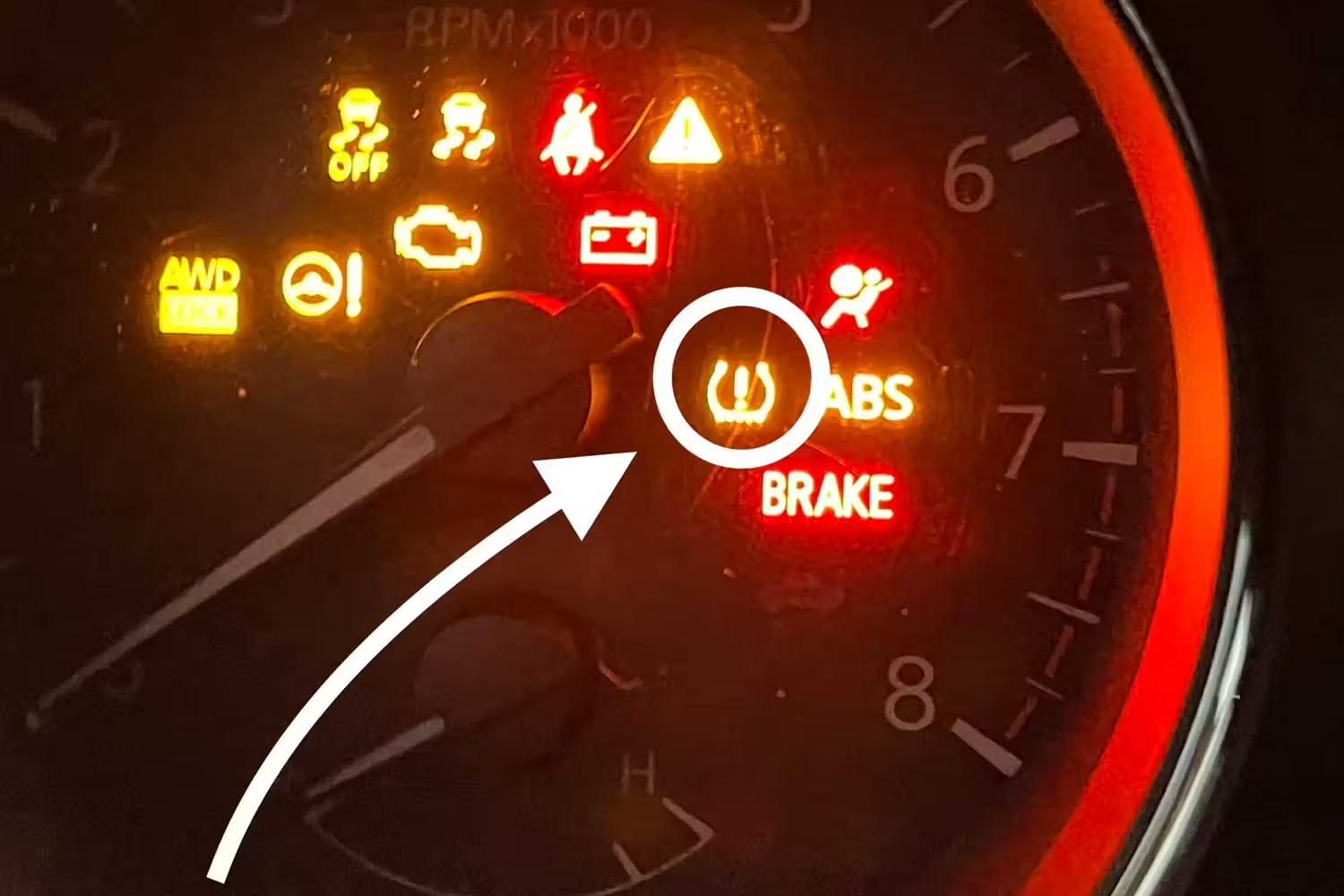
Cold weather is one of the top reasons drivers see a blinking or illuminated TPMS light in fall and winter.
For every 10°F drop in temperature, tires lose approximately 1 PSI. If you live in an area with significant seasonal temperature swings, your tires can lose 4 to 8 PSI overnight as temperatures drop in October and November.
This does not mean your tires have a leak. It is a natural physical property of air. Simply inflate your tires to the correct cold-weather PSI each fall season.
If your car is garaged overnight and you drive into cold air, the light may come on within the first few minutes of driving. It may disappear on its own as tires warm up and pressure rises. Still check your pressure manually to be sure.
Direct vs Indirect TPMS — How Each One Blinks
Direct TPMS
Direct TPMS uses a physical pressure sensor mounted inside each wheel. It sends real-time PSI data to the vehicle’s computer. A blinking light in a direct TPMS vehicle almost always means a sensor hardware issue — dead battery, damaged sensor, or lost signal.
All vehicles made after 2008 in the United States use direct TPMS.
Indirect TPMS
Indirect TPMS does not measure actual air pressure. It uses wheel speed sensors and ABS data to compare how fast each tire spins. An underinflated tire has a smaller circumference and spins faster. A mismatch triggers the warning.
Indirect TPMS cannot tell you exactly which tire is low and requires a different reset process — usually a calibration drive sequence.
When to Replace Your TPMS Sensor
You should plan to replace TPMS sensors when:
Your vehicle is 7 to 10 years old and the light begins blinking without obvious tire issues. You have recently had a tire replaced and the blinking started immediately afterward. A diagnostic scan shows a dead or non-communicating sensor. You notice the light only blinks in certain weather conditions, pointing to a weak battery that fails in the cold.
Most shops recommend replacing all four sensors at once if one fails after 7 or more years, since the others are likely close to failure as well.
TPMS Warning Light vs Other Dashboard Warnings
| Warning Light | What It Looks Like | Meaning |
|---|---|---|
| TPMS light (solid) | Flat tire with exclamation mark | Low tire pressure |
| TPMS light (blinking) | Same icon, flashing | Sensor or system fault |
| Battery warning | Rectangle with plus/minus | Electrical system issue |
| ABS warning | ABS in a circle | Brake system issue |
| Engine light | Engine icon | Various engine/emissions faults |
The TPMS icon looks like a cross-section of a tire with an exclamation point inside. If you are unsure which light is on, check your owner’s manual for the symbol guide.
Maintenance Tips to Prevent Tire Pressure Light Blinking
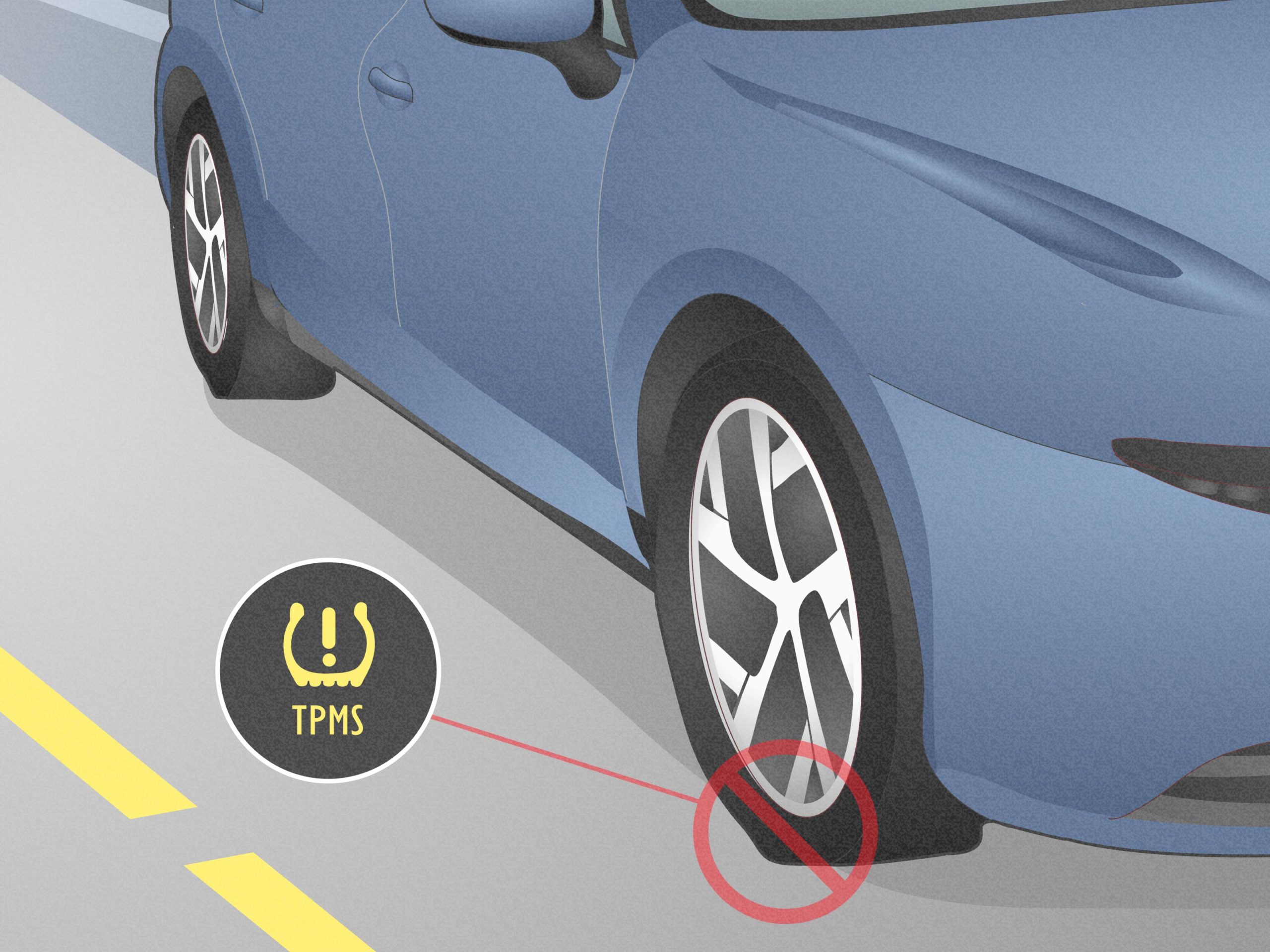
Check tire pressure manually once a month. Do not rely solely on the TPMS system.
Inspect valve stems every time you rotate tires. Cracked or corroded valve stems are a leading cause of slow leaks that trigger TPMS warnings.
Always request a TPMS relearn service when getting tires rotated or replaced. This simple step prevents most post-service blinking issues.
Buy a quality tire pressure gauge and keep it in your glove box. Digital gauges are accurate and inexpensive. A good gauge reading takes 30 seconds and can prevent expensive repairs.
Inflate tires every fall when temperatures drop. This one habit prevents the majority of cold-weather TPMS alerts.
Frequently Asked Questions (FAQs)
Why is my tire pressure light blinking if my tires look fine?
The blinking light usually signals a TPMS sensor fault, not a pressure problem. Your sensor battery may be dead or the system lost communication with one sensor.
What does it mean when TPMS light blinks for 60 to 90 seconds then stays on?
This specific pattern means the TPMS system detected a fault within itself. One or more sensors are not communicating with the module and the system needs professional inspection.
Can cold weather make my tire pressure light blink?
Yes. Cold temperatures cause air to contract and tire pressure to drop. A 10°F drop reduces pressure by about 1 PSI, which can trigger the warning light on borderline tires.
How do I reset a blinking tire pressure light?
Inflate all tires to the correct PSI, then use the TPMS reset button under the steering wheel. Hold it until the light blinks three times, then drive for 20 minutes to allow sensors to recalibrate.
Is it safe to drive with the tire pressure light blinking?
No, not for long. A blinking TPMS light means the system is not reliably monitoring pressure. You could develop a dangerous pressure drop with no warning. Get it checked as soon as possible.
How much does it cost to fix a blinking TPMS light?
A basic TPMS reset costs $25–$75. Replacing a single sensor runs $50–$100. A full diagnostic to find the faulty sensor typically costs $50–$100.
How long do TPMS sensor batteries last?
Most TPMS sensor batteries last 5 to 10 years. The batteries are sealed inside the sensor and cannot be replaced independently — the entire sensor must be replaced.
Why does my tire pressure light blink after getting new tires?
New tire installation requires a TPMS relearn procedure. If the shop skipped this step, the system cannot identify sensor positions and will blink until properly reset or recalibrated.
Can I drive to the shop with a blinking TPMS light?
Yes, for a short safe distance. Visually inspect your tires first and add air if needed. Avoid highway driving until the issue is diagnosed and resolved.
Does a blinking TPMS light mean I need new tires?
Not necessarily. Most blinking lights are caused by sensor faults, dead batteries, or a missed reset — not the tires themselves. A proper diagnostic will pinpoint the actual cause.
Conclusion
A blinking tire pressure light is never something to ignore. While a solid TPMS light points to low pressure in one or more tires, a blinking light signals a deeper system issue — most often a dead sensor battery, a damaged sensor, or a missed reset after tire service. The good news is that most causes are straightforward and affordable to fix. Start by checking your tire pressure manually, use the TPMS reset button, and drive at highway speed for 10 minutes to allow the system to recalibrate. If the light keeps blinking, book a professional TPMS diagnostic — the fault codes will point directly to the problem. Stay proactive, check your tire pressure monthly, and replace aging sensors at the 7–10 year mark. Your TPMS exists to protect you. When it blinks, listen.
