

Why is my mucus yellow is one of the most common health questions people search when they notice a change in their nasal discharge.
Yellow mucus is your immune system’s visible signal that it is actively fighting something, whether that is a common cold, sinus infection, allergies, or a bacterial illness.
Understanding what yellow mucus means, what causes it, how long it lasts, and when to see a doctor can help you make smarter decisions about your health.
What Is Mucus and Why Does It Change Color?
Mucus is a thin, clear, gel-like fluid produced by the mucous membranes lining your nose, throat, sinuses, lungs, and digestive tract. It plays a critical role in your immune system by trapping bacteria, viruses, dust, and other harmful particles before they can cause deeper infection.
Your nose alone produces roughly one quart of mucus every single day. Under normal, healthy conditions you do not notice it because it mixes with saliva and flows harmlessly down the back of your throat.
When something irritates or infects your nasal passages or airways, the composition of that mucus changes. It thickens, increases in volume, and often shifts in color from clear to white, yellow, or green depending on the stage and type of illness.
Why Is My Mucus Yellow? The Science Behind It
Yellow mucus gets its color from white blood cells, specifically a type called neutrophils, that rush to the site of infection or irritation to fight off invaders. As these immune cells do their job and begin to die, they release enzymes that tint the mucus yellow.
In a study of rhinovirus, the virus responsible for the common cold, approximately 50 percent of adults developed colored nasal discharge including yellow mucus due to this influx of immune cells. This means yellow mucus alone does not automatically indicate a bacterial infection.
The key takeaway is simple: yellow mucus means your immune system is working. It is a sign your body is responding to something, not necessarily that something is seriously wrong.
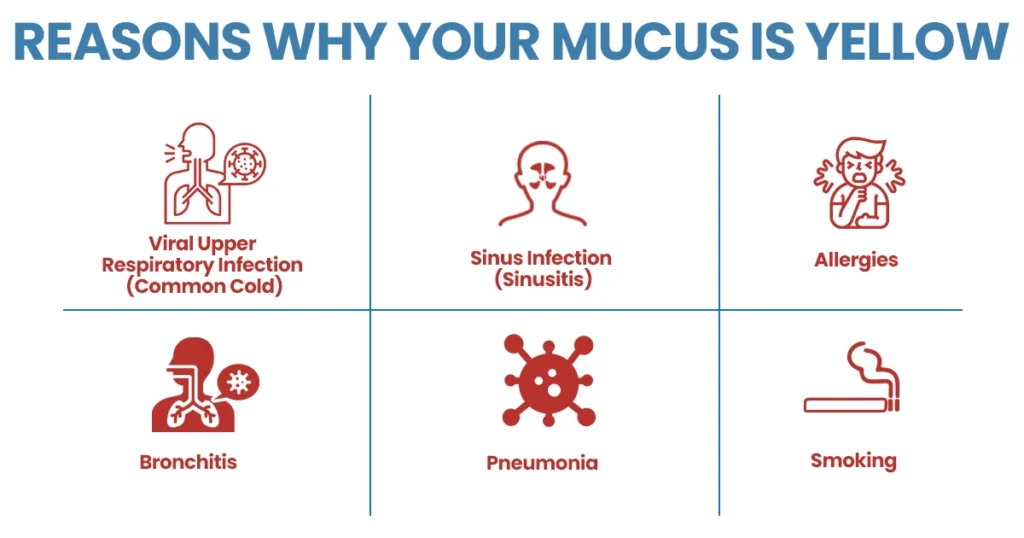
Top Causes of Yellow Mucus
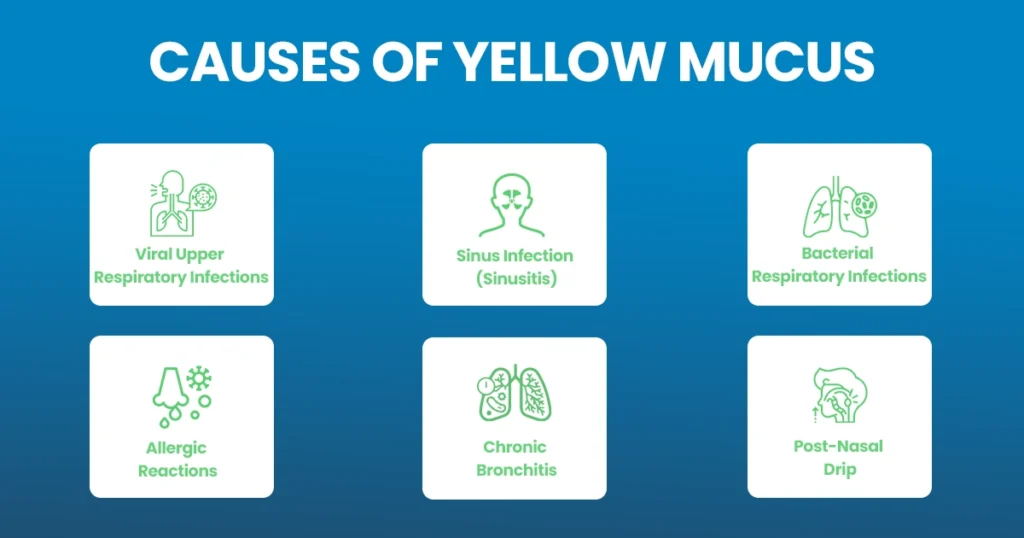
Multiple conditions can trigger yellow mucus. Some are mild and self-limiting. Others may require medical treatment.
Common Cold (Viral Upper Respiratory Infection)
The common cold is the most frequent cause of yellow nasal mucus. When a virus enters your respiratory system, your immune system triggers increased mucus production to trap the pathogen.
Mucus typically starts out clear and watery in the first one to two days, then thickens and turns white or yellow as the immune response peaks. Most viral colds resolve within 7 to 10 days without any need for antibiotics.
Acute Sinusitis
Sinusitis happens when the sinus cavities become inflamed and blocked, usually following a cold or allergy flare-up. Trapped mucus provides an environment where bacteria or viruses can multiply rapidly.
Yellow or green thick mucus is a hallmark symptom of sinusitis, often accompanied by facial pressure or pain around the eyes, cheeks, and forehead. Acute sinusitis lasting less than four weeks is typically viral. Symptoms persisting beyond 10 days without improvement may point to a bacterial cause.
Bacterial Sinus Infection
A bacterial sinus infection is suspected when symptoms worsen after an initial period of feeling better, or when they persist for more than 10 days without any sign of improvement. The mucus in bacterial infections tends to be darker yellow or yellow-green and thicker than what you see with a simple cold.
A key PubMed study found that over 80 percent of patients with darker yellow or greenish sputum had bacterial presence, compared with only 6 percent in lighter-colored mucus. However, doctors still do not diagnose bacterial infections by mucus color alone.
Allergic Rhinitis
Allergies most commonly produce clear, watery mucus. However, prolonged exposure to allergens like pollen, dust, or pet dander can cause enough inflammation that secondary infection sets in, turning the mucus yellow.
If allergies block the sinuses, bacteria can begin to grow in the trapped fluid, eventually producing yellow or green discharge. Sneezing, itchy eyes, and nasal congestion without fever are common accompanying symptoms.
Chronic Sinusitis
If you continue experiencing yellow snot and sinus symptoms for 12 or more weeks, this meets the clinical definition of chronic sinusitis. At this stage, the inflammation has not resolved and has likely worsened.
Chronic sinusitis often involves persistent congestion, fatigue, post-nasal drip, and recurring yellow or green mucus. It typically requires a more thorough medical evaluation and may not respond to over-the-counter treatments alone.
Post-Nasal Drip
Post-nasal drip occurs when mucus from the nasal passages flows down the back of the throat. When that mucus is already yellow due to infection or inflammation, it presents as yellow mucus from the throat.
It can cause a persistent cough, sore throat, bad breath, and the constant sensation of something dripping. Treating the root cause, whether infection, allergies, or congestion, is the most effective way to stop post-nasal drip.
Acute Bronchitis
Acute bronchitis inflames the bronchial tubes in the lungs and is a common cause of yellow phlegm when coughing. The immune cells fighting the infection in the airways tint the expectorated mucus yellow.
Most cases of acute bronchitis are viral and resolve with supportive care. A persistent productive cough lasting more than three weeks warrants a medical evaluation.
Pneumonia
Pneumonia is a more serious infection of the lungs and can produce thick yellow or yellow-green phlegm as the body fights the infection. Symptoms such as high fever, chills, shortness of breath, and chest pain alongside yellow mucus should be treated as a medical emergency.
Smoking and Environmental Irritants
Chronic smokers frequently produce dark yellow or brownish mucus because smoking irritates the respiratory tract, damages the cilia that clear mucus, and increases inflammation. Continued exposure to pollutants, dust, or chemical fumes can also darken mucus.
Mucus Color Chart: What Each Color Means
Understanding the full spectrum of mucus colors helps you interpret what your body is communicating.
| Mucus Color | What It Typically Means | Action Needed |
|---|---|---|
| Clear | Normal, healthy, or allergies | Usually none |
| White | Congestion, early cold | Monitor symptoms |
| Yellow | Immune response, viral or early bacterial infection | Rest, hydrate, monitor |
| Dark Yellow / Yellow-Green | Active infection, possible bacterial | See doctor if over 10 days |
| Green | Stronger immune response, possible sinusitis | Medical evaluation recommended |
| Brown | Smoking, pollution, dried blood | Doctor if persistent |
| Red / Pink | Blood from burst vessels or injury | Doctor if heavy or recurring |
| Black | Serious fungal infection, heavy pollution | Immediate medical attention |
Color alone is not a reliable diagnostic tool. Doctors consistently emphasize that the duration of symptoms, their severity, and whether they are worsening matters far more than color alone.
Yellow Mucus from Nose vs Yellow Mucus from Throat
Yellow mucus from the nose and yellow mucus from the throat can indicate different things and often occur together.
Yellow nasal mucus is the most common presentation and is typically associated with a cold, sinus infection, or allergies. It reflects immune activity in the nasal passages and sinuses.
Yellow mucus from the throat is often the result of post-nasal drip, where infected or inflamed nasal mucus drains backward. It can also originate directly from the throat or airways during bronchitis or a lower respiratory infection.
If yellow mucus is coming from both locations simultaneously and is accompanied by facial pressure, fever, or cough, sinusitis or a respiratory infection is a likely cause.
How Long Does Yellow Mucus Last?
The duration of yellow mucus depends almost entirely on what is causing it.
| Cause | Typical Duration | When to See a Doctor |
|---|---|---|
| Common cold (viral) | 7 to 10 days | After 10 days without improvement |
| Viral sinusitis | Up to 2 to 3 weeks | If no improvement after 10 days |
| Bacterial sinusitis | Can persist beyond 10 days | After 10 days or if worsening |
| Allergies with secondary infection | Variable | If symptoms do not respond to allergy treatment |
| Chronic sinusitis | 12 or more weeks | Needs specialist evaluation |
| Acute bronchitis | 1 to 3 weeks | If cough persists beyond 3 weeks |
Viral infections are the most common cause. Most people see improvement within a week to ten days. Bacterial infections follow a different pattern: they may seem to improve and then suddenly worsen, or they simply do not get better after the typical viral timeline.
Yellow Mucus and the Cold Progression: Day by Day
Understanding how a cold typically progresses helps put yellow mucus into context within the overall illness timeline.
Days 1 to 2: Symptoms begin. Mucus is usually clear and watery. You may feel a sore throat and mild congestion.
Days 3 to 5: Symptoms peak. Mucus thickens and turns white to yellow as white blood cells flood the infection site. Congestion, sneezing, and fatigue are most intense during this phase.
Days 6 to 10: Recovery phase. Mucus may remain yellow or begin to clear up. Symptoms gradually improve. Continued yellow mucus in this phase is still consistent with a normal viral cold.
Beyond day 10: If symptoms have not improved or have worsened, particularly if you develop facial pain, high fever, or darker discharge, consider a bacterial sinus infection or complication that may need medical treatment.
Is Yellow Mucus a Sign You Are Healing?
This is one of the most common questions people ask after seeing yellow nasal discharge. The answer is nuanced.
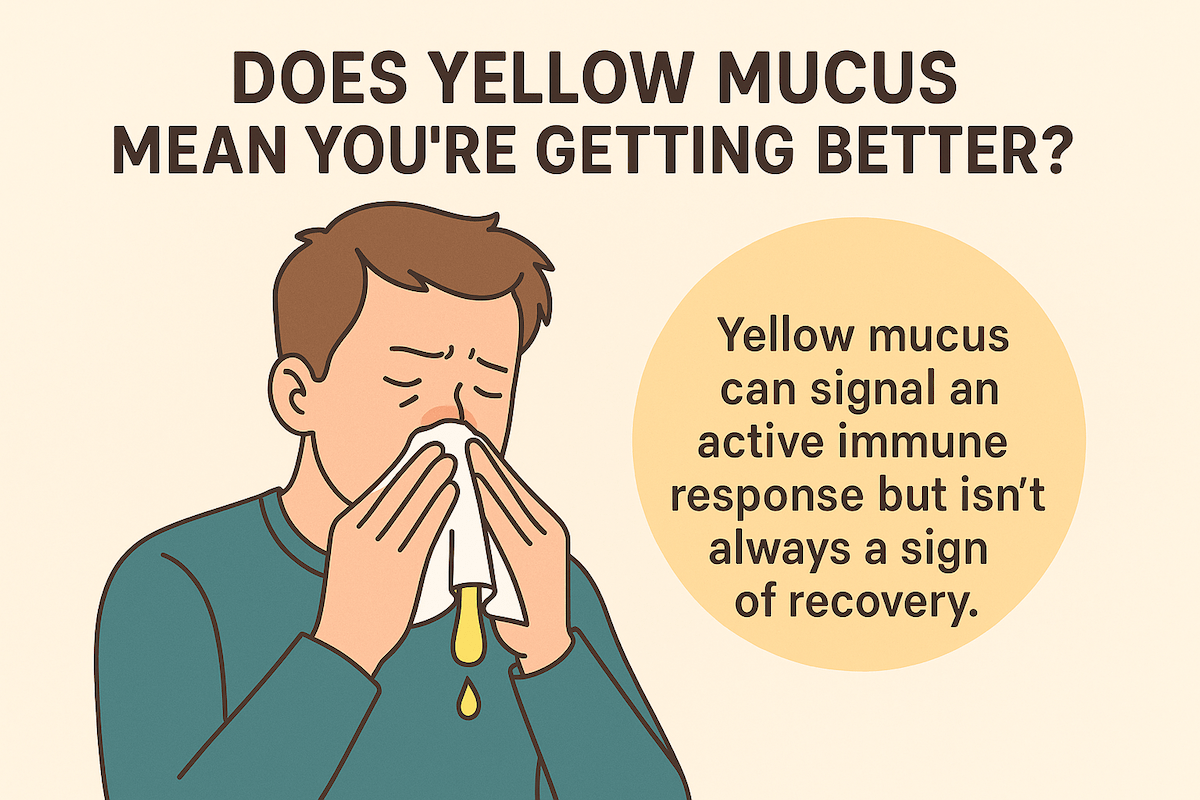
Yellow mucus can be a sign that your immune system is actively working through an infection, which is part of the healing process. The presence of immune cells gives the mucus its yellow tint, and as your body clears the infection, the mucus often lightens and eventually returns to clear.
However, yellow mucus that becomes darker over time, thickens significantly, or persists beyond 10 days is not necessarily a healing sign. In those cases it may indicate a worsening or secondary bacterial infection rather than recovery.
Yellow Mucus vs Green Mucus: What Is the Difference?
A common point of confusion is whether yellow or green mucus is more serious.
Yellow mucus appears earlier in the course of an infection when your immune system is actively responding. Green mucus tends to appear later and indicates that even more neutrophils and immune cells have accumulated in the discharge.
Green mucus does not automatically mean a bacterial infection, though it does signal a more intense immune response. Both yellow and green mucus can occur in purely viral infections.
What matters more than color is how long the symptoms have lasted, whether they are worsening, and what other symptoms are present alongside the discolored mucus.
Do You Need Antibiotics for Yellow Mucus?
A major misconception is that yellow mucus automatically requires antibiotics. This is not medically accurate.
Antibiotics treat bacterial infections only. They have zero effect on viral infections, which cause the vast majority of yellow mucus cases. Taking antibiotics unnecessarily can cause side effects, disrupt gut bacteria, and contribute to antibiotic resistance.
Doctors use a combination of symptom duration, clinical examination, and sometimes imaging or lab tests to determine whether an antibiotic is necessary. Yellow mucus alone, in the absence of other concerning signs, is not an indication for antibiotic treatment.
Yellow Mucus in Children
Children develop more colds per year than adults, making yellow mucus an extremely common occurrence in kids. Parents often worry unnecessarily when they see yellow or green nasal discharge in their children.
In most cases, yellow mucus in children is a normal part of fighting a viral cold. It does not automatically mean the child has a bacterial infection or needs antibiotics.
You should consult a pediatrician if your child has yellow mucus accompanied by a high fever lasting more than three days, significant facial pain or swelling, symptoms that worsen after initially improving, or symptoms that persist beyond 10 to 14 days.
The FDA does not recommend over-the-counter cold and cough medicines for children under 2 years old due to the risk of serious side effects.
Treatment Options for Yellow Mucus
Treatment for yellow mucus depends on the underlying cause. Most cases, particularly those linked to viral infections, improve with supportive home care.
Home Remedies and Supportive Care
Staying well hydrated is the single most effective step you can take. Water, warm broth, and herbal teas help thin mucus and support easier drainage through the sinuses.
Steam inhalation, whether from a hot shower or a bowl of warm water with a towel draped over the head, helps loosen thick mucus and soothes inflamed nasal tissue. Adding a few drops of eucalyptus oil can enhance the effect.
Using a saline nasal rinse or spray flushes out irritants, allergens, and excess mucus from the nasal passages. Devices like neti pots are highly effective when used correctly with sterile or properly boiled water.
Elevating your head while sleeping helps prevent mucus from pooling and worsening congestion during the night.
A humidifier in your bedroom adds moisture to dry indoor air, which helps loosen mucus and reduces irritation of the nasal passages.
Over-the-Counter Medications
| Medication Type | Examples | What It Does |
|---|---|---|
| Decongestants | Pseudoephedrine (Sudafed) | Reduces nasal swelling and improves drainage |
| Expectorants | Guaifenesin (Mucinex) | Thins mucus and makes coughing more productive |
| Antihistamines | Loratadine, Cetirizine | Reduces allergy-triggered mucus |
| Nasal Corticosteroid Sprays | Flonase, Nasacort | Reduces inflammation in nasal passages |
| Pain Relievers | Ibuprofen, Acetaminophen | Manages fever and facial pain |
Note that oral decongestants containing phenylephrine have been found by an FDA advisory panel to work no better than a placebo when taken by mouth. Pseudoephedrine remains effective but is sold behind the pharmacy counter.
Medical Treatments
Antibiotics are prescribed only when a bacterial infection is confirmed or strongly suspected based on symptom duration and clinical evaluation. They should never be taken based on mucus color alone.
Nasal corticosteroid sprays prescribed by a doctor can provide stronger relief for persistent sinusitis or allergy-related inflammation than over-the-counter versions.
Mucolytic agents like acetylcysteine are sometimes used to break down thick mucus in more severe cases of respiratory infection.
For chronic sinusitis that does not respond to medications, procedures like balloon sinuplasty or functional endoscopic sinus surgery may be recommended by an ENT specialist.
When to See a Doctor for Yellow Mucus
Most yellow mucus cases do not need a doctor visit. However, certain warning signs indicate you should seek medical evaluation promptly.
See your doctor if you experience any of the following:
Symptoms that last more than 10 days without improvement, or symptoms that initially improve and then suddenly worsen. Thick, dark yellow or green mucus accompanied by fever lasting more than three days. Severe facial pain or pressure around your eyes, forehead, or cheeks. Persistent headache or tooth pain in the upper jaw. Swelling or tenderness around the eyes or nose. Post-nasal drip causing a persistent bad taste or bad breath that does not resolve. Recurring yellow mucus as part of a pattern of frequent sinus infections.
Seek emergency care immediately if you experience difficulty breathing or shortness of breath, chest pain or rapid heartbeat, high fever with confusion, blood in your mucus that is heavy or persistent, or signs of dehydration combined with extreme fatigue.
Prevention: How to Reduce Your Risk of Yellow Mucus
You cannot prevent every viral cold, but you can significantly reduce your frequency of illness and limit the intensity of symptoms with consistent habits.
Wash your hands frequently and thoroughly, especially after touching shared surfaces or being in public spaces. This remains the single most effective prevention strategy for viral respiratory infections.
Stay well hydrated year-round to keep your mucous membranes moist and functioning properly. Drink at least 6 to 8 glasses of water daily.
Use a saline nasal spray during dry weather or allergy season to keep nasal passages moist and flush out irritants before they can trigger an immune response.
Manage allergies proactively with your doctor rather than waiting for symptoms to escalate. A management plan that includes antihistamines or immunotherapy can prevent the sinus blockages that lead to secondary yellow mucus.
Avoid cigarette smoke and limit exposure to dust, chemical fumes, and other air pollutants. Use an air purifier indoors and wear a protective mask in highly polluted environments.
Get recommended vaccinations including the annual flu vaccine. Influenza is a major trigger of severe upper respiratory infections that produce significant yellow and green mucus.
Yellow Mucus and Specific Conditions: A Quick Reference
| Condition | Mucus Description | Key Associated Symptoms | Typical Duration |
|---|---|---|---|
| Common Cold | Yellow, thickens mid-illness | Sneezing, congestion, mild fever | 7 to 10 days |
| Acute Sinusitis (Viral) | Thick yellow | Facial pressure, congestion | Up to 3 weeks |
| Bacterial Sinusitis | Dark yellow or yellow-green | Facial pain, fever, worsening after 10 days | More than 10 days |
| Allergies | Clear to mild yellow | Itchy eyes, sneezing, no fever | Seasonal or chronic |
| Chronic Sinusitis | Persistent yellow or green | Fatigue, congestion, post-nasal drip | 12 weeks or more |
| Acute Bronchitis | Yellow phlegm with cough | Cough, mild fever, chest discomfort | 1 to 3 weeks |
| Pneumonia | Thick yellow or green phlegm | High fever, chills, shortness of breath | Requires medical care |
What Your Doctor Will Look For

When you visit a doctor for persistent yellow mucus, the evaluation goes far beyond just the color of your discharge. They will ask about the duration and progression of your symptoms, whether you have had fever, facial pain, or changes in smell, and whether symptoms improved and then worsened.
Physical examination of the nasal passages, throat, and lymph nodes helps identify signs of active infection or inflammation. In some cases, imaging like a sinus X-ray or CT scan may be ordered to assess the extent of sinus involvement.
Mucus color is considered alongside all these other factors. A doctor will not prescribe antibiotics based on yellow mucus alone without clinical justification.
Frequently Asked Questions (FAQs)
Why is my mucus yellow but I do not feel sick?
Yellow mucus can appear without feeling severely unwell, as it simply reflects immune cell activity in response to mild irritation, early infection, or allergen exposure in your nasal passages.
Is yellow mucus always a sign of bacterial infection?
No, yellow mucus most often results from viral infections like the common cold. Bacteria are more likely if symptoms persist beyond 10 days without improvement or worsen after initially getting better.
How long should yellow mucus last before I worry?
Yellow mucus lasting up to 10 days during a cold is normal. See a doctor if it persists beyond 10 days, especially with facial pain, fever, or worsening congestion.
Does yellow mucus mean I am contagious?
Yes, if yellow mucus is caused by a viral or bacterial infection, you are likely still contagious. Viral colds are most contagious in the first three to five days of illness.
Can allergies cause yellow mucus?
Allergies primarily cause clear mucus, but prolonged allergen exposure can cause enough inflammation and sinus blockage to produce a secondary infection resulting in yellow mucus.
Should I take antibiotics for yellow mucus?
Only if a bacterial infection is confirmed by a doctor. Antibiotics do not treat viral infections and taking them unnecessarily causes more harm than good.
Is yellow mucus a sign of COVID-19?
Yellow mucus is not specific to COVID-19 and can appear with many respiratory illnesses. COVID-19 is more commonly associated with other symptoms like loss of smell, fever, and fatigue, though upper respiratory symptoms including colored mucus can occur.
What home remedies help get rid of yellow mucus fast?
Staying hydrated, using saline nasal rinses, inhaling steam, running a humidifier, and getting adequate rest are the most effective home strategies for clearing yellow mucus.
Can yellow mucus come from the throat and not the nose?
Yes. Yellow mucus from the throat often results from post-nasal drip, where infected nasal mucus drains backward, or from lower respiratory infections like bronchitis affecting the airways.
When is yellow mucus a medical emergency?
Seek emergency care immediately if yellow mucus is accompanied by difficulty breathing, chest pain, very high fever with confusion, heavy blood in the discharge, or signs of severe dehydration.
Conclusion
Why is my mucus yellow is a question that almost everyone will ask at some point in their life, and the answer is reassuring in most cases.
Yellow mucus is your body’s visible sign that the immune system is working hard to fight off a viral or bacterial invader in your nasal passages or airways.
The color comes from white blood cells rushing to the site of infection and leaving behind enzymes that tint the mucus as they break down.
In most situations, yellow mucus linked to a common cold or mild sinus inflammation resolves on its own within seven to ten days with hydration, rest, and simple home care.
However, yellow mucus that persists beyond ten days, worsens significantly, or comes with high fever and facial pain warrants a visit to a doctor to rule out bacterial sinusitis or a more serious respiratory infection.
Understanding the difference between normal immune activity and a condition that needs treatment gives you the power to respond to your body’s signals with confidence and clarity in 2026.
