

Why is it so important to have the proper amount of taxes withheld from your paycheck? Because getting it wrong costs you — in penalties, surprise tax bills, or lost cash flow throughout the year.
The U.S. tax system operates on a pay-as-you-go basis, meaning the IRS expects you to pay taxes as you earn income, not just at filing time. Withholding too little can trigger penalties and a large balance due.
Withholding too much means you are giving the government an interest-free loan. Getting it right puts you in control of your money year-round and eliminates tax-time stress in 2026.
Why Is It So Important to Have the Proper Amount of Taxes Withheld From Your Paycheck: What Is Tax Withholding and How Does It Work
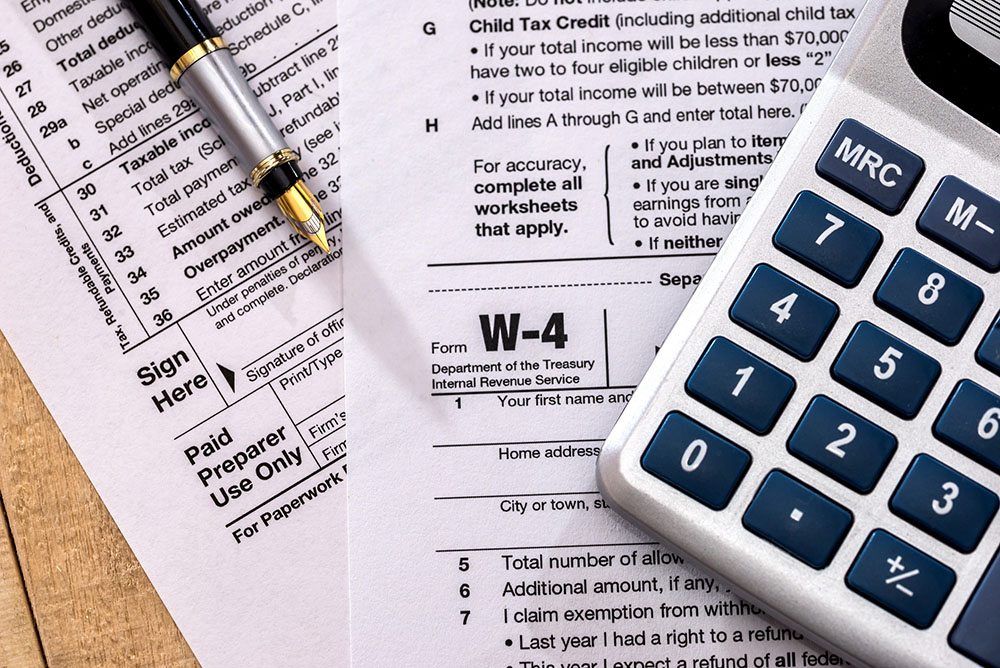
Tax withholding is the amount your employer automatically deducts from each paycheck and sends directly to the IRS on your behalf. It covers your federal income tax obligation throughout the year.
When you start a new job, you complete Form W-4. That form tells your employer how much federal income tax to withhold based on your filing status, income, and any credits or deductions you expect to claim.
Your employer uses IRS withholding tables combined with your W-4 information to calculate the exact dollar amount removed from every paycheck before you ever see it.
The Pay-As-You-Go Tax System Explained
The United States runs on a pay-as-you-go income tax system. This means the IRS does not wait until April to collect your full tax bill.
Instead, taxes are collected throughout the year as you earn income. Employers handle this automatically for employees through payroll withholding.
If you are self-employed or have non-wage income like freelance work, dividends, or rental income, you handle this yourself through quarterly estimated tax payments.
Why Proper Withholding Matters: The Core Reasons
Getting your withholding right is not just an administrative task. It has real financial consequences that affect your budget, your financial goals, and your relationship with the IRS.
Here are the core reasons why proper tax withholding is so important:
Avoid a Surprise Tax Bill — If too little is withheld, you owe the difference when you file. A large unexpected bill can strain your budget, force you to borrow money, or cause serious financial stress.
Avoid IRS Penalties — Underpaying your taxes throughout the year can trigger an underpayment penalty from the IRS, even if you pay the full balance when you file your return.
Stop Overpaying the Government — Withholding too much means you get a big refund, but that money sat with the IRS earning you nothing. That is cash you could have used to pay down debt, invest, or cover monthly expenses.
Improve Cash Flow — Properly calibrated withholding means your take-home pay reflects your actual tax obligation. You can budget more accurately and avoid end-of-year surprises.
Reduce Tax-Time Stress — When your withholding is right, filing your tax return becomes a simple confirmation rather than a crisis management event.
The Consequences of Under-Withholding
Under-withholding is one of the most common and costly paycheck mistakes taxpayers make. Here is what happens when too little tax is taken out.
You Owe a Large Tax Bill in April
If you have not paid enough tax throughout the year, the IRS will send you a bill when you file. Owing thousands of dollars unexpectedly can wreck a monthly budget and force difficult financial decisions.
Many taxpayers who owe are caught off guard. They assumed their employer was withholding the right amount but never verified it against their actual tax liability.
You Face IRS Underpayment Penalties
The IRS can charge a penalty for underpaying taxes during the year, even if you pay in full at filing time. The penalty applies when you owe more than $1,000 after subtracting withholding and refundable credits.
You can generally avoid this penalty if you paid at least 90% of your current year’s tax liability or 100% of last year’s tax liability through withholding and estimated payments, whichever is smaller.
If your adjusted gross income exceeded $150,000 in the prior year, the threshold increases to 110% of last year’s tax. High earners need to be especially careful.
You May Receive an IRS Lock-In Letter
In extreme cases, if the IRS determines your withholding is dramatically insufficient, they can issue a lock-in letter to your employer. This letter legally requires your employer to increase your withholding, removing your control over the amount.
This is a serious consequence that most employees never expect and want to avoid entirely.
You Pay Interest on Top of Penalties
Underpayment penalties are not a flat fine. The IRS charges interest on unpaid balances, and that interest compounds. The longer the underpayment goes uncorrected, the more it costs.
The Consequences of Over-Withholding
Over-withholding is less discussed but just as financially harmful. Millions of Americans over-withhold every year and celebrate their large refund without realizing what it actually means.
You Give the Government an Interest-Free Loan
When more tax is withheld than necessary, the IRS holds your money for months before returning it as a refund. During that time, you earn no interest on those funds.
That refund feels like a windfall, but it is simply your own money being returned to you — money you could have had in your pocket each month.
You Miss Investment and Debt Repayment Opportunities
Every extra dollar sitting with the IRS is a dollar not working for you. That money could be applied to high-interest debt, an emergency fund, a retirement account, or any investment that generates a return.
The opportunity cost of over-withholding adds up significantly over time. Even modest monthly amounts, invested consistently, produce meaningful results over years.
Your Monthly Budget Is Artificially Tight
When too much is withheld, your take-home pay is lower than it should be. Many people live within a tighter budget all year and then feel relief at refund time — not realizing they could have had that money month by month.
Better withholding calibration gives you access to your own money when you actually need it, not after a delay.
Under-Withholding vs. Over-Withholding: A Side-by-Side Comparison
| Factor | Under-Withholding | Over-Withholding |
|---|---|---|
| Tax Bill at Filing | Large amount owed | Refund received |
| IRS Penalty Risk | High (if >$1,000 owed) | None |
| Monthly Take-Home Pay | Higher | Lower |
| Cash Flow Impact | Better in short term | Worse all year |
| Investment Opportunity | More available monthly | Lost until refund |
| Financial Stress | High at tax time | Low at tax time |
| Ideal Outcome | No — penalty risk | No — lost opportunity |
The ideal outcome is withholding that lands you close to zero — either a small refund or a small amount owed, both under the penalty threshold.
Understanding Form W-4: Your Withholding Control Panel

Form W-4 is the tool the IRS gives you to control how much federal income tax is withheld from your paycheck. The 2026 version of Form W-4 is more streamlined than older versions.
The Five Steps of Form W-4
Step 1 — Personal Information: Enter your name, Social Security number, address, and filing status (single, married filing jointly, head of household, etc.).
Step 2 — Multiple Jobs or Working Spouse: If you have more than one job or your spouse also works, use the IRS withholding estimator or check the box for the higher withholding rate. This prevents under-withholding common in dual-income households.
Step 3 — Claim Dependents: Enter the dollar amount of credits you expect to claim for qualifying children and other dependents. This reduces your withholding appropriately.
Step 4 — Other Adjustments:
- 4(a) — Add non-wage income such as interest, dividends, freelance earnings, or rental income. This tells your employer to withhold more to cover income not subject to automatic withholding.
- 4(b) — Enter deductions if you plan to itemize or claim deductions beyond the standard deduction.
- 4(c) — Request an additional flat dollar amount withheld per paycheck, useful for building a cushion or covering complex tax situations.
Step 5 — Signature: Sign and date the form and submit it to your employer. Your employer does not send it to the IRS unless specifically asked.
When Should You Update Your W-4
The IRS recommends updating your W-4 whenever your tax situation changes. Most financial experts recommend reviewing it at least once per year.
| Life Event | Why It Matters |
|---|---|
| Marriage | Changes filing status and combined income |
| Divorce | Reverts to single filing status |
| New child or adoption | Qualifies for Child Tax Credit |
| New job or second job | Changes total income level |
| Spouse starts or stops working | Affects household withholding |
| Large raise or promotion | Could push you into higher bracket |
| Buying a home | Mortgage interest deduction changes taxable income |
| Starting freelance or gig work | Creates untaxed income requiring adjustment |
| Retirement | Changes income sources significantly |
| Major investment income | Capital gains, dividends require adjustment |
How to Calculate Whether Your Withholding Is Correct
Checking your withholding does not require a tax professional. Here is a straightforward way to assess your situation.
Step 1 — Review Your Pay Stub
Look at the federal tax withheld field on your pay stub. Multiply that amount by your number of pay periods per year to estimate your total annual withholding.
For example: $250 withheld per biweekly paycheck × 26 pay periods = $6,500 withheld for the year.
Step 2 — Estimate Your Total Tax Liability
Use last year’s tax return as a baseline. Your total tax liability is shown on Form 1040. If your income and deductions are similar this year, that number is a reasonable estimate.
Step 3 — Compare the Two Numbers
If your projected withholding is close to your expected tax liability (within $500–$1,000 in either direction), you are in good shape.
If your withholding is significantly less than your liability, you risk an underpayment penalty. If it is much more, you are over-withholding and leaving money on the table.
Step 4 — Use the IRS Withholding Estimator
The IRS Tax Withholding Estimator at IRS.gov/W4App is the most accurate tool available. It asks for your income, deductions, credits, and current withholding and tells you whether to adjust and by how much.
You will need your most recent pay stub and a copy of last year’s tax return to use it effectively.
Safe Harbor Rules: How to Protect Yourself From Underpayment Penalties
The IRS has safe harbor provisions that protect you from underpayment penalties even if you end up owing taxes at filing time.
| Safe Harbor Rule | Threshold |
|---|---|
| Current Year Rule | Pay at least 90% of this year’s tax liability through withholding and/or estimated payments |
| Prior Year Rule | Pay 100% of last year’s total tax liability (based on prior year Form 1040) |
| High-Income Prior Year Rule | Pay 110% of last year’s liability (for taxpayers with AGI over $150,000; $75,000 if married filing separately) |
| Small Balance Rule | Owe less than $1,000 at filing after credits and withholding |
Meeting any one of these thresholds protects you from the underpayment penalty, even if you still owe a balance at filing time.
Special Situations That Require Extra Attention
Most standard employees can manage withholding with a straightforward W-4 update. But certain situations require more careful planning.
Dual-Income Households
When both spouses work, the IRS withholding tables assume each job is the only income source. This often results in under-withholding for the household because the combined income may push the couple into a higher tax bracket.
The solution is to use the Two-Earners/Multiple Jobs Worksheet on the W-4 or the IRS estimator tool to calculate the correct withholding for both incomes combined.
Side Jobs, Freelancing, and Gig Work
Income from freelance work, gig platforms, or self-employment is not subject to automatic withholding. If you have a primary employer job plus side income, you have two options:
- Make quarterly estimated tax payments directly to the IRS to cover the side income.
- Increase withholding at your primary job by entering additional withholding in Step 4(c) of your W-4 to cover the extra tax obligation.
Many people choose option 2 for simplicity — one employer handles all withholding rather than managing quarterly payments separately.
Multiple Jobs at Once
Holding two or more jobs simultaneously can cause significant under-withholding. Each employer withholds based only on the income from their position, but your combined income is taxed at a higher rate.
Always check the multiple jobs box or use the IRS estimator when working more than one job at a time.
Investment Income
If you receive substantial dividends, capital gains, or interest income, none of that has withholding applied automatically. You either make estimated quarterly payments or increase W-4 withholding to cover it.
Retirement Income
If you receive pension payments, Social Security benefits, or IRA distributions, you can submit Form W-4P to your pension payer to have tax withheld from those payments as well.
State Income Tax Withholding

Federal withholding via Form W-4 covers only federal income taxes. Most states that have an income tax have their own separate withholding form.
State withholding rules vary significantly. Some states use a form similar to the federal W-4. Others have their own requirements, different filing statuses, or flat tax rates.
Check with your state’s tax agency or employer payroll department to ensure your state withholding is also properly set. Under-withholding at the state level carries its own set of penalties and interest.
| Withholding Type | Tax Covered | Form Used | Who Submits To |
|---|---|---|---|
| Federal Income Tax | IRS federal tax | Form W-4 | Employer |
| State Income Tax | State tax agency | State-specific form | Employer |
| Social Security Tax | SSA (mandatory) | Automatic | N/A |
| Medicare Tax | CMS (mandatory) | Automatic | N/A |
| Local/City Tax | Local municipality | Varies | Employer |
Note: Social Security and Medicare taxes (FICA) are mandatory and cannot be adjusted through your W-4. They are fixed percentages taken from every paycheck automatically.
What Happens If You Do Not File a W-4
If you start a new job and fail to submit a Form W-4, your employer is required by IRS rules to treat you as a single filer with no adjustments. This results in the maximum standard withholding for your pay level.
This may be too much or too little depending on your actual situation. Always submit a properly completed W-4 as soon as possible when starting a new position.
How Often Should You Review Your Withholding
At minimum, financial advisors and the IRS both recommend reviewing your withholding once per year. A good time is at the beginning of the year or right after you file your taxes, when your financial picture is fresh in mind.
Additionally, review and update your withholding immediately after any significant life change. The table of life events earlier in this guide covers the most common triggers.
Do not wait for the IRS to notify you of a problem. Proactive review prevents penalties and keeps your finances on track.
The Relationship Between Withholding and Your Tax Refund
Your tax refund is not free money. It is the excess amount you overpaid in taxes throughout the year.
A large refund means your withholding was set too high. You gave the IRS that money throughout the year and are now getting it back — without interest.
A small refund or a small amount owed is the sign of accurate withholding. It means you paid close to exactly what you owed, month by month, without overpaying or underpaying significantly.
The goal of proper withholding is to bring your refund close to zero — or to owe a small, manageable amount well within the safe harbor threshold. That keeps your money working for you all year rather than sitting in a government account.
Practical Tips to Maintain Correct Withholding in 2026
Follow these actions to keep your withholding accurate throughout the year:
Run the IRS Withholding Estimator at least once per year, especially after any life change. It is free, takes about 10 minutes, and gives you a specific recommendation.
Compare your projected annual withholding against last year’s total tax on your Form 1040 as a quick sanity check each January.
Update your W-4 promptly after marriage, divorce, a new child, a new job, a raise, or any other significant financial change.
If you have side income, use Step 4(c) of your W-4 to request additional withholding or set up quarterly estimated payments.
Check both federal and state withholding. Many people focus only on federal and overlook state obligations.
Save a copy of every W-4 you submit for your personal records. This gives you a reference point if questions arise later.
Common Withholding Mistakes and How to Avoid Them
| Mistake | Consequence | Solution |
|---|---|---|
| Never updating W-4 after life events | Incorrect withholding amount | Update W-4 within 30 days of any major change |
| Ignoring side income | Under-withholding, penalty | Add extra withholding in W-4 Step 4(c) or make estimated payments |
| Dual-income couples not coordinating | Under-withholding as a household | Use IRS estimator together or complete Two-Earner Worksheet |
| Claiming too many dependents | Lower withholding, potential underpayment | Review actual expected credits before filing W-4 |
| Claiming exempt status incorrectly | Zero withholding, large bill at filing | Only claim exempt if you had zero tax liability last year and expect the same this year |
| Not checking state withholding | State tax underpayment | Submit state withholding form and verify amount separately |
How to Use the IRS Tax Withholding Estimator
The IRS Tax Withholding Estimator at IRS.gov/W4App is the most reliable free tool for checking your withholding accuracy. Here is what you need before you start:
Your most recent pay stub (to see current withholding amounts and year-to-date totals)
Your most recent federal tax return (to estimate total annual income and last year’s liability)
Information on any other income sources — freelance, investments, rental income
Expected deductions if you plan to itemize (mortgage interest, charitable contributions, state taxes paid)
The estimator walks you through several steps and outputs a specific recommendation — whether to increase or decrease withholding and by how much per paycheck. You can then use that output to complete a new W-4 accurately.
Withholding for Bonuses, Commissions, and Supplemental Wages

Bonuses and commissions are classified as supplemental wages by the IRS. They are often withheld at a flat 22% federal rate if paid separately from your regular paycheck.
If your supplemental wages push your total income into a higher bracket, that 22% flat rate may not be enough. Plan accordingly by checking your total projected income for the year after receiving a bonus.
Some employers add bonuses to regular pay and withhold using the aggregate method, which can result in higher withholding. Review your pay stub after any bonus payment to see how it was handled.
Frequently Asked Questions (FAQs)
What happens if I do not have enough taxes withheld from my paycheck?
You will likely owe the IRS at filing time. If you owe more than $1,000, you may also face an underpayment penalty plus interest charges on the balance.
Can I change my withholding at any time?
Yes. You can submit a new Form W-4 to your employer at any time during the year. The change typically takes effect within one or two pay periods.
What is the safest withholding amount to avoid penalties?
Withhold at least 90% of your current year’s tax liability or 100% of last year’s tax liability, whichever is smaller. For high earners with prior-year AGI over $150,000, the threshold is 110% of last year’s tax.
Does a large tax refund mean my withholding is too high?
Yes. A large refund means you overpaid taxes throughout the year. That money was available to the IRS interest-free when it could have been in your account earning returns or paying down debt.
What is Form W-4 and why does it matter?
Form W-4 is the IRS form you complete for your employer that determines how much federal income tax is withheld from each paycheck. It directly controls your year-end tax outcome.
Does withholding cover Social Security and Medicare taxes?
No. Social Security (6.2%) and Medicare (1.45%) taxes are fixed and mandatory. They are deducted automatically from every paycheck and cannot be adjusted through your W-4.
Should I update my W-4 after getting married?
Yes. Marriage changes your filing status and potentially your combined household income. Dual-income married couples often under-withhold without coordinating their W-4 forms.
What if my employer withholds the wrong amount despite a correct W-4?
Contact your employer’s payroll department immediately to correct the error. Document the issue. If payroll does not correct it, you can contact the IRS for guidance on your options.
How do I withhold taxes on freelance or gig income?
You can either increase withholding at your primary job by adding an amount in Step 4(c) of your W-4, or make quarterly estimated tax payments directly to the IRS using Form 1040-ES.
Is it better to owe taxes or get a refund?
Neither extreme is ideal. A small refund or a small balance owed (within safe harbor limits) is the best outcome. It means your withholding was accurate, your cash flow stayed strong, and you avoided penalties.
Conclusion
Why is it so important to have the proper amount of taxes withheld from your paycheck? Because it sits at the center of your entire financial year.
Get it wrong in either direction and you pay a real cost — either in IRS penalties and stress or in lost purchasing power and missed financial opportunity.
The good news is that proper withholding is completely within your control. Form W-4 is your tool. The IRS Withholding Estimator is your guide.
And regular review, especially after life changes, is your strategy. In 2026, with updated W-4 forms, clear safe harbor rules, and free IRS tools available to every taxpayer, there is no reason to let incorrect withholding derail your finances.
Take 10 minutes today to check your withholding. A small adjustment now can save you hundreds in penalties, keep more money in your pocket each month, and make tax season next April a non-event. That is the real value of getting your paycheck withholding right.
