


The phrase “The Devil is in the Details” is a frequently used term that conveys the idea that a situation may look simple at the outset, actually possesses concealed complexities in the details. What looks simple at first glance can reveal complicated or difficult aspects upon closer inspection. The expression serves to remind us that missing or disregarding the details can cause unexpected obstacles.
Meaning of “The Devil is in the Details”
The phrase “The Devil is in the Details” highlights that small, apparently trivial details in a project, plan, or agreement may cause difficulty if they do not receive proper care. This implies that even though something may look straightforward or flawless at a superficial glance, the finer details and complications can often obscure difficulties, issues or problems.
The phrase encourages the importance of care and thoroughness to prevent issues, because disregarding small details can have major impacts. The devil, metaphorically, resides in these finer points, waiting to cause problems for the unwary.
Origin of “The Devil is in the Details”
The popular phrase, “The Devil is in the Details” is likely an alternate version of the earlier expression: “God is in the details”. The phrase was originated by German architect Ludwig Mies van der Rohe, who argued that paying close attention to detail ensures excellence in both art and in the way things are made.
Over the years, the expression changed to its existing form, by introducing the word “the Devil” in the phrase emphasizing the negative results of ignoring details instead of underscoring the positive gains from concentrating on them.
The origin of the modern version remains vague, however, there is a common belief in its growth in popularity during the mid-20th century. This emphasizes that not paying attention to the details could have seriously negative consequences, a timely alert that trouble frequently appear where we do not anticipate them.
Use of “The Devil is in the Details” in Literature
Example#1
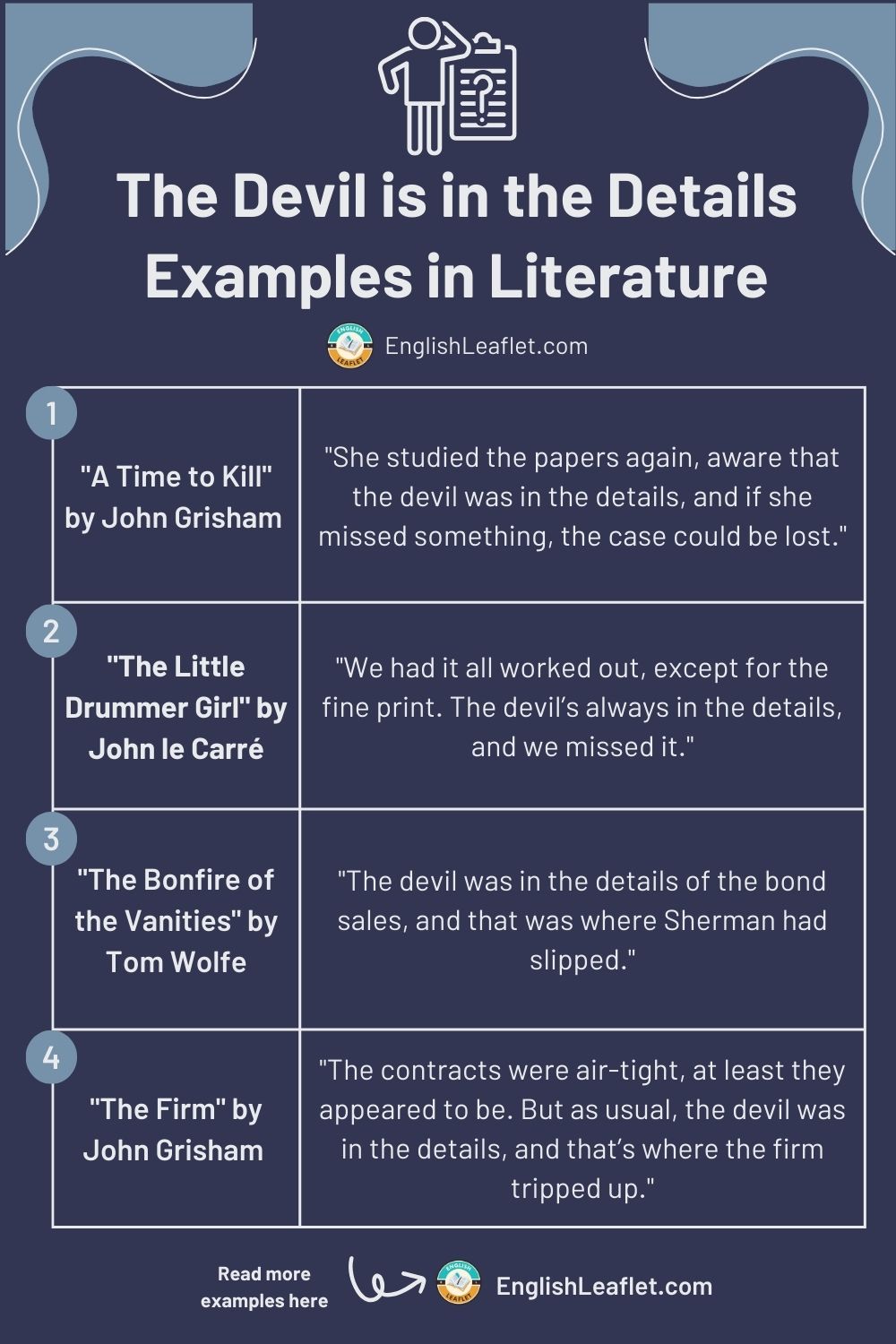
“A Time to Kill” by John Grisham
“She studied the papers again, aware that the devil was in the details, and if she missed something, the case could be lost.”
In the course of this legal suspense novel, the author uses the phrase to point out the necessity of thoroughness in legal pursuits. The protagonist is completely aware that paying insufficient attention to one small detail in the detailed records could endanger the entire lawsuit.
The phrase points out the critical significance of concentrating on the finer points found in legal documents.
Example#2
“The Little Drummer Girl” by John le Carré
“We had it all worked out, except for the fine print. The devil’s always in the details, and we missed it.”
In this spy novel, the phrase shows the hazards of carelessly analyzing the smaller details of an operation. Despite thinking they had covered everything, a minor unseen detail resulted in a substantial failure.
This expression brings attention to the intricacies found in surveillance, which facilitates the understanding of how minor mistakes may lead to serious consequences.
Example#3
“The Bonfire of the Vanities” by Tom Wolfe
“The devil was in the details of the bond sales, and that was where Sherman had slipped.”
Wolfe’s satirical piece uses the phrase to illustrate that what seems to be a successful transaction is actually impacted by a seemingly trivial oversight.
The principal character, Sherman, encounters the difficulties of the convoluted financial sector when a minor flaw in the specifics leads to his downfall. It points out the greater subject of ambition and the consequences of rash decisions.
Example#4
“The Firm” by John Grisham
“The contracts were air-tight, at least they appeared to be. But as usual, the devil was in the details, and that’s where the firm tripped up.”
In this thrilling novel, the phrase has been used to indicate how the ideal contracts often hide complexities which ultimately cause issues. In the novel, the “firm” assumed that everything was secure, but their downfall came from failing to notice the crucial details.
This application points out that a careful appreciation of legal documentation is crucial, as minor details can create serious problems.
Example#5
“The War of the Worlds” by H.G. Wells
“We had underestimated the Martians. Our plans were grand, but as always, the devil is in the details, and it was the small things that led to our undoing.”
The author utilizes the phrase in this classic science fiction novel to express that, despite the elaborate strategies implemented by humans to fight the Martians, it was the underserved details that resulted in their defeat.
The concept brings to attention the dangers of failing to recognize the significance of minute details in the bigger picture, which, in this situation, had strenuous effects on humanity’s survival.
Use of “The Devil is in the Details” in Modern Context
In modern usage, “The Devil is in the Details” is a commonly used in multiple industries and contexts. In the business world, the idiom usually acts as a advice to closely review contracts, negotiations, or project plans.
In the case of mergers or large deals, small contract clauses that appear insignificant can later lead to important legal or financial outcomes. In creative and design spheres, the phrase signifies the people that a project’s achievement typically depends on refining smaller details—such as the finishing aspects of a design or the accuracy of a technical strategy.
In everyday life, the term is typically used for basic tasks or personal assignments where overlooking minor steps or elements may escalate into greater challenges. For example, when assembling the furniture of making a recipe, the skipping of minor instruction can lead to larger problem.
The term has an application in relationships and social situations, enabling that noticing minor actions and expressions can stop potential conflicts or misunderstandings.
Overall, “The Devil is in the Details” continues to be an impactful proverb, forcing people to stay attentive and conscious of every simple detail in any endeavor. It points out that success commonly hinges on the attention devoted to the details, while ignoring these details often leads to failure.
