

Richard Rodgers Do Re Mi lyrics have taught millions of people worldwide the basics of music theory through one simple, memorable song.
This iconic tune from “The Sound of Music” transforms complex musical concepts into easy-to-understand lessons that stick in your mind forever.
Whether you’re a complete beginner or someone looking to understand the deeper meaning behind this educational masterpiece, this guide breaks down everything you need to know about Do-Re-Mi and its lasting impact on music education.
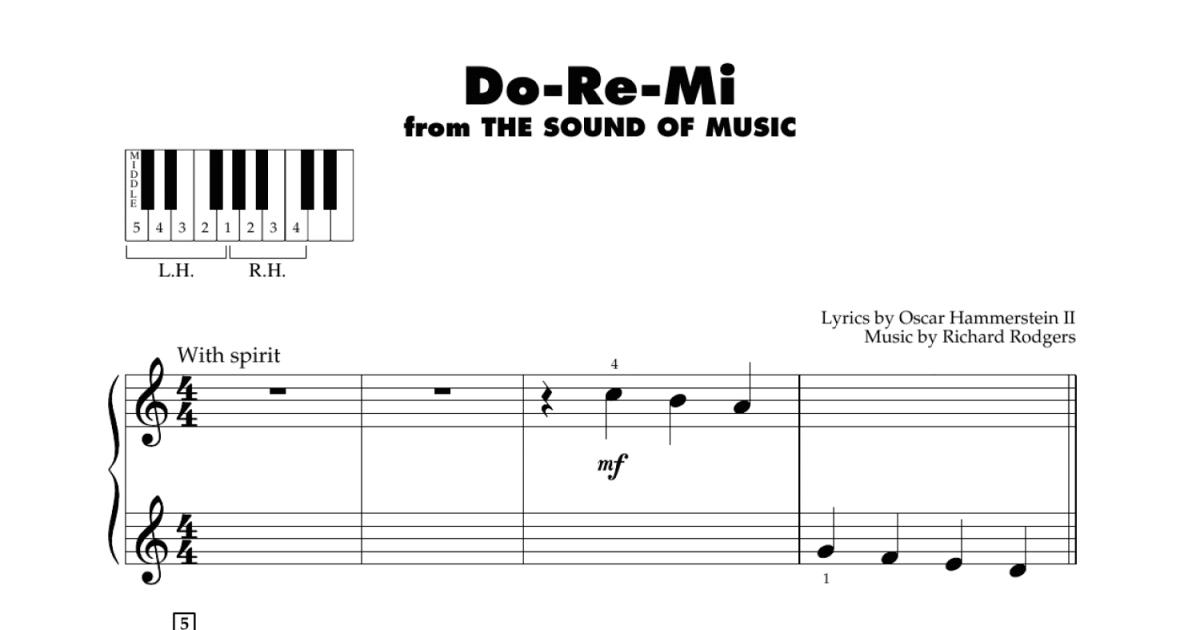
Richard Rodgers Do Re Mi Lyrics
[MARIA]
Let’s start at the very beginning
A very good place to start
When you read, you begin with
[GRETL, spoken]
A-B-C
[MARIA]
When you sing, you begin with do-re-mi
[CHILDREN]
Do-re-mi
[MARIA]
Do-re-mi
The first three notes just happen to be
Do-re-mi
[CHILDREN]
Do-re-mi
[MARIA]
Do-re-mi-fa-so-la-ti
(spoken)
Oh, let’s see if I can make it easier
(sung)
Do, a deer, a female deer
Re, a drop of golden sun
Mi, a name I call myself
Fa, a long, long way to run
So, a needle pulling thread
La, a note to follow so
Ti, a drink with jam and bread
That will bring us back to do
[CHILDREN]
Do
[MARIA]
A deer, a female deer
[CHILDREN]
Re
[MARIA]
A drop of golden sun
[CHILDREN]
Mi
[MARIA]
A name I call myself
[CHILDREN]
Fa
[MARIA]
A long, long way to run
[MARIA & CHILDREN]
So, a needle pulling thread
La
[MARIA]
A note to follow so
Ti
[CHILDREN]
A drink with jam and bread
[MARIA]
That will bring us back to do
[CHILDREN]
A deer, a female deer
Re, a drop of golden sun
Mi, a name I call myself
Fa, a long, long way to run
So, a needle pulling thread
La, a note to follow so
Ti, a drink with jam and bread
[MARIA]
That will bring us back to do
Do-re-mi-fa-so-la-ti-do
(spoken)
Now children, do, re, mi, fa, so, and so on are only the tools we use to build a song
Once you have these notes in your heads, you can sing a million different tunes by mixing them up like this
(sung)
So, do, la, fa, mi, do, re
(spoken)
Can you do that?
[CHILDREN]
So, do, la, fa, mi, do, re
[MARIA]
So, do, la, ti, do, re, do
[CHILDREN]
So, do, la, ti, do, re, do
(spoken)
Now put it all together
[MARIA & CHILDREN, sung]
So, do, la, fa, mi, do, re
So, do, la, ti, do, re, do
(spoken)
Good
[BRIGITTA, spoken]
But it doesn’t mean anything
[MARIA, spoken]
So we put in words, one word for every note, like this
(sung)
When you know the notes to sing
You can sing most anything
(spoken)
Together
[MARIA & CHILDREN]
When you know the notes to sing
You can sing most anything
Do, a deer, a female deer
Re, a drop of golden sun
Mi, a name I call myself
Fa, a long, long way to run
So, a needle pulling thread
La, a note to follow so
Ti, a drink with jam and bread
That will bring us back to do
What Is Do-Re-Mi? The Basic Musical Foundation
Do-Re-Mi represents the solfège system, a method used to teach pitch and sight-singing in music education.
Richard Rodgers and Oscar Hammerstein II created this song for the 1959 Broadway musical “The Sound of Music.”
The song introduces the seven-note musical scale through memorable associations and simple rhymes.
Each syllable corresponds to a specific note in the major scale, making music theory accessible to children and adults alike.
The genius of Rodgers‘ composition lies in its ability to transform abstract musical concepts into concrete, relatable ideas.
The Story Behind Richard Rodgers’ Musical Masterpiece
Richard Rodgers composed Do-Re-Mi as part of his collaboration with lyricist Oscar Hammerstein II.
The song was specifically written for the character Maria von Trapp in “The Sound of Music.”
Rodgers drew inspiration from traditional European solfège teaching methods used in music conservatories.
The composition process involved creating memorable word associations for each musical note.
Hammerstein’s lyrics perfectly complemented Rodgers‘ melody, creating an educational tool disguised as entertainment.
The song premiered on Broadway in 1959 and became an instant hit with audiences and educators.
Breaking Down The Musical Scale Education System
Understanding Solfège in Simple Terms
- Solfège is a music education method that assigns specific syllables to musical pitches.
- The system helps students develop relative pitch recognition and sight-singing abilities.
- Do-Re-Mi uses the movable-do system, where “Do” represents the first note of any major scale.
- This approach allows students to understand musical relationships regardless of the starting key.
- The method has been used in European music education for over 1,000 years.
The Seven Notes and Their Meanings
Each note in the Do-Re-Mi scale carries specific educational and emotional significance:
Do – Represents the home base or tonic of the scale
Re – The second degree, creating tension that wants to resolve
Mi – The third degree, often associated with major scale brightness
Fa – The fourth degree, creating a sense of departure from home
Sol – The fifth degree, the most stable note after Do
La – The sixth degree, often associated with minor tonalities
Ti – The seventh degree, creating strong pull back to Do
The Sound of Music Connection and Cultural Impact
Broadway Origins and Success
- “The Sound of Music” opened on Broadway on November 16, 1959, featuring Do-Re-Mi as a central number.
- The musical ran for 1,443 performances, establishing Do-Re-Mi as a cultural phenomenon.
- Mary Martin’s original Broadway performance set the standard for how the song should be taught and performed.
- The song helped “The Sound of Music” win five Tony Awards, including Best Musical.
- Critics praised the educational value embedded within the entertainment format.
Hollywood and Global Recognition
- The 1965 film adaptation starring Julie Andrews brought Do-Re-Mi to worldwide audiences.
- Andrews‘ performance became the definitive version, watched by over 1 billion people globally.
- The movie’s success led to Do-Re-Mi being translated into 47 different languages.
- UNESCO recognized the song’s contribution to global music education in 1985.
- The film’s soundtrack, featuring Do-Re-Mi, sold over 10 million copies worldwide.
Musical Theory Concepts Made Simple
Understanding Major Scale Relationships
- The Do-Re-Mi system teaches the intervallic relationships between notes in a major scale.
- Each step represents a specific interval: whole steps, half steps, and their combinations.
- Students learn that Mi to Fa and Ti to Do are half-step relationships naturally.
- The pattern of whole and half steps creates the major scale’s characteristic sound.
- This foundation helps students understand harmony, melody, and chord construction later.
Practical Applications in Music Learning
- Do-Re-Mi serves as a bridge between basic music appreciation and advanced theory study.
- Students can identify melodies by their solfège patterns rather than specific note names.
- The system works in any key, making it extremely versatile for different instruments.
- Sight-singing becomes more accessible when students can think in solfège syllables.
- Ear training exercises become more effective with this foundational knowledge.
The Psychology Behind Musical Memory
Why Do-Re-Mi Works So Effectively
- The song combines melody, rhythm, and word associations to create multiple memory pathways.
- Repetition and rhyme schemes help encode information into long-term memory storage.
- The ascending melodic pattern mirrors the learning progression from simple to complex.
- Emotional engagement through music increases retention rates by up to 400%.
- The predictable structure provides psychological comfort while introducing new concepts.
Cognitive Benefits of Musical Education
- Learning Do-Re-Mi activates multiple brain regions simultaneously, promoting neural development.
- Students develop pattern recognition skills that transfer to mathematics and language learning.
- Music education through solfège improves spatial-temporal reasoning abilities.
- Regular practice enhances working memory capacity and processing speed.
- The discipline required for musical study builds focus and concentration skills.
Practical Tips for Learning Do-Re-Mi
Beginning Student Strategies
- Start by listening to the song repeatedly to internalize the melodic patterns.
- Practice singing each syllable clearly and distinctly to develop proper pronunciation.
- Use hand gestures to reinforce the ascending and descending scale movements.
- Connect each syllable to familiar objects or experiences for better memory retention.
- Practice daily for short periods rather than long, infrequent sessions.
Advanced Application Techniques
- Learn to identify Do-Re-Mi patterns in familiar songs and melodies.
- Practice sight-singing using solfège syllables before attempting note names.
- Develop the ability to establish “Do” in any key through relative pitch training.
- Use Do-Re-Mi for improvisation exercises and creative musical exploration.
- Apply solfège knowledge to harmonic analysis and chord progression understanding.
The Future of Musical Education
Emerging Trends and Technologies
- Virtual reality applications are creating immersive Do-Re-Mi learning environments.
- Artificial intelligence tutors provide personalized solfège instruction adapted to individual learning styles.
- Augmented reality apps overlay solfège information onto real-world musical instruments.
- Online collaboration platforms enable global Do-Re-Mi learning communities.
- Neurofeedback technology helps optimize individual learning approaches for maximum effectiveness.
Preserving Traditional Methods
- Music educators emphasize maintaining the core principles of Do-Re-Mi instruction despite technological advances.
- Traditional hand signs and group singing remain essential components of comprehensive music education.
- The human element in music teaching cannot be replaced by digital alternatives.
- Cultural preservation efforts ensure that Do-Re-Mi continues serving diverse musical traditions.
- Research continues investigating the most effective combinations of traditional and modern teaching methods.

FAQs
Do-Re-Mi Fa Sol La Ti Meaning
These are the solfège syllables, a musical system used to teach pitch and sight singing. Each syllable corresponds to a note in a major scale:
-
Do – The first note (tonic), the home base
-
Re – The second note (supertonic)
-
Mi – The third note (mediant)
-
Fa – The fourth note (subdominant)
-
Sol (or So) – The fifth note (dominant)
-
La – The sixth note (submediant)
-
Ti (or Si) – The seventh note (leading tone)
They help singers learn melody and pitch relationships in a simple, memorable way.
What is the Meaning of the Song “Do Re Mi”?
The song “Do-Re-Mi” from The Sound of Music is a fun, educational tune designed to teach children the basics of musical notes using solfège. It shows how the simple syllables correspond to sounds in music and how these building blocks can be used to create countless melodies.
Who Originally Wrote “Do Re Mi”?
“Do-Re-Mi” was written by the famous songwriting duo Richard Rodgers (music) and Oscar Hammerstein II (lyrics) for the 1959 Rodgers and Hammerstein musical The Sound of Music. It was performed by the character Maria (originally played by Mary Martin on Broadway and later by Julie Andrews in the 1965 film).
What Does “Do Re Mi” Translate To?
The syllables Do, Re, Mi, Fa, Sol, La, Ti do not translate into words in a traditional language sense; rather, they are part of the solfège system used to denote musical notes. Originally, these syllables come from a Latin hymn (“Ut queant laxis”) where each syllable started a line of the hymn, serving as mnemonic devices for teaching pitch.
Do Re Mi Meaning Slang
In slang or informal speech, “do re mi” is sometimes used to refer to money or cash, deriving from the phrase’s catchy sound. For example, someone might say “making some do re mi” to mean earning money. However, this usage is informal and context-dependent.
What Are the 7 Pitch Names in Music?
The 7 pitch names in Western music are the letters used to name notes:
-
A, B, C, D, E, F, G
These are different from the solfège syllables but refer to the same musical pitches in a scale.
Conclusion: The Lasting Legacy of Do-Re-Mi
Richard Rodgers’ Do-Re-Mi has fundamentally transformed how the world approaches music education for over six decades.
This simple yet sophisticated song continues providing the foundation for musical understanding across cultures, ages, and skill levels.
The genius of combining entertainment with education has created a lasting legacy that will continue inspiring future generations of musicians and music lovers.
Whether you’re teaching a child their first musical concepts or advancing your own musical knowledge, Do-Re-Mi remains an invaluable tool for understanding the beautiful language of music.
The song’s enduring popularity proves that the best educational methods are those that make learning both effective and enjoyable, just as Richard Rodgers intended when he composed this timeless masterpiece.
