

Green Bay Packers vs Chicago Bears player stats tell the story of the NFL’s oldest and most storied rivalry.
These two NFC North powerhouses met three times in the 2025 season, producing some of the most dramatic individual performances in recent memory.
From Jordan Love’s aerial assault to Caleb Williams’ late-game heroics, every matchup delivered elite quarterback play, standout receiving performances, and defensive battles that swung on a single play.
The 2025 Season Series: Green Bay Packers vs Chicago Bears Overview
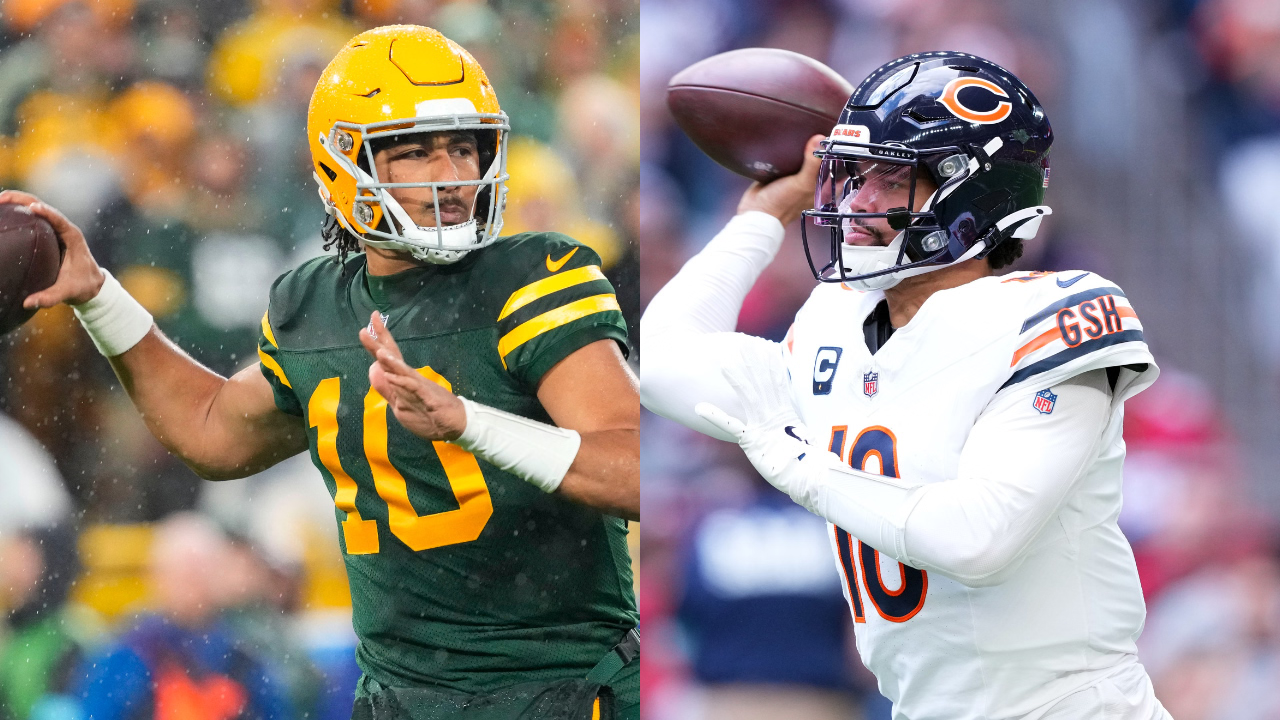
The Packers and Bears met three times in the 2025 NFL season. Green Bay won the first meeting on December 7, 2025. Chicago came back to win the second on December 21, 2025. The Bears then closed out the series with a playoff-week victory on January 11, 2026.
The series ended 2–1 in favor of Chicago. However, Green Bay’s individual player stats were stronger in two of the three games, which makes this breakdown especially interesting for fantasy analysis, betting trends, and rivalry history.
| Game | Date | Winner | Score |
|---|---|---|---|
| Game 1 | Dec 7, 2025 | Green Bay | 28–21 |
| Game 2 | Dec 21, 2025 | Chicago | 22–16 (OT) |
| Game 3 | Jan 11, 2026 | Chicago | 31–27 |
Jordan Love Player Stats vs Chicago Bears 2025
Jordan Love was the top statistical performer in this rivalry across all three games. His numbers reflect a dual-threat quarterback who can execute in crunch time and attack downfield.
Game 1 (Dec 7) — Green Bay 28, Chicago 21
Love completed 17 of 25 passes for 234 yards, 3 touchdowns, and 1 interception. His passer rating was a dominant 120.7. He averaged 8.46 yards per attempt and was only sacked once.
Game 2 (Dec 21) — Chicago 22, Green Bay 16 (OT)
Love was replaced late in this game by Malik Willis after injury concerns. Willis finished the game, going 17 of 24 for 198 yards and 1 touchdown with a 109.4 passer rating. Green Bay’s passing offense still produced but couldn’t finish in overtime.
Game 3 (Jan 11) — Chicago 31, Green Bay 27
Love returned with one of his most impressive stat lines: 24 completions on 46 attempts for 323 yards and 4 touchdowns. His passer rating was 103.8. He threw 0 interceptions but the Packers missed 2 field goals late, which proved fatal to the result.
| Stat | Game 1 | Game 2 (Willis) | Game 3 |
|---|---|---|---|
| Completions | 17/25 | 17/24 | 24/46 |
| Passing Yards | 234 | 198 | 323 |
| Touchdowns | 3 | 1 | 4 |
| Interceptions | 1 | 0 | 0 |
| Passer Rating | 120.7 | 109.4 | 103.8 |
Caleb Williams Player Stats vs Green Bay Packers 2025
Caleb Williams had a mixed series statistically but saved his best performance for last. His most significant numbers came in games where the pressure was highest.
Game 1 (Dec 7) — Chicago 21, Green Bay 28
Williams completed 19 of 35 passes for 186 yards, 2 touchdowns, and 1 interception. His completion percentage of 54.3% was below average and his rating of 76.6 reflected an inefficient outing. He threw away 6 passes and had 8 poor throws charted.
Game 2 (Dec 21) — Chicago 22, Green Bay 16
Williams was at his best when it mattered most. His day-line read: 19 of 34 for 250 yards, 2 touchdowns, 0 interceptions. His passer rating improved sharply to 98.9. His game-winning touchdown to D.J. Moore in overtime — a 46-yard strike — was the defining moment of the series.
Game 3 (Jan 11) — Chicago 31, Green Bay 27
Williams threw 24 of 48 for 361 yards and 2 touchdowns but threw 2 interceptions. His rating was 71.6. He made poor decisions but his receivers bailed him out with 125 yards after the catch. His late-game comeback drive to win 31–27 defined his season.
| Stat | Game 1 | Game 2 | Game 3 |
|---|---|---|---|
| Completions | 19/35 | 19/34 | 24/48 |
| Passing Yards | 186 | 250 | 361 |
| Touchdowns | 2 | 2 | 2 |
| Interceptions | 1 | 0 | 2 |
| Passer Rating | 76.6 | 98.9 | 71.6 |
Green Bay Packers Receiving Stats vs Chicago Bears
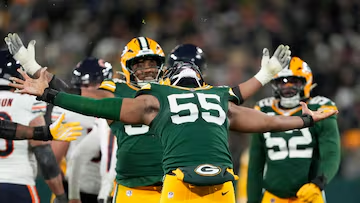
Green Bay’s receiving corps was one of the most productive units in this series. Christian Watson and Romeo Doubs both posted major games, while Josh Reed and Malik Golden added big plays in Game 3.
Christian Watson
Watson was Love’s most trusted target in Games 1 and 3. In Game 1, he caught multiple passes including a 23-yard touchdown catch and a 41-yard score that put the game away. In Game 3 he caught a touchdown pass from Love as part of a 4-TD passing performance.
Romeo Doubs
Doubs had his best individual moment in Game 2. He hauled in a 33-yard touchdown pass from Malik Willis late in the third quarter to give Green Bay the lead. He was also active in Game 3, catching a 1-yard score early.
Josh Reed
Reed made his biggest impact in Game 3, catching an 18-yard touchdown pass from Love in the second quarter. He was a key intermediate target when Green Bay spread the field.
Malik Golden
Golden’s biggest play of the rivalry came in Game 3 with a 23-yard touchdown catch from Love in the fourth quarter that gave Green Bay a 27–21 lead with six minutes remaining.
| Receiver | Game | Longest Catch | TD |
|---|---|---|---|
| C. Watson | Game 1 | 41 yards (TD) | 2 TDs |
| B. Melton | Game 1 | 45 yards (TD) | 1 TD |
| R. Doubs | Game 2 | 33 yards (TD) | 1 TD |
| R. Doubs | Game 3 | 1 yard (TD) | 1 TD |
| J. Reed | Game 3 | 18 yards (TD) | 1 TD |
| M. Golden | Game 3 | 23 yards (TD) | 1 TD |
| C. Watson | Game 3 | 7 yards (TD) | 1 TD |
Chicago Bears Receiving Stats vs Green Bay Packers
Chicago’s passing game leaned on a spread of weapons. D.J. Moore, Cole Kmet, Olamide Zaccheaus, and Collin Johnson all contributed across the series. Moore’s overtime catch in Game 2 was the biggest single reception of the entire rivalry this season.
D.J. Moore
Moore made two of the most important catches in the series. In Game 2, he hauled in the 46-yard game-winning overtime touchdown. In Game 3, he caught a 25-yard touchdown with 1:48 remaining to give Chicago its final 31–27 lead.
Cole Kmet / Collin Johnson
The Bears spread the ball between their tight end and wider receiving targets in the red zone. Kmet caught a 1-yard score in Game 1. Olamide Zaccheaus also caught a short touchdown in Games 1 and 3.
John Walker
Walker’s 6-yard touchdown catch from Williams with 28 seconds remaining in Game 2 forced overtime. That single play changed the entire complexion of the series.
| Receiver | Game | Key Play | Result |
|---|---|---|---|
| O. Zaccheaus | Game 1 | 1-yard TD | Bears score |
| C. Kmet (Johnson) | Game 1 | 1-yard TD | Bears score |
| O. Zaccheaus | Game 3 | 8-yard TD | Bears score |
| D.J. Moore | Game 2 | 46-yard OT TD | Bears win |
| J. Walker | Game 2 | 6-yard TD (tie) | Forced OT |
| D.J. Moore | Game 3 | 25-yard walk-off TD | Bears win |
Green Bay Packers Rushing Stats vs Chicago Bears
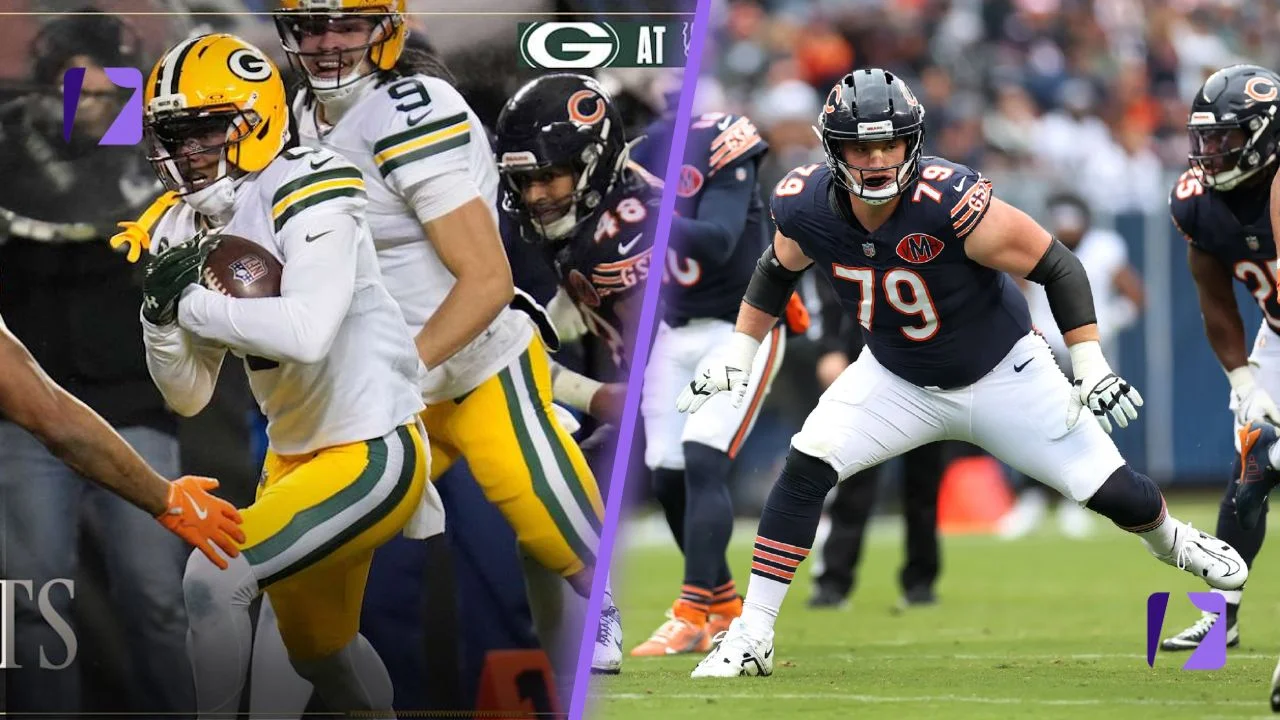
The Packers relied on Josh Jacobs and their ground game primarily in Games 1 and 3. In Game 2 their run game was dominant by volume but could not find the end zone.
Josh Jacobs
Jacobs scored the go-ahead rushing touchdown in Game 1. He rumbled up the middle for 2 yards but it was the score that gave Green Bay a 27–21 lead with 3:37 left. In Game 2 the Packers ran the ball 44 times for 192 yards, their highest rushing volume of the series, but did not score a rushing touchdown.
| Game | Rush Attempts | Rush Yards | Rush TDs | Avg Yards |
|---|---|---|---|---|
| Game 1 | 26 | 117 | 1 | 4.5 |
| Game 2 | 44 | 192 | 0 | 4.4 |
| Game 3 | 23 | 99 | 0 | 4.3 |
Chicago Bears Rushing Stats vs Green Bay Packers
The Bears had their most effective rushing game in Game 2, while D’Andre Swift provided the series’ only Bears rushing touchdown in Game 3.
D’Andre Swift
Swift’s most important carry of the series was a 6-yard touchdown run in the fourth quarter of Game 3. It cut Green Bay’s lead to 27–21 with 10 minutes remaining and set up the Bears’ final comeback.
| Game | Rush Attempts | Rush Yards | Rush TDs | Avg Yards |
|---|---|---|---|---|
| Game 1 | 32 | 138 | 0 | 4.3 |
| Game 2 | 26 | 150 | 0 | 5.8 |
| Game 3 | 28 | 93 | 1 | 3.3 |
Team Passing Stats Head-to-Head Comparison
Looking at raw passing numbers across all three games reveals a consistent edge for Green Bay in efficiency but Chicago’s advantage in big-play moments.
| Category | Green Bay (3 Games) | Chicago (3 Games) |
|---|---|---|
| Total Passing Yards | 755 | 797 |
| Passing Touchdowns | 8 | 6 |
| Interceptions Thrown | 1 | 3 |
| Avg Passer Rating | 111.3 | 82.4 |
| Completion % | 63.7% | 53.4% |
| Avg Yards Per Attempt | 7.6 | 6.3 |
Team Defense Stats: Packers vs Bears
Defense was a factor in all three games. Neither team had a shutdown performance across the full series but there were standout individual defensive moments.
Green Bay’s defense forced 2 turnovers in the series — 1 interception in Game 1 and 2 interceptions in Game 3. They registered sacks in all three matchups and were credited with 9 quarterback hits in Game 3 alone.
Chicago’s defense was most effective in Game 2, recording 2 sacks and holding Love out of the game. In Game 3 the Bears defense forced 3 three-and-outs but could not stop Love’s four-touchdown barrage for most of the game.
| Defensive Stat | GB (Series Total) | CHI (Series Total) |
|---|---|---|
| Sacks | 2.0 | 4.0 |
| Interceptions | 3 | 1 |
| Forced Fumbles | 1 | 3 |
| QB Hits | 20 | 9 |
| Tackles For Loss | 7.0 | 5.0 |
| Passes Defended | 15 | 12 |
Team Offense Stats: Full Series Summary
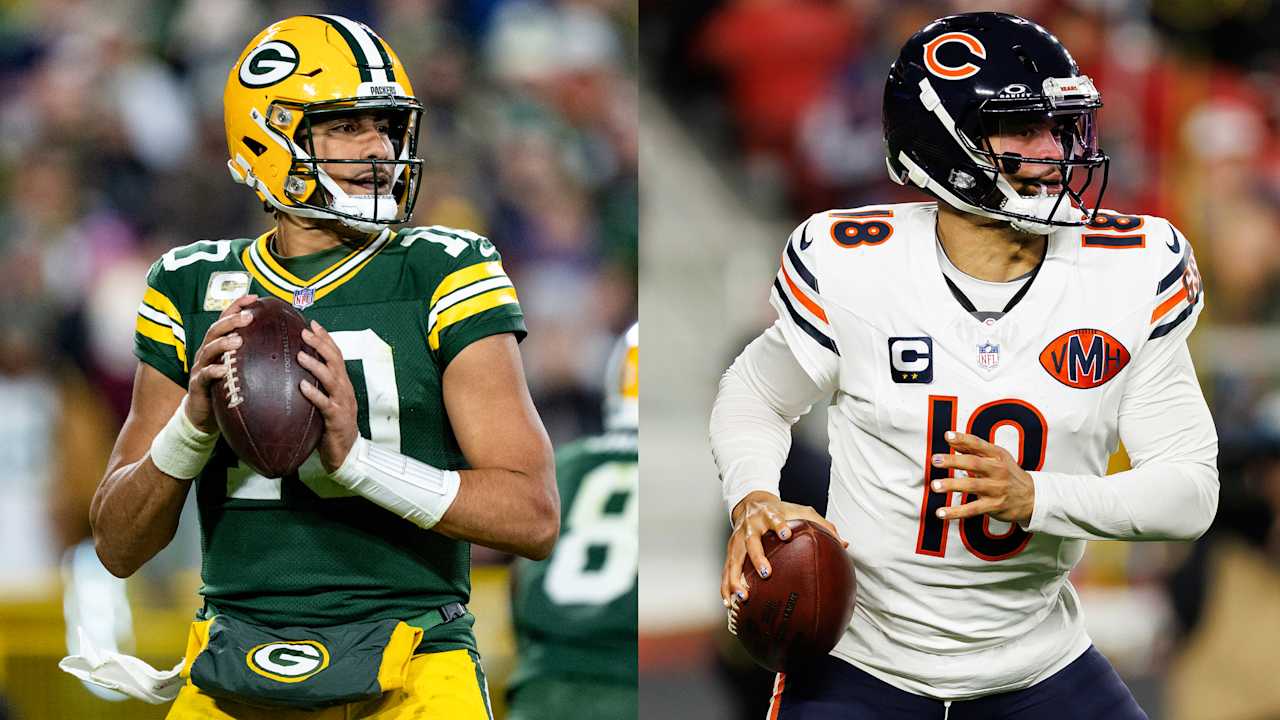
When you look at the Green Bay Packers vs Chicago Bears player stats across the full 2025 season series, the numbers show two very different offensive identities going head to head.
Green Bay is a pass-first offense that wins with efficiency and touchdown rate. Chicago is a higher-volume team that leans on explosive plays and yards after the catch.
| Offensive Stat | GB (Series Total) | CHI (Series Total) |
|---|---|---|
| Total Yards | 1,142 | 1,160 |
| Total TDs | 13 | 10 |
| Turnovers | 2 | 4 |
| First Downs | 62 | 65 |
| Penalties | 17 for 160 yds | 16 for 127 yds |
| Avg Points Per Game | 23.7 | 24.7 |
Key Player Matchup Breakdown
Beyond the raw stats, this rivalry came down to individual matchups that swung games.
Jordan Love vs Chicago’s Secondary
Love posted a combined 760 passing yards and 7 touchdowns against 1 interception across the games he played. His 63.7% completion rate and 7.6 yards per attempt were exceptional against a defense that blitzed heavily in all three matchups.
Caleb Williams vs Green Bay’s Pass Rush
Williams was under consistent pressure. Green Bay credited 20 quarterback hits in the series. Williams’ best game by passer rating (98.9) was his most efficient in Game 2, where he had zero throwaways and his offensive line gave him more time.
Josh Jacobs vs Chicago’s Run Defense
Jacobs and the Packers’ ground game averaged over 4.4 yards per carry in two of the three games. Chicago’s run defense allowed 117 yards in Game 1 and 192 yards in Game 2 — numbers that reflected their willingness to sell out against the pass.
D’Andre Swift vs Green Bay’s Run Defense
Green Bay held the Bears under 100 rushing yards in Game 3 (93 yards), which was the tightest run defense in the series. Swift’s 6-yard TD was the Bears’ only rushing score of the entire series.
Scoring Breakdown By Quarter
The quarter-by-quarter scoring data reveals when each team was at its best in this rivalry.
| Quarter | GB Total | CHI Total |
|---|---|---|
| Q1 | 7 | 9 |
| Q2 | 34 | 3 |
| Q3 | 14 | 17 |
| Q4 | 16 | 45 |
| OT | 0 | 6 |
The most striking number here is Chicago’s 45 fourth-quarter points compared to Green Bay’s 16. The Bears won this rivalry in the final quarter of games. Williams and the Bears offense had a 45–16 scoring advantage in Q4 alone, which directly explains why Chicago won the series 2–1 despite being outplayed statistically in two of three games.
Special Teams Stats Comparison
Special teams played a quiet but critical role in the series. Green Bay’s Brett McManus went a perfect 3 for 3 on field goals in Game 2. Cairo Santos for Chicago made all three attempts in Game 3 including a 51-yarder.
The most consequential special teams moment was Green Bay’s missed field goals in Game 3. The Packers missed 2 field goal attempts — one from the 40s and one from 50+ yards — which proved decisive in a 4-point loss.
| Kicker | FG Made | FG Missed | Long |
|---|---|---|---|
| B. McManus (GB) | 6/6 (Games 1–2) | 0 | 28 yds |
| McManus (Game 3) | 0/2 | 2 | — |
| C. Santos (CHI) | 8/8 | 0 | 51 yds |
Historical Context: The Rivalry in Numbers
The Packers and Bears rivalry is the oldest in NFL history, dating back to 1921. Green Bay leads the all-time series by a significant margin but Chicago has been more competitive in recent seasons.
Across the 2025 season, both teams finished the NFC North with strong records. The Bears’ three-game splits — losing Game 1 before winning the final two — mirrors a historical trend where Chicago often starts slowly against Green Bay before adjusting in later matchups.
For 2026, the player stats suggest this rivalry will continue to be driven by quarterback play. Both Jordan Love and Caleb Williams are entering their prime. The matchup between Green Bay’s efficient passing offense and Chicago’s explosive receiving group will define this series for years to come.
What the Stats Mean for 2026 Predictions
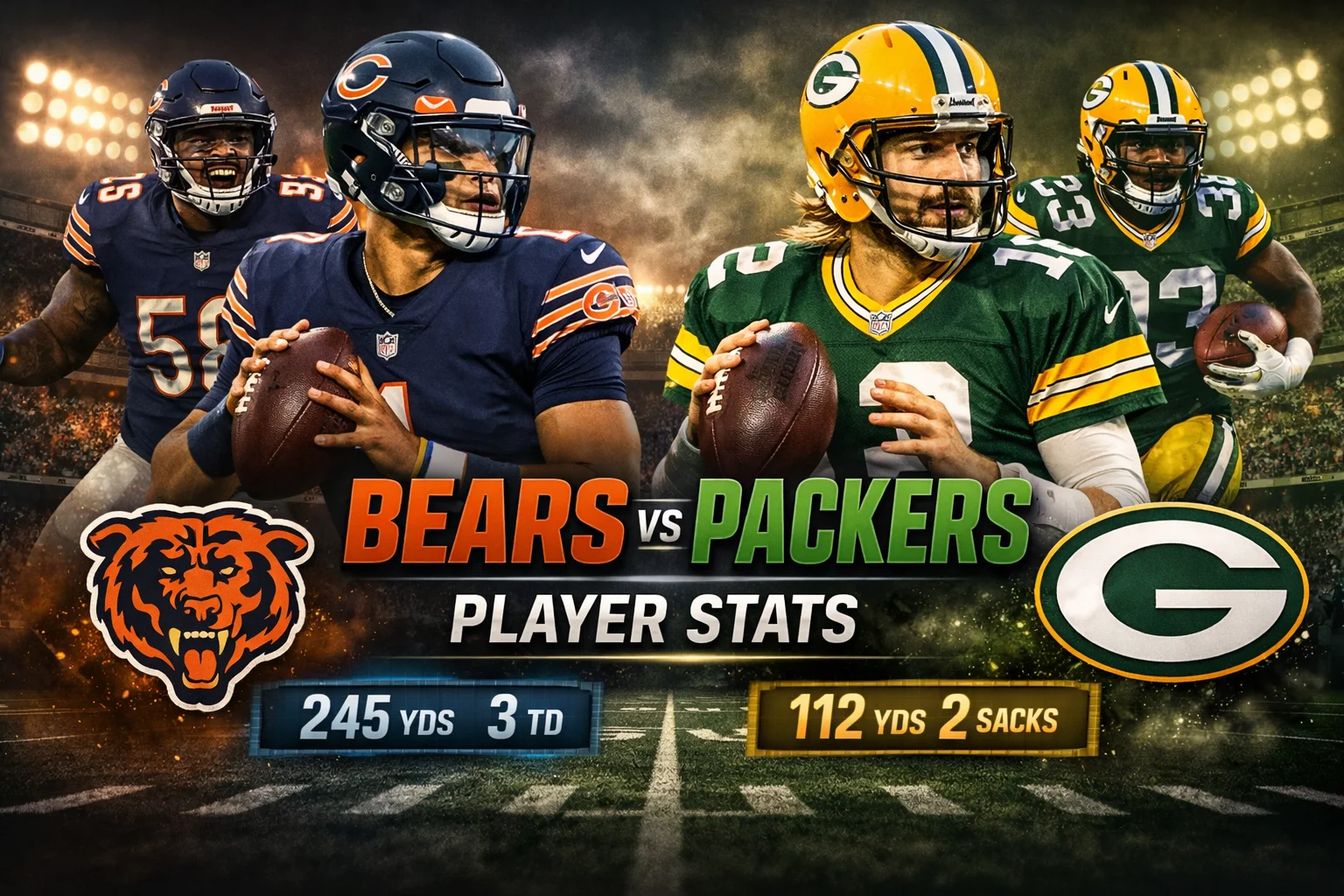
Based on the full Green Bay Packers vs Chicago Bears player stats breakdown from the 2025 season, several trends point to what both teams need to improve heading into 2026.
Green Bay needs to improve fourth-quarter execution. Their 16 Q4 points to Chicago’s 45 is a red flag regardless of how well Love plays in the first three quarters.
Chicago needs to improve early consistency. Caleb Williams’ completion rate below 55% in two of three games suggests he still forces too many throws under pressure. Reducing poor throw rate from 8–13 per game would make this offense elite.
For Green Bay, kicker accuracy in clutch moments is the clearest area to address. Two missed field goals in a 4-point loss in Game 3 is the kind of stat that sticks through an offseason.
Frequently Asked Questions (FAQs)
Who had the best individual stats in the Green Bay Packers vs Chicago Bears series?
Jordan Love led all players with 757 combined passing yards, 7 touchdowns, and a 111.3 average passer rating across the games he played. He was the top individual performer of the series.
What was the final score of Green Bay vs Chicago on December 7, 2025?
The Packers won 28–21. Jordan Love threw 3 touchdowns and Josh Jacobs ran in the go-ahead score in the fourth quarter.
Who won the Green Bay Packers vs Chicago Bears game on December 21, 2025?
Chicago won 22–16 in overtime. D.J. Moore caught the game-winning 46-yard touchdown from Caleb Williams in overtime.
How many touchdowns did Jordan Love throw against Chicago in 2025?
Love threw 7 touchdown passes across the games he played in the series with just 1 interception, posting a dominant 111.3 average passer rating.
Who scored the winning touchdown in the January 11, 2026 game?
D.J. Moore caught a 25-yard touchdown pass from Caleb Williams with 1:48 remaining to give Chicago a 31–27 victory and win the season series.
How did Caleb Williams perform in the Green Bay Packers vs Chicago Bears rivalry?
Williams averaged 266 passing yards per game with 6 touchdowns and 3 interceptions. His 50.0% completion rate in Game 3 was his weakest but his yards after the catch numbers saved the offense.
What was Green Bay’s rushing performance vs Chicago in 2025?
The Packers averaged 136 rushing yards per game in the series, their best individual output being 192 yards in Game 2. However they only scored 1 rushing touchdown across all three games.
How many interceptions did Green Bay’s defense pick off against Chicago?
Green Bay’s defense intercepted Caleb Williams 3 times across the series — 1 in Game 1 and 2 in Game 3. Those turnovers were critical to the Packers’ wins and near-wins.
Which Bears receiver had the biggest impact in the series?
D.J. Moore was the most impactful receiver in the series. His 46-yard overtime touchdown in Game 2 and his 25-yard walk-off score in Game 3 were the two most important catches of the entire rivalry in 2025.
Who leads the Green Bay Packers vs Chicago Bears all-time series?
Green Bay leads the all-time series significantly, as it is the oldest rivalry in NFL history dating to 1921. However Chicago won 2 of 3 matchups in the 2025 season and enters 2026 with momentum.
Conclusion
The Green Bay Packers vs Chicago Bears player stats from the 2025 season reveal a rivalry that is as competitive as it has ever been.
Jordan Love established himself as the most efficient quarterback in the series while Caleb Williams proved he can deliver in the most critical moments.
Green Bay won the statistical battle in two of three games but Chicago won the series by dominating the fourth quarter.
For fans, analysts, and fantasy players heading into 2026, this data provides a clear picture of where both rosters stand. The next chapter of the NFL’s greatest rivalry promises even bigger individual performances from both sides.
