

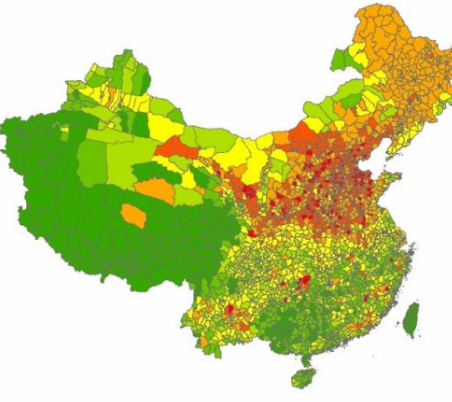
People who learn Mandarin online may notice that certain surnames appear repeatedly in one region but rarely in another. An online Chinese teacher may explain that this pattern arose from migration routes and administrative practices that resulted in population movements over many periods of Chinese history. Surname geography essentially means stable family networks which formed under specific political and environmental conditions.
Very early, clan groups settled near water routes or military outposts. When a family grew large in one area, its surname became associated with that land. Generational expansion usually stayed close to the original settlement, which allowed one surname to form a strong presence within a small territory. Written records show that large clans placed great value on burial grounds, ancestral halls, and cultivation rights, producing long-term residency patterns. This explains why certain surnames remain dominant in one province even when the total population changed drastically in later periods. Imperial relocation policies also shaped surname concentration. Rulers transferred entire households to new border regions for farming or defense, forming fresh settlements that preserved the surname distribution of their original home. Over time, this produced clear clusters in inland regions or frontier zones. Some movements were voluntary, but many followed administrative needs, such as land reclamation or new river projects. As a result, surname presence in specific prefectures reflects decisions made during earlier dynasties rather than modern movement.
Marriage practices contributed as well. In many rural districts, families preferred matches within a limited radius, which kept surname patterns stable. Restrictions on travel, especially before modern transport, reinforced this structure. Even today, villagers in some areas can trace local surname maps over several hundred years through genealogies and temple records.
Then, language variation also played a part. In regions with strong local dialect traditions, families tended to stay within familiar speech zones. This helped maintain separation between surname groups in adjacent counties. Pronunciation differences preserved surname forms that might have shifted elsewhere, giving each region a distinct set of spellings and ancestral stories.
Mandarin teaching institutions like GoEast Mandarin has produced certain cultural notes on surname origins in advanced reading classes! Such extra material looks at regional surnames. The focus lies in the linguistic and social background of naming systems.
To sum up a bit, modern mobility has changed residence patterns, yet regional surname clusters still appear in city statistics, village records, archaeological reports. This makes surname geography a valuable field for further study within Chinese cultural history.
