

Catherine the Great furniture represents one of the most fascinating chapters in imperial Russian history. As Empress of Russia from 1762 to 1796, Catherine II collected and commissioned extraordinary furniture pieces that blended European elegance with Russian opulence.
Her furniture collection went beyond mere decoration, serving as powerful symbols of political authority and cultural sophistication.
From ornate Rococo chairs to Neoclassical desks, each piece told a story of ambition, artistry, and empire. Today, these magnificent artifacts continue to captivate historians, collectors, and design enthusiasts worldwide, preserved in museums like the State Hermitage.
Who Was Catherine the Great?
Catherine II, known as Catherine the Great, ruled Russia for 34 years. She was the longest-reigning female leader in Russian history.
Born in Prussia as Sophie of Anhalt-Zerbst, she married into the Romanov dynasty at age 16. After overthrowing her husband Peter III in 1762, she became Empress Regnant.
Her reign transformed Russia into a major European power. She expanded Russian territory, modernized government institutions, and championed Enlightenment ideals.
Catherine’s Passion for Art and Culture
Catherine was deeply passionate about European art and culture. She corresponded with famous philosophers like Voltaire and Diderot, drawing inspiration from their ideas.
She established Russia’s first state-funded libraries and academies. Her patronage created a golden age of Russian culture that lasted decades.
The Empress wanted Russia to rival the great cultural centers of Europe. She used art, architecture, and furniture to project power and sophistication.
The Birth of Catherine’s Furniture Collection
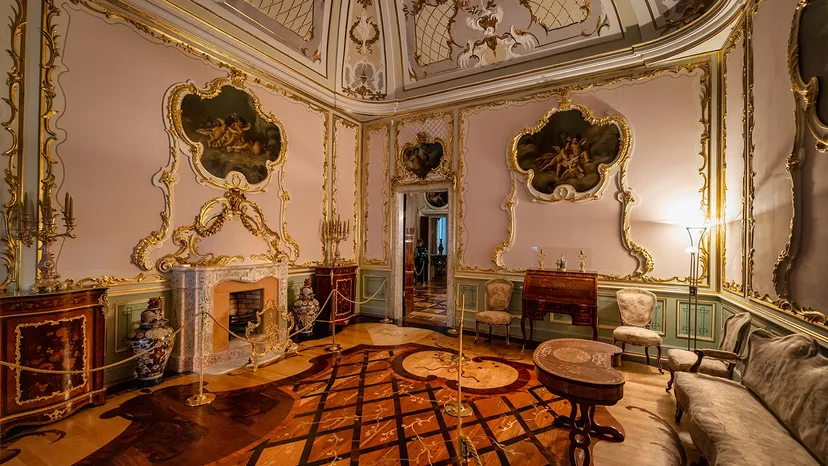
Catherine’s furniture collection began as part of her larger cultural mission. She wanted to elevate Russian court life to match Versailles and other European palaces.
She actively commissioned pieces from master craftsmen across Europe. French, German, and English furniture makers received lucrative contracts from the Russian court.
Catherine also invested in developing Russian furniture-making skills. She invited foreign artisans to train local craftsmen, creating a new generation of skilled Russian furniture makers.
Rococo Style Influence
The Rococo style dominated Catherine’s early furniture acquisitions. This French artistic movement emphasized graceful curves, elaborate ornamentation, and playful elegance.
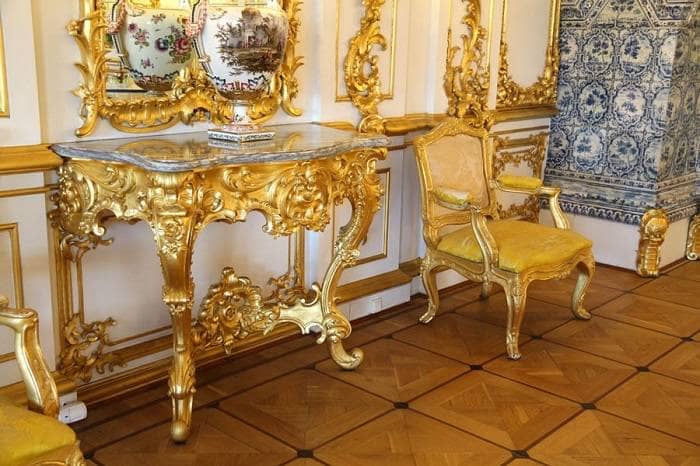
Rococo furniture featured intricate carvings, gilded details, and asymmetrical designs. Colors were typically soft pastels paired with gold accents.
Catherine commissioned sets of Rococo chairs from Nicolas-François Gillet, a renowned French furniture maker. These chairs showcased the delicate craftsmanship and sophisticated aesthetics she admired.
The Rococo pieces in her collection included ornate consoles, decorative screens, and elegant writing desks. Each piece demonstrated the height of 18th-century French luxury.
Neoclassical Style Dominance
As Rococo faded in popularity, Neoclassicism emerged as the dominant style. This movement drew inspiration from ancient Greek and Roman art and architecture.
Neoclassical furniture emphasized clean lines, symmetry, and restrained elegance. Designs featured classical motifs like laurel wreaths, columns, and urns.
Catherine embraced Neoclassicism enthusiastically in her later years. She commissioned numerous pieces that showcased the style’s dignified grandeur.
The Malachite Room in the Winter Palace exemplifies her love for Neoclassical aesthetics. Green malachite columns and furniture created a stunning visual harmony.
Famous Furniture Makers
Catherine worked with Europe’s most celebrated furniture makers. These master craftsmen created pieces that remain legendary today.
David Roentgen
David Roentgen was a German cabinet-maker famous for mechanical furniture. His pieces featured hidden compartments, secret drawers, and automatic mechanisms.
Catherine commissioned multiple pieces from Roentgen’s workshop. His most famous creation for her was the Cameo Cabinet, which housed her collection of carved gems.
Roentgen’s furniture combined technical innovation with artistic beauty. His mechanical desks amazed visitors with their complexity and elegance.
Jean-Henri Riesener
Riesener was the premier French furniture maker of the 18th century. He served as royal cabinet-maker to Louis XVI before working for Catherine.
His pieces featured exquisite marquetry work and gilded bronze mounts. The craftsmanship was so fine that joints were nearly invisible.
Catherine acquired several Riesener pieces for her palaces. His writing desks and commodes became centerpieces of her collection.
The Gambs Brothers
The Gambs brothers established St. Petersburg’s finest furniture workshop. They were German craftsmen who settled in Russia permanently.
Working closely with Catherine’s specifications, they created furniture blending European techniques with Russian materials. They trained numerous Russian apprentices in advanced cabinet-making.
Their workshop continued thriving long after Catherine’s death. The Gambs family became synonymous with high-quality Russian furniture.
Materials Used in Royal Furniture
Catherine’s furniture used only the finest materials available. Expense was never a concern when pursuing perfection.
Exotic Woods
Mahogany from the Caribbean provided rich, dark beauty. Rosewood from Brazil offered unique grain patterns and durability.
Ebony from Africa created dramatic black contrasts. Karelian birch, native to Russia, became fashionable for its distinctive figured grain.
These exotic woods were imported at great cost. They demonstrated Russia’s global trading connections and vast wealth.
Gilded Bronze (Ormolu)
Ormolu refers to gilded bronze decorative elements. French craftsmen perfected this technique to create lustrous gold accents.
Ormolu mounts adorned furniture legs, corners, and drawer pulls. The gilding process used mercury, making it dangerous but producing stunning results.
Catherine’s furniture featured elaborate ormolu designs. Lions, griffons, vines, and classical figures decorated her pieces.
Precious Stones and Metals
Some furniture incorporated precious materials like malachite, jasper, and lapis lazuli. These Russian stones added unique local character.
Silver and gold leaf covered surfaces and frames. Ivory inlays created intricate decorative patterns.
The Amber Room, though technically architecture, showcased Catherine’s love for precious materials. Amber panels glowed alongside gold leaf embellishments.
Catherine Palace at Tsarskoye Selo
The Catherine Palace served as her primary summer residence. Located outside St. Petersburg, this magnificent palace showcased her finest furniture.
The palace featured the famous Amber Room, often called the Eighth Wonder of the World. Amber panels lined the walls alongside gilded furniture and mirrors.
State rooms displayed Rococo and Neoclassical furniture in perfect harmony. Each room followed a distinct color scheme coordinated with the furniture.
The Great Hall featured massive gilded consoles and throne-like chairs. These pieces overwhelmed visitors with their scale and opulence.
Winter Palace and the Hermitage
The Winter Palace in St. Petersburg was Catherine’s primary residence. She lived here during the cold Russian winters.
Catherine added the Small Hermitage as her private retreat. The name “hermitage” means secluded place in French.
She filled these buildings with furniture from across Europe. French chairs, German desks, and Italian cabinets filled the rooms.
The Hermitage became her personal museum, housing art and furniture. Today it is one of the world’s greatest museums.
Pavlovsk Palace Design
Catherine built Pavlovsk Palace as a gift for her son Paul. The palace showcased refined Neoclassical elegance.
Furniture at Pavlovsk was slightly more restrained than other residences. Clean lines and balanced proportions dominated the design aesthetic.
Scottish architect Charles Cameron designed much of Pavlovsk’s interiors and furniture. His work perfectly captured Catherine’s evolving tastes.
The palace demonstrated how Catherine’s furniture style matured over time. Early Rococo gave way to sophisticated Neoclassicism.
The Erotic Furniture Legend
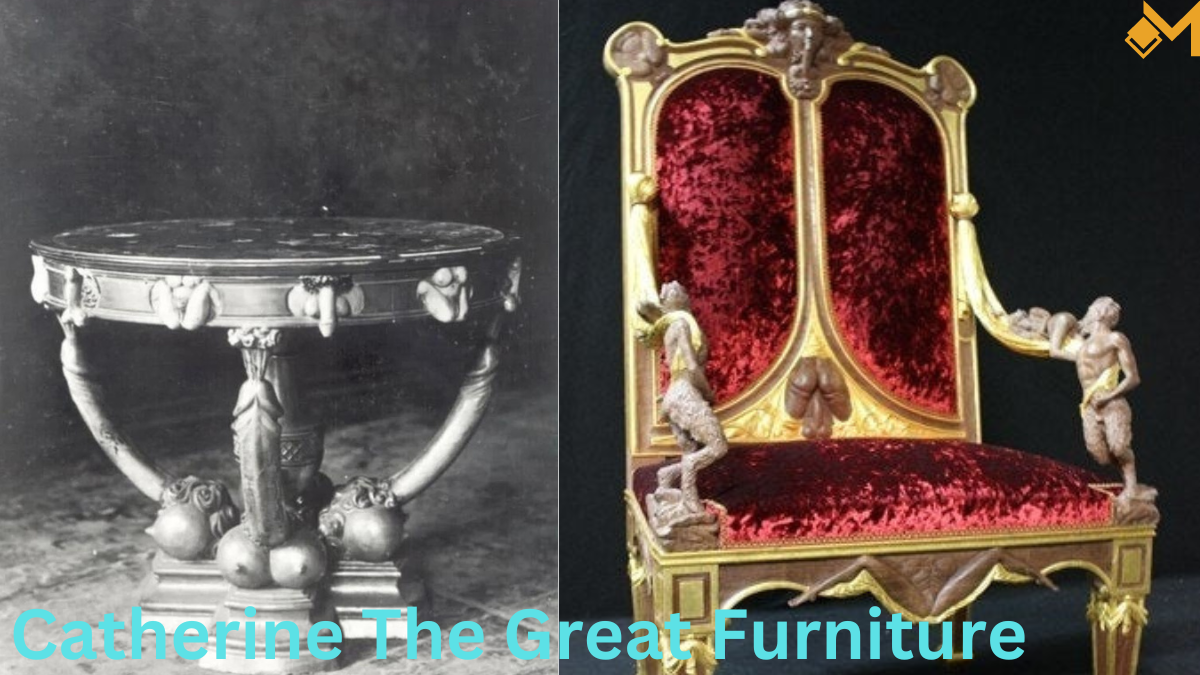
Catherine the Great furniture includes controversial legendary pieces. Rumors of “erotic furniture” have circulated for over two centuries.
The Nazi Discovery Claims
German Wehrmacht soldiers claimed to discover erotic furniture in 1941. During Operation Barbarossa, they photographed unusual pieces at one of Catherine’s palaces.
The photographs supposedly showed tables and chairs with explicit sexual imagery. These images surfaced after World War II ended.
Historians debate whether the photographs are authentic. No original pieces survived because the palace was bombed and burned.
Historical Authenticity Questions
Most historians remain skeptical about the erotic furniture’s authenticity. No documentation existed during Catherine’s lifetime or immediately after.
The furniture might have been created by others in the Romanov family. Or it could have been Nazi propaganda designed to discredit Russian culture.
Catherine’s son Paul I allegedly hid scandalous items after her death. This adds some credibility to the legend but proves nothing definitively.
Political Propaganda Context
Catherine faced constant attacks from political enemies. Rumors about her sex life were weaponized to undermine her authority.
The erotic furniture legend fits a pattern of salacious stories. These myths served to diminish a powerful woman’s accomplishments.
Whether real or fabricated, the legend reveals historical sexism. Male rulers rarely faced similar scandalous furniture rumors.
Furniture as Political Symbol
Catherine’s furniture served important political functions. Each piece communicated messages about power, culture, and legitimacy.
Opulent furniture demonstrated Russia’s wealth to foreign ambassadors. Visitors understood immediately that Russia was a major power.
European-style furniture proved Russia belonged among civilized nations. Catherine deliberately used design to combat stereotypes about Russian backwardness.
The furniture also legitimized Catherine’s rule. A German-born usurper needed to project strength and cultural authority.
Collecting European Masterpieces
Catherine actively purchased furniture from across Europe. She bought entire collections when opportunities arose.
She acquired pieces from bankrupt aristocrats and estates. Financial difficulties of European nobles became her collecting opportunities.
Catherine purchased Sir Robert Walpole’s furniture collection in 1779. This acquisition added important English pieces to her holdings.
She also bought complete sets from French workshops. Matching suites of furniture created unified room designs.
Training Russian Craftsmen
Catherine invested heavily in developing Russian furniture-making skills. She did not want to depend entirely on foreign imports.
Foreign master craftsmen received incentives to relocate to Russia. They established workshops and trained Russian apprentices.
Over time, Russian furniture makers achieved European quality standards. Some pieces became indistinguishable from French or German work.
This skill transfer had lasting effects on Russian decorative arts. The tradition continued flourishing long after Catherine’s death.
Furniture Room Designs
Catherine designed complete room environments, not just individual pieces. Furniture coordinated with wall colors, fabrics, and architectural details.
The Blue Cabinet
The Blue Cabinet featured furniture upholstered in blue silk velvet. Walls were painted complementary shades of blue.
Gilded furniture frames contrasted beautifully with the blue tones. The room demonstrated Catherine’s eye for color harmony.
The Silver Cabinet
This room featured furniture with extensive silver ornamentation. Silver leaf covered frames and decorative elements.
The effect was cooler and more restrained than gilded rooms. It showcased Catherine’s appreciation for varied aesthetic moods.
The Red Cabinet
Deep red dominated this chamber’s design scheme. Furniture upholstery used rich crimson velvets and silks.
Red symbolized imperial power and authority. The room served for important state functions and ceremonies.
Specific Furniture Types
Catherine’s collection included many specialized furniture forms. Each type served specific functions in palace life.
Throne Chairs
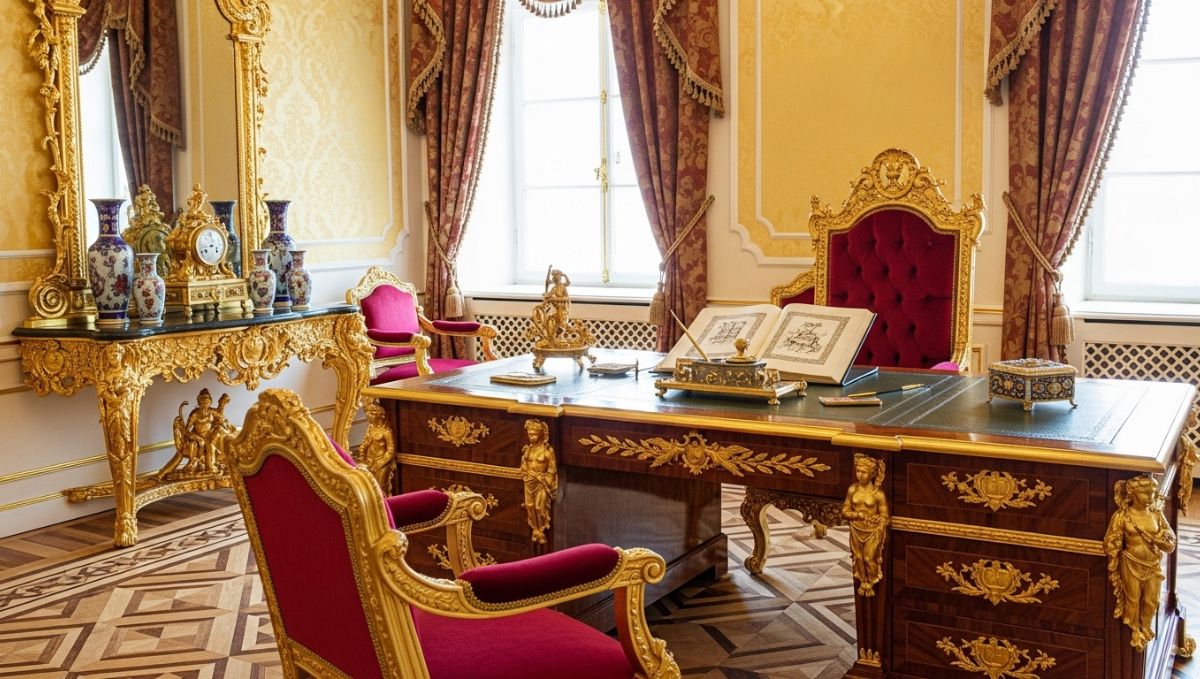
Catherine commissioned elaborate throne chairs for state ceremonies. These pieces combined maximum visual impact with symbolic meaning.
Thrones featured high backs carved with double-headed eagles. The Russian imperial symbol appeared prominently on many pieces.
Gilding covered the frames completely, creating dazzling golden thrones. Red velvet upholstery added traditional imperial color.
Writing Desks (Secrétaires)
Secrétaires were essential furniture for Catherine’s daily work. She spent hours writing correspondence and government documents.
These desks featured fall-front designs revealing complex interiors. Multiple drawers, compartments, and pigeonholes organized papers.
Secret compartments hid sensitive documents and valuables. Mechanical locks protected private correspondence from prying eyes.
Commodes and Chests
Commodes provided storage while serving as decorative showcases. Marble tops added luxury and durability.
Elaborate marquetry decorated the drawer fronts. Geometric patterns, flowers, and classical scenes appeared in contrasting woods.
Ormolu handles and corner mounts added finishing touches. Every detail received careful attention from master craftsmen.
Consoles and Tables
Console tables lined palace walls between windows. These pieces displayed decorative objects like vases and sculptures.
Center tables anchored room layouts in important chambers. Round or rectangular, they often featured marble or malachite tops.
Gaming tables served for cards and other entertainments. Special compartments held game pieces and markers.
Upholstery and Fabrics
Furniture upholstery used the finest fabrics available. Catherine spared no expense on textiles.
Silk velvet was the preferred upholstery material. Deep reds, blues, greens, and golds created rich color palettes.
White silk with subtle tinting appeared in private chambers. This created lighter, more intimate atmospheres than state rooms.
Gobelins tapestries from France covered some furniture. These woven artworks added prestige and artistic value.
Decorative Motifs and Symbolism
Catherine’s furniture featured meaningful decorative elements. These motifs communicated specific messages.
The double-headed eagle appeared frequently, representing Russian imperial power. This ancient symbol dated back to Byzantine times.
Classical figures from Greek and Roman mythology decorated many pieces. Mythological scenes demonstrated Catherine’s Enlightenment education.
Floral motifs and natural elements reflected Rococo influences. Vines, leaves, and flowers created organic, flowing designs.
Preservation Through Wars and Revolution
Catherine’s furniture survived incredible challenges over 200+ years. Wars, revolution, and regime changes threatened these treasures.
The Russian Revolution of 1917 endangered imperial possessions. Bolsheviks could have destroyed or sold everything as symbols of oppression.
Fortunately, many pieces were absorbed into state museums. The new Soviet government recognized their cultural value.
World War II posed the greatest threat. Nazi Germany invaded Russia, bombing and looting palaces.
World War II Damage and Loss
Operation Barbarossa devastated many Russian palaces in 1941. German forces occupied Catherine’s residences at Tsarskoye Selo.
Many furniture pieces were looted and transported to Germany. Others burned when palaces were bombed and set ablaze.
The Amber Room disappeared completely during the war. It has never been recovered despite extensive searches.
Curators frantically evacuated what they could before invasion. Many pieces survived because of these heroic rescue efforts.
Post-War Restoration Projects
After World War II, massive restoration efforts began. The Soviet government committed resources to rebuilding Catherine’s palaces.
The Amber Room Reconstruction
The most ambitious project was recreating the Amber Room. This took decades of painstaking work by master craftsmen.
Artisans studied old photographs and descriptions carefully. They sourced amber from the same Baltic regions.
The reconstructed Amber Room opened in 2003. It represents one of history’s greatest restoration achievements.
Furniture Conservation
Original surviving furniture received expert conservation treatment. Specialists repaired damage and stabilized deteriorating materials.
When originals were lost, accurate reproductions were created. Craftsmen used traditional techniques and materials.
Archives provided blueprints and sketches for recreation. The goal was historical accuracy in every detail.
Museums Housing Catherine’s Furniture Today
Catherine’s furniture collection is preserved in several locations. These museums allow public access to her legacy.
State Hermitage Museum
The Hermitage in St. Petersburg holds the largest collection. Hundreds of Catherine-era pieces fill the state rooms.
The Winter Palace sections display furniture in original contexts. Visitors see how rooms looked during Catherine’s reign.
Special exhibitions regularly feature furniture from the collection. The museum constantly researches and conserves these treasures.
Catherine Palace at Tsarskoye Selo
The restored Catherine Palace showcases her summer residence furniture. Both originals and reproductions furnish the state rooms.
The Amber Room is the main attraction here. Surrounding rooms display period-appropriate furniture in the Rococo style.
Guided tours explain the history and significance of each piece. Photography is restricted to protect the artifacts.
Pavlovsk Palace Museum
Pavlovsk retains much original furniture from Catherine’s era. The Neoclassical pieces here demonstrate her evolving taste.
Charles Cameron’s furniture designs are well represented. His unique style bridged French and Russian aesthetics.
The palace gardens and interiors work together harmoniously. Furniture complements the architectural vision perfectly.
International Collections
Some Catherine the Great furniture exists in museums outside Russia. Wars and sales dispersed pieces internationally.
Major European and American museums own Catherine-era pieces. The Metropolitan Museum of Art and Victoria and Albert Museum have examples.
Private collectors also own furniture from her reign. These pieces occasionally appear at prestigious auctions.
Authenticating furniture as truly Catherine’s can be challenging. Provenance documentation is crucial for verification.
Influence on Modern Design
Catherine’s furniture continues influencing contemporary design. Modern designers draw inspiration from her collection.
The blend of Rococo and Neoclassical elements remains popular. This combination creates timeless elegance that transcends eras.
Luxury furniture brands recreate Catherine-style pieces. High-end reproductions bring imperial glamour to modern homes.
Interior designers reference her color schemes and room layouts. The coordinated approach to total environment design is still relevant.
Furniture Reproductions and Replicas
High-quality reproductions of Catherine’s furniture are commercially available. These pieces make imperial style accessible to collectors.
Specialized workshops create museum-quality replicas. They use traditional techniques and authentic materials.
Prices vary from affordable interpretations to expensive exact copies. The finest reproductions cost as much as original antiques.
Reproductions serve educational purposes in exhibitions. Museums use them when originals are too fragile to display.
Academic Research and Study
Scholars continue researching Catherine the Great furniture extensively. New discoveries and insights emerge regularly.
Archives contain unexamined documents about furniture commissions. Researchers find receipts, letters, and design sketches.
Conservation science reveals construction techniques and materials. X-rays and chemical analysis provide technical information.
Comparative studies link Catherine’s pieces to broader European trends. Her furniture fits within larger art history narratives.
Auction Records and Values
Original Catherine the Great furniture commands extraordinary prices. When pieces appear at auction, collectors compete fiercely.
Documented provenance linking furniture directly to Catherine increases value dramatically. Authentication is crucial for maximizing price.
Even period pieces from her era fetch high prices. Furniture from 1760s-1790s Russia is highly collectible.
Reproductions and inspired pieces have separate markets. Quality modern interpretations also command premium prices.
Cultural Heritage Significance
Catherine’s furniture represents irreplaceable Russian cultural heritage. These pieces tell stories about history, art, and society.
The furniture demonstrates 18th-century craftsmanship at its peak. Techniques used then have largely disappeared.
The collection symbolizes cultural exchange between Russia and Europe. Catherine’s patronage connected distant artistic traditions.
Preserving these artifacts protects knowledge for future generations. Each piece is a tangible link to the past.
Digital Preservation Efforts
Modern technology aids in documenting Catherine’s furniture. Digital tools create permanent records of these treasures.
3D scanning captures precise measurements and details. These digital models preserve information even if originals deteriorate.
High-resolution photography documents current condition thoroughly. Images reveal details invisible to naked eye.
Virtual reality allows global audiences to experience the furniture. People worldwide can explore Catherine’s palaces digitally.
Educational Programs
Museums offer educational programs focused on Catherine’s furniture. These programs serve students, scholars, and general public.
School groups tour palaces learning about history through furniture. Objects make abstract historical concepts tangible.
University students study furniture as primary historical sources. Design, materials, and provenance reveal cultural information.
Public lectures and workshops explain furniture making techniques. Demonstrations show traditional craftsmanship methods.
Tourism and Cultural Exchange
Catherine’s furniture attracts millions of tourists annually. International visitors flock to Russian palaces and museums.
Tourism generates revenue supporting conservation efforts. Entrance fees fund ongoing preservation and research.
Cultural tourism promotes understanding between nations. Visitors appreciate Russian artistic achievements firsthand.
Traveling exhibitions bring Catherine’s furniture to international audiences. These shows build cultural bridges across borders.
The Legacy in 2026
In 2026, Catherine the Great furniture remains culturally vital. Over 230 years after her death, interest continues growing.
New technologies allow deeper understanding of her collection. Scientific analysis reveals secrets about materials and construction.
Climate change and aging pose ongoing preservation challenges. Museums adapt strategies to protect furniture for future generations.
Catherine’s vision of cultural excellence still inspires today. Her furniture collection achieved its goal of elevating Russian prestige.
Frequently Asked Questions (FAQs)
What style is Catherine the Great furniture?
Catherine the Great furniture primarily features Rococo and Neoclassical styles. Early in her reign, she favored ornate French Rococo, while later years emphasized restrained Neoclassical designs inspired by ancient Greece and Rome.
Is the erotic furniture of Catherine the Great real?
The authenticity of Catherine’s alleged erotic furniture remains unproven. While photographs exist showing explicit pieces, they likely originated from Nazi propaganda during World War II. No verified documentation from Catherine’s era confirms these items.
Where can I see Catherine the Great furniture today?
You can see Catherine the Great furniture at the State Hermitage Museum in St. Petersburg, Catherine Palace at Tsarskoye Selo, and Pavlovsk Palace. These museums house the largest collections of her original pieces and accurate reproductions.
Who made Catherine the Great furniture?
Catherine commissioned furniture from master craftsmen including David Roentgen (Germany), Jean-Henri Riesener (France), and the Gambs brothers (St. Petersburg). She also employed numerous French, German, and Russian artisans for her palaces.
What materials were used in Catherine’s furniture?
Catherine’s furniture used exotic woods like mahogany, rosewood, and ebony. Decorations included gilded bronze (ormolu), precious stones like malachite and jasper, silver and gold leaf, ivory inlays, and luxurious silk velvet upholstery.
How much is Catherine the Great furniture worth?
Authentic Catherine the Great furniture is priceless and rarely sold. When period pieces do appear at auction, they command hundreds of thousands to millions of dollars. Provenance documentation directly linking items to Catherine multiplies value significantly.
Did Catherine the Great design her own furniture?
Catherine did not personally design furniture, but she directed overall aesthetic vision. She commissioned specific pieces from master craftsmen, specified materials and colors, and approved or rejected designs based on her sophisticated taste.
What happened to Catherine’s furniture during wars?
Much furniture was damaged or destroyed during World War II when Nazi forces bombed Russian palaces. Some pieces were looted, others burned in fires. Post-war restoration efforts have recreated many lost pieces using historical documentation.
Can you buy reproductions of Catherine the Great furniture?
Yes, high-quality reproductions of Catherine the Great furniture are available from specialized workshops. These range from affordable interpretations to museum-quality replicas using traditional techniques and authentic materials at premium prices.
What is the most famous piece of Catherine the Great furniture?
The Amber Room is Catherine’s most famous furniture-related creation, though technically architectural. Among actual furniture, David Roentgen’s Cameo Cabinet and Catherine’s elaborate throne chairs are among the most celebrated pieces.
Conclusion
Catherine the Great furniture stands as an enduring testament to imperial ambition, artistic excellence, and cultural transformation.
Throughout her 34-year reign, Catherine II assembled one of history’s most magnificent furniture collections, blending the finest European craftsmanship with Russian materials and motifs.
Her patronage elevated Russian decorative arts to unprecedented heights, establishing workshops and training craftsmen whose influence extended far beyond her lifetime.
From the gilded Rococo splendor of her early years to the refined Neoclassical elegance of her mature taste, Catherine’s furniture choices reflected both personal sophistication and calculated political strategy.
