

Why do people drool in their sleep is a question most people ask quietly — usually after waking up to a wet pillow with zero explanation.
The short answer is that saliva keeps flowing during sleep, but your swallowing reflex slows down, your mouth muscles relax, and gravity does the rest.
For most people, occasional drooling is completely normal and harmless. But when it becomes excessive, nightly, or sudden in onset, it can signal something more significant — from sleep apnea and acid reflux to neurological conditions.
What Is Drooling and Why Does It Happen at Night?
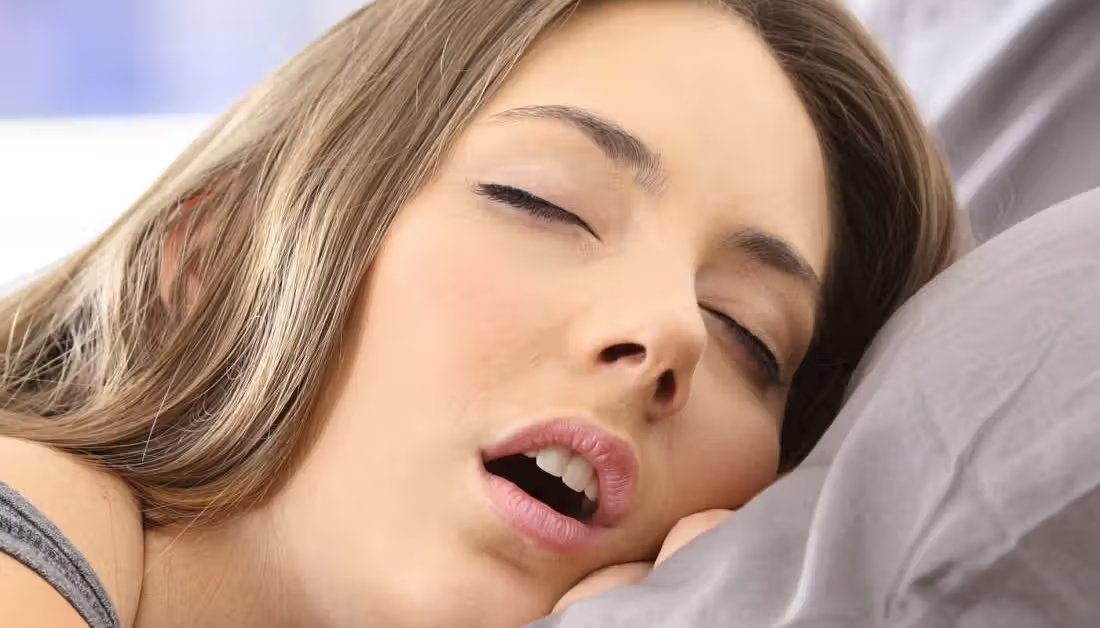
Drooling — medically called sialorrhea or hypersalivation — is the unintentional flow of saliva out of the mouth. Your body produces saliva continuously, even during sleep, because salivary glands never fully switch off.
The reason it escapes during sleep comes down to three factors working together. First, your facial and jaw muscles relax deeply. Second, your swallowing reflex becomes far less active — you swallow roughly once per minute while awake, far less while asleep. Third, if your mouth is open, gravity pulls saliva toward the path of least resistance: the pillow.
How Much Saliva Does the Body Actually Produce?
The human body produces between 0.5 and 1.5 liters of saliva per day. Production slows at night compared to daytime — but it never stops. Even at reduced nighttime rates, there is enough saliva in your mouth at any given moment that even minor muscle relaxation or a slightly open mouth allows it to leak out.
Saliva is not just water. It contains digestive enzymes, antibacterial proteins, electrolytes, and mucus. Its primary roles include beginning food digestion, protecting tooth enamel, and neutralizing acids in the mouth and throat.
Why Do People Drool in Their Sleep? The Main Causes
Sleep Position
Sleep position is one of the most straightforward causes of drooling and also the easiest to change. Back sleepers are least likely to drool because gravity directs saliva toward the throat and stomach rather than outward.
Side sleepers and stomach sleepers face a different physics problem. Gravity pulls saliva laterally — directly toward the mattress or pillow — especially if the mouth is even slightly open. This is why you often find a wet patch exactly where your cheek or chin rests.
If you have always slept on your side and only recently started drooling heavily, position alone is probably not the full story. A new underlying cause has likely emerged.
Mouth Breathing
Mouth breathing during sleep is probably the single biggest driver of nighttime drooling across all age groups. When your mouth is open, saliva accumulates and has nowhere to go but out.
Several conditions force people into mouth breathing at night. Blocked nasal passages from allergies, a cold, or a deviated septum are the most common culprits. Enlarged tonsils or adenoids — more common in children but also found in adults — can also obstruct the nasal airway enough to force mouth breathing.
People who are habitual mouth breathers due to structural anatomy (a recessed jaw, very narrow nasal passages) will drool more consistently and cannot fix it purely through sleep position changes.
Sleep Apnea
Obstructive sleep apnea (OSA) is one of the more serious medical causes of nighttime drooling. In sleep apnea, the soft tissues of the upper airway collapse repeatedly during sleep, blocking airflow for several seconds or longer at a time.
When the airway blocks, the body compensates by opening the mouth to gasp for more air. An open mouth with relaxed muscles and reduced swallowing is a perfect recipe for drooling. If you regularly drool and also wake feeling unrested, have loud snoring reported by a partner, or experience daytime fatigue or morning headaches, sleep apnea warrants investigation.
Around 23.5 million Americans with sleep apnea are currently undiagnosed, according to the American Academy of Sleep Medicine. Left untreated, sleep apnea increases risk for hypertension, heart disease, stroke, and diabetes. Drooling may be your most noticeable symptom.
Allergies and Sinus Congestion
Seasonal or year-round allergies cause inflammation and swelling in the nasal passages, making it difficult or impossible to breathe through the nose during sleep. Post-nasal drip — where mucus drains down the back of the throat — also stimulates saliva production as the body tries to dilute or clear the irritant.
The result is a blocked nose, a reflexively open mouth, increased saliva production, and drooling. Treating the underlying allergy often resolves the drooling without any other intervention.
Respiratory infections like the common cold, strep throat, tonsillitis, mononucleosis, and sinus infections produce the same nasal blockage effect and typically cause temporary spikes in nighttime drooling until the infection clears.
GERD (Gastroesophageal Reflux Disease)
GERD is a condition where stomach acid regularly flows back up into the esophagus. The body has a reflex response to esophageal acid exposure: it produces extra saliva to neutralize and wash the acid back down. This reflex is called water brash and it can be pronounced at night.
When lying flat, stomach acid is more likely to reflux upward. The resulting surge in saliva production, combined with relaxed muscles and mouth breathing, leads to noticeable nighttime drooling. GERD-related drooling is often accompanied by a sour taste in the mouth, heartburn, or a burning sensation in the chest upon waking.
Medications
A significant and underrecognized cause of nighttime drooling is medication side effects. Both hypersalivation (too much saliva production) and impaired swallowing can be caused by drugs in several categories.
| Medication Category | Examples | How It Causes Drooling |
|---|---|---|
| Antipsychotics | Clozapine, olanzapine | Direct stimulation of salivary glands; muscle relaxation |
| Sedatives / sleep aids | Benzodiazepines, Z-drugs | Deep muscle relaxation; reduced swallowing reflex |
| Antibiotics | Some broad-spectrum types | Disrupt oral flora; stimulate salivary response |
| Alzheimer’s medications | Donepezil, rivastigmine | Cholinergic effects increase saliva production |
| Muscle relaxants | Baclofen, cyclobenzaprine | Impair swallowing control |
| Anticonvulsants | Certain seizure medications | Affect muscle tone and swallowing |
If you started a new medication and also started drooling more at night, the connection is worth raising with your prescribing doctor. Never stop a medication without medical guidance, but a dose adjustment or alternative drug may resolve the issue.
Bruxism (Teeth Grinding During Sleep)
Sleep bruxism — the involuntary grinding or clenching of teeth during sleep — is independently associated with increased nighttime drooling. The link is mostly indirect: bruxism strongly correlates with mouth breathing and snoring, both of which promote drooling.
The jaw tension from bruxism can also alter the resting position of the mouth, making it more likely to stay slightly open during sleep. People with bruxism often wake with jaw soreness, headaches, or worn tooth surfaces in addition to a wet pillow.
Neurological Conditions
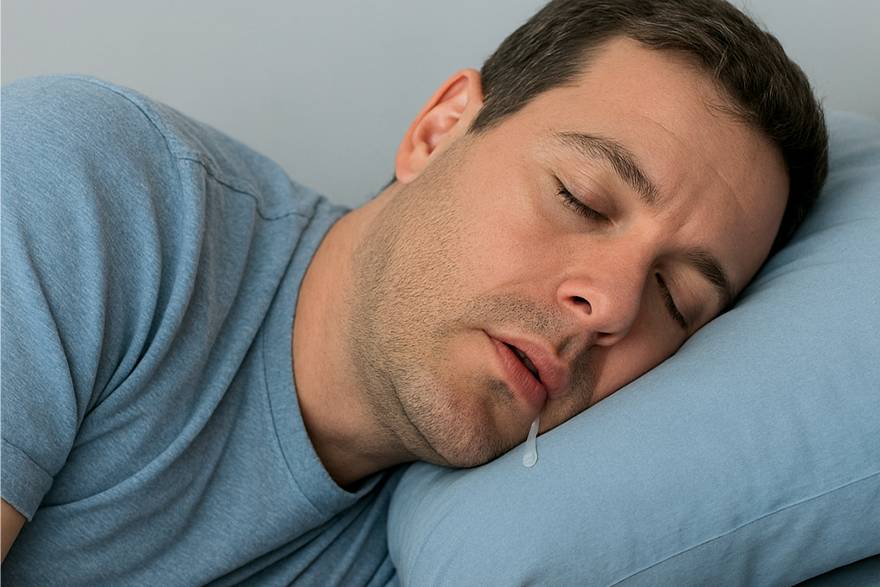
Several neurological conditions directly impair the nerves and muscles responsible for swallowing and oral motor control, leading to chronic and often severe drooling called sialorrhea.
Parkinson’s disease is the most common neurological cause of drooling in adults. Interestingly, Parkinson’s does not typically cause excess saliva production — instead, it impairs the automatic swallowing reflex, so saliva that would normally be swallowed constantly instead pools in the mouth and overflows. Drooling affects an estimated 32–74% of people with Parkinson’s disease.
Stroke can damage the motor cortex or brainstem regions controlling swallowing and lip closure, resulting in drooling that begins suddenly after the event.
Cerebral palsy, ALS (amyotrophic lateral sclerosis), and multiple sclerosis all affect the motor pathways that govern muscle coordination, including those in the face, tongue, and throat.
Autonomic neuropathy — which can be a complication of diabetes — can disrupt the nerve signals that regulate salivary gland activity and swallowing timing.
If drooling has emerged or worsened alongside other neurological symptoms such as tremors, weakness, difficulty speaking, or swallowing problems, a neurological evaluation is essential.
Dental and Oral Health Issues
Problems inside the mouth can increase saliva production as a local defensive or inflammatory response. Tooth decay, mouth ulcers, gum disease (periodontitis), infected teeth, pharyngitis, and other oral infections all prompt the salivary glands to produce more saliva to combat the irritant or pathogen.
Dental malocclusion — a misalignment between the upper and lower teeth — can also prevent the mouth from closing completely at rest, creating a gap through which saliva escapes during sleep.
Pregnancy
Pregnancy is a well-documented cause of increased saliva production, particularly during the first trimester. The condition is called ptyalism gravidarum or hypersalivation of pregnancy. It is closely linked to the nausea and morning sickness of early pregnancy — the body produces excess saliva partly in response to acid reflux and partly due to hormonal changes.
For many pregnant women this means not only more daytime drooling but also a significantly wetter pillow each morning. It typically resolves after the first trimester or after delivery.
Deep Sleep and REM Sleep
Drooling is more common during the deepest stages of sleep, particularly slow-wave sleep (SWS) and certain phases of REM (rapid eye movement) sleep. In these stages, muscle tone drops to its lowest point and swallowing reflexes are most suppressed.
This is why you might drool occasionally after an unusually deep or exhausted night of sleep but not on regular nights. It is also why napping in a chair — where the head drops forward and the mouth falls open — produces drooling in people who do not normally drool in bed.
Is Drooling During Sleep Normal or a Problem?
Most occasional drooling is normal and requires no treatment. The line between normal and problematic comes down to frequency, volume, and whether other symptoms accompany it.
| Situation | Likely Normal | Warrants Attention |
|---|---|---|
| Frequency | Occasional — a few times a month | Nightly or almost every night |
| Amount | Damp spot on pillow | Pillow soaked; skin around mouth irritated |
| Onset | Always been a side sleeper who sometimes drools | Sudden new onset, especially after age 50 |
| Other symptoms | None | Snoring, fatigue, heartburn, tremors, swallowing issues |
| Age | Any age without other symptoms | Over 60 with new or worsening drooling |
| Linked events | Cold, allergy season, new medication | No obvious trigger; persistent and progressive |
The key phrase from sleep medicine experts: occasional drooling during deep sleep is common; excessive and frequent drooling signals a problem worth evaluating clinically.
Can Drooling During Sleep Be a Sign of Something Serious?
In most cases, no. But there are specific scenarios where drooling at night is an early or prominent symptom of a condition that genuinely needs medical attention.
Sleep apnea is the most actionable of these — it is common, underdiagnosed, and very treatable, but it carries serious cardiovascular and metabolic risks if ignored.
Early neurological disease — particularly Parkinson’s — can present with increased drooling before other symptoms become obvious. In older adults, new nighttime drooling alongside any movement, speech, or swallowing changes should be discussed with a neurologist.
Stroke can cause sudden-onset drooling as one of its symptoms. If drooling begins abruptly alongside facial drooping, slurred speech, arm weakness, or confusion, treat it as a medical emergency and call emergency services immediately.
How to Stop Drooling in Your Sleep: Treatment Options
Change Your Sleep Position
Switching from side or stomach sleeping to back sleeping is the simplest first step. When lying on your back, gravity keeps saliva in your mouth rather than pulling it outward toward the pillow.
If you find it hard to stay on your back, try a cervical pillow designed to support proper spinal alignment — these can make back sleeping more comfortable. Some people use a body pillow on either side to prevent rolling over during the night.
Treat Underlying Nasal Congestion and Allergies
If nasal blockage is forcing mouth breathing, treating it directly addresses the root cause. Over-the-counter antihistamines, decongestant nasal sprays (used short-term only), or saline nasal rinses before bed can open the airway enough to restore nasal breathing during sleep.
For chronic or severe allergies, a course of allergen immunotherapy or prescription nasal corticosteroid sprays may provide more lasting relief. Consulting an ENT specialist is worthwhile if congestion is structural — such as a deviated septum — rather than inflammatory.
Use Mouth Tape or a Chin Strap
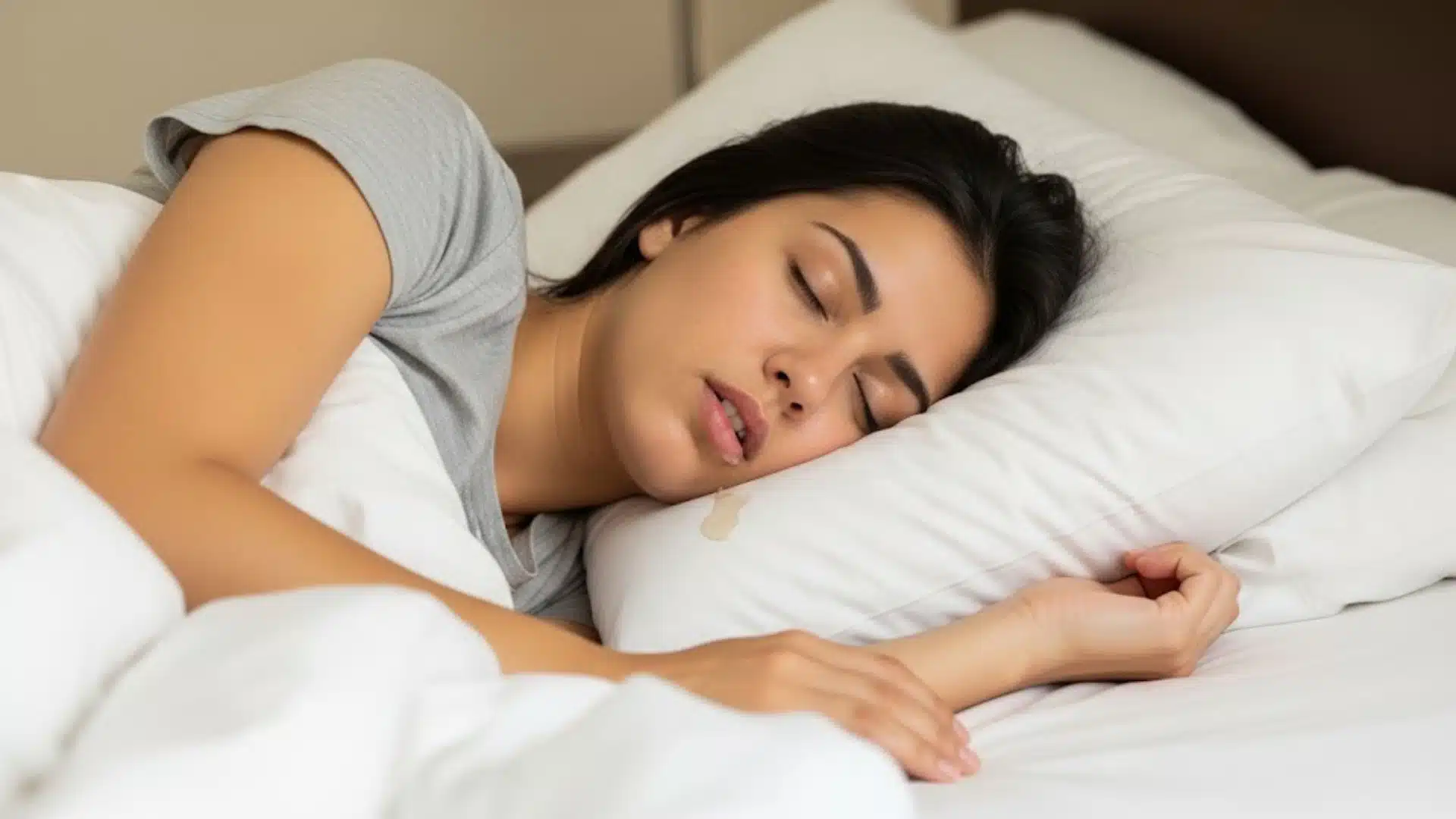
Mouth taping — applying a small strip of gentle medical tape across the lips before sleep — has gained popularity as a way to encourage nasal breathing and keep the mouth closed. It is generally considered safe for people without sleep apnea or other breathing obstructions.
A chin strap works similarly: it wraps under the jaw and over the head, holding the mouth closed during sleep. Both methods are inexpensive and can meaningfully reduce drooling caused by habitual mouth breathing.
Important: Do not use mouth tape if you have sleep apnea, severe nasal congestion, or any condition that impairs nasal breathing. Consult your doctor first.
Address GERD
For drooling driven by acid reflux, the management approach centers on reducing acid exposure during sleep. Elevating the head of the bed by 6–8 inches (using bed risers, not just extra pillows) helps prevent acid from traveling up the esophagus while lying flat.
Avoid eating within two to three hours of bedtime. Cut back on known reflux triggers — coffee, alcohol, spicy foods, fatty meals, chocolate, and carbonated beverages. Your doctor may also prescribe proton pump inhibitors (PPIs) or H2 blockers to reduce acid production directly.
Get Evaluated and Treated for Sleep Apnea
If sleep apnea is suspected, a sleep study — either in a lab (polysomnography) or at home — provides a definitive diagnosis. Treatment options include:
CPAP therapy — the gold standard for moderate to severe OSA. A continuous positive airway pressure machine delivers pressurized air through a mask, keeping the airway open throughout the night. Many patients report that their drooling resolves completely with CPAP use.
Oral appliance therapy (OAT) — a custom-fit mandibular advancement device (MAD) that repositions the lower jaw to keep the airway open. It also keeps the lips closed, directly reducing drooling. This is often preferred by people who cannot tolerate CPAP masks.
Surgery — for anatomical causes of airway obstruction (enlarged tonsils, a deviated septum, nasal polyps), surgical correction may be appropriate and can eliminate both the sleep apnea and associated drooling.
Speech Therapy for Muscle Control
A speech-language pathologist (SLP) can teach targeted oral motor exercises that strengthen the muscles of the tongue, lips, jaw, and throat. Stronger oral muscles improve lip seal at rest and increase the frequency and effectiveness of automatic swallowing — both of which reduce drooling.
Speech therapy is particularly valuable for people whose drooling relates to neurological conditions, post-stroke recovery, or muscle weakness rather than a purely structural or inflammatory cause.
Medical Treatments for Hypersalivation
When drooling is caused by a diagnosable condition producing true excess saliva, or when lifestyle and positional changes are not enough, medical treatments become appropriate.
| Treatment | How It Works | Used For |
|---|---|---|
| Anticholinergic medications (e.g., scopolamine, glycopyrrolate) | Block nerve signals to salivary glands; reduce saliva production | Neurological conditions, severe chronic drooling |
| Botulinum toxin (Botox) injections | Injected into parotid and submandibular glands; reduces saliva output for 3–6 months | Parkinson’s, CP, post-stroke, severe sialorrhea |
| Mandibular advancement device (MAD) | Repositions jaw; keeps lips sealed; reduces sleep apnea | Sleep apnea-related drooling, bruxism |
| CPAP machine | Keeps airway open; eliminates mouth breathing | OSA-related drooling |
| Salivary gland surgery | Removes or repositions glands or redirects ducts | Severe, treatment-resistant sialorrhea |
| Radiation therapy | Last-resort reduction of gland function | Severe, refractory cases |
Elevate Your Head During Sleep
Sleeping with your head elevated — either by using a thicker pillow, a wedge pillow, or raising the head end of the bed — uses gravity in your favor. Elevation encourages saliva to travel toward the throat and stomach rather than out of the mouth.
This simple change is particularly helpful for people with GERD-related drooling, as head elevation also reduces acid reflux during sleep.
Maintain Good Oral Hygiene
Oral infections, gum disease, and tooth decay all increase saliva production locally. Regular brushing twice daily, flossing, and rinsing with an antibacterial mouthwash reduce the bacterial load that triggers excess saliva.
Staying well hydrated throughout the day also matters. Dehydration can make saliva more viscous and harder to swallow, contributing to pooling and drooling.
Drooling in Sleep Across Different Life Stages
Drooling means different things depending on age. Understanding the typical patterns by life stage helps identify when it is expected versus when it needs attention.
| Life Stage | Is Drooling Normal? | Most Common Cause | When to Seek Help |
|---|---|---|---|
| Infants (0–12 months) | Yes — very common | Immature muscle coordination; teething begins | If accompanied by swallowing problems or choking |
| Toddlers (1–3 years) | Common during teething | Teething stimulates excess saliva | If persists well past teething; swallowing concerns |
| Older children | Less expected | Enlarged adenoids/tonsils; mouth breathing | Frequent drooling; snoring; sleep disruption |
| Adults (18–50) | Occasionally normal | Sleep position; congestion; new medication | Nightly; with snoring or exhaustion (OSA screen) |
| Adults (50+) | Less expected | GERD, medications, early neurological change | New onset; progressive; with any other symptoms |
| Seniors (65+) | Not normal as a baseline | CDS-adjacent or neurological; medication side effects | Any unexplained onset warrants evaluation |
Home Remedies That May Help Reduce Drooling
Several practical, low-cost habits can meaningfully reduce nighttime drooling without medical intervention.
Nasal rinse before bed. Using a neti pot or saline squeeze bottle to rinse nasal passages clears mucus and reduces congestion, making nasal breathing easier through the night.
Elevate your pillow. A wedge pillow or two stacked firm pillows keep the head at an angle that discourages saliva from pooling and escaping the mouth.
Avoid heavy meals close to bedtime. Large or acidic meals taken within two hours of sleep increase GERD risk and stimulate more saliva production. Eating earlier allows the stomach to empty before you lie down.
Sleep on your back. The simplest and most consistently recommended home adjustment. Placing a pillow under your knees makes back sleeping more comfortable and harder to roll out of.
Use a humidifier. Dry air causes nasal irritation and congestion, promoting mouth breathing. A cool-mist humidifier in the bedroom can keep airways more comfortable and reduce nasal dryness overnight.
Stay hydrated during the day. Chronic mild dehydration concentrates saliva and makes it thicker. Thick saliva is harder to swallow and more likely to pool and overflow. Drinking enough water throughout the day helps maintain thinner, more easily managed saliva.
When to See a Doctor About Drooling in Sleep
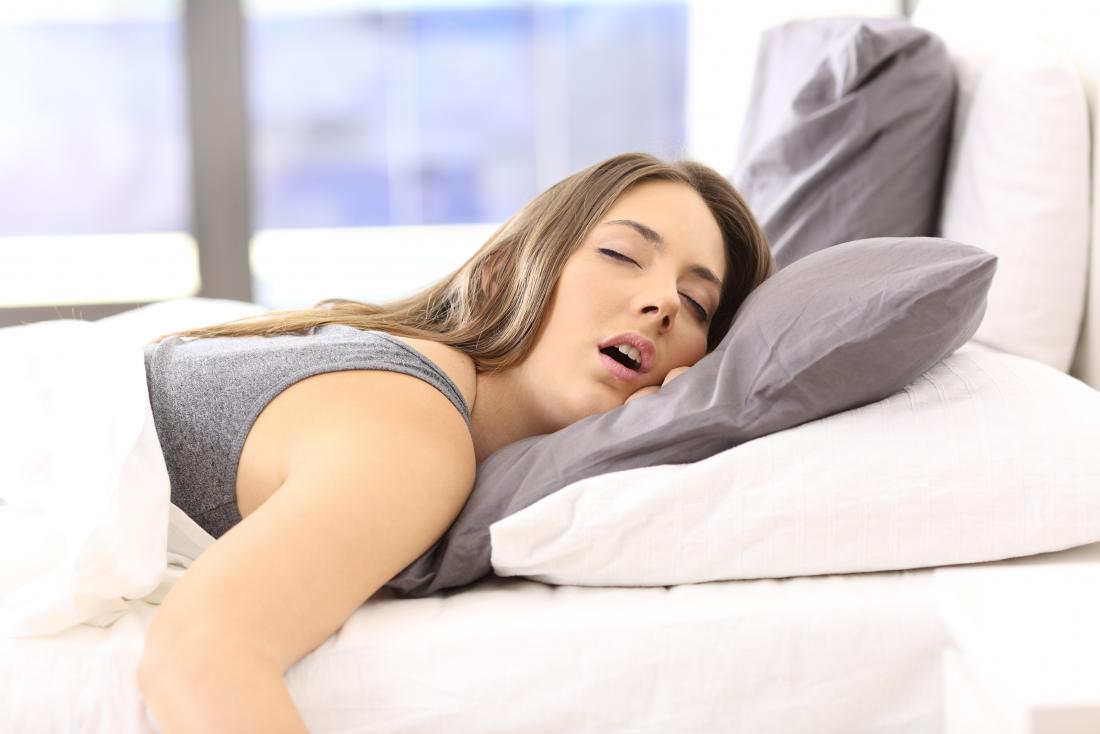
Most people never need to see a doctor specifically about drooling. But the following situations warrant a medical appointment:
- Drooling is nightly and has been consistent for more than a few weeks
- You wake up with a completely saturated pillow regularly
- Drooling started suddenly without an obvious cause like a cold or new medication
- You are over 50 and drooling is new or has recently worsened
- Drooling is accompanied by snoring, gasping, morning headaches, or daytime sleepiness
- You notice tremors, stiffness, changes in speech, or swallowing difficulty alongside increased drooling
- Skin around the mouth is becoming irritated, cracked, or infected due to constant moisture
- You are on a new medication and drooling began shortly after starting it
A primary care doctor can conduct an initial assessment, check for GERD and infection, and refer you to a sleep specialist, neurologist, ENT, or speech therapist as appropriate.
Frequently Asked Questions (FAQs)
Why do people drool in their sleep even if their mouth is closed?
Very slight muscle relaxation at the lip corners can allow small amounts of saliva to escape even with the mouth mostly closed, especially for side and stomach sleepers where gravity assists.
Is drooling in sleep a sign of deep sleep?
It can be. Muscle tone drops significantly during slow-wave and REM sleep stages, which reduces swallowing frequency and relaxes the muscles that keep saliva in the mouth.
Does drooling during sleep mean you have sleep apnea?
Not necessarily, but chronic heavy drooling alongside snoring, daytime tiredness, and waking feeling unrefreshed is a common pattern in sleep apnea. An at-home sleep study can confirm or rule it out quickly.
What does it mean when an older adult suddenly starts drooling at night?
New-onset drooling in someone over 50 or 60 can indicate early neurological change (such as Parkinson’s disease), GERD, medication side effects, or sleep apnea and should be evaluated by a doctor.
Can GERD cause nighttime drooling?
Yes. GERD triggers a reflex called water brash, where the body produces excess saliva to neutralize stomach acid in the esophagus. This is more pronounced at night when lying flat.
Is drooling in sleep linked to any medications?
Yes. Antipsychotics (especially clozapine), sedatives, certain Alzheimer’s medications, muscle relaxants, and some antibiotics can cause hypersalivation or impair the swallowing reflex, leading to drooling.
How can I stop drooling in my sleep without medication?
Switching to back sleeping, treating nasal congestion, using a wedge pillow for elevation, avoiding late meals, and practicing nasal rinsing before bed are all effective non-medical approaches.
What is the medical term for excessive drooling?
Excessive drooling is medically called sialorrhea or hypersalivation. When it occurs specifically due to a neurological condition, it is often referred to as sialorrhea in clinical settings.
Can drooling damage the skin around the mouth?
Yes. Chronic or heavy drooling can cause angular cheilitis — a condition involving painful, cracked sores at the corners of the mouth — as well as general skin irritation and redness from prolonged moisture exposure.
Does sleeping on your back really stop drooling?
For most people without an underlying medical condition, yes. Back sleeping uses gravity to direct saliva toward the throat rather than out of the mouth, and it is one of the most consistently recommended first-line adjustments.
Conclusion
Why do people drool in their sleep ultimately comes down to a natural combination of muscle relaxation, reduced swallowing activity, and the relentless production of saliva that never fully stops.
For most people, it is benign, occasional, and easily managed by adjusting sleep position or treating a temporary cold or allergy.
But when drooling becomes nightly, excessive, or sudden — particularly in older adults — it is worth looking deeper.
Sleep apnea, GERD, medication side effects, and early neurological conditions are all real possibilities, each with effective treatments.
The good news is that every cause covered in this guide has a clear solution pathway. From simple positional changes and nasal rinses to CPAP therapy, Botox injections, and speech therapy, there is a treatment that fits every cause and every severity level.
If your pillow is consistently drenched and you have no clear explanation, a conversation with your doctor is the right next step — and it can lead to better sleep, better health, and a much drier morning.
