

Why does my cat lay on my chest is one of the most commonly asked questions by cat owners, and the answer is almost always heartwarming. Your cat is not randomly picking a napping spot — they are choosing you deliberately.
This behavior is rooted in trust, warmth, bonding, and deep feline instinct. Whether your cat curls up on your chest during a quiet afternoon or settles in for the night, there is always a reason behind it.
What Does It Mean When Your Cat Lays on Your Chest?
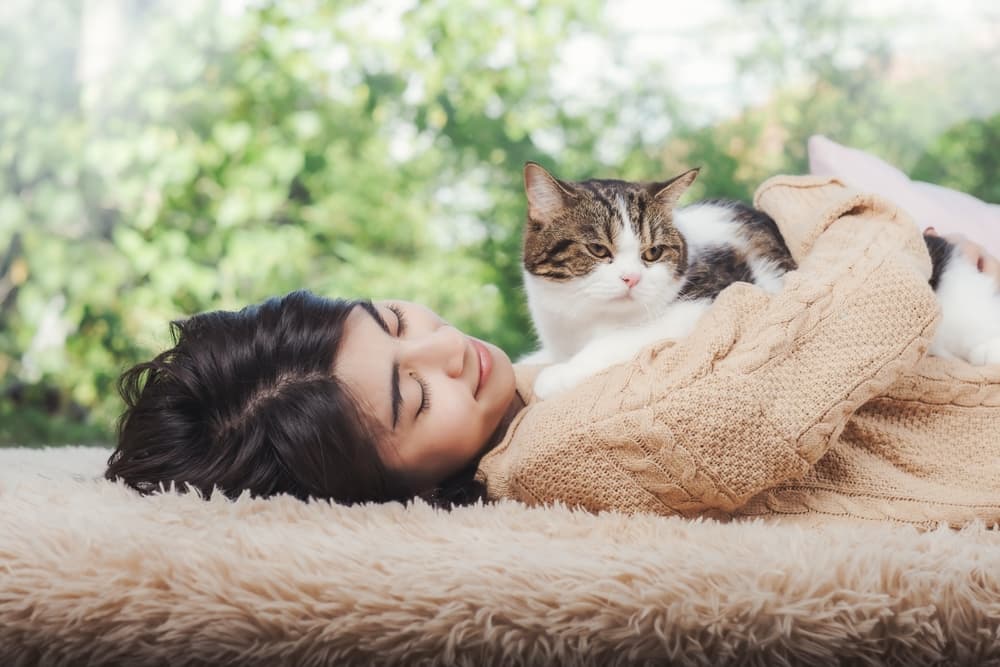
When your cat lays on your chest, it is sending you a clear message: you are safe, trusted, and loved.
Cats are naturally cautious animals. They do not give their trust easily, especially when it comes to sleeping near someone. Sleep makes any animal vulnerable, and cats instinctively pick sleeping spots where they feel completely protected.
Choosing your chest — the center of your body — is one of the strongest signs of affection and security a cat can show.
Why Does My Cat Lay on My Chest? The Top Reasons
There is never just one single reason behind this behavior. Most cats who lay on their owner’s chest are responding to a combination of physical, emotional, and instinctual factors.
Here are the most well-supported reasons, backed by feline behavioral science.
1. Your Cat Trusts You Completely
Trust is the foundation of this behavior.
Cats in the wild are both predator and prey. When sleeping, they are at their most vulnerable. A cat that chooses to sleep on your chest is saying, without words, that they feel zero threat from you.
This trust is built gradually through consistent care, gentle handling, and routine. It does not happen overnight, which makes it even more meaningful when it does.
2. Your Chest Is Warm
Cats have a higher resting body temperature than humans, sitting around 101°F to 102.5°F. They are biologically driven to seek out warm spots to conserve energy.
Your chest and face are among the warmest surfaces on your body. This makes your torso a natural target for a cat looking for the coziest place to rest.
This warming behavior is especially noticeable during cooler months, at night, or if your home runs cool.
3. Your Heartbeat and Breathing Are Soothing
The rhythm of your heartbeat and the steady rise and fall of your chest while breathing have a deeply calming effect on cats.
As kittens, cats would snuggle against their mother’s belly, hearing her heartbeat and feeling her breathing. When they lay on your chest, they are recreating that same sense of comfort and safety from early life.
This is sometimes called “cat imprinting,” where a cat bonds so deeply with a person that they seek the same nurturing signals they once received from their mother.
4. Your Scent Is Familiar and Reassuring
Cats experience the world primarily through smell. Your natural scent is one of the most familiar and comforting things in your cat’s environment.
When your cat lays on your chest, they are surrounding themselves with your smell. This reinforces their sense of home, security, and belonging.
This is also why cats often prefer to sleep on worn clothing rather than brand-new blankets — your scent has not yet reached the new item.
5. Your Cat Is Scent-Marking You
Cats have scent glands located in their cheeks, forehead, and paws.
When your cat rubs against you or lays on your chest, they are leaving behind subtle pheromones that claim you as their own. This is not aggression — it is a social bonding behavior.
In multi-cat households, one cat may lay on your chest more than others specifically to mark their special relationship with you and signal it to the other cats in the home.
6. Your Cat Loves You
This sounds simple, but it is one of the most honest explanations.
Cats are not indifferent to their owners despite the popular myth. According to certified cat behaviorist Lauren Parsch, some cats just prefer to be close and have a lot of physical contact, and laying on your chest is one of the most direct ways a cat can express that preference.
Cats that have bonded deeply with their human will consistently seek physical proximity, and the chest is as close as a cat can get while you are resting.
7. Your Cat Feels Emotionally Safe With You
Security is not just about physical warmth. Cats also seek emotional safety.
Your presence — your voice, your breathing, your familiar smells — creates a zone of calm that your cat wants to be inside. When life feels unpredictable or your cat feels uncertain about something in their environment, your chest becomes their safe harbor.
8. Your Cat Is Monitoring Your Mood or Health
Cats are highly perceptive animals.
Research suggests they can detect changes in human stress levels, emotional states, and even physical health through scent, body language, and vocal cues. If you are feeling unwell, grieving, or stressed, your cat may lay on your chest more than usual as a way of offering comfort and staying close.
Many cat owners report that their cats become unusually clingy when the owner is sick — this is not coincidence. It is feline empathy in action.
9. Your Cat Seeks Comfort From Anxiety
If your cat suddenly starts laying on your chest more frequently than usual, it could indicate that something in their environment is causing them stress.
Cats respond to anxiety in two opposite ways — some withdraw and hide, while others seek constant physical reassurance. A cat that suddenly becomes more clingy is often processing stress related to a change in routine, a new pet, a move, or loud noises.
10. It Is a Learned Routine and Habit
Cats are creatures of habit.
Once your cat discovers that your chest is warm, safe, and comfortable, they are very likely to return to that spot again and again. Over time, it becomes part of their daily routine — as expected and reliable as their feeding schedule.
The more times your cat lays on you without being disturbed, the more deeply the habit becomes embedded.
The Science of Purring While Laying on Your Chest
One of the best parts of having your cat on your chest is the purring.
A cat’s purr is generated by the rapid contraction and relaxation of muscles in the larynx. As your cat breathes in and out, air moves across these vibrating muscles, creating the familiar sound. Purring typically occurs at a frequency between 25 and 150 Hz.
This frequency range is scientifically significant.
| Purring Frequency | Known Therapeutic Effect |
|---|---|
| 25–50 Hz | Bone healing and growth |
| 50–100 Hz | Soft tissue and wound repair |
| 100–150 Hz | Pain reduction and inflammation control |
| 25–150 Hz (full range) | Stress and anxiety reduction |
Research published in the Journal of the Acoustical Society of America confirms that the frequency range of a cat’s purr aligns with therapeutic frequencies used in bone healing, pain relief, and wound recovery.
A 2008 University of Minnesota study found that cat owners have a 40% reduced risk of fatal cardiovascular events compared to non-cat owners. Petting a cat while it purrs triggers the release of oxytocin and serotonin, hormones that promote happiness and lower cortisol — the stress hormone connected to high blood pressure.
Simply put: when your cat lays on your chest and purrs, both of you are receiving measurable health benefits simultaneously.
Benefits of Letting Your Cat Lay on Your Chest
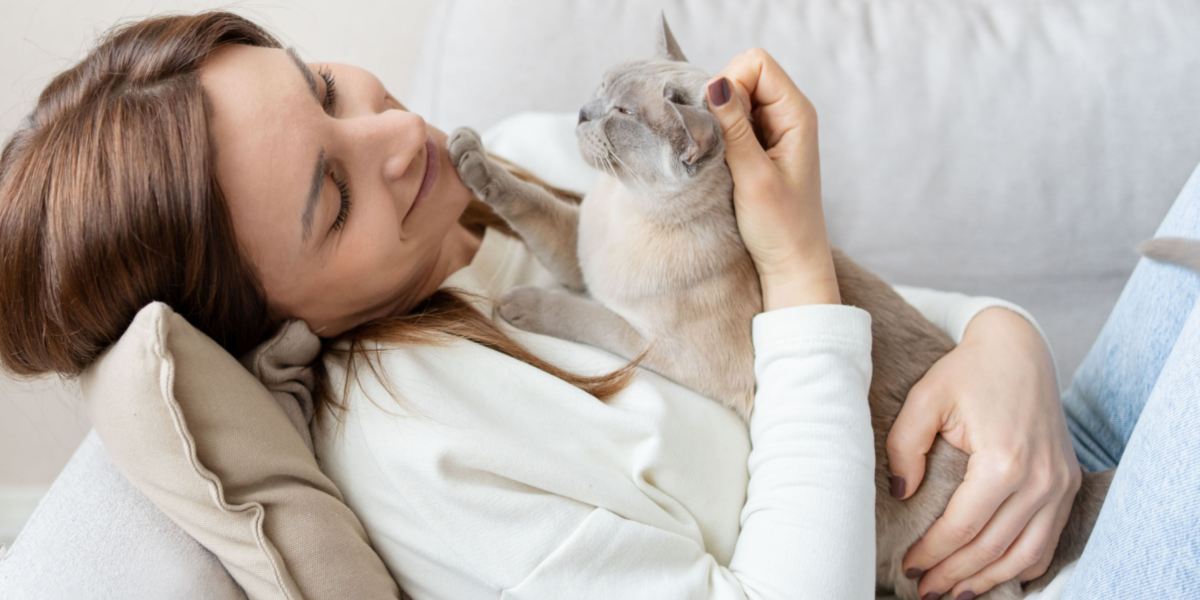
Allowing your cat this behavior is genuinely good for you.
Stress reduction — The vibrations of purring soothe the autonomic nervous system and reduce the production of cortisol.
Lower blood pressure — Physical contact with a cat and exposure to purring has been shown to lower blood pressure in clinical observations.
Improved mood — Oxytocin release during cat-human contact elevates mood and reduces feelings of anxiety and depression.
Better sleep quality — For some owners, the rhythmic purr and warmth of a cat on their chest acts as a natural sleep aid.
Stronger human-animal bond — Physical closeness regularly deepens the emotional connection between cats and their owners over time.
Possible bone and tissue healing support — Some researchers believe the 25–50 Hz vibrations from purring may support bone density and tissue repair in nearby humans, though more research is ongoing.
Health Benefits: A Quick Comparison
| Who Benefits | How They Benefit |
|---|---|
| Your cat | Warmth, security, emotional comfort |
| Your cat | Stress regulation through scent familiarity |
| You | Reduced cortisol and stress hormones |
| You | Lower blood pressure and heart rate |
| You | Oxytocin and serotonin release |
| Both | Strengthened emotional bond |
What Your Cat’s Body Language Tells You
When your cat is on your chest, pay attention to what the rest of their body is doing.
Closed or slow-blinking eyes — Your cat is deeply relaxed and content. A slow blink from a cat is widely considered a feline expression of love and trust.
Kneading your chest — This is a kitten behavior where cats knead against their mother to stimulate milk flow. When your adult cat does this to your chest, it means they feel the same level of safety and nurturing comfort with you.
Loud, rhythmic purring — Your cat is settled, happy, and at ease.
Tail wrapped around their body — Comfortable and calm.
Tail twitching while on your chest — Mild irritation or overstimulation. Your cat may be about to jump off.
Ears flat or whiskers pulled back — Something is making them uncomfortable. Give them space.
Staring at your face — Cats stare at the people they feel closest to. Combined with slow blinking, this is a sign of deep affection.
Kneading: Why Your Cat Does It on Your Chest
Kneading — the rhythmic pushing motion cats make with their front paws — is one of the clearest signs of deep contentment.
Kittens knead against their mother while nursing to stimulate milk production. As adults, cats retain this behavior and perform it when they feel completely safe and loved.
If your cat kneads your chest while laying on you, they are essentially treating you like their most trusted figure. It is one of the highest compliments a cat can pay a person.
Why Does My Cat Lay on My Chest at Night?
Nighttime chest-laying is extremely common and driven by slightly different factors than daytime behavior.
At night, temperatures drop. Your body becomes even more appealing as a heat source. Your breathing is slower and more rhythmic, which creates a more soothing experience for the cat.
Your cat also instinctively understands that you are at your most still and available during sleep. There are no sudden movements, no distractions, and no competing attention.
Some cats also lay on their owner at night as a protective behavior — staying close during the hours of darkness when, in the wild, predators would be more active.
Why Does My Cat Lay on My Chest in the Morning?
Morning chest-sitting often has a practical edge to it.
Your cat is active at dawn (cats are crepuscular, meaning most active at dusk and dawn) and may be hungry, bored, or simply ready for your company.
Laying on your chest in the morning is one of the gentlest ways your cat can say: wake up, I need you. It is also, importantly, a strategy that tends to work — most owners find it very difficult to stay asleep with a warm purring cat on their chest.
Do not reward early morning chest-sitting with immediate feeding if you want to avoid training this into a daily pre-alarm habit.
When to Be Concerned About This Behavior
In most cases, your cat laying on your chest is a completely positive sign.
However, certain changes in this behavior can be worth noting:
Sudden increase in clinginess — If a cat that has never laid on your chest suddenly does it constantly, it could signal stress, anxiety, or a health issue. Cats sometimes seek closer physical contact when they are in pain or feeling unwell.
Unusual vocalizations while on your chest — Crying, howling, or distressed sounds while seeking closeness can indicate discomfort.
Accompanying signs of illness — Lethargy, loss of appetite, changes in litter box habits, or weight loss alongside increased clinginess should prompt a veterinary check.
Aggression when you try to move them — Occasional resistance is normal cat behavior, but growling or biting when disturbed could indicate pain-related guarding behavior.
If the behavior change is sudden and paired with any physical symptoms, always consult a veterinarian. Behavioral shifts are often one of the earliest indicators that something is medically wrong.
Does Your Cat’s Personality Affect This Behavior?
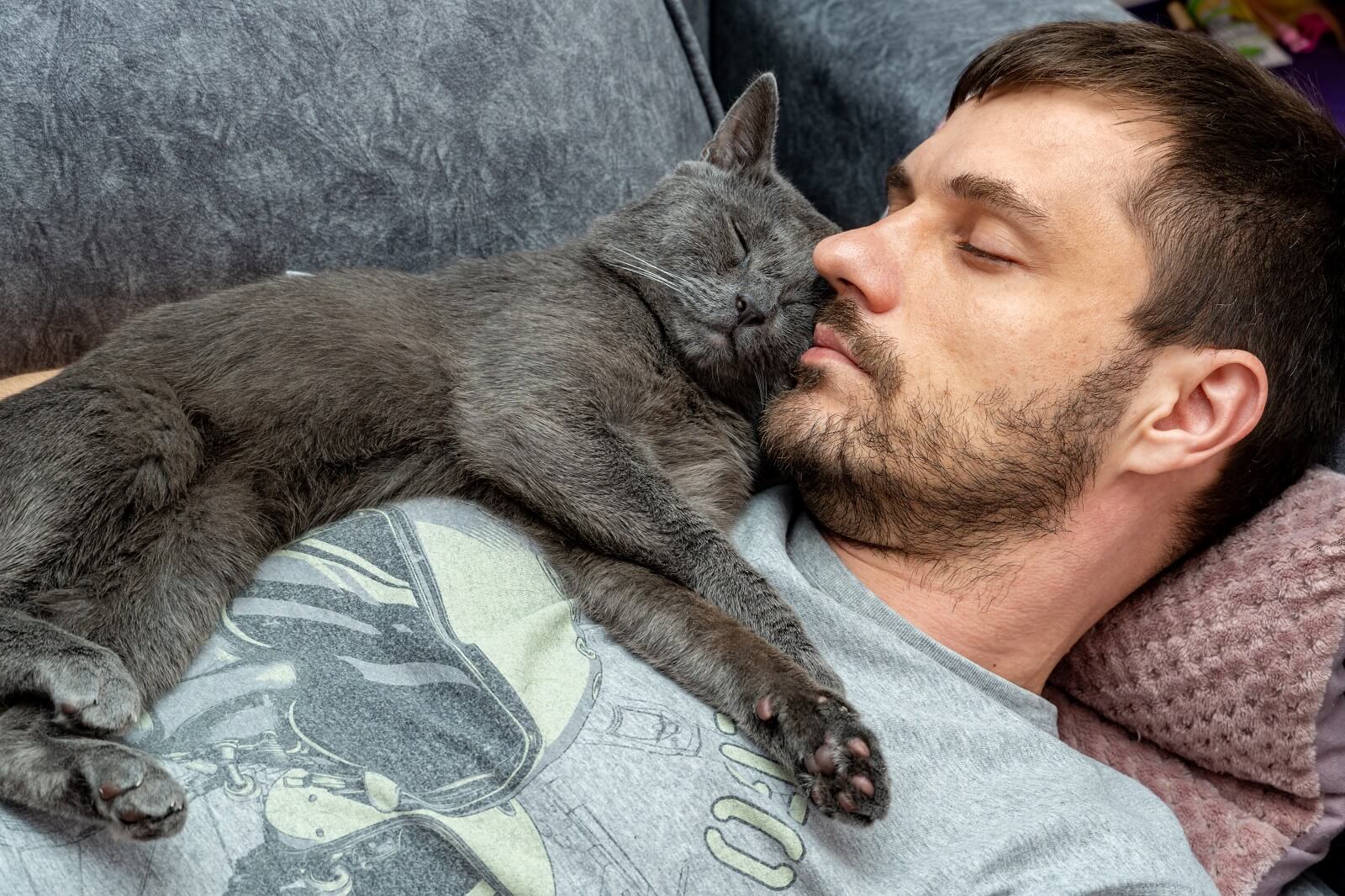
Absolutely. Not all cats are chest-layers, and that is completely normal.
Personality plays a significant role. According to feline behavior experts, some cats prefer a lot of physical contact while others become overstimulated very quickly and prefer to show affection from a short distance.
| Cat Personality Type | Likely Chest-Laying Behavior |
|---|---|
| High-affection, socially confident | Frequent, long chest-laying sessions |
| Moderately bonded but independent | Occasional, usually in evenings or when cold |
| Anxious or trauma-background | May avoid or suddenly increase chest contact |
| Multi-cat household — dominant cat | More territorial about claiming the owner’s chest |
| Senior cats | May increase due to need for warmth and comfort |
A cat that sits next to you rather than on you is not showing less love. They may simply have a personality that values closeness with a small buffer zone — and that is equally meaningful.
How to Encourage This Behavior If Your Cat Does Not Do It
If your cat does not naturally lay on your chest, you cannot force it — but you can create the right conditions.
Stay calm and still. Cats are more likely to approach when you are quietly resting rather than moving around. Put your phone down, settle on the couch, and give them the opportunity.
Let them initiate. Grabbing a cat and placing them on your chest rarely works. Wait for them to come to you and reward them with gentle strokes when they do.
Use a soft, familiar-smelling blanket. If you place a blanket on your chest that already carries your scent, a hesitant cat is more likely to settle on it.
Minimize loud sounds. Cats will not lay on a vulnerable chest position if they feel startled or unsafe. A calm, quiet environment is essential.
Build trust over time. The more positive interactions you have with your cat — gentle play, regular feeding, calm handling — the more likely they are to eventually choose your chest as their nesting spot.
How to Gently Discourage It If Needed
Some owners love this behavior but need their cat to sleep elsewhere for practical reasons — sleep disruption, allergies, or simply needing space.
Do not abruptly push your cat away. This can damage trust. Instead, gently move them to a warm spot nearby.
Invest in a quality heated cat bed. Place it close to where you sleep or relax so your cat can still feel near you. Warmth is a major draw, and a heated bed can replicate the appeal of your chest.
Place a worn T-shirt in their bed. Your scent on the fabric helps ease the transition from your body to their own space.
Keep your bedroom door closed consistently. If you do it only sometimes, your cat will scratch and wait until the inconsistency works in their favor.
Be patient. Cats take time to adapt to routine changes. Consistency over weeks, not days, is what produces lasting results.
Cross-Cultural and Spiritual Interpretations
Many cat owners are curious about the spiritual side of this behavior.
In various spiritual traditions, cats are believed to be drawn to the heart chakra — the energy center located in the center of the chest associated with love, healing, and emotional connection. Some people believe a cat sleeping on your chest is offering energetic protection or absorbing negative emotions.
In traditional Japanese belief, cats have long been regarded as protective and healing animals. The placement of a cat on the chest of an ill person was sometimes interpreted as the cat helping draw out illness.
Whether or not you hold these beliefs, the consistency across cultures in associating cats with healing and emotional protection reflects something real: the measurable, documented health benefits that cats provide to the humans who love them.
Quick Reference: Why Your Cat Lays on Your Chest
| Reason | What It Means |
|---|---|
| Warmth-seeking | Your chest is one of the warmest parts of your body |
| Trust and security | They feel fully safe sleeping in a vulnerable position near you |
| Heartbeat comfort | Recreating the soothing rhythm of their mother from kittenhood |
| Scent familiarity | Surrounding themselves with the most comforting smell in their world |
| Scent marking | Claiming you with subtle pheromone deposits from face and paw glands |
| Affection and love | Direct expression of deep emotional attachment |
| Mood sensing | Detecting stress or illness and offering comfort |
| Anxiety relief | Seeking reassurance during stressful periods |
| Habit and routine | Returning to a spot that has always felt safe and warm |
Frequently Asked Questions (FAQs)
Why does my cat lay on my chest and purr?
Your cat is deeply content and feels completely safe with you. Purring at 25–150 Hz is both a sign of happiness and a self-soothing mechanism that also benefits your health by reducing stress and lowering blood pressure.
Is it safe to let my cat sleep on my chest?
Yes, for most healthy adults it is safe and even beneficial. However, people with cat allergies, respiratory issues, or very light sleep may prefer to redirect their cat to a nearby warm bed.
Why does my cat only lay on my chest and not anyone else’s?
You are your cat’s favorite person. Cats choose one primary attachment figure who represents the most trust, safety, and comfort in their world — and they show that preference through physical proximity.
Why does my cat knead my chest while laying on me?
Kneading is a kitten behavior associated with nursing and maternal comfort. When your adult cat kneads your chest, they are expressing the highest level of emotional safety and trust — you have become their mother figure in the best possible way.
What does it mean spiritually when my cat sleeps on my chest?
Many traditions associate this with your cat being drawn to your heart center — the seat of love and healing energy. While scientific explanations center on warmth and bonding, many owners feel there is a deeper emotional or spiritual connection being expressed.
Why does my cat suddenly lay on my chest more than usual?
A sudden increase in this behavior can indicate your cat is sensing changes in your mood or health and is responding with comfort. It can also signal that your cat is experiencing stress, anxiety, or the early stages of illness themselves.
Why does my cat lay on my chest in the morning?
Your cat is likely active at dawn (their natural active period) and is using the gentlest possible strategy to wake you up — whether for food, play, or company. The warm stillness of your sleeping body is also especially appealing at that hour.
Can cats sense when you are sad or sick?
Yes. Research shows cats are highly perceptive to changes in human scent, vocal tone, and body language. Many owners report their cats become closer and more physical during periods of illness, grief, or emotional distress.
Should I be worried if my cat stops laying on my chest?
A gradual change in affection habits alone is usually just a personality or seasonal shift. However, if it is sudden and paired with other behavioral changes like hiding, loss of appetite, or changes in grooming, it is worth a veterinary visit.
Do cats lay on your chest because they love you?
Yes. While warmth and instinct contribute, genuine affection is one of the primary drivers. Cats form real emotional attachments to their owners, and choosing your chest as a resting spot is one of the clearest physical expressions of that love.
Conclusion
Why does my cat lay on my chest? The answer is a beautiful intersection of biology, instinct, and genuine emotional attachment.
Your cat chooses your chest because you are warm, familiar, safe, and deeply trusted. They are drawn to your heartbeat, your scent, and the calm rhythm of your breathing — all of which recreate the primal comfort of their earliest moments of life.
At the same time, they are offering you something real in return: purring vibrations that measurably reduce stress, lower blood pressure, and release mood-lifting hormones.
This behavior is almost always a sign of a healthy, loving bond between you and your cat. It is rarely concerning unless it changes suddenly or is paired with other worrying symptoms. In that case, a quick visit to your veterinarian will give you peace of mind.
For now, the next time your cat settles onto your chest and starts purring, know that you are not just tolerating an inconvenience — you are participating in one of the most sincere forms of feline affection that exists. Enjoy it. You have clearly earned it.
