


When people compare AI tools, they often ask which one is best. But that question can be misleading, especially in music generation. A better question is which system helps users make better decisions for different kinds of projects. That is where an AI Music Generator like ToMusic becomes more interesting than a single-model platform. It does not frame music generation as one fixed capability. Instead, it offers four models, V1 through V4, with different strengths. In my view, that model architecture is not a minor feature. It is part of the product’s core logic, because it encourages users to think in terms of matching engines to tasks.
That matters because music is not one thing. A short content intro, a lyric-heavy song draft, a cinematic background piece, and a harmonic-rich arrangement do not all fail for the same reasons. One may lack energy. Another may feel too compressed. Another may need better vocal presence. Another may simply need more room to unfold. A platform that acknowledges these differences gives users a more realistic way to work. It replaces the vague hope of universal quality with a more practical question: which version is built for the job in front of me?
Why Creative Work Benefits From Multiple Engines
A lot of software becomes harder to use when it adds options. But the opposite can happen when the options represent genuinely different workflows. In that case, the extra choices do not create confusion. They create relevance.
Not Every Track Needs The Same Kind Of Strength
A user creating a quick track for social media may value speed, repeatability, and enough style control to stay on brand. A writer building a vocal-centered song may care more about expression, phrasing, and how the words sit in the performance. These are different priorities, so they should not always rely on the same engine.
Better Selection Often Beats One-Size-Fits-All Quality
In real creative work, appropriateness often matters more than abstract quality. A richly layered track is not necessarily better for a simple video. A powerful vocal model is not automatically necessary for an instrumental cue. Multiple versions help users choose what fits rather than always chasing what sounds most advanced on paper.
How ToMusic Organizes Its Model Logic
The official product page positions ToMusic as a platform with four models, each presented as having a distinct creative role. That framing gives the user a planning mindset before generation even begins.
V1 Represents Balanced And Faster Access
V1 appears to be the model for users who want a more straightforward workflow. When speed and basic control are more important than maximum complexity, that kind of balance is valuable.
V2 Adds Duration And Tonal Breadth
V2 is described around longer compositions and deeper tonal space. This makes sense for music that needs to develop gradually rather than arrive quickly and end quickly.
V3 Emphasizes Harmonic Richness And Pattern Ideas
The platform positions V3 as stronger in harmonies and musical patterns. That suggests a better fit for users who want output that feels denser, more layered, or more compositionally active.
V4 Pushes Vocal Expression And Advanced Control
V4 is described as the strongest model for vocals and creative depth. For song drafts where the vocal dimension is central, this difference is likely to matter more than any other.
How The Official Workflow Supports Model-Based Thinking
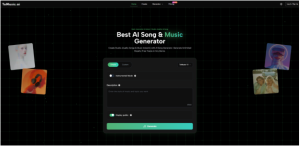
The core workflow is still simple, but the presence of four models turns it into a more strategic sequence.
Step 1. Decide Whether The Input Is A Concept Or A Song Draft
The user begins by entering either a descriptive prompt or custom lyrics. This matters because the input type changes which model is likely to be most relevant.
Step 2. Pick The Model That Matches The Goal
Next comes model selection. This is not just a technical checkbox. It is where the user decides whether the project needs speed, length, harmonic richness, or stronger vocal presence.
Step 3. Add Style And Performance Direction
The official controls include genre, mood, tempo, instrumentation, custom length, style tags, and voice characteristics. These settings refine the chosen model rather than replacing the importance of model choice.
Step 4. Generate, Compare, And Keep The Best Direction
Once the track is generated, the results can be saved and reviewed in the library. This matters because users often learn which model fits a task only after hearing a few attempts.
A Model-Centered Comparison Table
| Model | Official Strength | Best Suited Project Type |
| V1 | Balanced performance and simplicity | Fast drafts, repeated short-form work |
| V2 | Longer compositions and tonal depth | Ambient scenes, cinematic pacing, extended tracks |
| V3 | Rich harmonies and stronger patterns | Fuller arrangements, more musical movement |
| V4 | Better vocals and advanced control | Vocal songs, lyric-driven creation, expressive drafts |
Why This Structure Improves User Judgment
One hidden advantage of multiple models is that they train the user to ask better questions. Instead of only asking whether the output is good, the user asks whether the output is good for this kind of task.
The Creator Starts Thinking Like A Producer
A producer rarely assumes one setup is right for every project. They think about use case, emotional function, audience, and production constraints. The model system encourages ordinary users to think the same way.
The Platform Makes Trade-Offs Easier To Understand
Speed versus depth, duration versus simplicity, vocal emphasis versus broader musical balance. These trade-offs exist whether a tool explains them or not. ToMusic’s versioning makes them more visible.
Where The Version Logic Becomes Most Useful
The most valuable design choices are the ones that become more helpful as projects become more varied.
For Content Creators Working Across Formats
A creator may need a short intro today, a longer background track tomorrow, and a more voice-led experiment next week. Having several models in one place supports that variety without forcing the user to switch platforms.
For Marketers And Creative Teams Comparing Directions
A campaign often benefits from multiple tonal interpretations. One model may produce something cleaner and faster, while another creates a track that feels richer or more expressive. That comparison helps teams make decisions earlier.
For Songwriters Moving Between Sketch And Development
A writer may first want a simple draft to test the lyric, then later want a stronger vocal interpretation. Different models suit different stages of that process.
Why Lyrics Change The Version Decision
Not every input stresses the system in the same way. Lyrics add another layer of demand because the music has to support written language.
Words Increase The Need For Vocal Sensitivity
Once a user is no longer making only an instrumental cue, details of phrasing and singing character become more noticeable. That is why lyric-based creation often pushes attention toward the stronger vocal-oriented model.
Revision Becomes More Diagnostic
Using Lyrics to Music AI is not only about hearing the words sung. It is also about discovering whether the chosen model supports the lyric’s emotional shape. A writer may find that the same text feels flat in one version and alive in another.
The Honest Limits Of Version Choice
A multi-model platform is useful, but it does not make decision-making effortless. It simply gives the user better tools for making those decisions.
The Best Model Still Needs A Good Brief
Even the strongest model can produce a vague output if the prompt is vague. Model choice improves alignment, but it does not replace clarity of intent.
More Advanced Is Not Always More Appropriate
Users often assume the highest model should be the default. In practice, some projects benefit from lighter, faster generation. A clean short draft may serve the work better than a more elaborate track.
Comparison Is Part Of The Real Workflow
The best model for a project is sometimes obvious only after a few results are heard side by side. That is why version choice works best when paired with iteration and review.
What This Means For The Future Of Creative Tools
The broader value of ToMusic’s version design is not just that it offers more options. It is that it organizes those options around real creative differences.
Users Learn To Match Tools To Intent
That is a valuable skill beyond this platform. Once people start thinking in terms of fit rather than hype, their creative decisions usually improve.
Music Generation Becomes More Deliberate
Instead of treating output as a surprise, users can guide the process with a stronger sense of why one model should be tried before another.
A Better System Makes Better Questions Possible
That may be the most durable advantage. Great creative tools do not only generate results. They teach users how to frame problems more intelligently. ToMusic’s version-based structure does exactly that. It turns music generation from a single-button event into a more thoughtful process of choosing the right engine for the right kind of creative work.
