

Why do people cheat is one of the most searched relationship questions of 2026 — and the honest answer is far more complex than most people expect. Infidelity is not simply about sex, boredom, or a bad partner.
It is rooted in psychology, brain chemistry, unmet emotional needs, and sometimes deeply buried personal wounds.
Whether you have been cheated on, done the cheating yourself, or are simply trying to understand human behavior, this guide breaks down every angle of infidelity backed by the latest research and real psychological insight.
What Is Cheating? Defining Infidelity in 2026
Cheating does not have a single universal definition. What one person calls betrayal, another might consider harmless.
Most psychologists agree that infidelity involves any sexual, emotional, or romantic act that violates the agreed boundaries of a committed relationship. This includes physical affairs, emotional affairs, sexting, and even sustained secret online relationships.
Research shows that 99% of women and 97% of men consider vaginal intercourse with someone outside the relationship to be cheating. However, lines blur quickly around kissing, flirting, emotional bonds, and digital interactions.
Types of Infidelity
| Type | Description | Common Among |
|---|---|---|
| Physical/Sexual | Intercourse or sexual acts outside the relationship | Both genders |
| Emotional Affairs | Deep emotional bond with someone other than partner | More common in women |
| Micro-Cheating | Flirting, hiding messages, liking photos obsessively | Both genders |
| Digital/Cyber Cheating | Sexting, online flirting, dating app use | Rising across all ages |
| Revenge Cheating | Retaliating after being cheated on | Situational |
Understanding which type has occurred matters for how a couple processes and heals from it.
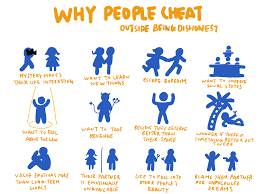
Why Do People Cheat? The 8 Core Psychological Reasons
A landmark study published in the Journal of Sex Research surveyed 495 adults who admitted to infidelity and asked them to identify their motivations. Researchers identified eight key reasons why people cheat — and most had nothing to do with sex.
1. Anger and Revenge
Some people cheat as a way to punish their partner. They feel wronged, disrespected, or deeply hurt, and infidelity becomes their silent retaliation.
This is especially common in passive-aggressive personality types who avoid confrontation. Rather than speaking honestly about their pain, they act it out in ways that guarantee maximum hurt to the other person.
2. Lack of Love
When the emotional connection in a relationship fades, people start looking for it elsewhere. Falling out of love is one of the top motivators for long-term infidelity.
This type of cheating often leads to the most serious and prolonged affairs. Research shows these situations are more likely to result in the primary relationship ending than affairs driven by opportunity or anger.
3. Low Self-Esteem and Need for Validation
Feeling desired by someone new can temporarily silence deep insecurities. People with low self-worth may cheat not because they are unhappy with their partner but because they need external proof that they are still attractive and valuable.
According to therapists, this pattern often starts in childhood. Adults who grew up feeling unseen or inadequate sometimes seek constant external validation as adults, and affairs provide a powerful rush of that feeling.
4. Sexual Dissatisfaction
Mismatched libidos, different sexual preferences, and declining physical intimacy are among the most cited practical reasons people step outside their relationships. Many people report feeling stuck in a routine that no longer excites them.
It is important to note, however, that sexual dissatisfaction is rarely the entire story. Research by sex expert Esther Perel suggests that affairs are far more about desire — the desire for attention, importance, and novelty — than about the physical act itself.
5. Neglect and Emotional Starvation
When one partner feels chronically ignored, undervalued, or emotionally invisible, they become vulnerable to anyone who offers them attention and warmth. This is one of the most emotionally painful drivers of cheating because the betrayed partner often had no idea their partner was starving for connection.
Emotional neglect can be unintentional. Busy schedules, parenting pressures, and career demands can slowly drain the intimacy from a relationship without either person noticing until it is too late.
6. Low Commitment
Some individuals enter relationships with different expectations or levels of dedication than their partners. A person who never truly committed emotionally to the relationship is statistically far more likely to cheat.
Research shows that ambivalent attachment styles and avoidant personalities are closely linked to infidelity rates. These individuals tend to pull away when intimacy deepens, making outside connections more appealing.
7. Situational and Opportunity-Based Cheating
Sometimes people cheat not because anything is wrong at home but because the opportunity presented itself in a low-risk, high-excitement environment. Alcohol, travel, workplace proximity, and stress can all lower inhibitions and decision-making standards.
A 2026 study found that 27% of cheaters identified opportunity — not dissatisfaction — as the main trigger for their infidelity. This type of cheating tends to be shorter-lived and less emotionally invested than affair-driven cheating.
8. Desire for Novelty and Variety
Evolutionary psychology offers a less romantic but compelling explanation. Some people are neurologically wired to seek novelty. The brain’s dopamine reward system responds strongly to new and exciting experiences, and this biological pull can override emotional loyalty.
Research links genetic differences in dopamine receptor D4 to higher rates of infidelity. People with lower baseline dopamine levels may be especially drawn to the emotional high of a new romantic connection.
The Neuroscience of Cheating: What Happens in the Brain
Cheating is not purely a moral failing — it has a genuine neurological dimension. Understanding the brain science behind infidelity does not excuse it, but it does explain why some people find it so hard to stop.
When a person begins an affair, the brain releases a flood of dopamine, oxytocin, and norepinephrine — the same chemicals involved in falling in love. This creates a powerful addiction-like cycle that can feel nearly impossible to break.
Brain Chemicals Involved in Infidelity
| Chemical | Role | Effect During an Affair |
|---|---|---|
| Dopamine | Reward and pleasure | Creates the “high” of new romance |
| Oxytocin | Bonding and attachment | Deepens emotional connection with affair partner |
| Norepinephrine | Excitement and arousal | Intensifies physical attraction |
| Serotonin | Mood regulation | Often drops, creating obsessive thinking |
Research from Amen Clinics confirms that dopamine signaling differences can make some people more susceptible to the neurochemical pull of new romantic experiences. This is especially true for individuals who are chronically understimulated in their primary relationship.
The brain treats an affair much like an addiction. When the affair ends, many cheaters experience genuine withdrawal — sadness, irritability, obsessive thoughts — even if they wanted to stop.
Cheating Statistics 2026: The Numbers You Need to Know
The data on infidelity in 2026 paints a sobering picture of how widespread cheating actually is, even among people who consider themselves moral and committed.
Key Infidelity Statistics
| Statistic | Data |
|---|---|
| Married men who have cheated | 20% |
| Married women who have cheated | 13% |
| Including emotional affairs (men) | 45% |
| Including emotional affairs (women) | 35% |
| Affairs beginning on social media (2026) | 38% |
| Affairs beginning as “harmless messaging” | 42% |
| Cheaters who rate their marriage as happy | 56% of men, 34% of women |
| Likelihood of cheating again | 3x higher if previously cheated |
| Relationships surviving without therapy | 15.6% |
| Relationships surviving with therapy | 60–75% |
One of the most revealing statistics is that 56% of men and 34% of women who cheat describe their marriages as happy or very happy. This demolishes the myth that infidelity only happens in broken or miserable relationships.
Men vs. Women: Do They Cheat for Different Reasons?
Men and women cheat at different rates and for different core reasons, though these patterns are shifting in 2026.
Men are statistically more likely to cheat for sexual variety and opportunity. Women are more likely to cheat because of emotional disconnection and the need for intimacy. However, both genders share many of the same underlying psychological motivators.
Gender Differences in Cheating
| Factor | Men | Women |
|---|---|---|
| Primary motivation | Sexual variety / novelty | Emotional disconnection |
| Emotional affair risk | 78.6% admit to one | 91.6% admit to one |
| More upset by | Sexual infidelity | Emotional infidelity |
| Peak infidelity age | 70s (26%) | 60s (16%) |
| Workplace affairs | 31% start at work | 31% start at work |
Interestingly, younger women aged 18–29 now cheat at slightly higher rates than men in the same age group, a reversal from historical patterns. This shift reflects changes in financial independence, social access, and evolving expectations around commitment.
Emotional Affairs: The Most Overlooked Form of Cheating
Emotional infidelity is one of the fastest growing forms of cheating in the digital age. Many people dismiss it because there is no physical contact, but research consistently shows it causes equal or greater damage than sexual affairs.
An emotional affair involves a deep, exclusive emotional bond with someone outside the relationship — sharing secrets, seeking comfort, and prioritizing that connection over your partner. Research shows that 64% of couples consider an emotional affair as damaging as a physical one.
The digital world has made emotional affairs dangerously easy to start. A 2026 study found that 42% of cheaters said their affair began as harmless messaging, and 38% said it began on social media platforms.
The slow build of an emotional affair is what makes it so insidious. By the time the person realizes they have crossed a line, they are already deeply attached.
The Role of Social Media and Technology in Modern Cheating
Technology has not created infidelity but it has dramatically lowered the barriers to it. In 2026, the digital landscape has become one of the most significant risk environments for relationship fidelity.
Social media platforms create constant access to past partners, new connections, and anonymous interactions. A 2025 survey found that 46% of people under 35 said digital secrecy — hidden apps, private accounts, secondary phones — increases their temptation.
Research from the Survey Center on American Life notes that social media puts people in contact with individuals far outside their normal social circle, expanding opportunities in ways that previous generations never faced.
The anonymity factor is equally significant. Online interactions feel lower-stakes than in-person ones, which leads people to push boundaries they would never cross face to face.
Childhood Trauma and Attachment Styles: Deeper Roots of Cheating
One of the most important and underappreciated reasons people cheat is rooted in their childhood experiences. Unresolved trauma, neglect, and early attachment wounds create patterns that play out painfully in adult relationships.
Adults who grew up with inconsistent caregivers often develop anxious or avoidant attachment styles. Anxious individuals may cheat to test whether their partner will stay. Avoidant individuals may cheat because closeness triggers discomfort and they unconsciously self-sabotage.
Therapist Jenna Nielsen identifies relationship sabotage as one of the clearest clinical patterns in infidelity. Some people cheat not to gain something but to destroy what they fear losing.
Trauma-focused therapies like EMDR and Somatic Therapy have shown strong results in helping people understand and break these deeply ingrained patterns. The cycle is not inevitable — but it does require deep, honest inner work to interrupt.
Can People Who Cheat Change?
This is one of the questions most asked by people who have been cheated on and are trying to decide whether to stay. The research gives a nuanced answer.
A person who has cheated is three times more likely to cheat again in future relationships. However, this statistic reflects people who did not address the root causes of their behavior. With genuine commitment and professional support, change is absolutely possible.
The critical factor is accountability and insight. Cheaters who blame their partner, minimize the damage they caused, or refuse therapy are far less likely to change. Those who take full responsibility, seek individual counseling, and actively work on understanding their own psychology have much higher rates of genuine behavioral change.
How to Heal After Infidelity: What the Research Shows

Recovery from cheating is one of the most emotionally difficult journeys a couple can take. But it is survivable — and for many, the relationship that emerges is deeper and more honest than what existed before.
Research shows that without professional help, only about 15.6% of relationships survive infidelity long-term. With specialized couples therapy — particularly Gottman Method or Emotionally Focused Therapy (EFT) — that number rises to 60–75%.
Healing Outcomes After Infidelity
| Approach | Survival Rate |
|---|---|
| No intervention | 15.6% |
| General couples therapy | ~57% |
| Gottman Method Therapy | 70–75% |
| Emotionally Focused Therapy (EFT) | 70% |
| Both partners in individual therapy | Higher than average |
The betrayed partner needs time to grieve, express anger, and ask questions. The partner who cheated must be willing to sit with that discomfort without becoming defensive. Both must commit to radical honesty — not just about the affair but about everything that led up to it.
Warning Signs Someone May Cheat
While no behavior is a guaranteed predictor of infidelity, research has identified certain patterns that appear consistently in couples where cheating eventually occurs.
Declining communication is one of the strongest early signals. Studies show that couples with low weekly emotional communication are 2.4 times more likely to experience infidelity than those who maintain consistent, open dialogue.
Other behavioral warning signs include sudden increase in phone privacy, unexplained schedule changes, emotional withdrawal, picking unnecessary arguments, and dramatically reduced physical affection. None of these individually confirm cheating, but a cluster of them together warrants a direct, honest conversation.
The Relationship Between Self-Esteem and Infidelity
Low self-esteem appears in virtually every serious academic study of why people cheat. It drives both the need for external validation and the inability to communicate unmet needs honestly.
A person who feels deeply unworthy of love may cheat because they believe they do not deserve what they have. A person who constantly seeks external approval may cheat because the early stages of romance provide the most intense version of that approval.
Building genuine self-esteem — not confidence based on others’ reactions but real self-acceptance — is one of the most powerful preventive factors against infidelity. People who feel secure in themselves are far less dependent on outside relationships to feel valuable.
Opportunity and Environment: When Circumstance Plays a Role
Not all cheating is emotionally motivated. A significant portion happens because the environment made it easy and the person lacked the self-discipline to resist.
High-risk environments for infidelity include workplaces with frequent travel, industries with high social intimacy, and social settings involving alcohol. Research shows that 31% of all affairs begin at work, and industries like sales (14.5%), education (13.7%), and healthcare (9.8%) have the highest reported workplace infidelity rates.
This does not mean all professionals in those fields are at risk. It simply means that awareness of environmental factors is important. Couples who set clear expectations around work friendships, overnight travel, and digital communication are better protected.
Does Cheating Always Mean the Relationship Is Over?
The short answer is no — but recovery requires more than just forgiveness. Around 60% of couples attempt reconciliation after an affair is discovered. Of those who seek professional help, the majority report meaningful improvements in their relationship quality.
Research from the American Association for Marriage and Family Therapy found that 74% of couples who underwent therapy after infidelity successfully recovered, with 90% reporting better emotional health even in cases where the couple eventually separated.
The deciding factor is almost never the affair itself. It is what both partners are willing to do after it comes to light. Genuine transparency, mutual accountability, and professional guidance create the conditions where real healing is possible.
How Common Is Cheating by Age Group?
Infidelity rates shift significantly across the lifespan. Younger adults cheat less often than middle-aged or older adults, which challenges the common assumption that youth equals recklessness.
Infidelity Rates by Age Group
| Age Group | Men | Women |
|---|---|---|
| 18–29 | 10% | 11% |
| 30–39 | 14% | 11% |
| 40–49 | ~20% | 18% |
| 50–59 | 28% | 17% |
| 60–69 | 24% | 16% |
| 70+ | 26% | 13% |
Interestingly, women aged 18–29 now cheat at slightly higher rates than men in the same group. For men, the peak of infidelity occurs in their 50s and 70s. For women, the peak is in their 40s and 60s. These patterns reflect shifting social freedoms, financial independence, and life-stage stressors.
Cultural and Societal Factors That Influence Cheating
Culture shapes how people think about fidelity, commitment, and the acceptability of affairs. In some countries, infidelity is widely practiced and only mildly condemned. In others, it carries devastating social stigma.
Research from the Pew Global Survey shows that 84% of Americans consider infidelity morally unacceptable, compared to just 47% in France and similar numbers across other European nations. Despite this moral condemnation, the United States still reports some of the highest self-admitted cheating rates globally.
This gap between stated values and actual behavior is itself psychologically revealing. Many people who cheat genuinely believe cheating is wrong. They cheat anyway — which points back to emotional unmet needs, impulsive decision-making, and the powerful pull of short-term reward over long-term commitment.
Rebuilding Trust: Practical Steps After Infidelity
Trust is not rebuilt in a single conversation. It is rebuilt in hundreds of small, consistent actions over time. Research on post-affair recovery consistently points to the same foundations.
Complete transparency is non-negotiable. This means open access to phones, social accounts, and calendars — not as punishment but as evidence that the secretive behavior has genuinely ended.
The person who cheated must also be willing to hear the same questions repeatedly. Betrayed partners often revisit the details of the affair for months or years as they process the trauma. Patience and non-defensiveness during this process are essential to healing.
Frequently Asked Questions (FAQs)
Why do people cheat even when they are happy in their relationship?
Research shows 56% of men and 34% of women who cheat describe their marriages as happy. Cheating is often driven by internal psychological needs — validation, novelty, or unresolved trauma — rather than relationship dissatisfaction.
Is cheating a sign that the relationship is over?
Not necessarily. Around 60% of couples attempt reconciliation after infidelity, and with professional therapy, 60–75% achieve lasting recovery. Success depends on both partners’ commitment to honesty and healing.
Do people who cheat always cheat again?
A person who cheated is three times more likely to cheat again if they do not address root causes. However, with genuine accountability and therapy, behavioral change is absolutely possible and well-documented.
Why do people cheat emotionally rather than physically?
Emotional cheating often meets deeper needs for intimacy, attention, and feeling truly known. Research shows 91.6% of women and 78.6% of men admit to having had an emotional affair at some point in their lives.
What is the most common reason people cheat?
Research identifies a broken emotional connection — lack of love, neglect, and emotional starvation — as the most common underlying cause. Situational opportunity is the second most reported trigger for infidelity.
Does cheating happen more in long-term relationships?
Yes. Infidelity rates rise with relationship length as communication declines, sexual routine sets in, and couples stop investing in emotional intimacy. Couples together over a decade face statistically higher risk.
Can the brain make someone more likely to cheat?
Yes. Genetic differences in the dopamine receptor D4 have been linked to higher infidelity rates. People with lower baseline dopamine levels are more neurologically drawn to the novelty and excitement of new romantic connections.
Who cheats more — men or women?
Men currently cheat more in marriages (20% vs 13%). However, the gender gap is narrowing, especially in younger age groups and unmarried relationships where rates are nearly equal at 57% men and 54% women.
How does social media increase the risk of cheating?
Social media expands access to potential affair partners while creating low-accountability environments for secret communication. In 2026, 38% of affairs begin through social media, and 42% start as what people describe as harmless messaging.
What is the best way to prevent cheating in a relationship?
Open communication, emotional vulnerability, and consistent investment in intimacy are the strongest protective factors. Couples who communicate openly and set clear expectations have significantly lower rates of infidelity.
Conclusion
Why do people cheat is never answered with a single cause or a simple character flaw.
The psychology of infidelity is layered with unmet emotional needs, neurological wiring, childhood wounds, situational pressures, and fundamental human desires for connection, validation, and novelty.
Understanding these layers does not excuse the behavior — cheating causes real and lasting pain — but it does open the door to something more useful than blame.
For those who have been cheated on, this knowledge can begin to separate self-worth from a partner’s choices. For those who have cheated, it creates the possibility of genuine self-understanding and change.
And for anyone committed to building a resilient relationship, the research is clear: consistent communication, emotional honesty, and mutual investment are the most powerful protections against infidelity that psychology has ever identified.
