

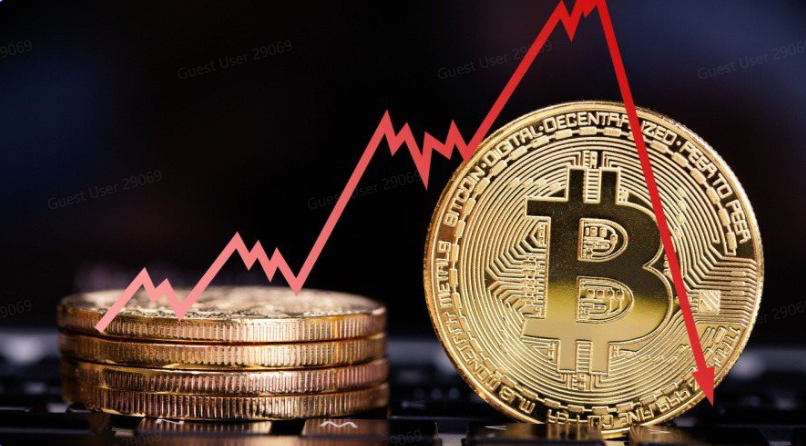
If you’ve been in the crypto space for more than a week, you know that the market is less of a straight line and more of a wild psychological roller coaster. As we move into the first quarter of 2026, the days of Bitcoin being just a “speculative internet coin” are long gone. Today, it’s a heavyweight asset sitting on institutional balance sheets, integrated into national strategic reserves, and serving as a cornerstone for modern digital finance.
But what actually moves the needle now? Gone are the days when a single tweet could send the price up 20%. In 2026, the drivers are more sophisticated, more “macro,” and—luckily for you—more predictable if you know where to look. We’ve entered what many analysts call the “Institutional Era,” where the four-year cycle theory is being challenged by steady, year-round corporate demand.
Traders are no longer just looking at exchange order books; they are watching the Net Inflow/Outflow data from major asset managers like BlackRock and Fidelity. When Wall Street “buys the dip” via an ETF, it creates a massive supply shock. Because these institutions aren’t day-trading—they are locking BTC away—even a slight shift in sentiment can cause a sharp move in the bitcoin price.
Here is a breakdown of the key indicators that will actually dictate where Bitcoin goes this year.
The 2026 checklist: Key indicators moving the needle
1. The Macro shadow: Interest rates and the “Risk-On” switch
Bitcoin has officially joined the big leagues of the global economy. This means it now reacts to the Federal Reserve just like the Nasdaq does. In 2026, the biggest question is: Are we in a high-rate or low-rate environment? Low rates: When the Fed cuts rates, “cheap money” floods the market. Investors get bored with 2% savings accounts and go hunting for gains in “risk-on” assets. That’s usually rocket fuel for Bitcoin.
- Geopolitical tensions: Interestingly, 2026 has shown us that Bitcoin can also act as “Digital Gold.” When trade wars or global tensions spike, we often see a “flight to safety” that pushes prices higher while stocks might be struggling.
2. On-chain health: Exchange reserves and “Whale” movement
If you want to know what’s happening under the hood, you have to look at on-chain data. One of the most reliable indicators is Exchange reserves.
When the amount of Bitcoin sitting on exchanges drops, it means people are moving their coins into private wallets (cold storage). This reduces the “liquid supply.” When there’s less BTC available to buy, even a small increase in demand can cause a massive price spike. Currently, exchange reserves are sitting at multi-year lows, meaning the spring is tightly coiled.
Pro-tip: Watch for “Whale Alerts.” When wallets holding 1,000+ BTC start moving funds off exchanges, they are usually signaling that they expect the price to go up and don’t plan on selling anytime soon.
3. Technical levels: The $100k psychological barrier
We can talk about “utility” all day, but human psychology still runs the market. In 2026, the $100,000 mark isn’t just a number; it’s a massive psychological wall.
Traders use Moving averages (MA)—specifically the 50-day and 200-day MAs—to see if the trend is healthy. As of early 2026, analysts are watching the $88,000 to $90,000 support zone closely. This area has acted as a “floor” where institutional buyers step in. If Bitcoin stays above its long-term moving averages, the bull market is technically intact. If it dips below, expect the “crypto winter” headlines to start reappearing.
4. The “Energy displacement” narrative: AI vs. mining
A new indicator for 2026 is the reallocation of power. With AI workloads demanding massive amounts of energy, some Bitcoin miners are pivoting to AI data processing. Traders are watching the Hash Rate—the total computational power securing the network.
If the hash rate remains stable despite miners shifting resources, it proves Bitcoin’s resilience. However, if it drops too fast, it could signal a period of miner “capitulation” where they are forced to sell their holdings to cover costs. The intersection of AI and crypto is the “hidden” driver of 2026.
5. Regulatory clarity: The GENIUS act and beyond
The US has moved past the “is it legal?” phase. With the passage of bipartisan market structure legislation, the rules of the road are finally clear. This clarity is the “green light” for pension funds and insurance companies that were previously too nervous to buy. When you see news about a new major bank offering Bitcoin custody, that is a lagging indicator that the price is being supported by long-term, “sticky” capital.
Understanding the 2026 volatility
We aren’t in the “Wild West” anymore, but that doesn’t mean the volatility is gone. It has just changed shape. In 2026, volatility often comes from liquidation cascades—when too many traders are using too much leverage, and a small price drop triggers a chain reaction of forced sells.
To survive this, you have to stop thinking like a gambler and start thinking like a fund manager. Use the indicators:
- Watch the DXY (US dollar index): When the dollar is weak, Bitcoin is usually strong.
- Watch the “Fear & Greed” index: When everyone is screaming “To the moon,” it might be time to take some profit. When everyone is panicking, the indicators usually show a bottom is near.
Why 2026 is different
The most significant shift this year is the death of the “four-year cycle.” Historically, Bitcoin peaked about 18 months after a halving. But with the 2024 halving now far in the rearview mirror, 2026 is proving that Bitcoin can grow based on adoption rather than just scarcity mechanics. We are seeing a “maturation” of the asset class where it behaves more like a global macro asset and less like a tech startup.
The winners in 2026 aren’t the ones chasing every 100x memecoin. They are the traders who understand that Bitcoin is becoming the “base layer” of the new financial system. They watch the ETF flows, they respect the moving averages, and they don’t get shaken out by short-term noise.
Expert advice: Take control of your strategy with Zoomex

Watching the indicators is only half the battle; you need a platform that can keep up when the market starts moving. If you’re looking for a trading experience that’s built for both speed and security, Zoomex is where the pros land.
As an official partner of the Haas F1 Team, Zoomex understands that in high-stakes environments, system stability is everything. You can’t afford a platform that freezes when the Bitcoin price hits a new all-time high.
Whether you’re looking to copy a pro’s moves with their Copy Trading feature or you want to dive into the charts yourself with up to 150x leverage, Zoomex keeps things simple so you can focus on the trade. With no KYC requirements for regular trading and deep liquidity that keeps spreads tight, it’s designed for the reality of the 2026 market.
Don’t just watch the market happen to you—use a platform designed for the speed and precision of 2026. Explore the tools available at Zoomex today and start trading with the same edge the institutions have.
