

The Portland Trail Blazers vs Utah Jazz timeline spans over four decades of intense NBA competition, fierce playoff battles, and memorable regular season clashes that have defined the Northwest Division rivalry.
Since the Jazz relocated to Utah in 1979, these two franchises have met 243 times across regular season and playoffs, with the Jazz holding a slight overall edge at 128-114 (52.9%).
Their history includes six playoff series between 1988 and 2000, with Portland winning four series despite Utah’s dominance during the Stockton-Malone era.
The rivalry intensified throughout the 1990s when both teams regularly competed for Western Conference supremacy, producing classics like the 2000 Western Conference Semifinals.
In 2026, the rivalry continues as both teams rebuild while maintaining the competitive spirit that has always characterized this matchup.
Early Years: The Rivalry Begins (1979-1987)
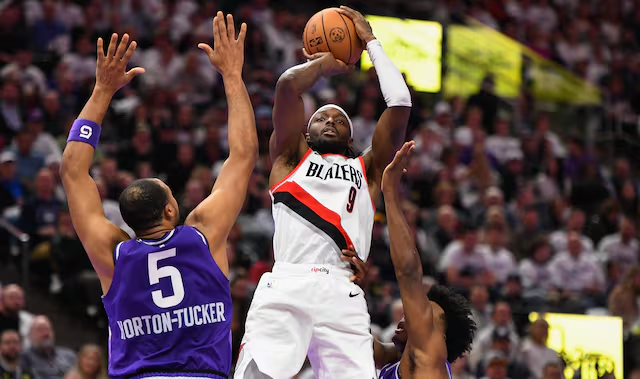
The Portland Trail Blazers vs Utah Jazz timeline officially started when the Jazz franchise relocated from New Orleans to Salt Lake City in 1979. The two teams became Western Conference rivals immediately.
During the early 1980s, both franchises were building their identities. Portland was coming off their 1977 championship glory with Bill Walton, while Utah was developing young talents.
The Jazz struggled initially in their new home, posting losing records. Portland maintained respectability but couldn’t recapture championship magic from the late 1970s.
By the mid-1980s, both teams began assembling the rosters that would define their rivalry. Utah drafted John Stockton in 1984 and Karl Malone in 1985, forming one of history’s greatest duos.
Portland countered with Clyde Drexler, Terry Porter, and Jerome Kersey. The stage was set for what would become one of the NBA’s premier rivalries.
First Playoff Meeting: 1988 Western Conference First Round
The first postseason clash in the Portland Trail Blazers vs Utah Jazz timeline occurred in the 1988 Western Conference First Round. Utah won the series 3-1, advancing past Portland decisively.
The Jazz dominated with their emerging pick-and-roll offense featuring Stockton and Malone. Game 1 saw Utah win 114-105 at home, setting the tone for the series.
Portland struggled to contain Utah’s offensive efficiency. The Jazz’s defense, anchored by Mark Eaton’s shot-blocking, frustrated the Blazers’ offensive attempts throughout.
This series marked Utah’s announcement as a legitimate Western Conference contender. The Jazz would build on this success, making the playoffs every year for the next two decades.
For Portland, the loss served as motivation. The Blazers would retool and return stronger, setting up future playoff confrontations with their Northwest rivals.
1991 Western Conference Semifinals Revenge
The second chapter in the Portland Trail Blazers vs Utah Jazz timeline came in the 1991 Western Conference Semifinals. Portland avenged their 1988 loss by defeating Utah 4-1.
The Blazers, led by Clyde Drexler, Terry Porter, and Buck Williams, proved too versatile. Portland’s balanced attack overwhelmed Utah’s defense despite Stockton and Malone’s brilliance.
Game 1 in Portland set the tone with a convincing Blazers victory. Utah managed only one win in Game 3, but Portland closed out the series in five games.
This series showcased Portland at their peak. The Blazers would advance to the NBA Finals that year, eventually losing to Michael Jordan’s Chicago Bulls.
For Utah, the loss highlighted areas needing improvement. The Jazz front office responded by adding pieces around their core duo, preparing for future championship runs.
Epic 1992 Western Conference Finals Battle
The 1992 Western Conference Finals represented the peak of the early Portland Trail Blazers vs Utah Jazz timeline rivalry. Portland won a hard-fought series 4-2 to reach their second consecutive Finals.
This series featured six incredibly competitive games. Home court advantage proved crucial, with each team defending their building until Portland won Game 6 in Utah.
Clyde Drexler averaged over 25 points per game while Stockton and Malone combined for tremendous production. Every possession felt critical as both teams battled for Finals positioning.
Portland’s depth and experience proved decisive. Veterans like Clifford Robinson and Danny Ainge made crucial contributions that swung close games in Portland’s favor.
Utah’s disappointment was immense, having come so close to their first Finals appearance. The Jazz would use this setback as fuel, returning stronger in subsequent years.
Jazz Dominance: 1996 First Round Upset
The Portland Trail Blazers vs Utah Jazz timeline took a turn in the 1996 First Round. Utah, now a seasoned playoff team, defeated Portland 3-2 in a closely contested series.
The Jazz were at the peak of their powers. Stockton and Malone, supported by Jeff Hornacek and Antoine Carr, formed a championship-caliber roster seeking Finals glory.
Portland featured a younger core led by Arvydas Sabonis and Rasheed Wallace. Despite competitive games, the Blazers’ inexperience showed against Utah’s playoff-tested veterans.
This series victory launched Utah’s historic 1996-97 season. The Jazz would advance all the way to the NBA Finals, eventually losing to Michael Jordan’s Bulls.
For Portland, the loss signaled a transition period. The Blazers began retooling around their young core, preparing for their own late-1990s championship push.
The Intense 1999 Western Conference Semifinals
The 1999 Western Conference Semifinals added another memorable chapter to the Portland Trail Blazers vs Utah Jazz timeline. Portland won the series 4-2, eliminating the defending Western Conference champions.
Both teams entered this lockout-shortened season with championship aspirations. Utah was seeking a third consecutive Finals appearance, while Portland emerged as a legitimate contender.
The series featured physical, low-scoring battles typical of late-1990s playoff basketball. Defense dominated, with every possession requiring maximum effort and execution.
Portland’s roster featured Rasheed Wallace, Scottie Pippen, Steve Smith, and Damon Stoudamire. This talented lineup overwhelmed Utah through superior depth and versatility.
Utah’s aging core of Stockton and Malone fought valiantly but couldn’t overcome Portland’s younger, deeper roster. The loss marked the beginning of Utah’s championship window closing.
Historic 2000 Western Conference Semifinals
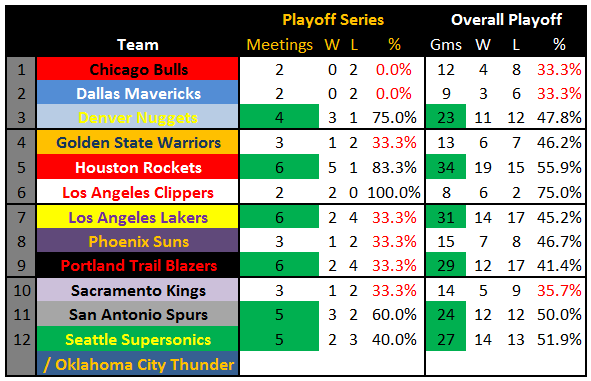
The 2000 Western Conference Semifinals provided the final playoff chapter in the Portland Trail Blazers vs Utah Jazz timeline. Portland eliminated Utah 4-1, ending their playoff meetings for over two decades.
This series marked Utah’s last true championship opportunity with Stockton and Malone. Despite regular season success, the Jazz couldn’t solve Portland’s multifaceted attack.
Portland’s “Jail Blazers” roster dominated with talent and toughness. Rasheed Wallace, Scottie Pippen, Steve Smith, Bonzi Wells, and Damon Stoudamire overwhelmed Utah consistently.
The Blazers won decisively, advancing to face the Lakers in the Western Conference Finals. Portland nearly reached the Finals before collapsing in Game 7.
For Utah, this loss effectively ended their championship era. Stockton and Malone would play a few more seasons but never again reached such heights.
The Northwest Division Era Begins (2004-Present)
The Portland Trail Blazers vs Utah Jazz timeline entered a new phase when the NBA realigned divisions in 2004. Both teams joined the newly formed Northwest Division, guaranteeing regular matchups.
This realignment meant Portland and Utah would play at least four times per regular season. The increased frequency intensified familiarity and competitive rivalry despite diminished playoff stakes.
Both franchises underwent significant transitions during this period. Utah rebuilt after Stockton and Malone’s retirements, while Portland recovered from the “Jail Blazers” era’s turmoil.
The division format created natural storylines. Winning the Northwest Division became an annual battle, with Denver, Oklahoma City, and Minnesota also competing.
Through the 2000s and 2010s, both teams experienced highs and lows. Utah found success with Deron Williams, then later with Donovan Mitchell and Rudy Gobert.
Brandon Roy vs Deron Williams Era (2006-2011)
A new chapter in the Portland Trail Blazers vs Utah Jazz timeline emerged with Brandon Roy and Deron Williams leading their respective franchises. Both young stars brought excitement and hope.
Brandon Roy’s smooth scoring and clutch gene made him Portland’s franchise cornerstone. His three All-Star selections from 2008-2010 coincided with the Blazers’ resurgence.
Deron Williams established himself as one of the NBA’s premier point guards. His pick-and-roll mastery with Carlos Boozer and later Paul Millsap kept Utah competitive.
Games between these teams featured intense point guard battles. Roy and Williams regularly matched up in thrilling individual duels that decided close contests.
Unfortunately, both careers were cut short by injuries. Roy’s devastating knee problems forced early retirement, while Williams’ ankles never fully recovered from constant wear.
Damian Lillard Era Impact (2012-2023)
Damian Lillard transformed the modern Portland Trail Blazers vs Utah Jazz timeline with his clutch performances and competitive fire. “Dame Time” became must-watch television.
Lillard’s rivalry with Utah’s various point guards created memorable moments. His deep three-pointers and game-winners tormented Jazz fans throughout his Portland tenure.
Utah countered with strong rosters during this era. The Jazz featured Derrick Favors, Gordon Hayward, and later the Mitchell-Gobert combination that dominated defensively.
Notable games included Lillard’s 51-point explosion in 2016 and various buzzer-beaters. His range and confidence made him a nightmare matchup for Utah’s defense.
When Lillard eventually requested a trade in 2023, it shocked the NBA. His departure to Milwaukee marked the end of Portland’s most successful modern era.
The Donovan Mitchell Years (2017-2022)
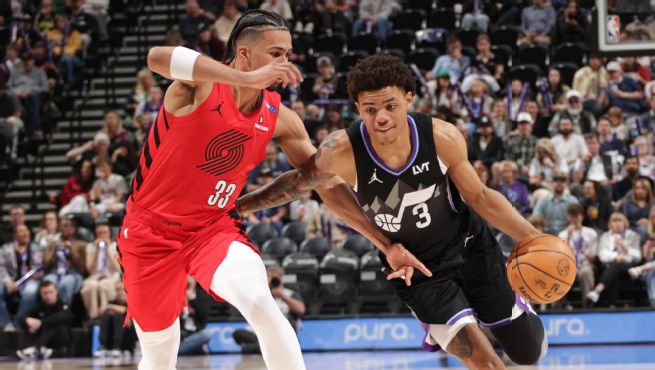
Donovan Mitchell’s tenure with Utah added star power to the Portland Trail Blazers vs Utah Jazz timeline. His explosive scoring and athleticism rejuvenated the franchise.
Mitchell’s rookie season in 2017-18 immediately impacted the rivalry. His fearless attacking style and acrobatic finishes made him an instant fan favorite.
Paired with Rudy Gobert’s elite rim protection, Utah built one of the NBA’s best regular season teams. The Jazz won multiple Northwest Division titles during this stretch.
Individual matchups between Mitchell and Lillard generated excitement. Both guards regularly traded highlight plays and clutch shots in close games.
Mitchell’s 2022 trade to Cleveland shocked the basketball world. The move ended Utah’s championship aspirations and initiated a complete franchise rebuild.
Recent Regular Season Meetings (2023-2025)
The Portland Trail Blazers vs Utah Jazz timeline’s recent chapter features two rebuilding franchises. Both teams embraced youth development while accumulating draft assets for future contention.
The 2023-24 season saw competitive games despite low playoff expectations. Young players on both rosters battled for playing time and developmental opportunities.
December 2, 2023, Utah won 118-113 in a competitive contest. The game showcased both teams’ young cores competing with energy despite limited winning expectations.
December 14, 2023, brought another Jazz victory, 141-99, demonstrating Utah’s superior depth. Portland struggled with injuries and roster turnover throughout the season.
The 2024-25 season continued this pattern. Both teams prioritized player development over immediate winning, leading to unpredictable but entertaining matchups.
Memorable December 26, 2024 Thriller
December 26, 2024, provided instant classic status in the Portland Trail Blazers vs Utah Jazz timeline. Portland won 122-120 on Scoot Henderson’s buzzer-beating jumper with 0.1 seconds remaining.
Deni Avdija and Shaedon Sharpe each scored 27 points for Portland. Their balanced attack kept the Blazers competitive throughout a back-and-forth battle.
Utah’s Lauri Markkanen led the Jazz with his usual efficient scoring. Despite his efforts, Utah couldn’t execute defensively on Portland’s final possession.
Henderson’s game-winner sent the Moda Center crowd into pandemonium. The young point guard’s clutch gene showed tremendous promise for Portland’s future.
This game demonstrated that even rebuilding teams produce memorable moments. The competitive spirit defining this rivalry remains intact regardless of standings.
October 29, 2025: Another Classic
October 29, 2025, added another thrilling chapter to the Portland Trail Blazers vs Utah Jazz timeline. Portland won 136-134 in an offensive showcase at Delta Center.
Jrue Holiday dominated with 27 points and eight assists for Portland. The veteran guard’s clutch free throws in the final seconds secured the victory.
The game featured exceptional shooting from both teams. Defense took a backseat as offensive execution reached elite levels throughout all four quarters.
Utah nearly completed a comeback from a significant fourth-quarter deficit. The Jazz’s late rally fell just short despite excellent execution down the stretch.
This early season matchup set the tone for 2025-26 competitiveness. Both teams showed improved rosters capable of competing despite modest expectations.
All-Time Regular Season Record
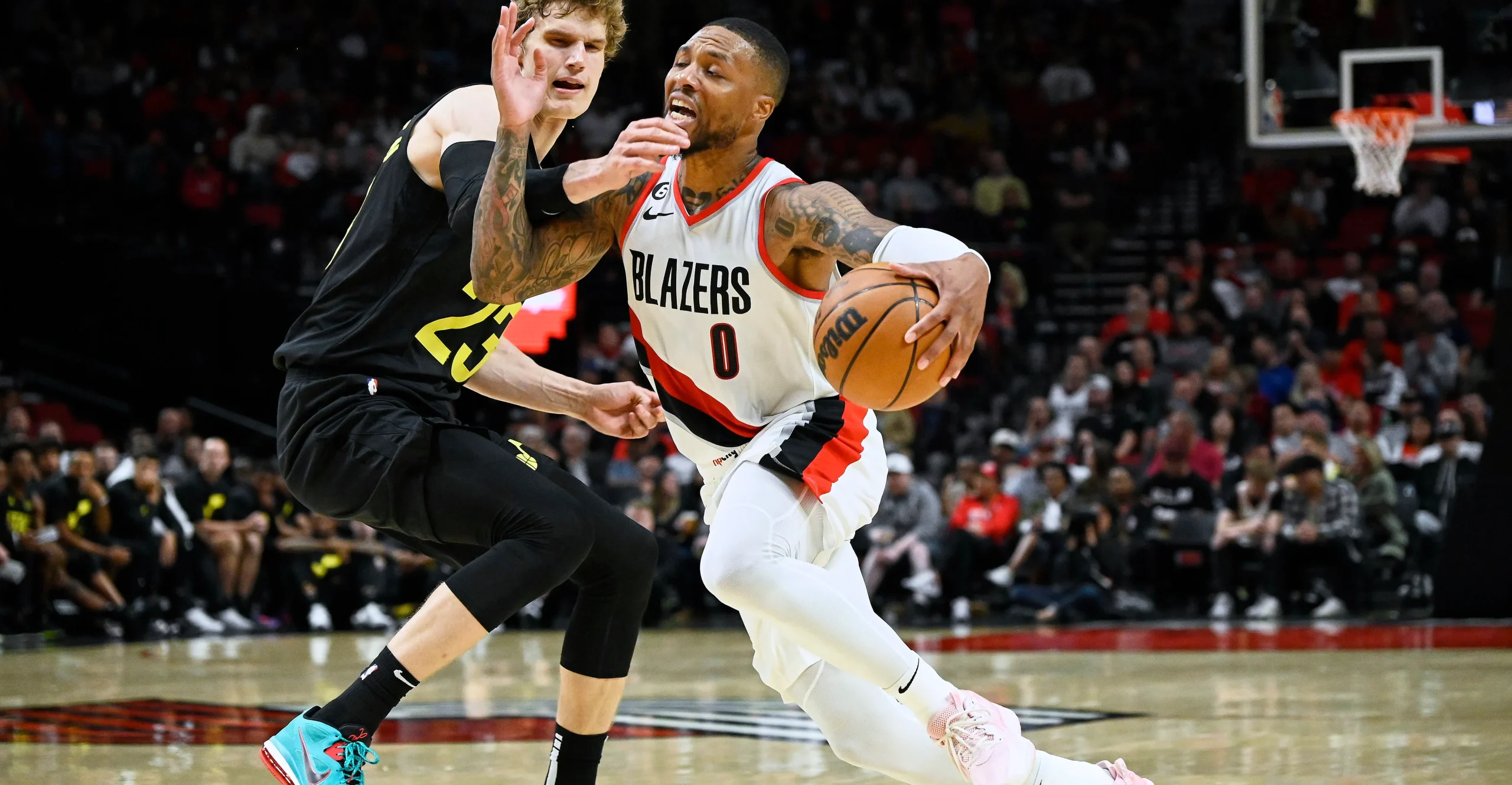
The regular season component of the Portland Trail Blazers vs Utah Jazz timeline shows Utah’s historical dominance. The Jazz hold a 116-97 (54.5%) advantage through 213 regular season games.
Utah’s success came primarily during the Stockton-Malone era. Those championship-caliber Jazz teams consistently defeated Portland during regular season matchups.
Home court has mattered significantly in this rivalry. Both teams defend their buildings well, with the altitude factor in Salt Lake City creating additional challenges.
Portland’s best regular season stretches came during their championship runs in the late 1970s and late 1990s. These periods saw the Blazers compete evenly with Utah.
Since 2000, the regular season series has remained competitive. Neither team has dominated despite fluctuating roster quality and championship aspirations.
All-Time Playoff Record
The playoff component of the Portland Trail Blazers vs Utah Jazz timeline favors Portland significantly. The Blazers lead the playoff series 4-2, winning 19 of 31 total playoff games.
Portland’s four series victories came in crucial moments. The 1991, 1992, 1999, and 2000 series wins eliminated Utah from championship contention.
Utah’s two series victories occurred in 1988 and 1996. Both series launched deep playoff runs, with the 1996 win preceding Utah’s Finals appearances.
The playoff record demonstrates Portland’s ability to elevate in crucial moments. Despite regular season struggles, the Blazers consistently performed when stakes increased.
No playoff meeting has occurred since 2000, a remarkable 26-year gap. Both franchises have since experienced complete roster turnovers and organizational changes.
Head-to-Head Scoring Trends
Statistical analysis of the Portland Trail Blazers vs Utah Jazz timeline reveals interesting scoring trends. Games average approximately 103-107 points per team, reflecting different eras’ pacing.
The 1990s featured lower-scoring, defensive battles. Final scores regularly fell in the 85-95 range during the peak playoff rivalry years.
The 2000s saw gradual pace increases. Scores climbed into the 95-105 range as NBA rule changes encouraged faster play and more perimeter shooting.
Modern matchups (2010s-present) feature much higher scoring. Games regularly exceed 110-120 points per team, reflecting today’s three-point revolution and pace emphasis.
Three-point shooting has dramatically altered the rivalry. Both teams now attempt 35-40 threes per game compared to 10-15 attempts in the 1990s.
Key Player Performances Throughout History
Individual brilliance has defined many Portland Trail Blazers vs Utah Jazz timeline moments. Legendary performances create lasting memories transcending win-loss records.
- John Stockton holds the assist record in this matchup. His pick-and-roll mastery with Karl Malone tormented Portland’s defenses for nearly two decades.
- Karl Malone dominated scoring in playoff matchups. The Mailman’s power game and mid-range consistency made him nearly unstoppable in crucial moments.
- Clyde Drexler delivered clutch playoff performances. His 1991 and 1992 series heroics showcased his ability to elevate when Portland needed him most.
- Damian Lillard owns several 40+ point games against Utah. His deep three-point range stretched defenses beyond their breaking points.
- Donovan Mitchell and Lauri Markkanen represent modern excellence. Both stars regularly produce highlight performances in recent matchups.
Coaching Matchups Through the Years
The Portland Trail Blazers vs Utah Jazz timeline features legendary coaching battles. Strategic adjustments and tactical innovations determined many series outcomes.
- Jerry Sloan coached Utah from 1988-2011, establishing the Jazz’s identity. His pick-and-roll offense and defensive principles created consistent excellence.
- Rick Adelman guided Portland during their late-1990s peak. His offensive system maximized talent, creating one of history’s most potent attacks.
- Quin Snyder modernized Utah’s approach from 2014-2022. His defensive schemes and offensive spacing created a consistently elite Jazz team.
Modern coaches face different challenges. Player development and pace-and-space principles now dominate coaching priorities over traditional schemes.
Coaching stability has fluctuated. Utah maintained consistency with Sloan’s long tenure, while Portland experienced more frequent changes throughout franchise history.
Venue Atmosphere Comparisons
The Portland Trail Blazers vs Utah Jazz timeline features two outstanding home court atmospheres. Both venues create intimidating environments for visiting teams.
Moda Center in Portland (formerly Rose Garden) seats 19,393 for basketball. The arena opened in 1995, providing state-of-the-art facilities and excellent sightlines.
Portland fans, known as “Rip City,” bring passionate energy. The crowd’s knowledge and enthusiasm create genuine home court advantage.
Delta Center in Salt Lake City (formerly Vivint Arena) seats 18,306. Opened in 1991, the venue serves as Utah’s home and features excellent acoustics.
Utah’s altitude at 4,226 feet above sea level affects visiting teams. Fatigue impacts late-game execution, giving the Jazz subtle but meaningful advantages.
Both venues rank among the NBA’s loudest. Playoff games generate incredible noise levels that disrupt opposing offenses and energize home teams.
Notable Trades and Transactions Between Teams
Direct trades remain rare in the Portland Trail Blazers vs Utah Jazz timeline. Division rivals typically avoid strengthening each other through transactions.
Few significant player trades have occurred between franchises. Both organizations prefer dealing with teams outside their division and conference when possible.
Free agent signings occasionally impact the rivalry. Players switching between Portland and Utah bring inside knowledge to new teams.
Front office personnel moves occur more frequently. Scouts, assistant coaches, and executives occasionally transition between organizations, sharing philosophies.
The reluctance to trade directly reflects competitive respect. Neither franchise wants helping the other succeed within their shared division.
Playoff Drought and Rebuilding Phases
Both teams have experienced extended playoff absences in the Portland Trail Blazers vs Utah Jazz timeline. Rebuilding periods test fan patience and organizational commitment.
Portland missed the playoffs from 2004-2008, a rare drought for the historically successful franchise. Poor draft picks and roster mismanagement created struggles.
Utah’s only significant playoff drought occurred from 2004-2007. The post-Stockton/Malone transition proved difficult despite Deron Williams’ emergence.
Both teams have generally maintained competitive relevance. Compared to other NBA franchises, Portland and Utah avoid extended basement-dwelling.
Current rebuilding phases started around 2023 for both teams. Utah traded Mitchell and Gobert, while Portland traded Lillard, initiating youth movements.
These parallel rebuilds could set up future competitive battles. Both franchises possess promising young talent and valuable draft capital.
The Northwest Division Standings Battle
Northwest Division races have added intensity to the Portland Trail Blazers vs Utah Jazz timeline since 2004. Five teams compete annually for divisional supremacy.
Utah has won the Northwest Division five times since its creation. Their consistency during the Williams and Mitchell eras produced regular division titles.
Portland captured two Northwest Division championships. The Blazers’ Lillard-led teams occasionally topped the division despite Denver and Utah’s strength.
Division standings impact playoff seeding. Higher seeds provide home court advantage and potentially easier first-round matchups.
Oklahoma City’s recent dominance has shifted division power. The Thunder’s emergence creates three-way competition with Utah and Portland rebuilding.
Minnesota and Denver also compete regularly. The Northwest Division consistently ranks among the NBA’s most competitive divisions.
Statistical Head-to-Head Leaders
Advanced statistics reveal deeper insights into the Portland Trail Blazers vs Utah Jazz timeline. Numbers tell stories beyond simple win-loss records.
- Highest single-game points: Various players have topped 40 points in this matchup. Damian Lillard’s 51-point performance in 2016 stands among the highest.
- Most rebounds in a game: Karl Malone and Rasheed Wallace battled on the boards regularly. Several games featured 15+ rebound performances.
- Most assists in a game: John Stockton holds multiple games with 15+ assists. His playmaking consistently set up Jazz scoring opportunities.
- Best shooting performances: Modern games feature efficient three-point shooting. Several players have hit 7+ threes in single games.
- Plus-minus leaders: Impact players like Scottie Pippen and Rudy Gobert posted impressive plus-minus numbers despite not always leading in traditional stats.
Broadcast and Media Coverage Evolution
Media coverage of the Portland Trail Blazers vs Utah Jazz timeline has evolved dramatically. Technology transforms how fans experience these matchups.
Early games received limited national attention. Regional broadcasts and occasional national telecasts comprised most coverage.
The 1990s playoff series generated significant media interest. ESPN and TNT provided extensive analysis and highlights.
Cable television expansion brought more regular season coverage. Local broadcasts improved production quality throughout the 2000s.
Streaming services now dominate modern coverage. NBA League Pass and team apps provide unprecedented access to every game.
Social media transformed fan engagement. Highlights spread instantly on Twitter, Instagram, and TikTok, creating viral moments.
Impact on NBA Draft Positioning
Draft positioning influenced both franchises’ trajectories in the Portland Trail Blazers vs Utah Jazz timeline. Smart drafting separates successful rebuilds from extended mediocrity.
Portland’s 2007 Greg Oden selection over Kevin Durant remains controversial. Injuries destroyed Oden’s career, significantly impacting the franchise’s 2010s trajectory.
Utah’s draft success includes finding Donovan Mitchell at pick 13 in 2017. Hidden gems like Mitchell, Millsap, and Boozer emerged from lower picks.
Current rebuilds emphasize draft capital accumulation. Both teams prioritize collecting picks and developing young talent over immediate winning.
The Victor Wembanyama sweepstakes missed both franchises. However, both Portland and Utah still possess promising young cores.
Future draft success will determine championship windows. The next few drafts could define 2030s competitiveness for both organizations.
Fan Base Characteristics and Rivalry Intensity
Despite geographic distance, the Portland Trail Blazers vs Utah Jazz timeline features passionate fan bases. Each city embraces their team as cultural cornerstones.
Portland fans pride themselves on basketball knowledge. “Rip City” represents one of the NBA’s most educated and passionate fan bases.
Utah fans provide unwavering support in a unique market. Salt Lake City’s limited entertainment options make the Jazz the primary professional sports attraction.
Both fan bases respect competitive excellence. Mutual appreciation exists despite competitive tension during games.
The rivalry lacks true animosity. Unlike Lakers-Celtics or Bulls-Pistons hatred, Portland-Utah features competitive respect.
Social media enables fan interaction. Online communities discuss matchups, debate players, and maintain rivalry awareness year-round.
Future Outlook for the Rivalry
The Portland Trail Blazers vs Utah Jazz timeline’s future chapter depends on successful rebuilding. Both franchises possess tools for eventual championship contention.
Portland’s young core includes Scoot Henderson, Shaedon Sharpe, and Donovan Clingan. These lottery picks represent the foundation for future success.
Utah features Lauri Markkanen, Keyonte George, and Walker Kessler. The Jazz also possess significant draft capital for future acquisitions.
Both teams could become competitive simultaneously. Parallel rebuilds might recreate 1990s-style playoff battles within several years.
The Northwest Division will remain challenging. Denver, Oklahoma City, and Minnesota ensure no easy paths to playoff positioning.
Conference realignment remains possible. NBA expansion could alter divisions, potentially changing the rivalry’s frequency and dynamics.
2025-26 Season Outlook
The current Portland Trail Blazers vs Utah Jazz timeline chapter features two developing teams. Neither expects immediate championship contention but both show improvement.
Portland enters 2025-26 with cautious optimism. Young talent development takes priority over wins, though competitive games provide valuable experience.
Utah embraces a similar approach. Markkanen provides veteran stability while younger players gain critical playing time and responsibility.
Regular season matchups will showcase emerging talent. Individual player development narratives drive fan interest more than playoff positioning.
Both teams schedule four regular season meetings. These games provide comparison points for parallel rebuilding trajectories.
Expect competitive, entertaining basketball. While neither team dominates, close games and individual brilliance create watchable products.
Historic Games and Memorable Moments
Certain games transcend normal importance in the Portland Trail Blazers vs Utah Jazz timeline. These contests create lasting memories cherished by fans.
- Game 6, 1992 Western Conference Finals: Portland’s series-clinching road victory sent the Blazers to their second consecutive Finals.
- 2000 Semifinals dominance: Portland’s 4-1 series victory showcased their overwhelming talent advantage over aging Utah legends.
- December 26, 2024: Scoot Henderson’s buzzer-beater with 0.1 seconds remaining delivered an instant classic.
- October 29, 2025: Jrue Holiday’s clutch free throws preserved a 136-134 Portland victory in a high-scoring thriller.
These moments connect generations. Older fans remember Stockton-Malone battles while younger fans celebrate modern heroics.
Cultural Impact Beyond Basketball
The Portland Trail Blazers vs Utah Jazz timeline extends beyond sports. Both franchises represent their cities’ identities and cultural values.
Portland embraces their counterculture reputation. The city’s progressive values and environmental consciousness contrast with typical sports culture stereotypes.
Utah reflects family-oriented values. Salt Lake City’s unique cultural fabric creates a distinct NBA market unlike any other.
Both franchises support extensive community programs. Youth basketball initiatives, charity work, and educational partnerships define off-court impacts.
Economic impacts are substantial. Each team generates millions in local economic activity through games, employment, and tourism.
The rivalry helps maintain NBA relevance in smaller markets. Competitive games prove teams outside major cities can compete successfully.
Frequently Asked Questions (FAQs)
What is the all-time record between Portland Trail Blazers and Utah Jazz?
The Utah Jazz lead the all-time series 128-114 (52.9%) including both regular season and playoffs. In regular season games only, Utah leads 116-97 (54.5%), while Portland leads the playoff series 4-2 across six postseason matchups.
When did Portland and Utah last meet in the playoffs?
The last playoff meeting between Portland Trail Blazers and Utah Jazz occurred in 2000 during the Western Conference Semifinals. Portland won that series 4-1, eliminating Utah and advancing to face the Los Angeles Lakers in the conference finals.
Who are the leading scorers in this rivalry’s history?
Karl Malone leads all scorers in Portland vs Utah matchups with over 3,000 points across his career. Clyde Drexler leads Portland’s all-time scorers in the rivalry, followed by Damian Lillard who had numerous high-scoring performances during his tenure with the Blazers.
How many playoff series have these teams played?
Portland Trail Blazers and Utah Jazz have met in six playoff series between 1988 and 2000. Portland won four series (1991, 1992, 1999, 2000) while Utah won two series (1988, 1996), with all matchups occurring during the Stockton-Malone era.
What was the highest-scoring game in this rivalry?
The October 29, 2025 game produced one of the highest-scoring matchups with Portland winning 136-134 for a combined 270 points. Several modern games have exceeded 240 combined points due to increased pace and three-point shooting emphasis compared to 1990s contests.
Who holds the single-game assist record against the opponent?
John Stockton holds the single-game assist record in this matchup with multiple games featuring 15+ assists. His pick-and-roll mastery with Karl Malone created countless scoring opportunities that tormented Portland’s defense throughout the 1990s.
Are Portland and Utah in the same division?
Yes, both teams are in the Northwest Division since the 2004-05 season realignment. They share the division with Denver Nuggets, Oklahoma City Thunder, and Minnesota Timberwolves, guaranteeing at least four regular season matchups annually.
What is the longest winning streak in this rivalry?
Portland’s longest winning streak against Utah is six consecutive games from January 27, 2000 through May 11, 2000, spanning both regular season and playoffs. Utah’s longest streak is eight games from April 30, 1988 through December 28, 1989.
Where do Portland and Utah play their home games?
Portland plays home games at Moda Center in Portland, Oregon (capacity 19,393), while Utah plays at Delta Center in Salt Lake City, Utah (capacity 18,306). Both venues are known for passionate fans and excellent home court atmospheres.
Will these teams meet in the 2026 playoffs?
It’s unlikely both Portland and Utah will make the 2026 playoffs as both are currently rebuilding. Both teams sit in the lower half of Western Conference standings, focusing on youth development rather than immediate playoff contention during this rebuilding phase.
Conclusion
The Portland Trail Blazers vs Utah Jazz timeline represents over four decades of compelling NBA basketball, from the 1979 franchise relocation through today’s rebuilding phases.
This rivalry has produced six memorable playoff series, 243 total games, and countless individual performances that defined eras.
The 1990s playoff battles between Stockton-Malone and Drexler-Porter remain legendary, while modern stars like Damian Lillard and Donovan Mitchell carried the torch into the 21st century.
With Utah leading the all-time series 128-114 overall but Portland dominating the playoff meetings 4-2, both franchises can claim historical significance in this matchup.
