

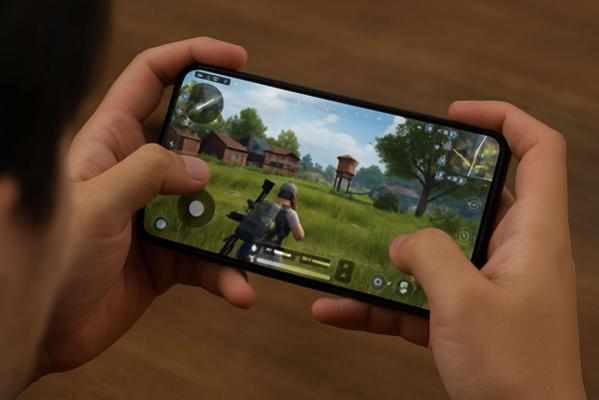
Humans have been gaming for something more than entertainment for centuries. From the earliest civilizations gathered around the boards to today’s families staying up late with card games, humans have always intuitively understood that some games are more than entertainment. Strategy games are intellectual gyms, working several cognitive skills while we entertain ourselves. Instead of active entertainment that mentally wears us out, the games work our minds and challenge us to become better.
What makes these games so particularly useful is how realistically they model real-world issues, developing abilities you’ll find yourself applying long after you’ve put the game pieces away. If you’re a working professional attempting to make clearer choices, a student attempting to concentrate and recall more, or simply someone who likes mental challenges, strategy games offer the rare chance for a combination of fun and mental stimulation. The best thing is how these benefits are achieved naturally—you’re playing, not tediously repeating drills or memorizing flashcards. Your brain is simply quietly building more robust mental muscles in the background.
Developing Problem-Solving Abilities
Strategic games make players into researchers who are constantly examining clues and constructing solutions. Let’s take chess as an example—each move involves examining a chain of possibilities and their potential outcomes. Players begin to think as designers, constructing solutions move-by-move and watching the bigger picture. This mental training helps maintain composure when confronting complicated situations in daily life.
The patience gained from working through challenging game situations transfers effectively to professional obstacles or personal issues. Players discover that hasty decisions seldom produce optimal results, and that occasionally taking a step back for reevaluation can uncover previously overlooked solutions. Eventually, the brain becomes more creative and flexible in tackling problems.
Enhancing Memory and Pattern Recognition
Card games are ideal memory stimuli as they make players remember various streams of information at a time. Learning how to play Gin Rummy and other such games essentially condition the mind to work like a high-end organizational system. Players monitor which cards have been played, recall what opponents might be gathering, and identify chances for successful combinations.
This mental coordination strengthens the capacity to retain and process information mentally. The pattern identification abilities developed extend past card games—players might discover improved recall for names at professional gatherings or better recognition of trends in workplace information. Consistent practice with memory-challenging games functions like daily supplements for cognitive health, maintaining sharp recall and well-developed pattern detection skills.
Improving Decision-Making Under Time Constraints
Real life seldom provides unlimited decision-making time, and strategic games prepare players for this challenge. Poker enthusiasts understand this sensation—having moments to choose whether to fold, call, or raise using partial information. These situations teach reliance on intuition while maintaining logical thinking. Gaming’s advantage lies in providing instant feedback on choices, helping fine-tune the decision-making approach.
Players learn to evaluate situations rapidly, judge risks properly, and commit to actions despite unpredictable outcomes. This decision-making confidence becomes extremely valuable in work environments, where delays can result in lost chances. The high-pressure atmosphere of competitive gaming develops mental strength that proves beneficial in important real-world circumstances.
Developing Long-Term Strategic Thinking
Strategic planning games teach players to become mental time travelers, continuously moving between current actions and future results. Board games like Settlers of Catan demand balancing immediate requirements with extended objectives, similar to career management or financial planning. Players develop skills for seeing how today’s minor decisions create waves leading to tomorrow’s major results.
This future-oriented thinking becomes automatic, helping anticipate difficulties before they emerge and creating advantageous positions. The strategic approach developed through gaming makes players more deliberate about resource distribution, whether involving time, money, or effort. People start viewing life as connected sequences rather than separate incidents, resulting in more purposeful and successful living.
Strengthening Concentration Abilities
In our distraction-filled environment, strategic games provide spaces for intense focus. Unlike browsing social media, these games require complete mental engagement. Success becomes impossible while multitasking or allowing mental drift. This concentrated attention develops into a valuable skill for daily activities, helping approach work tasks more effectively and engage more deeply in conversations.
The absorbing nature of strategic games creates what researchers term “flow state”—that special zone where time appears suspended and performance reaches its peak. Constant gaming is a concentration exercise which improves one’s ability to focus hard on important tasks. The improved concentration is advantageous to school assignments, work tasks, and social relations in which attention is key.
Understanding Social Dynamics and Communication
Multiplayer games turn the player into an observer of human nature, learning to read between the lines and balance group dynamics. Bluffing games like Werewolf require reading facial expressions, voice tone, and behavioral tells. The player learns there’s more to communication than what comes out of someone’s mouth—accepting timing, context, and different personality types. These social labs are a rehearsal for difficult conversations in a safe environment.
They acquire persuasion without the aggression, win-win negotiation, and relationship maintenance in the face of competition. The social awareness gained through gaming improves teamwork abilities, empathetic leadership, and meaningful relationship building. These interpersonal capabilities often become more valuable than technical expertise for career growth.
Developing Emotional Control and Mental Resilience
Strategic games provide excellent training in emotional management, teaching composure maintenance when pressure increases. Players experience full emotional ranges—thrills, frustration, disappointment, victory—within a safe space. Conditioning oneself to think rationally while still in the state of excitement or tension builds genuine mental toughness. Games show that problems are transitory and emotional responses rarely make things better.
This emotional outlook transfers extremely well to real-life circumstances, whether you’re facing difficult bosses, financial problems, or relationship issues. The resilience developed through gaming helps recover more quickly from failures and maintain perspective during difficult periods. Players develop what athletes call “mental strength”—performing optimally regardless of external pressure or internal emotions.
Final Thoughts
Strategic games represent one of life’s uncommon perfect matches—something genuinely fun that simultaneously increases intelligence and capability. The cognitive dividend extends far beyond game boards to penetrate all aspects of thought, decision-making, and engagement with the world. Most important, brains hunger for these challenges and respond very forcefully to the intense mental exercise provided by strategy games. Whether the goal is professional skill development, cognitive acuteness with aging, or merely personal enrichment for the sake of it, strategy games offer a straightforward and effective answer. Time invested in strategy gaming pays compound interest in the form of sharpened cognitive skills that extend entire lifetimes.
