

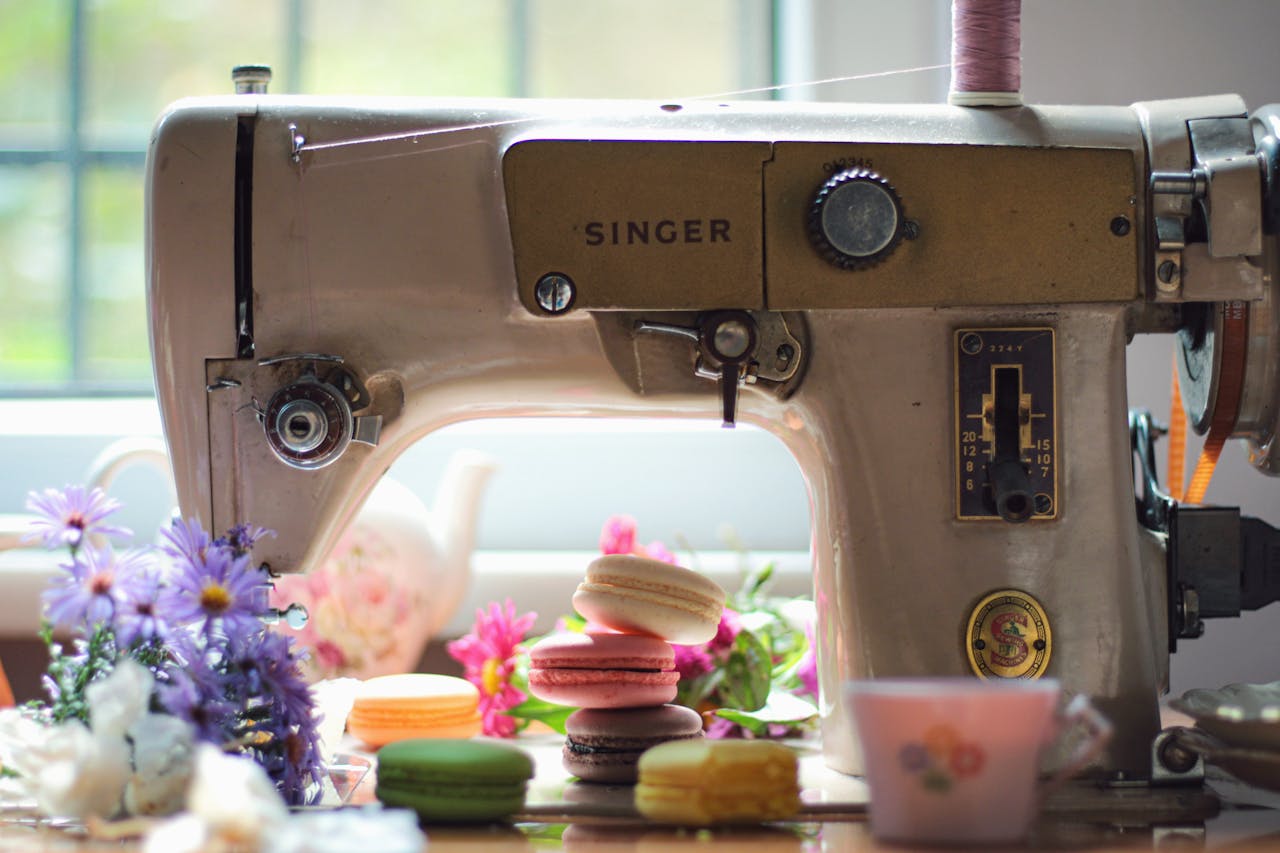
There’s a reason why vintage Singer sewing machines are still found humming away in sewing rooms around the world. Models like the Singer 201 and the 600 series Touch & Sew were built with quality parts, heavy-duty motors, and authentic craftsmanship. Unlike newer plastic models, these machines were made to last through decades of daily use.
That said, even the most well-built machines need maintenance. If you’ve noticed your vintage Singer starting to skip stitches, slow down, or struggle with tension, it might be time for a bit of upkeep. Luckily, most repairs are more straightforward than they sound.
Here’s what you need to know to keep your Singer sewing as it did 60 years ago.
Clean and Oil It Regularly
A dusty sewing machine is a slow sewing machine. Over time, lint, dust, and old oil clog up the moving parts, especially around the bobbin case and feed dogs. Regular cleaning and oiling keep everything running smoothly.
Start by removing the needle plate and brushing out any debris with a soft brush. You can also use tweezers or a vacuum with a narrow attachment to reach tight spots. Once clean, apply sewing machine oil made explicitly for vintage models. Modern oils or household lubricants can damage delicate internal components.
Oil points vary between models, so if you don’t have a manual, try to find a scanned version online or check sewing forums. A well-oiled machine will sound smoother and run with far less resistance.
The Right Replacement Parts Make a Difference
Not all replacement parts are equal. While some generic pieces might seem like a quick fix, many don’t fit correctly or can cause additional issues over time. If you’re restoring or maintaining a vintage Singer, you’ll want parts that are either original or properly machined to match the model’s specifications.
For those working on a Singer Model 201, you can find quality replacements that match the original parts without sacrificing performance. Whether you’re replacing the foot pedal, power cord, or bobbin winder, this Singer 201 parts collection offers original and modern replacements that fit and function the way they should.
If your machine is from the Singer 600 series, such as the 600, 600E, 603, or 603E, be sure the parts are model-specific. These machines introduced new features, such as the internal bobbin winding system, which requires compatible components. You can find exactly what you need in this Singer 600-series collection.
Using the right parts is one of the easiest ways to avoid frustration and future repairs.
Common Electrical Issues and Easy Fixes
One of the most intimidating problems for new vintage machine owners is anything involving wiring. If your machine won’t start, the light flickers, or the foot pedal feels unresponsive, it might be tempting to assume the worst.
In most cases, the issue is with the cord or terminal connections. Over time, wiring can dry out or crack. If the machine’s motor still hums when connected to another power source, you’re likely dealing with a simple cord or pedal issue.
Replacement cords are available for most vintage Singer models, and many just plug directly into the machine without any soldering. Always unplug everything before inspecting, and check for visible wear or loose terminals.
Adjust the Tension and Timing with Patience
If your Singer is skipping stitches, knotting thread, or breaking needles, it may be a tension issue. Older machines are exact, and even minor adjustments can make a big difference.
Start with the tension knob. Try increasing or decreasing the setting slightly while using the same fabric and thread combo. If the problem persists, check your bobbin tension, thread path, and needle placement. Still stuck? Let’s check the timing.
While adjusting timing can sound technical, many sewing hobbyists do it themselves. There are plenty of step-by-step videos and guides online specific to models like the 201 and 603E. If you’re not ready to try it yourself, a local sewing machine repair shop should be able to fix it affordably.
Keep a Few Spare Parts on Hand
You don’t have to stock an entire workshop, but it’s smart to keep a few essentials nearby, especially if your machine is part of your everyday routine.
Some functional spare parts to have include:
- Extra bobbins
- Drive belts
- Tension springs
- Needles (specific to your model)
- Foot pedal or motor brushes (for electric models)
Having these on hand saves time and helps you troubleshoot problems without waiting days for parts to ship. It’s also a great way to learn more about your machine’s mechanics.
Don’t Toss It Over a Small Problem
Vintage sewing machines were built to be repaired, not replaced. If something stops working, it’s rarely a dealbreaker. In fact, many common issues take just 15 to 30 minutes to fix.
Here’s a quick cheat sheet for typical problems:
- Won’t start: Check the cord and foot pedal.
- Thread keeps breaking: Check the needle and tension settings.
- Motor runs but needle won’t move: Belt may be loose or broken.
- Stitches are inconsistent: Could be the timing or the tension.
Before giving up, reach out to vintage sewing forums or groups. There’s a massive community of passionate collectors, restorers, and hobbyists who’ve probably seen the exact issue before.
Find a Trusted Source for Parts
One of the biggest frustrations people face when restoring vintage machines is tracking down parts that actually fit. While auctions and online marketplaces may seem like easy options, you’re often dealing with inconsistent quality or incorrect sizing.
Instead, find a reliable parts source that specializes in vintage Singer machines. Lucky for you, the team behind Vintage Singer Parts has curated a complete selection of parts specifically for models like the 201 and the 600-series, so you’re not left guessing.
Final Thoughts
Owning a vintage Singer sewing machine is more than just a nod to the past. These machines still outwork many modern alternatives, and with a bit of maintenance, they’ll continue to do so for generations.
From routine cleaning to knowing where to find parts that actually fit, the small steps you take now can keep your machine running for years. Whether you’re restoring a family heirloom or keeping your favorite model in top shape, just remember—these machines were made to be used, loved, and repaired.
Treat yours well, and it’ll never let you down.
