

Why do cats lay on you is one of the most common questions cat owners ask, and the answer is far more meaningful than most people realize.
Your cat is not simply looking for a soft surface. Every time your feline friend curls up on your chest, lap, or legs, they are sending a clear message about trust, comfort, and deep affection.
Cats are intentional creatures, and their sleeping choices reveal a great deal about how they feel.
Understanding this behavior can transform the way you see your relationship with your cat.
Why Do Cats Lay on You? The Core Reasons
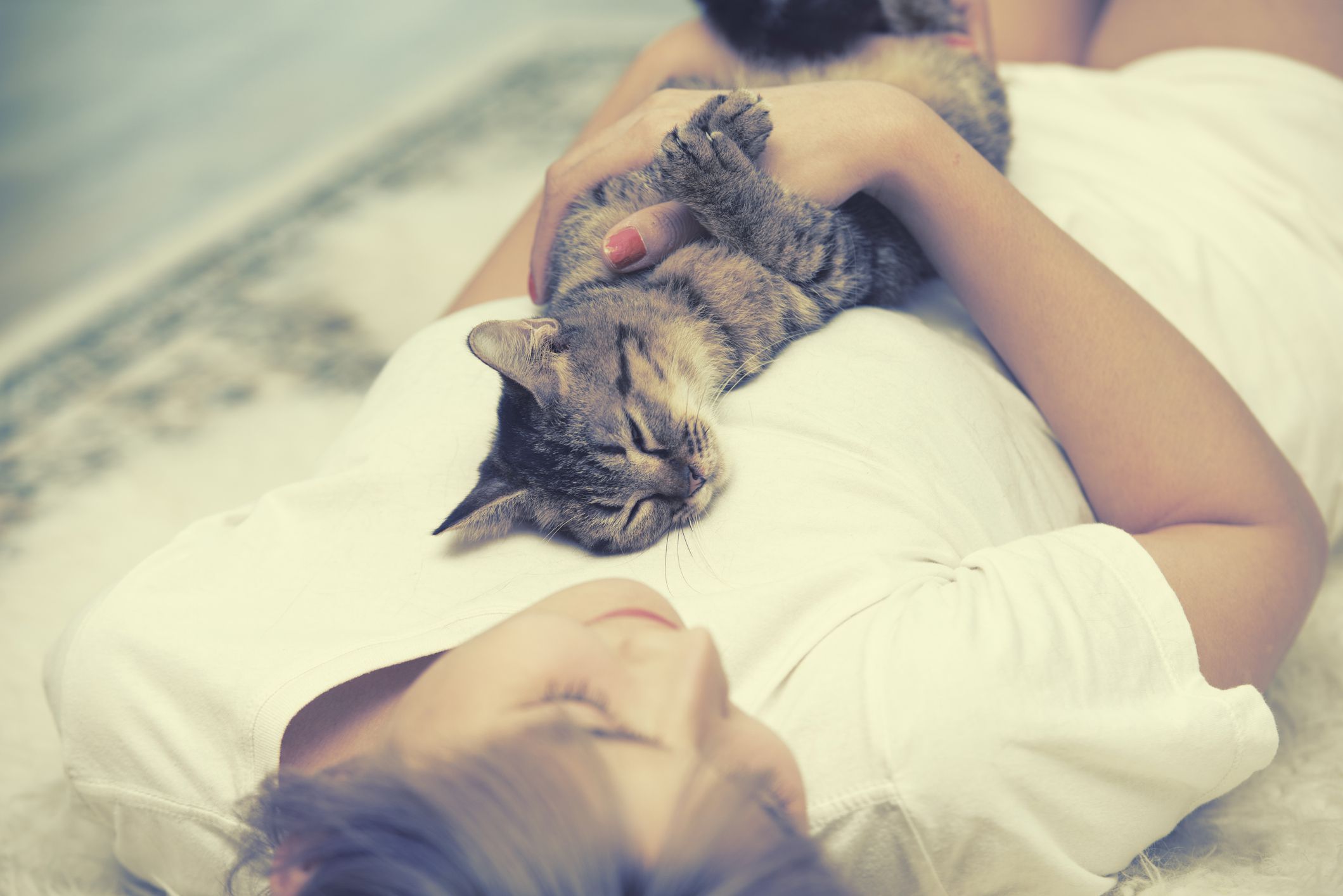
Cats do not choose their sleeping spots randomly. When a cat decides to lay on you, it is a deliberate choice driven by instinct, emotion, and biological need.
Your body offers warmth, security, familiar scent, and the comforting rhythm of your heartbeat. All of these are things cats actively seek out when they rest.
There are several well-documented reasons behind this behavior, and each one reveals something deeper about the bond between cats and their owners.
Reason 1: Love and Deep Affection
The most straightforward reason your cat lays on you is simple love. Your cat has bonded with you since becoming a part of your family and genuinely wants to be close to you.
Cats express love through physical closeness. Since they sleep 12 to 18 hours a day, laying on you is the most efficient way to show affection without giving up their beloved nap time.
Other signs of cat affection include slow blinking, head butting, rubbing against your legs, and following you from room to room. Laying on you is the strongest physical expression of all of these.
Reason 2: Warmth and Body Heat
Cats naturally run at a body temperature between 99.5°F and 102.5°F and constantly seek external heat sources to help maintain it. Your body is one of the best heat sources available to them.
The warmest parts of your body, including your chest, head, and armpits, are the spots cats gravitate toward most. This is not coincidence. It is pure biological logic working in your favor.
Even a soft blanket nearby cannot compete with the live, consistent warmth that a human body provides throughout the night or during a long afternoon nap.
Reason 3: Safety and Security
Cats are both predators and prey by nature. Even domestic cats retain the instinct to remain alert during sleep, always watching for threats. Laying on or near you provides an added layer of security.
When a cat chooses to sleep on you, they are saying they trust you completely. You are their safe base. Your presence allows them to drop their guard and enter a deeper, more restful sleep.
This trust is not given lightly. Cats who have been through trauma or adoption may take weeks or months before they feel secure enough to sleep on their owner.
Reason 4: Territorial Marking and Scent
Cats are highly territorial animals. They communicate ownership through scent, using pheromone glands located on their face, paws, and body. When a cat lays on you, they are also marking you as theirs.
This scent transfer is not aggressive. It is actually a sign of deep inclusion. Your cat is saying you belong to their trusted inner circle, their family group.
If you notice your cat rubbing their head against you before settling down, that is the scent-marking process in action. Laying on you extends and reinforces that scent claim.
Reason 5: Emotional Bonding
Laying together is a core social behavior for cats. In the wild, cats in family groups sleep together to reinforce social bonds. Your cat treats you as part of that group.
This behavior is sometimes called “pillowing,” where cats use another trusted cat or their owner as a living cushion. It is one of the strongest social signals in feline behavior.
If your cat always chooses you over other people in the household, that is a genuine compliment. It means you are their primary attachment figure and their most trusted companion.
Reason 6: Your Heartbeat and Breathing Rhythm
The sounds your body makes during rest are deeply soothing to cats. Your rhythmic heartbeat and the steady rise and fall of your chest while breathing create a calming sensory experience.
Some animal behaviorists compare this to how a mother’s heartbeat soothes a newborn infant. Cats respond to that same kind of rhythmic biological pattern. It lowers their stress and helps them settle.
This is why so many cats prefer to sleep specifically on your chest rather than beside you or at the foot of the bed.
Reason 7: Attention-Seeking Behavior
Some cats lay on you simply because they want your attention. If you have been busy, distracted, or away for long periods, your cat may escalate their proximity to get your focus back.
An attention-seeking cat may sit on your laptop, climb into your lap while you read, or curl directly on your chest while you watch television. They want interaction, not just physical closeness.
Providing mental stimulation through play, puzzle feeders, and regular one-on-one time can reduce excessive attention-seeking behavior while still honoring your cat’s need for connection.
Reason 8: Stress Relief and Comfort
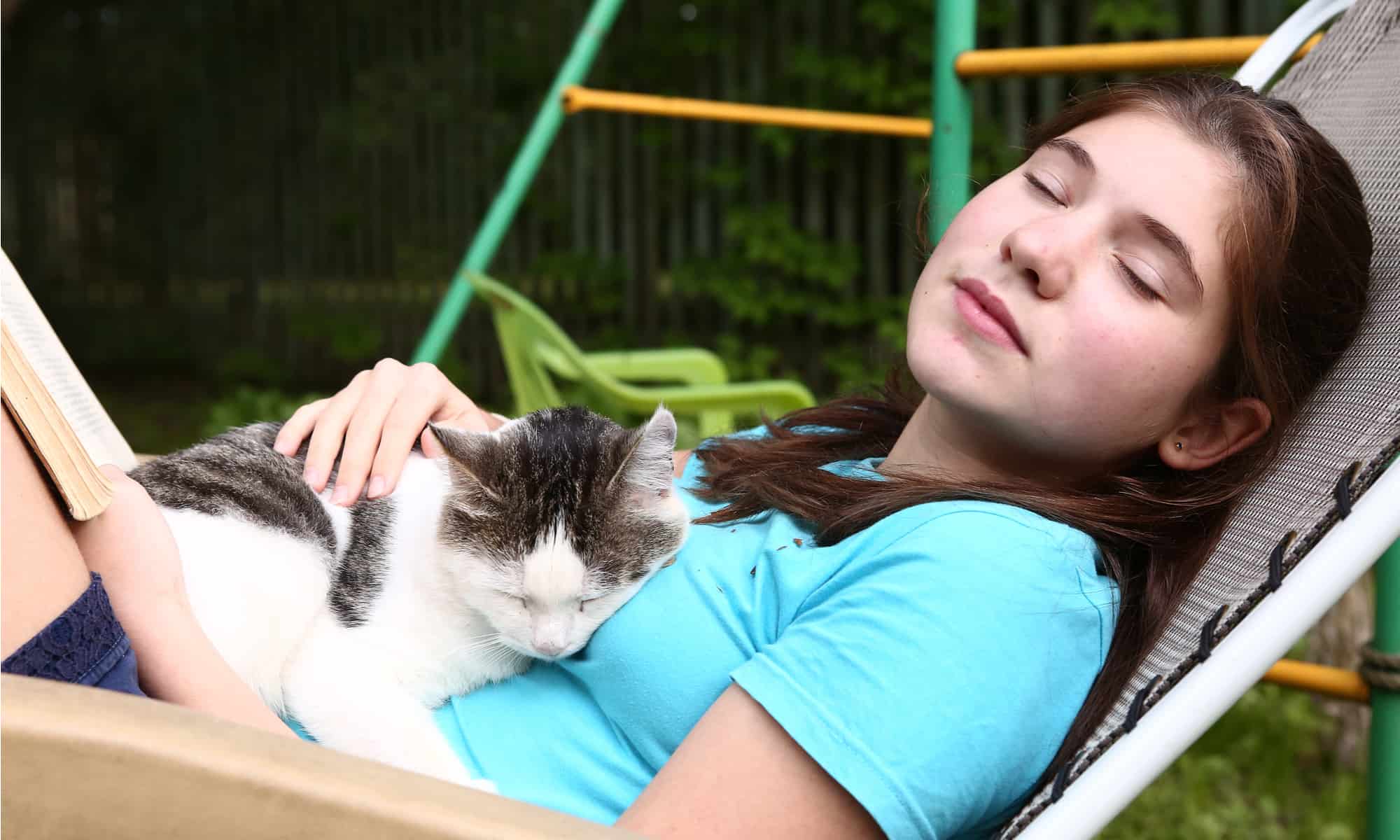
Cats can experience stress, anxiety, and uncertainty just like humans do. When they feel unsettled due to household changes, new pets, or loud environments, they often seek you out for comfort.
Your familiar scent, steady presence, and warm body act as a natural anxiety reliever for cats. Laying on you helps them regulate their emotional state and feel grounded again.
If your cat suddenly starts laying on you more than usual, it may be worth examining whether something in their environment has changed recently.
Reason 9: Pregnancy or Heat Cycle in Female Cats
Unspayed female cats often become significantly more affectionate when they are pregnant or experiencing a heat cycle. A sudden increase in cuddly behavior can be a biological signal.
If your female cat who was previously independent suddenly wants to lay on you constantly, this hormonal explanation is worth considering. A vet check can confirm the cause quickly.
Spayed females can still be very affectionate, but they will not show this specific pattern of sudden behavioral change linked to reproductive cycles.
Reason 10: Habit and Routine
Sometimes cats lay on you simply because it has become a comfortable habit over time. Once a cat discovers that your lap or chest is warm and safe, they return to it again and again.
Cats are creatures of routine. They will seek out the same sleeping spots at the same times each day if their experience has been consistently positive. You become part of that daily routine.
This is actually a positive sign. A cat that routinely returns to lay on you has built a stable, secure attachment to you as a reliable source of comfort in their life.
Where Your Cat Lays on You and What It Means
The spot your cat chooses on your body is not random. Each location carries a specific meaning based on what the cat is seeking at that moment.
| Body Part | What It Means |
|---|---|
| Chest | Deepest trust and affection, drawn to heartbeat and warmth |
| Lap | Comfort, bonding, and desire for interaction or petting |
| Head or pillow | Attracted to heat, scent of hair, and stability while you sleep |
| Legs or feet | Closeness with easy escape route, light bonding behavior |
| Stomach | Comfort-seeking, warmth, sometimes a sign of illness monitoring |
| Face | Very strong attachment, desire for scent closeness |
Understanding these positions helps you read your cat’s emotional state and respond to their needs more accurately.
Why Cats Lay on Your Chest Specifically
Your chest is one of the most popular spots cats choose, and for good reason. It combines several things cats look for all at once: warmth, your heartbeat, your breathing rhythm, and proximity to your face and voice.
Studies suggest that cats find rhythmic vibrations like a heartbeat deeply reassuring. It taps into the same neurological pathways that make purring calming for cats themselves.
Cats who consistently choose your chest are showing a particularly strong emotional bond. It is one of the most affectionate positions in the entire range of cat sleeping behaviors.
Why Cats Lay on Your Head
Your head releases more consistent heat than most other parts of your body throughout the night. It is also the most stationary part of a sleeping person, which means fewer disturbances for the cat.
Your hair and scalp carry a strong concentration of your personal scent. Cats, with their powerful sense of smell, find this deeply comforting and are drawn to it during rest.
If your cat sleeps on your pillow or rests against your head regularly, they are treating you as their most valued sleep companion and are seeking the most scent-rich part of you available.
Why Cats Lay on Your Legs or Between Your Legs
The space between your legs forms a natural nest that is warm on both sides and slightly enclosed. Cats with a strong preference for security tend to gravitate toward this spot.
Behavior experts note that cats who sleep between legs are balancing two priorities: closeness to you and access to a clear escape route if something startles them. It is trust with a backup plan.
This position is common in cats that are affectionate but still retain a slight independent streak. They want to be near you while keeping their options open.
What It Means When Your Cat Suddenly Starts Laying on You
If your cat has never been particularly cuddly but suddenly starts laying on you all the time, several explanations are worth exploring. A change in household routine, a new pet, stress, or seasonal changes can all trigger this shift.
Sometimes a sudden increase in laying behavior signals that a cat is not feeling well and is seeking comfort. If the behavior is paired with low energy, appetite changes, or unusual sounds, a vet visit is worth considering.
On the positive side, a sudden increase in cuddling can also simply mean your cat has reached a new level of trust with you. Some cats need extra time to fully open up.
When Should You Be Concerned About This Behavior
In most cases, a cat laying on you is completely normal and healthy. However, there are a few situations that warrant closer attention from a veterinarian.
If your cat suddenly sleeps far more than usual, shows decreased appetite, or seems lethargic even when awake, the increased contact could be a sign of illness rather than simple affection.
Cats instinctively hide illness, but they also seek out their trusted person when they are not feeling well. Paying attention to the full picture of their behavior is always important.
How to Encourage or Manage This Behavior
If you love having your cat lay on you, there are simple ways to make the experience better for both of you. A consistent routine, positive reinforcement, and quiet time together all help strengthen this bond.
If you prefer your cat to sleep nearby but not directly on you, a heated cat bed placed close to your sleeping area can provide a satisfying alternative. The warmth mimics your body heat closely enough that most cats accept it readily.
Never punish a cat for trying to lay on you. Gently redirecting them to their own comfortable space nearby is the most effective and relationship-preserving approach.
Cat Body Language Signs That Accompany Laying on You
When your cat lays on you, they often show additional signals that help communicate their emotional state. Learning to read these signs deepens your understanding of what they are expressing.
| Body Language Signal | What It Communicates |
|---|---|
| Purring while laying on you | Contentment, relaxation, deep comfort |
| Slow blinking | Trust, affection, feeling completely safe |
| Kneading or “making biscuits” | Deep comfort, attachment, often linked to kittenhood memories |
| Tucked paws (loaf position) | Relaxed but alert, content and comfortable |
| Exposed belly while on you | Maximum trust and complete vulnerability |
| Tail wrapped around your arm | Affectionate claiming, bonding behavior |
Reading these signals together with the location your cat chooses gives you a much richer picture of their emotional world.
Does Breed Affect How Often Cats Lay on You
Some cat breeds are significantly more affectionate and lap-oriented than others. Knowing your cat’s breed tendencies can help you set realistic expectations for cuddling behavior.
Ragdolls, Maine Coons, Burmese, Siamese, and Scottish Folds are consistently ranked among the most affectionate and people-oriented breeds. These cats tend to lay on their owners far more frequently than average.
Independent breeds like Norwegian Forest Cats or Russian Blues may still lay on you occasionally but typically prefer to be near you rather than directly on top of you. Both are expressions of love.
The Science Behind Why Cats Choose You Over Others
Research on cat attachment behavior shows that cats form genuine emotional bonds with specific humans, similar in some ways to how infants bond with caregivers. This is not just warmth-seeking.
A 2019 study published in Current Biology found that cats demonstrate secure attachment to their owners, seeking them out for comfort when stressed, similar to dogs and human children. Choosing to lay on you is one expression of this attachment.
If your cat consistently picks you over other household members, it is because you have become their primary attachment figure through consistent positive interactions, reliable caregiving, and calm, gentle behavior.
Tips for Bonding With a Cat That Does Not Lay on You
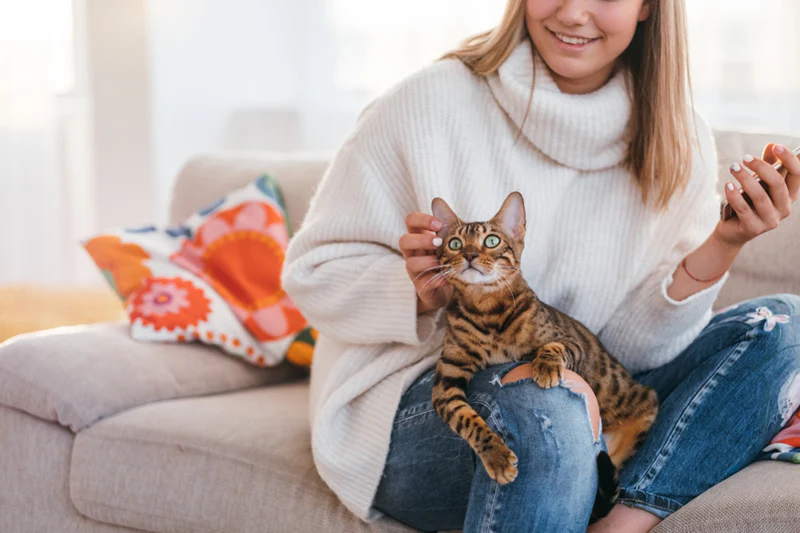
Not every cat is a natural lap cat, and that is perfectly okay. Some cats show love through proximity rather than direct contact, sitting nearby rather than on top of you.
To encourage a more reserved cat to feel comfortable enough to lay on you, focus on low-pressure positive interactions. Offer treats, engage in interactive play, and let them initiate all physical contact.
Over time, as trust deepens, many cats who started out as independent will gradually move closer and eventually begin to lay on or near you during rest. Patience is the most important ingredient.
Health Benefits of Letting Your Cat Lay on You
There is genuine scientific support for the idea that letting your cat lay on you is good for your health. The warmth, companionship, and rhythmic purring all contribute to measurable wellbeing benefits.
Studies show that petting a cat and being in close physical contact lowers cortisol levels, reduces blood pressure, and decreases feelings of loneliness and anxiety. The bond is genuinely therapeutic.
A cat’s purr vibrates at frequencies between 25 and 150 Hz, a range that has been linked in some research to promoting bone density and tissue healing. Whether or not your cat is aware of this, the result is a living health benefit curled up on your chest.
Pros and Cons of Letting Your Cat Lay on You at Night
| Pros | Cons |
|---|---|
| Reduces stress and anxiety | May disrupt your sleep if cat moves often |
| Strengthens the bond with your cat | Can worsen cat allergies for sensitive owners |
| Provides warmth during cold nights | Not recommended with infants or toddlers |
| Can lower blood pressure | Cat fur can affect breathing quality overnight |
| Many owners find it comforting | Some cats may become overly dependent |
Weighing these factors helps you make an informed decision about whether overnight co-sleeping with your cat is right for your household.
Why Some Cats Never Lay on Their Owners
A cat that never lays on you is not necessarily less bonded to you. Cat personality varies enormously, and some cats simply prefer expressing love through other behaviors.
Sitting in the same room, following you around, greeting you at the door, and slow blinking at you from across the room are all valid expressions of cat affection that do not involve physical contact.
If your cat shows these behaviors consistently but never actually lays on you, they still love you. They simply have a different love language that does not require direct physical contact to be meaningful.
Understanding Cat Sleep Patterns in Context
Cats sleep between 12 and 18 hours per day, and some sleep up to 20 hours in a 24-hour period. With that much sleeping to do, their choice of location becomes genuinely significant.
Most cat sleep happens in short bursts rather than one long block. Even when cats appear deeply asleep, they remain partially alert, monitoring their environment for any changes that require a response.
When a cat chooses to sleep on you during these cycles, they are integrating you into their most vulnerable moments. That level of trust is one of the most meaningful things a cat can offer.
Frequently Asked Questions (FAQs)
Why do cats lay on you and purr?
When a cat lays on you and purrs, it is expressing deep contentment and trust. Purring signals that your cat feels completely safe and comfortable in that moment.
Why does my cat only lay on me and not other family members?
Your cat has identified you as their primary attachment figure, the person they feel safest with. This is usually based on who feeds them, plays with them, and responds most calmly to their needs.
Is it okay to let my cat sleep on my chest every night?
It is generally safe and healthy for most adults. However, if you have allergies, asthma, or are a very light sleeper, consider offering a heated bed nearby as an alternative.
Why does my cat lay on my head while I sleep?
Your head is the warmest, most stationary part of your body during sleep and carries the strongest concentration of your personal scent. Cats find both of these qualities deeply comforting.
Why did my cat suddenly start laying on me all the time?
Sudden increases in cuddly behavior can be triggered by stress, household changes, seasonal shifts, or a new level of trust developing. If paired with other health symptoms, consult a vet.
Why do cats lay on you when you are sick?
Cats are sensitive to changes in human body temperature, scent, and behavior. When you are ill, they may sense something is different and respond by staying closer to provide comfort.
Does my cat know I love them when they lay on me?
Yes, in their own way. Cats read body language, scent, and tone of voice. Stroking them gently when they lay on you reinforces the positive emotional experience and strengthens the bond.
Why does my cat knead me before laying down?
Kneading is a comfort behavior that cats carry from kittenhood, when they kneaded their mother to stimulate milk flow. Doing it on you means they associate you with that same deep sense of safety.
Should I move my cat when they lay on me and I need to get up?
It is fine to gently move them when necessary. Most cats will not hold it against you. Offering a warm alternative spot nearby helps ease the transition without disrupting their comfort entirely.
Why does my cat lay on my clothes or belongings instead of me?
Your clothing carries your scent heavily. When you are not physically present, laying on your belongings gives your cat the next best thing, your smell without your body. It is a sign of attachment.
Conclusion
Why do cats lay on you comes down to a powerful mix of love, trust, instinct, and biological need working together.
Every time your cat curls up on your chest, settles into your lap, or rests their head near yours, they are communicating something genuine and meaningful.
They have chosen you as their safe place, their warmth source, their bonding partner, and their most trusted companion.
That is not a small thing in the feline world. Understanding these reasons does not just satisfy curiosity.
It changes how you experience every quiet moment your cat decides to spend with you.
Whether your cat is a daily snuggler or an occasional visitor to your lap, the message is always the same.
You matter to them deeply, and they are showing you in the most instinctive, honest way they know how.
Cherish every single purring moment.
