

Why do cats bite is one of the most searched questions among cat owners, and the answer is rarely simple.
Cats bite for a wide range of reasons, from playful instincts and overstimulation to pain, fear, and learned behavior. Understanding why your cat bites suddenly is the first step toward stopping it.
Why Do Cats Bite? The Core Reasons
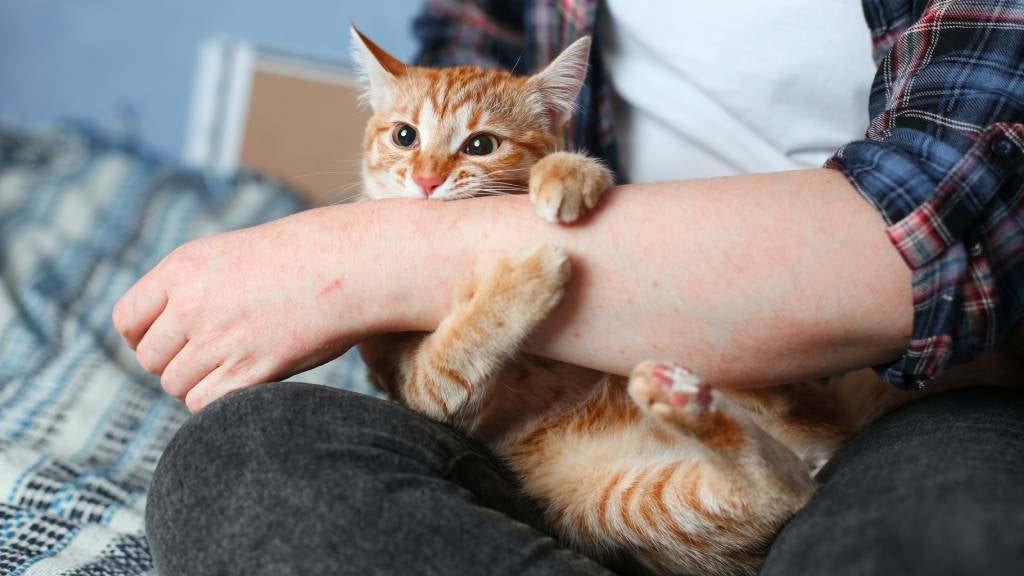
Cats are natural predators with complex communication styles. When they bite, they are almost always trying to say something.
Biting is rarely random. It is usually a response to overstimulation, fear, pain, boredom, or instinct. Learning to read the situation before the bite happens is the key to stopping it.
There is no single answer to why cats bite. The behavior varies by age, history, health, and individual personality. Most biting, however, falls into one of ten clear categories.
10 Main Reasons Why Cats Bite
1. Overstimulation During Petting
This is the most common reason cats bite suddenly. A cat may enjoy petting at first, but repetitive stroking can quickly shift from pleasant to irritating.
Behaviorists call this petting-induced aggression. The cat is not being mean. Their highly sensitive hair follicles become overstimulated, and the bite is their way of saying “stop.”
Some cats even generate static electricity from repeated stroking, which adds a physical discomfort to the sensation. The bite feels unprovoked, but the cat was giving signals for some time before it happened.
2. Play Aggression
Kittens and young cats bite during play because it mimics how they interact with littermates. This is completely normal feline development behavior.
The problem begins when humans let kittens bite hands, feet, or fingers during play. The kitten learns that human body parts are acceptable targets, and that habit carries into adulthood with much sharper teeth and claws.
Play bites are usually softer and happen during active interaction. The cat will often have a playful posture, with a wiggling rear end and dilated pupils.
3. Love Bites
Love bites are gentle nips your cat gives during calm, affectionate moments. They usually do not break the skin and come alongside purring, slow blinking, or kneading.
These bites are a form of feline bonding. Cats groom each other with their mouths, and a light nibble toward their human is an extension of that behavior.
Love bites can sometimes escalate into something harder if the cat becomes overstimulated. Watching their body language helps you tell the difference between affection and an early warning.
4. Fear and Stress
A scared or stressed cat will bite as a last resort when it feels trapped or unable to escape. Before biting, most cats will try to hide, hiss, or display warning body language.
Common fear triggers include loud noises, unfamiliar people, new pets, vet visits, or sudden changes in the home environment. A cat that feels cornered with no escape route is far more likely to bite.
If your cat bites in response to specific situations like carrier entry, grooming, or being picked up, fear is very likely the cause. Desensitization and positive reinforcement can help over time.
5. Redirected Aggression
Redirected aggression happens when your cat becomes aroused or upset by something it cannot reach, such as a bird outside the window or a stray cat in the yard, and then bites the nearest person or animal instead.
This type of biting can feel completely unprovoked because you had nothing to do with what triggered the cat. The bite may be intense and seem out of character.
If your cat was watching something through a window and then bit you when you approached, redirected aggression is the most likely cause. Give the cat space until it calms down fully before interacting.
6. Pain-Induced Biting
A cat in pain will bite when touched, especially near the source of discomfort. This is one of the most important reasons to take sudden biting seriously.
Conditions like arthritis, dental disease, abscesses, skin infections, pancreatitis, and hyperthyroidism can all cause pain-related aggression. A cat that was always calm but suddenly starts biting when touched in a specific area is telling you something hurts.
Older cats are especially prone to pain-induced biting. Over 90 percent of cats above age 12 show signs of arthritis, and by age 3, most cats have early signs of periodontal disease. A vet visit is essential when biting behavior changes without an obvious behavioral cause.
7. Territorial Aggression
Cats are highly territorial animals. When a new person, pet, or even a piece of furniture disrupts their established space, they may bite to defend it.
This is more common in multi-cat households or when a new animal is introduced without a proper gradual process. The biting is usually directed at the perceived intruder.
Territorial biting in cats is also seen when a resident cat reacts to the scent of another animal brought home on clothing or skin. The smell triggers the response even without the other animal being physically present.
8. Attention-Seeking Biting
Some cats learn that biting gets an immediate response. They nip an ankle, you react, and from the cat’s perspective the biting worked.
This is a learned behavior that develops when biting is accidentally rewarded with attention, even negative attention. The cat does not care if you are angry. Any response counts as a reward.
The fix is counterintuitive. When your cat bites for attention, do not react at all. Stand up, turn away, leave the room. No eye contact, no talking, no pushing them away. Consistent non-response breaks the habit faster than punishment.
9. Maternal Aggression
A mother cat with kittens will bite to protect them. This is hormonally driven behavior that peaks in the early weeks after birth.
Even a normally gentle cat can become aggressive if she feels her kittens are threatened. This type of biting usually decreases as the kittens grow and become more independent.
Spaying female cats eliminates hormonal biting cycles and reduces the risk of maternal aggression in the future.
10. Medical and Neurological Issues
Conditions affecting the brain or nervous system can cause sudden, unpredictable aggression. Hyperthyroidism, epilepsy, brain tumors, cognitive decline in senior cats, and certain infections can all trigger biting.
If your cat bites without any behavioral trigger and shows other unusual signs like confusion, disorientation, or extreme mood swings, a neurological or medical workup is necessary.
Idiopathic aggression, where no cause can be identified through history or examination, is rare but real. These cats require professional behavioral intervention and veterinary support.
Cat Biting Warning Signs: What to Watch For
Most cats give clear signals before they bite. The problem is that owners often miss them.
| Warning Sign | What It Means |
|---|---|
| Tail flicking or thumping | Increasing irritation or arousal |
| Ears flattening or rotating back | Discomfort, fear, or annoyance |
| Skin twitching along the back | Overstimulation, sensory overload |
| Dilated pupils | Excitement, fear, or predatory arousal |
| Sudden stillness or body tensing | Preparing to bite or pounce |
| Whiskers flattening against face | Fear or defensive aggression |
| Turning head toward your hand | Processing and about to react |
| Tail bristling | Serious anger or fear response |
When you see these signs during petting or play, stop the interaction immediately. Calmly withdraw your hand or stand up and move away. Do not push the cat off or react sharply.
Love Bites vs. Aggressive Bites: How to Tell the Difference
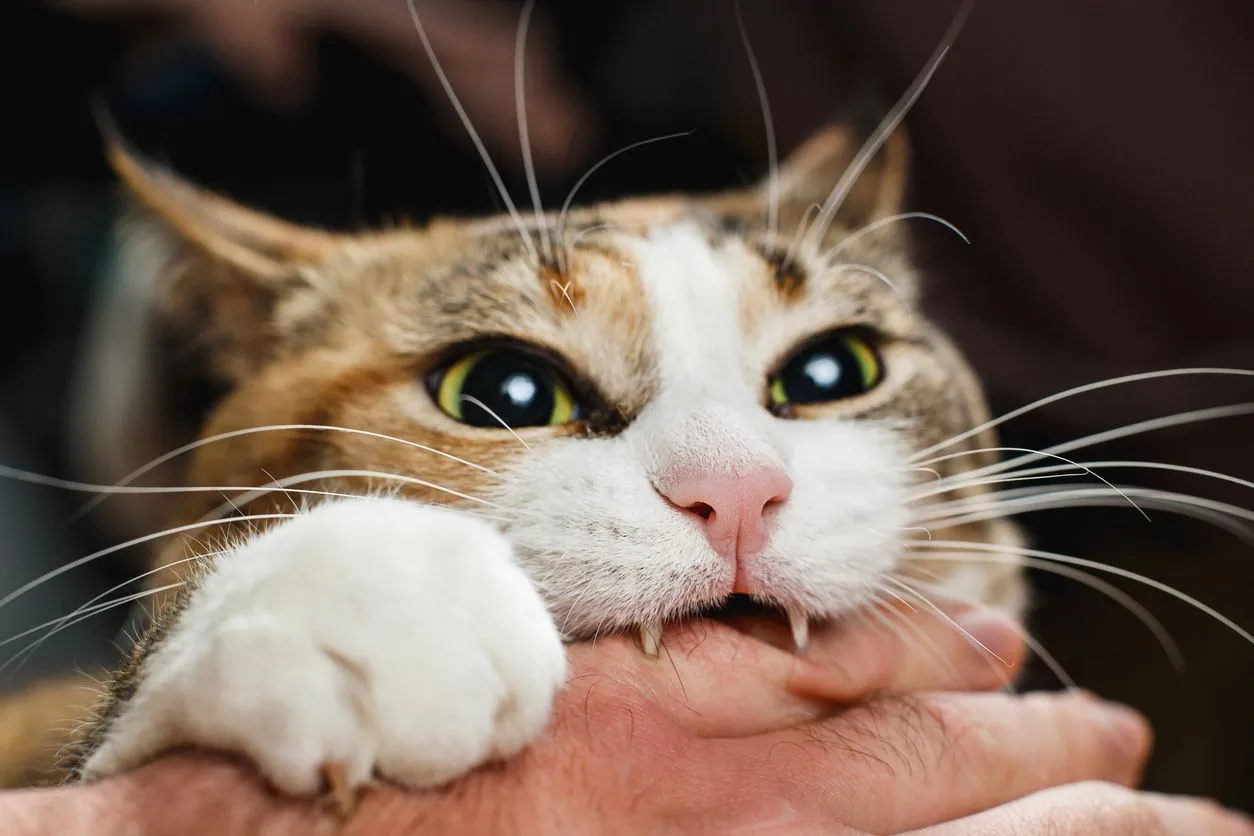
Not all biting is the same. Knowing the difference helps you respond correctly.
| Feature | Love Bite | Aggressive Bite |
|---|---|---|
| Pressure | Soft, does not break skin | Hard, may puncture or lacerate |
| Body language | Relaxed, purring, slow blink | Tense, ears back, tail lashing |
| Context | During calm petting or cuddling | During overstimulation or fear |
| Duration | Brief, then resumes normal contact | Followed by running away or more biting |
| Accompanying behavior | Licking or kneading before bite | Hissing, growling, or swatting |
Love bites generally do not require intervention unless they become bothersome. Aggressive bites should be addressed through behavioral changes and, if needed, veterinary consultation.
Types of Cat Aggression: A Quick Reference
| Type | Common Trigger | Who It Targets |
|---|---|---|
| Petting-induced | Repetitive stroking | Owner during petting |
| Play aggression | Boredom, under-stimulation | Hands, feet, moving objects |
| Fear aggression | Feeling trapped or threatened | Anyone nearby |
| Redirected aggression | External stimuli cat cannot reach | Nearest person or pet |
| Pain-induced | Being touched near a sore area | Person touching them |
| Territorial aggression | New pet, person, or scent | Perceived intruder |
| Maternal aggression | Protecting kittens | Anyone near the litter |
| Status aggression | Establishing dominance | Other pets or people |
When Cats Bite During Petting: Understanding Overstimulation
Petting-induced aggression confuses most owners because the cat sought out the interaction in the first place. The cat jumps onto your lap, purrs, and then bites your hand after a few minutes.
What happens is that the cat reaches its personal stimulation threshold. Every cat has a different limit for how much petting it can tolerate. Once that limit is crossed, the sensation shifts from pleasant to overwhelming.
The repetitive motion of stroking in one spot is one of the biggest triggers. Try varied, shorter strokes or switch to scratching under the chin and between the ears, areas that most cats prefer over full-body strokes.
Track how long your cat tolerates petting before the first warning sign appears. If warning signs start at around two minutes, stop at ninety seconds. Over time, you can very gradually extend the sessions.
Why Cats Bite While Purring
This is one of the most confusing behaviors for cat owners to interpret. The cat is purring, which signals happiness, and then suddenly bites.
Purring is not exclusively a sign of contentment. Cats also purr to self-soothe when anxious, in pain, or overstimulated. A purring cat can still be building toward a bite.
The tail is the most honest body part in this situation. If the cat is purring but the tail starts twitching or thumping, the bite is coming regardless of the sound. Watch the tail, not just the ears or the purring.
Why Cats Bite at Night or in the Morning
Cats are crepuscular, meaning they are naturally most active at dawn and dusk. If your cat bites your feet under the covers or wakes you with a nip in the early morning, it is following its biological schedule.
Movement under blankets triggers hunting instincts. The cat sees the shape moving and responds with predatory behavior, not aggression toward you personally.
A strong interactive play session in the evening, tiring your cat out before bedtime, is the most effective way to reduce this behavior. Puzzle feeders and automated toys can also occupy cats during their active hours.
Why Kittens Bite and How to Stop It Early
Kittens bite during play because it is how they learn limits and hunting skills with their littermates. When humans allow this without correction, the kitten never learns that biting people is unacceptable.
The single most important rule is never use your hands, feet, or any body part as a toy. Always redirect to an appropriate toy like a feather wand, a crinkle ball, or a plush kicker toy.
When a kitten bites, yelp or say “ouch” firmly, then immediately withdraw all attention. Do not push them away or shake your hand, as this mimics prey movement and makes biting more exciting. Walk away and wait before resuming interaction.
How to Stop a Cat From Biting: Proven Tips
Use Toys, Not Hands
Never let your cat bite your hands or feet during play at any age. Redirect every play session to wand toys, balls, or stuffed animals.
Wand toys with feathers or ribbons let you engage your cat’s hunting drive at a safe distance. They tire out your cat and provide the mental stimulation cats need daily.
Respect Petting Limits
Learn your individual cat’s tolerance level. Watch for the early warning signs and stop petting before the threshold is reached.
Keep early sessions short and positive. End petting while the cat still seems to be enjoying it, not after the warning signs have already appeared. This builds positive associations with being touched.
Use Positive Reinforcement
Reward calm behavior during petting with a treat or quiet praise. This teaches your cat that relaxed interaction results in something good.
Never punish a cat for biting with physical force, loud noises, or spray bottles. Punishment increases fear and anxiety, which makes biting worse, not better. Any negative reaction that causes the cat to stop can temporarily reinforce the behavior too.
Increase Enrichment and Play
Boredom and under-stimulation are major causes of biting. Cats need daily active play sessions, ideally two sessions of ten to fifteen minutes each.
Add puzzle feeders, window perches for bird watching, cat trees, and rotating toys to keep your cat engaged. A mentally and physically satisfied cat is far less likely to redirect energy into biting.
Create a Calm Environment
Stress-related biting improves when the environment is more predictable and secure. Ensure your cat has access to hiding spots, high perches, and areas where they cannot be cornered.
In multi-cat homes, provide one litter box per cat plus one extra, separate feeding stations, and individual resting spots. Reducing resource competition lowers stress significantly.
Try Pheromone Diffusers
Products like Feliway emit synthetic cat pheromones that mimic the calming facial pheromones cats use to mark their environment as safe. These can reduce anxiety-driven biting.
Plug them into the rooms where your cat spends the most time. Results vary by cat, but many owners report measurable improvement in stress-related behavior within two to four weeks.
Consider Spaying or Neutering
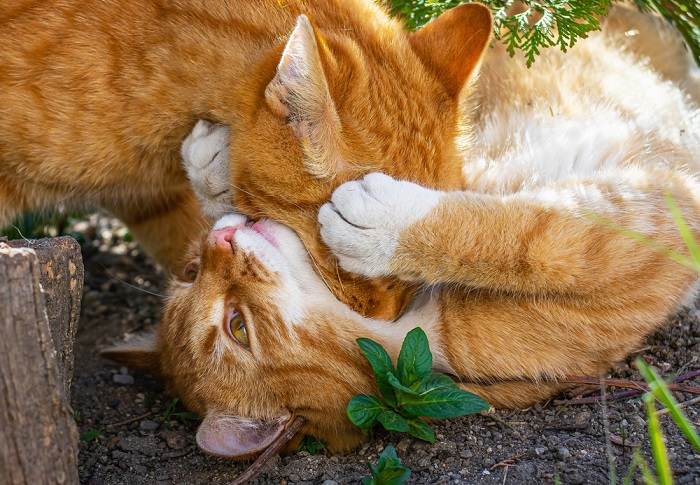
Intact cats bite more due to hormonal influences. Males can be territorial and reactive. Females in heat can be unpredictable and more prone to aggression.
Spaying and neutering reduces hormonally driven biting, territorial aggression, and stress. It is one of the single most impactful steps for reducing problem biting in cats that have not yet been altered.
What to Do Immediately After a Cat Bite
Cat bites are medically serious even when they seem minor. Cat teeth are sharp and narrow, creating puncture wounds that can seal over quickly and trap bacteria inside.
Wash the wound thoroughly with soap and warm water for at least five minutes. Apply an antibacterial ointment and cover with a sterile bandage.
Seek medical attention if the wound is deep, does not stop bleeding, shows signs of infection like swelling, redness, or warmth, or if you have a weakened immune system. Cat bite infections can escalate quickly and may require antibiotics.
When to See a Vet About Cat Biting
Some biting is behavioral and manageable at home. Other biting requires a vet visit.
Schedule a veterinary appointment if your cat was previously calm but suddenly started biting, your cat bites when a specific area of the body is touched, biting is accompanied by other behavioral changes like appetite loss or hiding, your cat seems confused or disoriented alongside aggressive behavior, or if the biting is frequent and intense without a clear trigger.
The vet will check for dental disease, arthritis, thyroid abnormalities, skin conditions, neurological issues, and other pain-related causes. Ruling out medical problems first is always the right first step when biting behavior changes.
Cat Biting and Children: Special Considerations
Children are more likely to be bitten by cats because they often miss or ignore warning signals. They may pet too roughly, hold the cat too long, or approach when the cat wants space.
Teach children never to chase or corner a cat, always let the cat come to them first, stop petting when the cat moves away or shows any tension, and never disturb a sleeping or eating cat.
Supervise all interactions between young children and cats that have any history of petting-induced aggression. Even gentle cats can bite if stressed or overstimulated.
Cat Biting at Specific Body Parts: What It Means
| Cat Bites At | Most Likely Reason |
|---|---|
| Hands during petting | Overstimulation |
| Feet and ankles | Play aggression, predatory behavior |
| Face while sleeping | Attention-seeking, crepuscular activity |
| A specific body spot on themselves | Pain, skin irritation, or parasites |
| Other pets | Territorial or play aggression |
| Strangers only | Fear or poor socialization |
Understanding the pattern of when and where your cat bites gives you the clearest picture of the underlying cause.
Frequently Asked Questions (FAQs)
Why do cats bite suddenly for no reason?
Most sudden biting has a reason, even if it is not obvious. Overstimulation, redirected aggression, or hidden pain are the most common triggers behind bites that seem unprovoked.
Why does my cat bite me when I pet it?
Your cat has reached its petting threshold and is telling you to stop. Watch for tail flicking, skin twitching, or ear rotation as early warning signals and stop before those signs appear.
Why do cats give love bites?
Love bites are gentle nips cats use to show affection or communicate mild overstimulation. They usually do not break the skin and happen alongside relaxed body language like purring and slow blinking.
Why does my cat bite me when I pick it up?
Your cat likely feels uncomfortable being held or is in pain when pressure is applied to certain areas. Try holding for shorter periods and always support the hindquarters to reduce discomfort.
Why is my cat biting me more than usual?
Increased biting can signal pain, illness, stress, or a change in the environment. A sudden increase in biting without a clear trigger warrants a vet visit to rule out medical causes.
Why does my cat bite me then lick me?
This is usually a combination of affection and a signal to stop or change the interaction. The lick is bonding behavior, and the bite is a gentle way to redirect or communicate a limit.
Why do cats bite feet and ankles?
Feet and ankles are moving targets that trigger predatory instincts. This is especially common in bored cats, young cats, or cats that were not taught appropriate play as kittens.
Can I train my cat to stop biting?
Yes. Consistent redirection to toys, ending play when biting starts, and never using hands as toys are the most effective training methods. Results take time and require patience.
Is cat biting a sign of affection?
It can be. Gentle love bites during calm moments are often affectionate. Hard bites during or after petting are usually a signal to stop and are not a sign of affection.
When should I be worried about my cat biting?
Be concerned if biting is sudden and out of character, if it escalates in intensity, if it happens when touching a specific body area, or if it is accompanied by other behavioral or physical changes. See a vet promptly in these cases.
Conclusion
Why do cats bite is a question with many answers, and the right answer depends on the individual cat, the situation, and any underlying health factors. Most biting falls into clear, understandable categories including overstimulation, play aggression, fear, pain, redirected aggression, and learned behavior.
Once you identify the cause for your cat specifically, the path to reducing or eliminating it becomes much clearer.
The most important habits to build are reading your cat’s body language before a bite happens, using toys instead of body parts during play, respecting your cat’s petting threshold, and visiting a vet when biting changes suddenly.
With patience, consistency, and a better understanding of how cats communicate, most biting problems can be managed effectively and the relationship with your cat can become stronger and more trusting.
